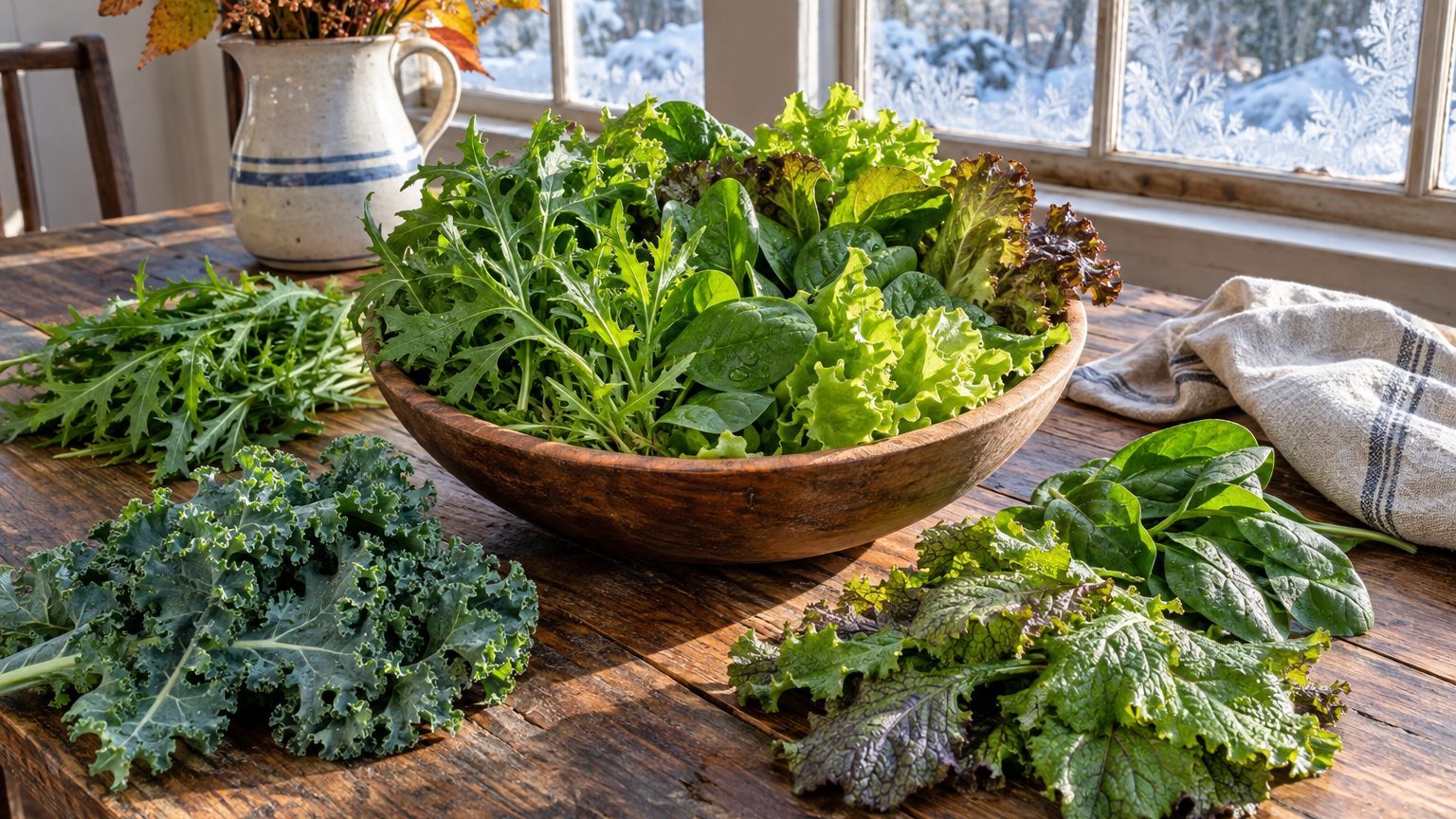

The best winter salads for New Hampshire are the cold-hardy greens: spinach, mâche, claytonia, tatsoi, mizuna, kale and escarole. Grow them under a low tunnel or in a cold frame. Tender head lettuce is the weak link, because winter nights here fall well below what it tolerates. Most of the work happens in late summer, when the sowing dates matter more than the variety you pick.
The short answer for New Hampshire
Choose by type, and put the toughest leaves in the ground first. Spinach, mâche (corn salad) and claytonia (miner’s lettuce) shrug off hard freezes and can sit through winter under cover. Tatsoi, mizuna, kale and arugula tolerate a lot of cold but stop growing as daylight shortens. Endive, escarole and loose-leaf lettuce need the most shelter and the earliest start.
The season sets the pace. At the airport reference station, the last spring freeze falls between April 16 and April 27, and the first fall freeze between October 13 and October 26. Both ranges are the 30 to 70 percent probability band for a 32°F freeze, from the 1991-2020 NOAA normals. those are the dates when a freeze is about as likely as not. The coldest month averages a daily minimum of 17.1°F at the Manchester reference station. That is cold enough to burn unprotected lettuce, and it is the number that decides what survives.
| Type | Cold tolerance | Role in a New Hampshire winter bed |
|---|---|---|
| Spinach | Very hardy | Overwinters under cover, restarts in late winter |
| Mâche, claytonia | Very hardy | Reliable cut-and-come-again salad through the coldest weeks |
| Kale, tatsoi, mizuna | Hardy | Baby leaves for mixes, sturdier with a cover |
| Arugula, endive, escarole | Moderately hardy | Best in the shoulder months, with a tunnel for deep winter |
| Loose-leaf and head lettuce | Tender | Fall harvest, or a heated or well-sealed structure |
Sowing runs from mid-August for the slower types through mid-September for the quick ones, adjusted to your frost dates. The detail is in When to Sow Winter Salads in New Hampshire. For the wider picture of the crop, start with Winter Salads for New Hampshire Gardens.
What will not work here

A late start defeats the slowest salads. The reference-station freeze dates shown above are the best case. Suburban and rural gardens usually see the first fall frost one to two weeks earlier, and more than that at elevation. A bed of escarole or radicchio sown in early September may only reach seedling size when the light starts to fade. Plants that go into winter small stay small. They hold on, but there is little to cut until the days lengthen again.
Why does lettuce fail here in winter?
Lettuce is simply too tender for a coldest-month minimum of 17.1°F. A row cover or low tunnel adds a few degrees, but a cold night in January can drop well below that, and the leaves freeze, thaw and turn to slime. Lettuce seed also goes dormant in hot soil, so an August seedbed in a sunny spot often germinates poorly unless you shade and water it daily. Spinach, mâche and claytonia are better bets for the same slot.
What about wet snow and damp air?
Snow load is a bigger threat than cold. A heavy, wet snowfall can flatten a plastic hoop or crush a row cover into the plants, so tunnels need steep curves, sturdy ribs and a quick brush-off after storms. Fall in New Hampshire also brings long damp spells, and close spacing under plastic traps that moisture. Downy mildew and gray mold show up where leaves touch and condensation drips. Give each plant room, open the ends of a tunnel on mild days, and skip watering once the soil is cool and the days are short.
Frozen hoses are the last trap. Water the beds well in early November, while the ground still takes it, because you may not get another chance until March.
What changes across New Hampshire
New Hampshire is not one garden. The USDA Plant Hardiness Zone Map (2023 edition, built on 1991-2020 normals) places the state across zones 3b to 6a. That spread covers the cold north country and high ground at one end and the warmer seacoast and southeast at the other. The zone rests on the average annual extreme minimum temperature, which is a different number from the 17.1°F average coldest-month minimum at Manchester. A single statewide answer would be wrong for most readers, so use the Manchester figures as a reference point and adjust from there.
A gardener in the north or on a hillside should shift in three ways. Sow earlier than the reference dates suggest, since the first fall frost arrives earlier and the plants need size before the light fades. Lean harder on the hardiest types: spinach, mâche and claytonia over arugula and endive. And build for more cold and more snow, which usually means a cold frame with an insulated lid, or a tunnel with two layers of cover. Lower areas where cold air pools behave like a colder zone than the map shows.
In the warmer south and along the coast, you have more room. Arugula, escarole and some loose-leaf lettuce can stay in the mix longer, and a single layer of row cover inside a tunnel may be enough for much of the winter. Still, the same short winter days apply everywhere in the state.
To find which zone applies to your property, enter your ZIP code on the USDA map rather than guessing from a neighbor’s garden.
Where to check this for your own county
UNH Extension is the place to confirm any of this. Look for two things: the vegetable planting guidance for your part of the state, and any season-extension material covering cold frames, low tunnels and hoop houses. Educators in the county offices can tell you which varieties have been trialled nearby and how local gardeners are managing winter beds.
A county recommendation beats a state one. Frost dates, snow load and winter lows differ enough between the coast, the Merrimack Valley, the Lakes Region and the north country that the best sowing date can differ by two weeks or more. What you are reading is the state-level view, built around reference-station numbers that suit a typical southern garden. Anything the county office tells you about your own elevation and soils takes priority.
When you call or browse, bring the basics: your town, whether the garden sits on a slope or in a hollow, and whether you plan to use a cold frame, a low tunnel or a full hoop house. Ask which spinach, mâche and kale types do well locally, and when residents typically sow them.
Checking this against your own garden
Your own observations outrank any date printed here. Three are worth watching.
- Soil warmth by feel. Push your hand two inches into the bed in late August. If it feels like warm bathwater, lettuce and spinach seed will sulk, so wait or shade the bed. If it feels merely mild, sow. A bed that stays warm longer than a neighbor’s holds heat well and can take later sowings.
- First true leaves. Count how many days seedlings take to show their first true leaves, the ones after the round seed leaves. Fast growth in September means you have time to size up plants before the days shorten. Slow growth tells you your site is cool or shaded and that you should sow earlier next year.
- Which tender plants blacken first. Note the morning basil, squash vines or tomatoes turn dark. If that comes well before the airport reference dates, your garden is a cold pocket, and your sowings should move earlier too.
Write the dates down each year. Three seasons of notes will tell you more about your yard than any statewide table.
Common questions
Can I grow winter salads in New Hampshire without a greenhouse?
Yes, with a cold frame or a simple low tunnel. Spinach, mâche and claytonia are the most forgiving. Without any cover, expect a fall harvest and little else once hard freezes arrive.
Which winter salad is hardiest?
Mâche and claytonia are among the toughest, and spinach is close behind. All three survive cold that wilts lettuce and arugula, though they grow very little in midwinter.
When should I sow for a winter harvest?
Late summer, working back from your first fall frost. Slower types go in earliest, in mid-August in much of the state, and faster ones follow into September. Colder, higher sites should start sooner. The sowing calendar has the details.
Will I get fresh salad all winter?
Not at a steady pace. Most growth happens in fall and again in late winter. In between, plants mostly hold, so harvest lightly in December and January and expect a flush when the days lengthen.