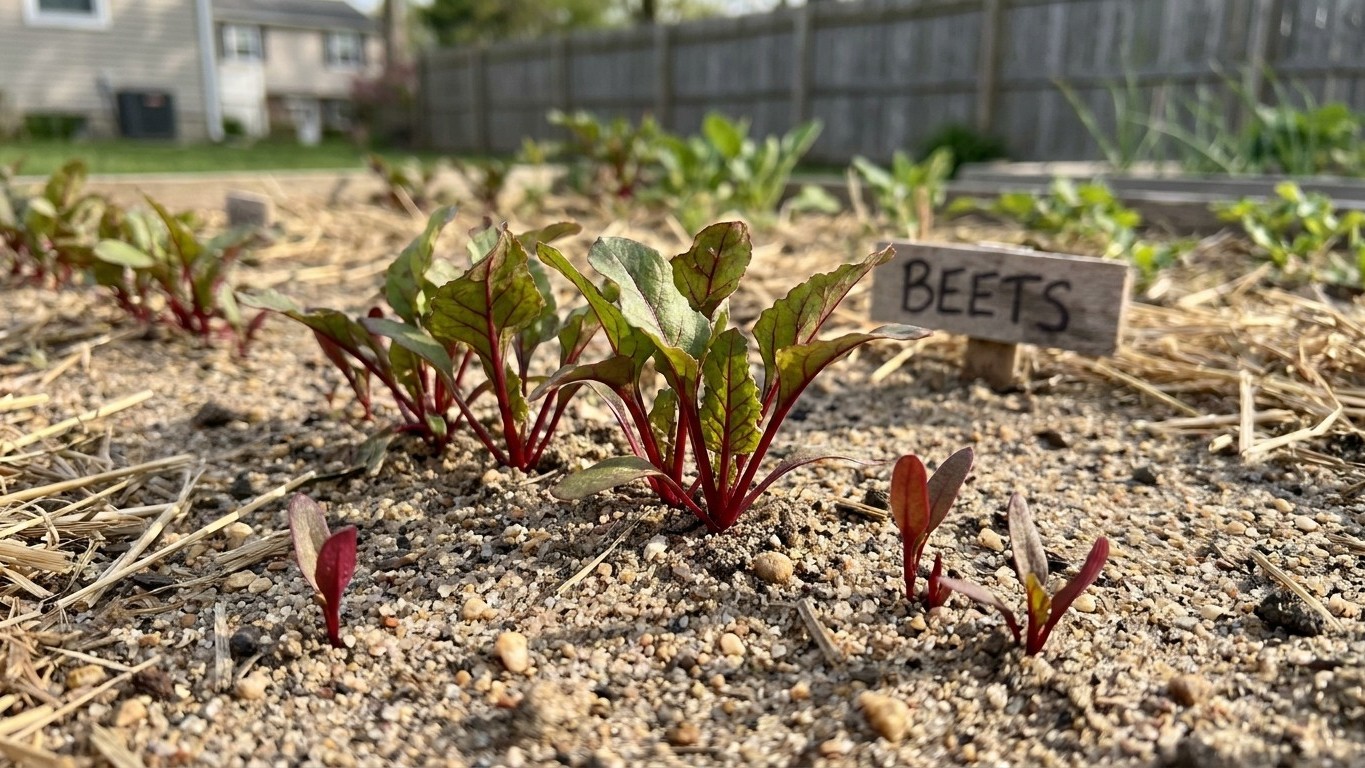

New Jersey gardeners can grow beets successfully, but two separate problems trip up most plantings: bolting triggered by dry spells right after sowing, and woody roots caused by heat stress later in the season. The soil USDA treats as representative of the state runs sandy and lean, which speeds up both problems if moisture isn’t managed closely. For specific guidance, see When to Sow Beets in New Jersey: sow two to three weeks before your county’s last frost, keep the bed evenly moist through the first six weeks, then watch soil moisture again once summer heat sets in.
The short answer
USDA NRCS lists the Downer series as the soil representative of New Jersey, and this profile of Beet Soil in New Jersey is worth understanding before you sow. It’s an Ultisol, meaning it’s old, heavily weathered, and stripped of a lot of its natural fertility over time. The surface horizon runs 79 percent sand, 6 percent clay, and 15 percent silt, with organic matter around 1.2 percent and a pH near 6.3, slightly acid. It’s classified as well drained. For a root vegetable like beets, that combination cuts both ways. Well-drained, sandy ground is exactly what beets want for straight, unforked roots, and it’s easy to work in early spring when heavier clay soils are still cold and sticky. The tradeoff is that sand of that percentage sheds water fast. A bed that looks moist on Monday can be bone-dry by Wednesday if there’s no rain and no mulch, and with organic matter sitting at roughly 1.2 percent, there isn’t much of a sponge underneath to buffer that swing.
That matters because beets that dry out in their first six weeks tend to bolt, sending up a flower stalk instead of building a root worth eating. The Downer profile’s low organic matter also means fewer nutrient reserves held in the topsoil, so a bed left unamended for several seasons in a row will feel that shortfall more in a sandy soil than in a clay one, where minerals cling to soil particles longer.
On the heat side, Utah State University Extension’s guidance on beets notes that temperatures above 85 F combined with water stress make roots woody, a texture problem separate from bolting. The exact number of days New Jersey’s reference weather station spends above 90 F in a typical year isn’t part of the dataset behind this page, so it won’t be guessed at here. What can be said plainly is that New Jersey summers routinely produce stretches well past that 85 F mark, particularly inland and in the southern part of the state, which is reason enough to keep watering steady once the root is sizing up, not just at the seedling stage.
None of this is a verdict on any one garden. New Jersey spans hundreds of mapped soil series, and a yard a few miles from where Downer soil is mapped can run heavier, wetter, or far more acidic. Treat these numbers as the state’s starting point, not a stand-in for a soil test pulled from your own bed.
The six weeks that decide it here
Beets are sown directly in the ground, never transplanted, and the standard advice is to get seed in two to three weeks ahead of the last frost. NOAA NCEI’s 1991-2020 climate normals put the last spring frost at the Newark reference station somewhere between March 29 and April 6, based on the 32 F freeze-probability data for that station. Working backward from that window, a lot of New Jersey beet seed goes into the ground in the second and third week of March, which puts the first six weeks of growth, the window where water stress does the most damage, squarely in a New Jersey March and April.
That stretch of the calendar in this state doesn’t behave the same way every year. Some springs bring steady, soaking rain that keeps a sandy Downer-type bed moist without any help. Others turn dry for two or three weeks at a stretch right when seedlings are putting down their first real roots, and a light, fast-draining soil has no reserve to fall back on when that happens. Because there’s no way to know in advance which kind of spring is coming, the practical move is to treat every sowing as if a dry stretch is possible and check soil moisture by hand rather than by the calendar.
The bolting risk in New Jersey, then, isn’t really about the calendar date of the last frost. It’s about what happens to soil moisture in the weeks right after sowing, in a soil texture that has very little buffer built in. A gardener working a sandier plot needs to check the top few inches of soil every couple of days during that six-week window, not just after a week without rain, because sand this coarse can dry out faster than the eye expects.
It’s worth remembering, too, that the Newark frost dates are station-specific. Suburban and rural gardens across the state typically see their own last frost land later, sometimes by one to two weeks, and gardens at higher elevation later still. That shifts the whole six-week window later on the calendar without changing the underlying risk.
What goes wrong here
- Seedlings bolt before the root ever sizes up. A Downer-type sandy soil drains fast enough that the top few inches can dry out within days of sowing, and beets under water stress in that first six-week window respond by flowering early instead of building a root. Water on a fixed schedule isn’t reliable here; check soil moisture by hand every two to three days through that window and water before the surface goes fully dry.
- Roots come out woody after a hot, dry stretch later in the season. This is a separate failure from bolting: it hits established plants, not seedlings, and shows up when temperatures push past 85 F while the soil is also dry. Keep watering consistent through summer heat rather than assuming an established plant can coast on deeper roots alone.
- Beds run low on organic matter and lose fertility over a season or two. With organic matter around 1.2 percent in the representative soil, there isn’t much of a nutrient reserve to draw on. Work in composted organic matter ahead of sowing, capped at 1 inch per 100 square feet, since beets don’t want it piled on any heavier than that.
- Sowing timed to a frost date that isn’t the reader’s own. Using the Newark-area last-frost window for a garden thirty miles away, or one at higher elevation, can put seed in the ground too early or leave the six-week window ending later than expected. Check a local frost date rather than relying on a single reference station’s numbers.
Checking this against your own county
Everything above starts from one representative soil series and one reference weather station. Neither one describes every backyard in New Jersey. Before committing a whole bed to beets, pull a soil test through Rutgers Cooperative Extension, the New Jersey Agricultural Experiment Station, at njaes.rutgers.edu. A county-level test will show the actual pH, texture, and organic matter of the specific ground being planted, rather than the statewide reference figures used here. Rutgers Cooperative Extension also fields county-specific questions on local frost timing, which matters given how much the Newark station’s dates can shift once you move inland, toward the coast, or up in elevation. That combination, a real soil test plus a local frost date, is the only way to know whether a given yard tracks the Downer-series pattern described above or looks nothing like it.
Common questions
How many days does it take to grow beets from seed in New Jersey?
Beets typically run 60 to 80 days from seeding to harvest, counted from the day seed goes into the ground rather than from a transplant date, since beets aren’t started indoors and moved outside the way tomatoes or peppers are.
Is New Jersey’s representative soil good for beets without any amendment?
It’s well drained and easy to work, which beets appreciate, but at roughly 1.2 percent organic matter it’s on the lean side. Working in a modest amount of composted organic matter, no more than 1 inch per 100 square feet, before sowing gives the bed more of a moisture and nutrient buffer without overdoing it.
Should beets be watered the same way all season?
No. The two main failure modes need different responses: bolting comes from water stress in the first six weeks after sowing, while woody roots come from heat above 85 F combined with dryness later in the season, once the plant is established. Both call for consistent moisture, but they happen at different growth stages for different reasons.
What beet varieties are recommended for home gardens?
Utah State University Extension names several varieties suited to home garden beet plantings without attaching specific data, such as days to maturity or color, to any one of them. Choosing among named varieties is more a matter of personal preference than a soil or climate decision for New Jersey growers.