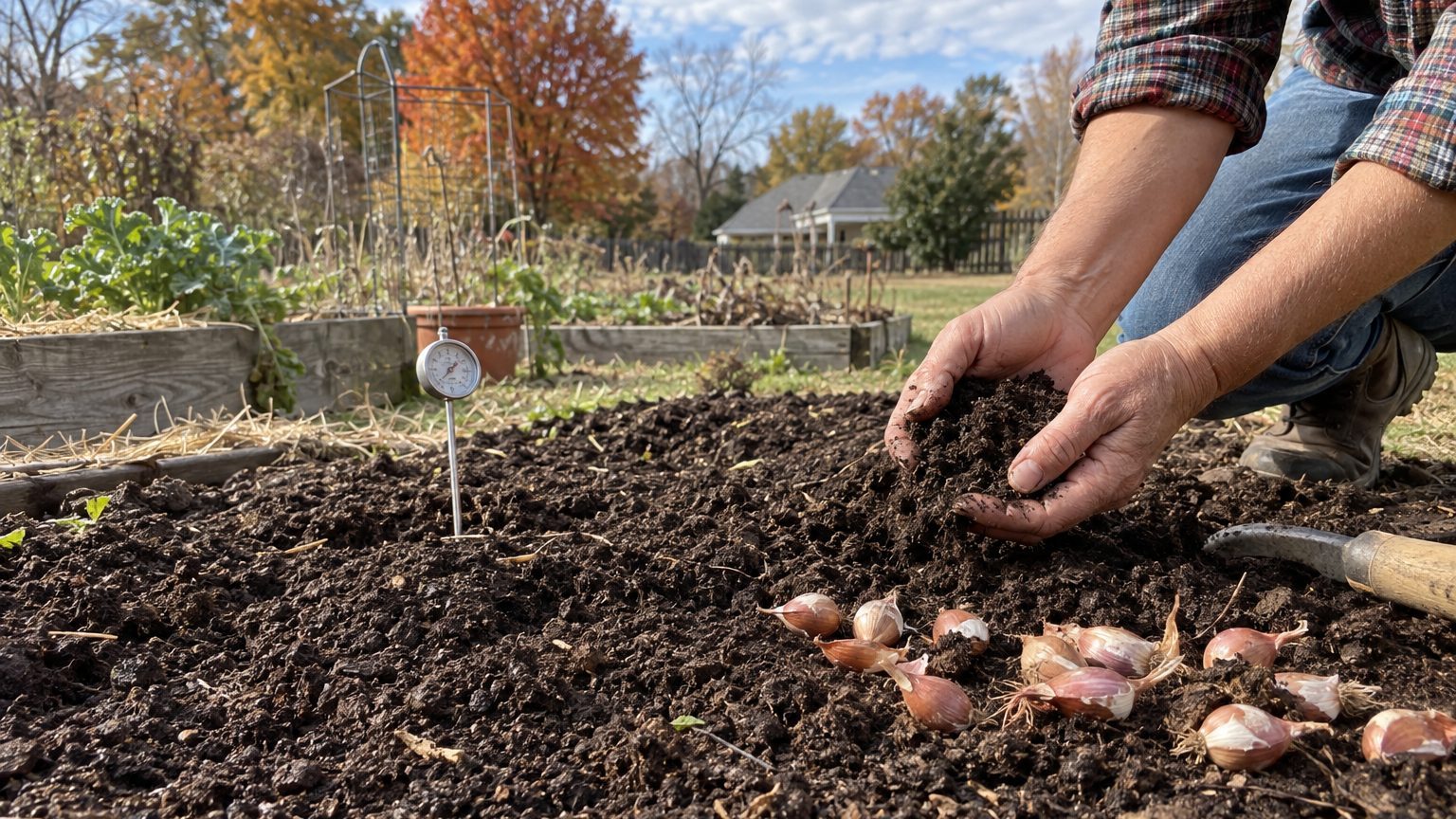

Plant shallots in New Jersey as soon as the ground can be worked in spring, which means the end of March at the earliest, or in late autumn for earlier, larger bulbs the following summer. Autumn works where winter soil drains and stays put. Spring is safer where it doesn’t.
When the soil is warm enough in New Jersey
The Newark reference station puts the last spring frost between March 29 and April 6, based on NOAA NCEI U.S. Climate Normals for 1991-2020 (the 30-70% band of 32 F freeze probabilities). That is an airport station in the urban north, and the dates are a chance, so a hard freeze after April 6 can still happen. Gardens in the suburbs and the countryside usually see the last frost one to two weeks later, and more than that in the northwestern hills. Check the date for your own county before you mark a calendar.
Frost is a stand-in for what the crop actually responds to, which is the condition of the soil. Soil warms and dries after the frost risk fades, and it lags behind the air. Shallot sets pushed into cold, saturated ground sit there and rot before they root. A simple test works better than a date: squeeze a handful of soil from planting depth. If it crumbles when you poke it, plant. If it holds a slick, muddy ball, wait a few days. Soil that crumbles in your hand is the signal, whatever the calendar says.
Shallots are tougher than that sounds. Established plants shrug off a light spring frost, and the green tops can take a nip. What they dislike is wet feet during the first weeks. So spring planting in New Jersey runs from late March through April, starting early in sandy, well-drained beds and later in heavy clay that stays soggy.
What type of shallot goes in the ground?
Most home gardeners plant sets, which are small bulbs that each grow into a cluster of new ones. Set the bulb with its tip at or just below the soil surface, spaced a few inches apart so air moves between plants. Seed-grown types are the other route, started indoors and moved out as transplants, and they suit gardeners who want to skip the cost of buying sets each year. Which named varieties have been trialled for New Jersey conditions is a question for the state extension service.
Autumn planting follows the same logic as garlic, and the garlic section of this site covers depth, mulch and timing in detail. Shallots differ in two ways. The bulbs are smaller and shallower, so they have less margin if frost heaves them up. They also tend to be eaten fresh or stored in smaller quantities, so a modest bed is plenty. Rotate them like any allium: keep them off ground that held onions, garlic or leeks in recent seasons, since the diseases they share build up in the soil.
How long the season lasts here
The reference station has about 220 to 224 days between the mean last spring frost (March 29 to April 6) and the mean first fall frost (November 4 to November 16). Treat that as the ceiling. A garden in the Skylands or the Pine Barrens may lose a week or two at each end.
That is a long window, and it changes what you can do with shallots. A short season makes the first planting the only one. Here you can plant sets in early spring, plant another batch a few weeks later, and still have room for a fall planting. Staggered spring plantings give a steady supply of green shallots for the kitchen. Later plantings make smaller bulbs, because the plants have less time before summer heat. For bulbs you plan to store, the earliest planting is the one that counts. The succession sowing guide on this site walks through spacing the batches.
The long window also makes transplanting from seed worth the effort. Seed started indoors in late winter has time to size up before the season turns hot. The step people skip is the root check. Before setting a seedling out, slide it from its cell and look at the roots. White roots reaching the edge of the soil are ready. A tight mat of circling roots needs loosening by hand, and a root ball that falls apart needs another week in the cell.
Compare that with a much shorter season. In the Canadian prairies, for instance, growing shallots in Alberta leaves little room for a second planting or for slow seedlings, so growers there lean on sets and the earliest types. Closer to home, growing shallots in New York sits between the two, with a shorter window than most of New Jersey, especially upstate. For the general method that applies everywhere, the main guide Growing Shallots: One Bulb In, a Handful Out covers the multiplication habit and basic care.
Heat and water in New Jersey
Summers are hot and humid across most of the state, and the heat arrives right as shallots finish growing. Rain often comes in short, heavy thunderstorms followed by dry spells. Shallots have shallow roots, so they feel both extremes. Hot, wet weather is when fungal leaf disease and bulb rot take hold, and it is also when the bulbs ripen and the tops fall over. Your job is to give them airflow, water at the root, and a bed that drains.
Winter decides the autumn-or-spring question. At Newark, the coldest month has a mean daily minimum of 25.5 F, and the USDA Plant Hardiness Zone Map (2023 edition) places the state in zones 6a to 7b. Shallots are hardy enough that cold alone seldom kills a dormant bulb. The trouble comes from the ground freezing and thawing and staying wet. Where heavy clay holds water, as in parts of the north, autumn-planted sets can rot or heave out of the soil. The sandy, free-draining soils of the Coastal Plain and the milder winters near the shore are kinder to fall planting.
| Choice | Window | Main risk | Where it fits best |
|---|---|---|---|
| Autumn planting | Late autumn, a few weeks before the ground freezes hard | Rot or heaving in wet, freezing clay | Sandy, well-drained beds and milder winters near the coast and in the south |
| Spring planting | Late March through April, once soil crumbles | Smaller bulbs if summer heat arrives early | Heavy clay, low spots and colder inland or northern gardens |
If you try autumn planting in a doubtful bed, build it up. A raised bed or a ridge of soil lets water run off, and a loose layer of straw laid after the ground freezes keeps temperature swings smaller. Pull the straw back in spring so the shoots do not sit under a damp mat.
Humidity also governs how you finish the crop. Harvest when the tops have mostly yellowed and fallen, then cure the bulbs in a shaded, airy spot out of the rain until the necks are dry and the skins rustle. Humid weather slows that drying. Before storing, inspect every bulb: press the neck and look at the base. A soft neck or a moldy base ends the question, and that bulb goes in the trash, not the pantry. A firm, clean-looking bulb is not proof of soundness, so keep checking stored bulbs and pull any that soften. The same curing and storage cautions are covered in the garlic pages of this site.
Which shallots suit New Jersey
Choose by type first. A long season frees you to pick for flavor and bulb size, but humidity makes disease resistance the first thing to look for in a type. Ask any seller whether a type holds up in wet, warm summers, and favor ones with a record of staying healthy rather than ones sold on looks.
Next, think about timing. Early-maturing types finish before the worst of the summer heat and are easier to cure in drier weather. That matters if your garden is shaded or if your summers run damp. Since the heat arrives while the bulbs are sizing up, look for plants with sturdy upright tops that give the neck room to dry. Space plants wider than you think you need, and add a thin mulch to keep the root zone cooler and to stop soil splashing onto the leaves.
A cultivar that thrives in one garden may sulk in another a county away, and the only recommendation that means anything is one tested in the soil and weather where you live. The Rutgers New Jersey Agricultural Experiment Station and the county extension offices tied to it can tell you what has been trialled in your region, which diseases are active this year, and which suppliers carry clean planting stock.
One more point favors buying locally adapted stock. Sets sold for planting should be firm and dry, without soft spots or mold. Do not plant bulbs bought for the kitchen, which may be treated to stop sprouting or may carry disease. For a first year, buy a small amount of two or three types, record what does well, and save your own best bulbs for replanting only if they stayed healthy all season.
Common questions
Can I plant shallots in the fall in New Jersey?
Yes, where the bed drains well. Sandy soils and milder spots near the coast suit it. In heavy clay that stays wet through winter, spring planting is the safer call, since sets can rot or heave out of the ground.
Do I have to wait for the last frost to plant shallots?
No. Established shallots tolerate a light frost, and the real test is soil that crumbles in your hand. At Newark the last spring frost falls between March 29 and April 6, and gardens outside the city usually see it one to two weeks later.
Where can I find varieties that grow well in New Jersey?
Ask the Rutgers New Jersey Agricultural Experiment Station or your county extension office. They know what has been trialled locally and which diseases are active.
How can I tell if cured shallots are safe to store?
Check the neck and the base of every bulb. A soft neck or a moldy base means the bulb should go. Firm bulbs still need regular checks in storage, because a good appearance does not guarantee a sound bulb.