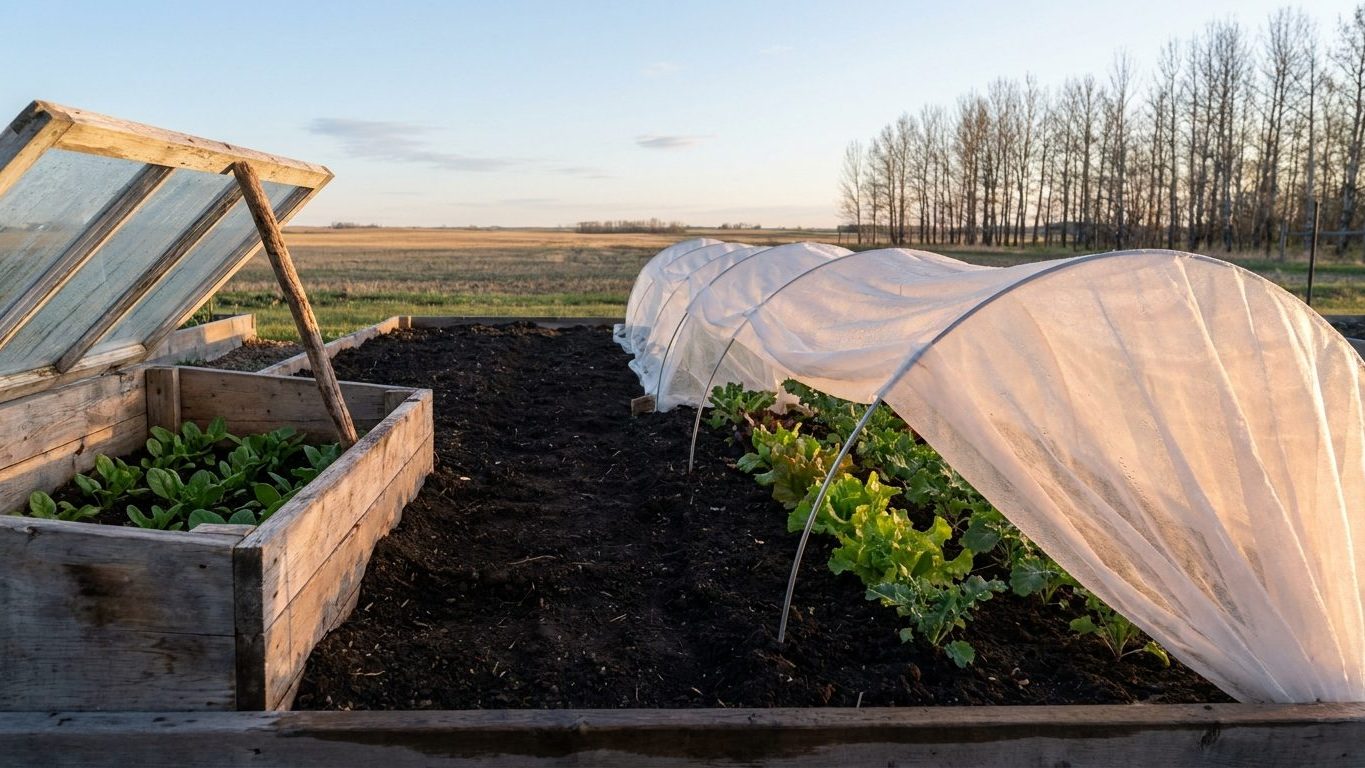

Floating row cover, low tunnels over hoops, and a cold frame handle most season-extension jobs in a North Carolina vegetable garden. They move spring planting a couple of weeks earlier, carry hardy greens through winter, and protect fall crops past the first frost. Shade cloth does the opposite job in July. Which tool pays off depends on whether you garden in the Piedmont, the mountains, or the coastal plain.
The short answer for North Carolina
Start with row cover and hoops, then add a cold frame if you grow winter greens. Those three cover frost protection at both ends of the year and cost little compared with a greenhouse. Shade cloth is the fourth tool, and it matters here more than in cooler states because summers are hot and humid.
The numbers come from Charlotte, which sits in the Piedmont. NOAA’s 1991-2020 climate normals put the last spring frost between March 23 and April 5, and the first fall frost between October 30 and November 8. Those windows mark where the odds of a 32°F freeze run between 30 and 70 percent. A freeze can still arrive after the later date in some years, and that gap is exactly what a cover is for.
The coldest month at that station has a mean daily minimum of 31.8°F. Winter nights hover right around freezing instead of plunging far below it. A layer of fabric that holds a few degrees of warmth is often enough to keep spinach, kale, lettuce and carrots alive and growing slowly through January. Cold-sensitive crops are a different story, and they need the covers mainly in the shoulder weeks.
Charlotte sits at 35.22 degrees north. Day length, which shortens fast after October, slows growth no matter how well a tunnel traps heat. A cover holds a fall crop in place. It does not make it grow the way September sun does.
| Extender | Best job in North Carolina | Main thing to watch |
|---|---|---|
| Floating row cover | Frost nights in spring and fall, plus an insect barrier | Anchor the edges against wind; lift it when fruiting crops flower |
| Low tunnel on hoops | Winter greens, early spring transplants | Vent on sunny days |
| Cold frame | Hardening off seedlings, winter lettuce and spinach | Prop the lid open on mild afternoons |
| Shade cloth | Spring greens into early summer, late-summer seedlings for fall | Take it off once nights cool |
| Individual plant protectors | Single tomato or pepper transplants set out early | Check for heat buildup by midday |
What will not work here
Sealed plastic with no venting is the first thing to fail. A sunny February afternoon can push the air under a closed tunnel far above what the plants tolerate, and a warm, humid spring keeps that air damp. Leaf diseases love both conditions. Tunnels in this climate need to be opened in the morning and closed again before dusk, which means they suit someone who is home most days.
Planting warm-season crops weeks ahead of the March 23 to April 5 window and trusting one layer of cover is the second mistake. Tomatoes and peppers in cold soil sit and stall even when the air stays above freezing. Cover only protects them on the nights that dip, and the soil stays cold for longer than the air does. Gaining a week or two works. Gaining six weeks does not.
Trying to ripen summer crops after the first fall frost window of October 30 to November 8 is the third. By then the days are short and the nights are long. A cover can keep a pepper plant from dying on a 30°F night, but fruit that has not set by mid-October will not finish just because the plant is still green. Use covers to protect crops that are already nearly done, or to hold hardy greens.
Stretching spring lettuce into summer with shade cloth also falls short. Lettuce planted in March will bolt in the heat of a Southern June regardless of cover, because summer nights stay warm and the plant reads that as a signal to flower. Shade cloth buys a couple of weeks at best. A better plan is to sow the next round in late summer under shade cloth and let the cooler fall do the work.
Finally, leaving covers in storage and waiting for a forecast scare rarely works. Because the coldest month averages just below freezing, a mild winter can swing from 60°F to a hard freeze within days. Hoops and fabric that are already in place can be pulled over in two minutes. Hoops that need to be found, cut and bent at dusk usually do not get used.
What changes across North Carolina
The USDA Plant Hardiness Zone Map (2023 edition, built on 1991-2020 normals) places North Carolina in zones 5b through 8b. That spread is wide, and it is based only on the average annual extreme minimum temperature. No single answer fits the state, and the Charlotte dates above are a Piedmont reference, not a statewide rule.
How should mountain gardeners shift these dates?
West of Charlotte, the Blue Ridge runs several weeks later in spring. A mountain gardener who plants on the Piedmont schedule will lose transplants to a late freeze. Row cover and low tunnels do more work here, a cold frame earns its keep for starting seedlings, and warm-season crops often need a plastic-covered start or a longer wait. Fall dates shift too, so check your own local frost dates before relying on Charlotte’s window.
What about the coastal plain?
Toward the coast, spring arrives earlier than in the Piedmont. Frost covers matter less in March, and hot summers become the bigger problem, so shade cloth and well-timed fall sowing carry more weight than winter tunnels. Winter greens often grow with only a light cover on the coldest nights.
Latitude also shifts. Charlotte’s 35.22 degrees north belongs to that city, and the state spans several degrees of latitude and a large range in elevation. A gardener near the northern border, the coast, or the western edge should look up their own latitude and elevation before trusting any of these dates. To find the zone for a specific address, use the USDA Plant Hardiness Zone Map and enter the ZIP code there. For the broader picture of how covers fit into the year, Extending the Growing Season in North Carolina goes through the full calendar.
Where to check this for your own county
Your county office of North Carolina State Extension is the best next stop. Look for the local planting calendar for vegetables, which lists spring and fall dates for your part of the state. Look also for the varieties trialled in your county, since a tomato that ripens well in the Piedmont can sulk in the mountains or crack in coastal humidity.
Ask the county staff or Extension Master Gardener volunteers three things: when the last spring freeze usually falls in your area, which cool-season crops people overwinter successfully, and which covers hold up in local wind and rain. Those answers come from people who have watched the same soil for years.
A county recommendation beats a state one every time. What you are reading is the state-level picture, built from one Piedmont reference city, and it can be off by weeks for someone in the mountains or near the coast. Treat it as a starting point and let the county calendar overrule it where they disagree. For timing a cover on a particular night, When to Cover Your Garden in North Carolina covers the forecast side.
Checking this against your own garden
Your own observations outrank every date above. Three things are worth watching, and none needs equipment.
- Soil warmth by feel. Push your hand a few inches into the bed in the morning. If it feels cold enough to make your fingers ache, tomato and pepper roots will stall. Beds against a south wall warm sooner than beds in the open, and low, shaded corners stay cold longest.
- The first flush of male flowers. On squash and cucumbers, the male blooms open before the females. When they appear under a tunnel earlier than on uncovered plants, the cover is working, and the gap tells you how much your site gains.
- The first true leaves. Seedlings show their rounded seed leaves first, then the leaves that look like the adult plant. Once true leaves are out and growing, the plant can take cool nights with less protection. If they are slow to come, the spot is colder than you think.
Frost often settles in the lowest part of a yard first, so a patch where morning frost lingers longest is a spot to cover earlier in fall and later in spring. Keep a few notes from one year to the next, and your own dates will soon be more reliable than any published ones.
Common questions
What is the cheapest season extender for a North Carolina garden?
Floating row cover is the lowest-cost place to start. A single roll and a handful of hoops or stakes protect transplants on frost nights and shield greens in winter. Plastic milk jugs with the bottoms cut off can shelter individual transplants for even less, as long as you take them off on warm days.
Can I grow vegetables all winter in the Piedmont?
Hardy ones, yes. At Charlotte, the coldest month has a mean daily minimum of 31.8°F, so spinach, kale, lettuce, carrots and similar crops can stay alive under a light cover. Growth slows in winter because days are short, so plan to harvest slowly rather than expect fast regrowth.
When do I need to cover plants in fall?
Have covers ready before the first fall frost window of October 30 to November 8 at the Charlotte reference station. That window is where the chance of a 32°F freeze sits between 30 and 70 percent. Mountain gardeners should check their local calendar, since their dates differ.
Does shade cloth really help in North Carolina?
It helps in two cases: stretching spring greens a little into early summer, and cooling late-summer seedlings for fall crops. It will not rescue a lettuce bed through a hot, humid July. Use it to get fall seedlings started, then remove it once nights cool.