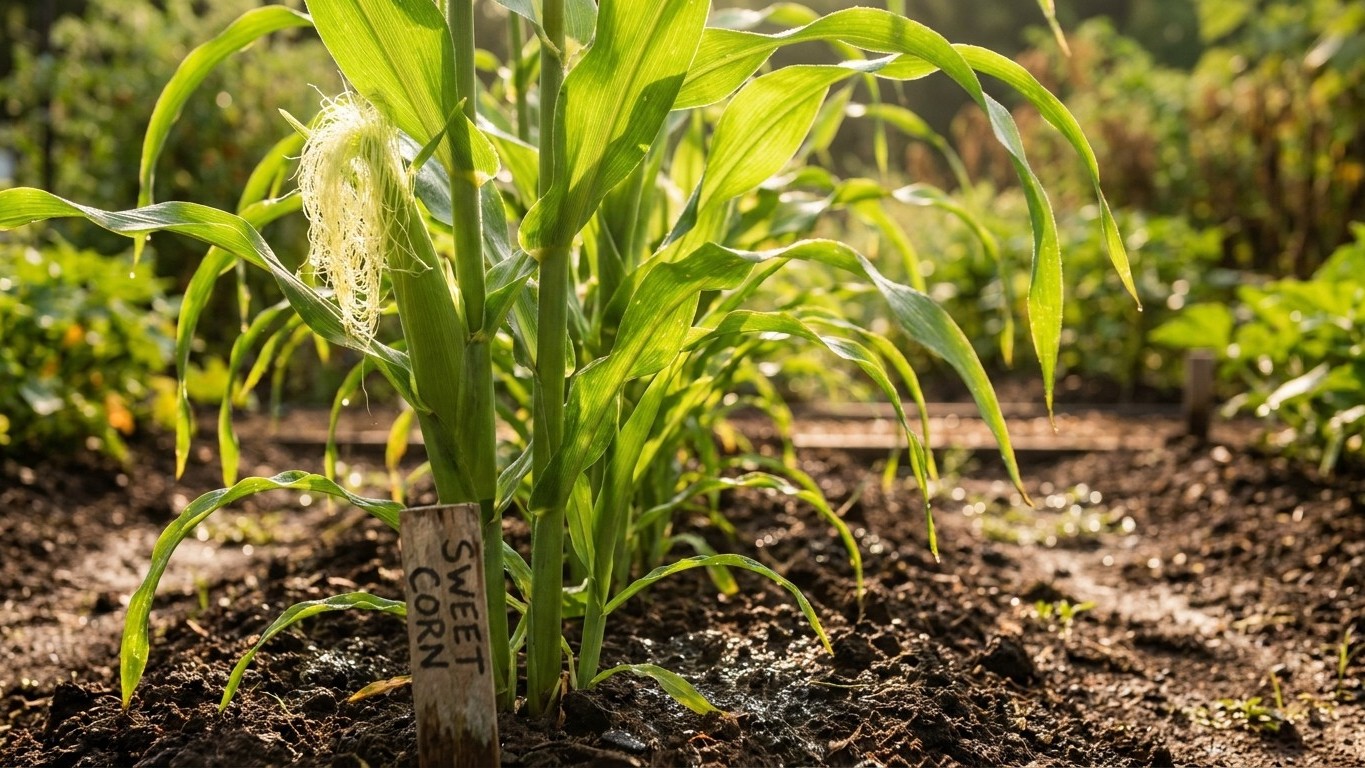

Yes, sweet corn ripens reliably in Ontario, but not on the same calendar most gardeners assume. The corn clock doesn’t start at the last frost. It starts when the soil itself warms past 60°F, which happens weeks after that frost date, and the 60 to 90 days a variety needs must still fit before autumn’s first cold snap.
The short answer
Start with the frost date everyone quotes: April 30, on average, at the Toronto Pearson reference station. That’s the mean date from Environment and Climate Change Canada’s 1981-2010 climate normals, and it’s a midpoint, not a guarantee. In one year out of two, frost actually arrives later than April 30. Treat it as the center of a range, not a line you can plant against.
But the frost date isn’t the number that matters for corn. Sweet corn germinates and grows only once the soil itself climbs above 60°F, and soil warms on its own schedule, lagging well behind the air. That gap between “frost is over” and “soil is finally warm enough” is exactly where a lot of Ontario gardeners lose a few weeks without realizing it. The soil doesn’t care what the calendar says the frost date was. It warms when the sun has had enough consecutive days to push heat down past the surface, and in most seasons here that happens sometime well into May, not right after the frost clears.
Once the soil crosses that 60°F threshold, the real countdown begins: 60 to 90 days from planting to harvest, depending on variety. On the other end of the season sits the first fall frost, averaging October 16 at the same reference station, again a mean date with the same caveat, in one year out of two it comes later, but in the other half it can arrive earlier too.
Do the arithmetic and the window is generous. From late April to mid-October is roughly 169 days on paper. Even after losing several weeks waiting for soil to warm, gardeners are typically left with something like 140 to 150 usable days before the average first frost. A 60-day variety fits with room to spare. A 90-day variety fits too, provided it goes into the ground promptly once the soil is actually warm rather than the moment the calendar suggests it should be.
One more number reinforces why this works here: an average of 0.0 days per year reach 90°F or hotter at the Toronto reference station. Sweet corn doesn’t need blistering heat, it needs steady warmth, and this climate delivers a long, mild growing stretch rather than short bursts of extreme heat. That’s good news for corn, which can actually stall or stress in prolonged heat waves. Ontario’s growing season plays to corn’s preference for consistent, moderate warmth over raw intensity.
Does a late variety fit here?
The 60-to-90-day range from Utah State University Extension covers a wide spread of varieties, and where a given corn falls in that range determines how much margin a gardener actually has. Here’s how the two ends of that range play out against Ontario’s average dates.
A 60-day variety
A fast-maturing, roughly 60-day variety is the low-risk choice in this climate. Once soil crosses 60°F, typically sometime in May, planting a 60-day corn means it could be ready for harvest by midsummer, long before the October 16 average first frost even enters the conversation. This is the variety that gives the most cushion against a late soil warm-up, a cool stretch mid-season, or a first frost that arrives earlier than average. If soil warming runs later than usual in a given year, a 60-day variety still has enough runway to finish.
A 90-day variety
A 90-day variety asks more of the season, but it still fits. Even with a delayed start while soil climbs to 60°F, planting by early-to-mid June leaves roughly 90 to 120 days before the average October 16 frost, enough for the crop to mature and be harvested with some buffer left over. The risk isn’t that the variety is too late for Ontario in general, it’s that a gardener who plants a 90-day corn too early, before the soil has genuinely warmed, gains nothing: cold soil just stalls germination rather than starting the clock sooner. The other risk sits at the far edge of the range, in a year when the first fall frost arrives well ahead of its October 16 average, a late-planted 90-day corn has less cushion than a 60-day one would.
| Variety type | Days to maturity | Margin before Oct 16 avg. frost | Risk level in Ontario |
|---|---|---|---|
| 60-day | 60 days | Large | Low |
| 90-day | 90 days | Moderate | Moderate, depends on planting date |
Both fit Ontario’s average season. The 90-day variety just leaves less room for error if soil warming runs late or frost runs early, which happens in roughly half of all years given how these dates are calculated.
What goes wrong here
- Soil sown too cold. Planting right after the April 30 average frost date, assuming that’s the green light, is the most common mistake. Corn seed sitting in soil below 60°F simply doesn’t germinate well, it can rot before it sprouts. The remedy is patience: wait for the soil itself to warm, not the calendar, and check soil temperature directly rather than counting days since frost.
- A variety too late for the season. A 90-day corn planted late, say after soil finally warms in a cool, delayed spring, can run out of season if that year’s first frost arrives ahead of the October 16 average. The fix is matching variety choice to planting date: if the soil warm-up runs late, switch to a 60-day variety rather than forcing a 90-day one into a shortened window.
- Sweetness lost because two types tasseled together. This one has nothing to do with weather. Sweet corn comes in different sweetness types (su, se, sh2), and if two different types tassel at the same time nearby, cross-pollination degrades the sweetness of the harvest, turning what should be a sweet crop starchy and disappointing. The remedy is timing, not distance: stagger planting dates so the varieties don’t tassel simultaneously, or plant only one sweetness type per season. Corn should also go in as blocks of three or more rows rather than a single thin row, which improves pollination within the variety itself.
Common questions
Is April 30 a safe date to plant sweet corn in Ontario?
No. That’s the average last frost date at the Toronto reference station, and in one year out of two frost actually falls later. Planting on that date also ignores the separate requirement that soil itself must be above 60°F, which usually happens later still.
How do I know when the soil has actually reached 60°F?
The only reliable way is to check soil temperature directly rather than counting days from the frost date. The frost date and the soil-warming date are two different clocks, and conflating them is one of the most common planting mistakes in this climate.
Can I grow both a 60-day and a 90-day variety in the same garden?
Yes, but plan the tasseling timing carefully. If both varieties tassel at the same time, cross-pollination can degrade sweetness in both. Stagger planting or choose varieties whose maturity dates keep their tasseling periods apart.
Does Ontario’s mild summer heat help or hurt sweet corn?
It helps. With an average of 0.0 days per year reaching 90°F or above at the reference station, corn here rarely faces the heat stress that can stall pollination and ear development in hotter regions. The tradeoff is that the season depends more on a long, steady stretch of moderate warmth than on a short burst of intense heat.