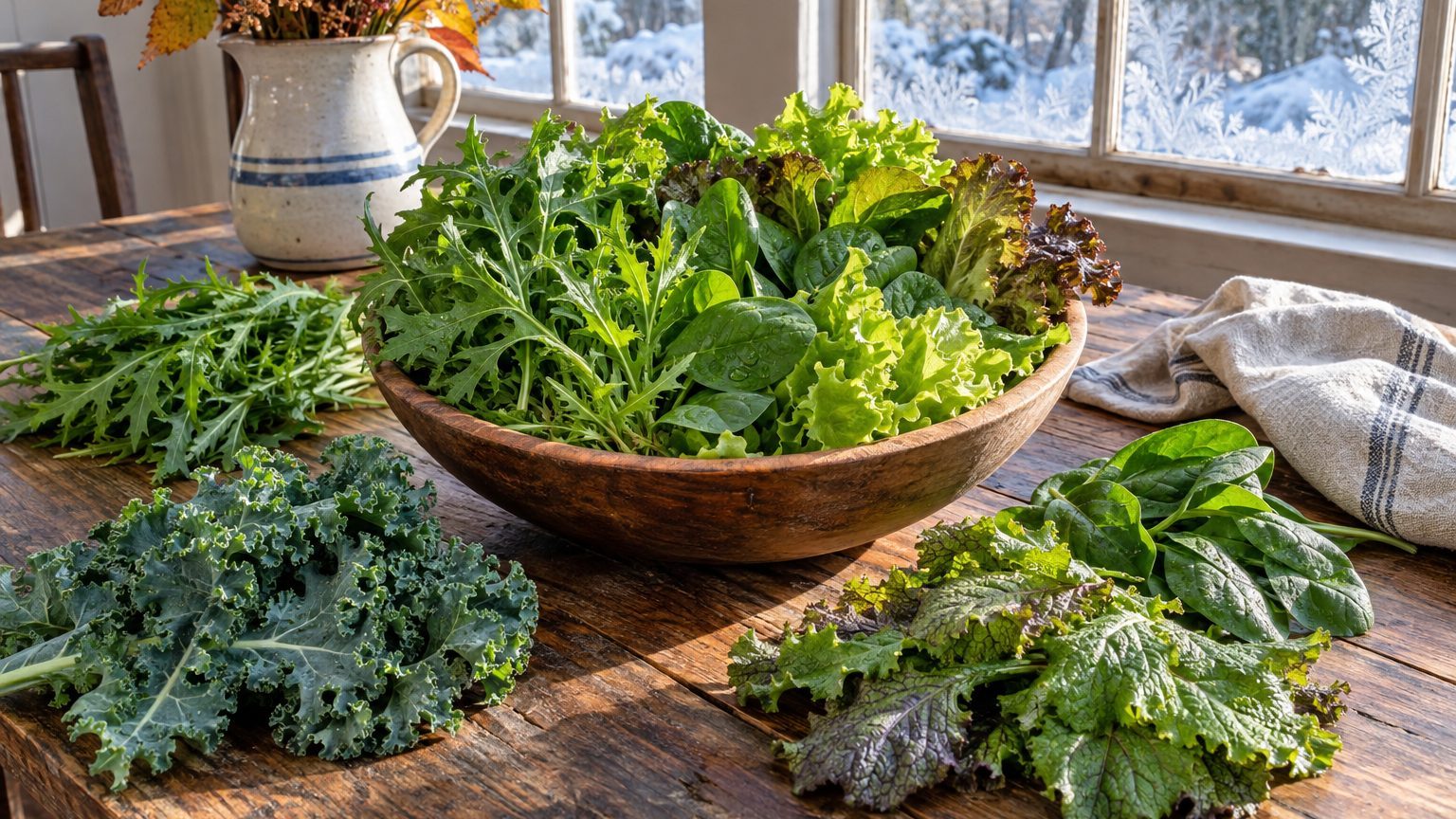

The best winter salads for Ontario are the cold-hardy leaf crops: mâche, spinach, claytonia, hardy kale and, for a faster fall harvest, mizuna, tatsoi and arugula. Cold-tolerant lettuce works too if it gets a cover. Heading chicories and big-headed lettuce are the poor bets. A growing season that closes in mid-October and a January cold that turns tender leaves to mush drive those choices.
The short answer for Ontario
Ontario gardeners get the best winter salads from mâche, spinach and claytonia for the cold months, with mizuna, tatsoi, arugula and baby kale as the quick fall crops. Cold-tolerant lettuce fills in under a cover, and slow chicories are worth a try only when sown early.
How long is the growing season in Ontario?
The Toronto Pearson reference station has a mean last spring frost on April 30 and a mean first fall frost on October 16, but these are midpoints of a window, not safe dates. Both are averages from Environment and Climate Change Canada’s 1981-2010 normals. In one year out of two, the last spring frost falls later than April 30. In one year out of two, the first fall frost arrives earlier than October 16. Treat each date as the middle of a window, never a safe date.
Winter cold matters as much. The mean daily minimum of the coldest month is -10.2 °C (13.6 °F, for readers comparing with US gardens). That is an average night, and the worst nights run well below it. Anything planted for winter has to take that without a cover, or be protected enough to ride it out.
Which winter salad types suit Ontario’s season?
Sort the crops by two traits: how well they take hard cold, and how fast they reach harvest size. The first decides what survives January. The second decides whether it is big enough before growth slows in late fall.
| Type | Cold tolerance | Speed from sowing | Best role in Ontario |
|---|---|---|---|
| Mâche (corn salad) | Very high | Slow | Core winter crop, sown late summer |
| Claytonia (miner’s lettuce) | Very high | Moderate | Dependable under a cover all winter |
| Spinach | High | Moderate | Overwintering crop for early spring picking |
| Kale (baby leaf) | High | Moderate | Sturdy leaves that stay usable through frost |
| Mizuna, tatsoi, arugula | Moderate | Fast | Fall harvest, winter only with a tunnel |
| Cold-tolerant lettuce | Moderate | Moderate | Cold frame or low tunnel crop |
| Radicchio, escarole, heading endive | Moderate | Slow | Early sowings only, harvested before deep cold |
Exact sowing dates depend on the year, so use When to Sow Winter Salads in Ontario to pin them down. For the broader picture of how these crops fit a home garden, see Winter Salads for Ontario Gardens.
What will not work here

The slowest winter salads fail first. Radicchio, heading endive and large-headed lettuce need a long run of mild weather to size up. With the mean first frost on October 16, and a coin-flip chance it arrives earlier, a late-summer sowing of those crops has little margin. Plants that are still small when the days shorten stop growing and just hold their size through winter.
Why do late fall sowings fail in Ontario?
Sowing in October for a December salad is the most common mistake. Seed germinates in the cooling soil, but the seedlings never put on leaf, because growth in deep fall depends on light and warmth that the season no longer supplies. Winter harvests in Ontario come from plants that were nearly full size by the first hard frosts, then paused. The quick crops (mizuna, tatsoi, arugula) can go in later than the slow ones, but a late sowing still has to reach picking size before the light fades.
The spring side has its own trap. An April 30 mean last frost means half of all years see frost after that date. Tender transplants set out on the average date will be hit in many springs. Hardy greens shrug off a light frost, so the lesson applies to lettuce seedlings that were hardened off too gently and to anything warm-season tucked into the same bed.
Can salad greens survive Ontario winters in an open bed?
Some can. With a coldest-month mean minimum of -10.2 °C, bare-ground mâche, spinach, claytonia and kale generally come through, though leaves get battered and growth stops. Tender lettuce, arugula and the Asian greens are another matter. A run of nights below that average will flatten them. A cold frame or low tunnel, with fabric or plastic over hoops, lifts the odds a great deal.
Covers bring their own problems. A thick snow load will crush a flimsy hoop tunnel, which matters in the snowbelt districts east of Lake Huron and Georgian Bay. On mild, damp days condensation builds under plastic, and tight spacing invites gray mold and rot. Open the ends or lift the lid on those days, and thin seedlings to a few inches apart so air can move.
What changes across Ontario
Ontario is not one garden, and no single recommendation fits it. The reference city, Toronto, sits in Canadian plant hardiness zone 7a, according to Natural Resources Canada’s plant hardiness site (1991-2020 normals). That is the zone of the reference city, not of the province. Farther north and at higher elevations, winters are far colder and the season is weeks shorter. The Canadian system uses seven climate variables, so it does not convert to a USDA zone, and US readers near the border should not read it as one.
The frost dates also come from one airport station, with normals from 1981-2010. Northern and upland districts run weeks behind them, with a later last spring frost and an earlier first fall frost. Lakeshore sites often run milder, because the big lakes hold heat into fall and delay the first frost.
For a gardener in the north or on higher ground, the adjustments are straightforward:
- Sow earlier in late summer, so plants reach size before growth slows.
- Lean on the hardiest types: mâche, claytonia, spinach and kale.
- Plan on a cover, and treat midwinter as a pause in picking rather than a steady harvest.
- Skip the slow chicories unless a tunnel is guaranteed.
To find the zone for your own town, use the NRCan map by municipality. It gives a firmer starting point than any province-wide rule, and you can adjust sowing dates from it.
Where to check this for your own county
For local advice, start with Ontario’s agriculture and food website, the provincial government’s farm and food service. Look there for two things: a planting calendar for your region, and any trial results showing which varieties performed in your area. A variety that does well near Lake Erie may sulk in a colder inland district, and trial notes show that.
A county or regional recommendation beats a provincial one, and everything above is the provincial view. Frost dates can differ by weeks across a few dozen miles, and local advisers know how nearby soils drain, where frost pockets form and which seed sources suit the area. If the local calendar contradicts a date above, follow the local one.
Bring specifics when you check: your nearest town, the type of cover you plan to use, and the crops you want. A cold-frame grower and an open-bed grower can get different answers for the same street.
Checking this against your own garden
Your own observations outrank every date above. Three are worth watching, and none needs equipment.
Soil warmth by feel. In late summer, press your palm flat on the bed. If it still feels warm, seed will sprout quickly, and a sowing for winter can go in. Beds that cool early, such as shaded or low-lying ones, will be slower in fall and should be sown sooner. A bed that stays warm longer is your best site for the slow crops.
The first frost on the ground. Note where frost shows up first on grass, car roofs and railings, and where it lingers. A corner that frosts weeks before the rest of the yard is a cold pocket, so keep tender greens out of it and put the hardiest crops there. A spot next to a south-facing wall that stays clear of frost can hold the most delicate varieties.
The first true leaves. Seedlings first show a pair of seed leaves, then true leaves with the plant’s real shape. Watch how fast new leaves appear as fall turns cold. When they slow to a crawl, your plants have entered their winter pause. Keep a note of that date each year, and you will know how early you need to sow. For help with timing, see When to Sow Winter Salads in Ontario.
Common questions
What is the easiest winter salad green to grow in Ontario?
Spinach is the easiest for most beginners. It germinates reliably in cool soil, tolerates hard frost and overwinters for an early spring picking. Mâche and claytonia are tougher still, but mâche is slow from sowing and the seed can be harder to find.
Do I need a cold frame to grow winter salads in Ontario?
Not for the hardiest types. Mâche, spinach, claytonia and kale usually survive in open beds, though the harvest is thinner. Lettuce, arugula, mizuna and tatsoi need a cold frame or low tunnel to give usable leaves in the coldest months.
Can I harvest salad greens all winter in Ontario?
Under a cover, you can pick small amounts through much of winter, but growth nearly stops in the darkest weeks. Plants grown to size in fall act as a stored crop. Picking resumes in earnest as days lengthen in late winter.
How early can I sow winter salads in Ontario?
Sow slow crops such as mâche and chicories first, in late summer, and quick ones like mizuna and arugula a bit later. The last spring frost averages April 30 and the first fall frost October 16, so count backward from mid-October and adjust for your area. Colder districts need to start earlier.