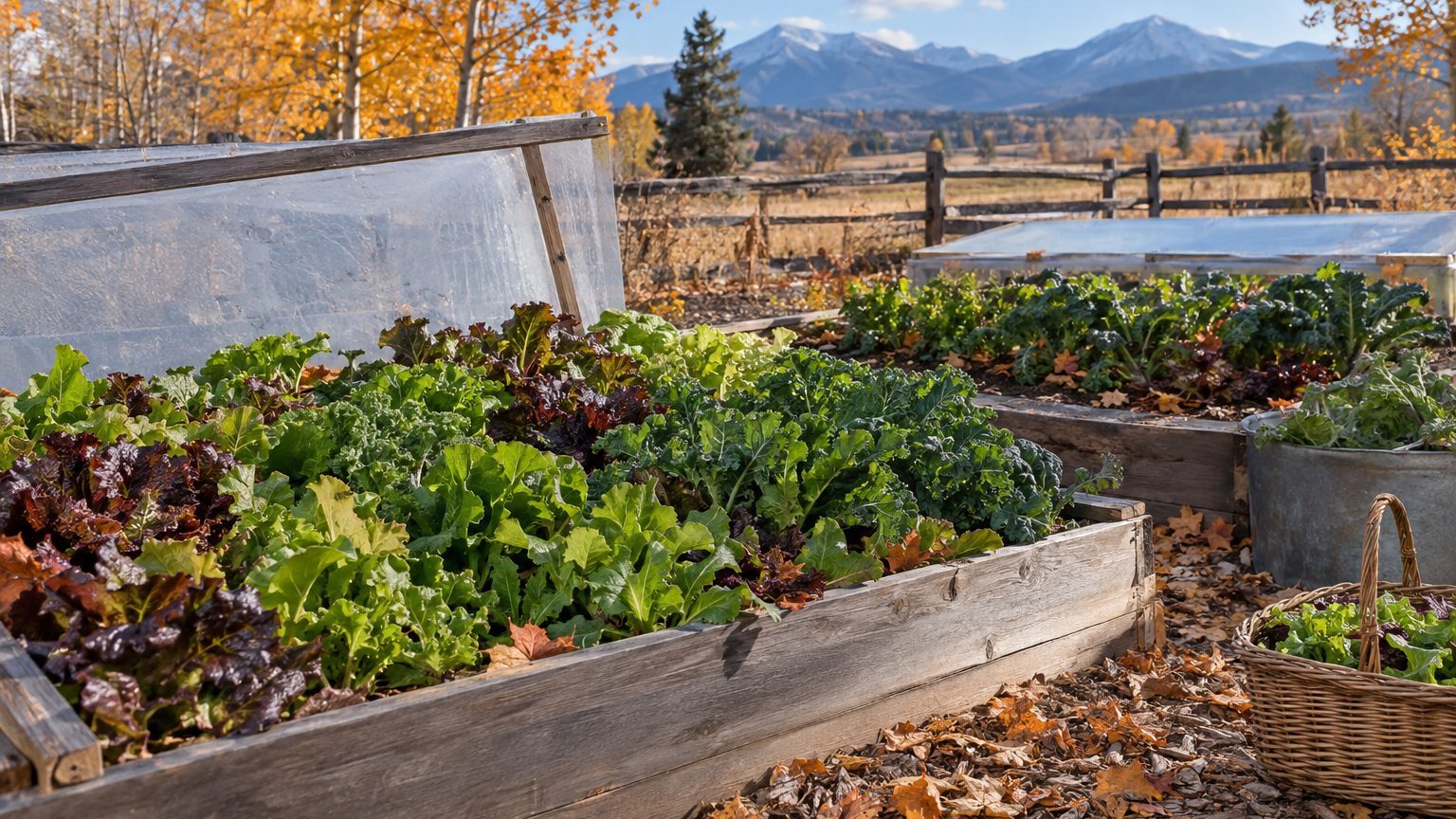

At the Portland reference station, the last spring frost falls between March 6 and March 21, and the first fall frost between November 11 and November 27. Winter salads are sown in the stretch before that fall date and carried through a cool, wet winter. Those dates describe western Oregon only. Central and eastern Oregon run on a much shorter calendar.
When the soil is warm enough in Oregon
The last spring frost at the Portland station falls between March 6 and March 21. That comes from the NOAA NCEI U.S. Climate Normals 1991-2020, which give the 30 to 70 percent probability band for a 32 F freeze. So it is a two-week band, not a single day. And like every frost date, it is a probability, not a promise.
Frost is a stand-in for the real question
A frost date tells you about air. Seeds and roots care about soil, and soil lags behind. It warms after the frost risk ends, not alongside it, which is why a bed can look ready in early March and still be cold and sodden a hand’s depth down. A soil thermometer settles the argument in about a minute. For the temperature each crop wants, use your state extension service rather than a number from a seed packet written for the whole country.
Late summer flips the problem
For winter salads, the sowing happens when the soil is warm, sometimes too warm. Cool-season seed can sulk or germinate unevenly in hot ground, so a shaded, evenly watered seedbed does more than any calendar date. Many gardeners sow in a cooler corner or in containers they can move, then set plants out as the weather eases.
The spring date still earns its place. It marks when the winter crop has to be finished and the bed cleared, and when spring sowings can follow.
One firm limit: Portland sits west of the Cascades. Central and eastern Oregon are high desert, with a far shorter season, so do not apply the March and November dates statewide. The USDA Plant Hardiness Zone Map (2023 edition, built on 1991-2020 normals) spans zones 4a to 9b across Oregon, and a spread that wide tells you the state is several gardens, not one. The varieties trialled where you live are listed by Oregon State University Extension. Everything on this page assumes beds and containers, grown from seed you bought.
How long the season lasts here
Count from the latest end of the spring band to the earliest end of the fall band, and again from the earliest spring date to the latest fall date. Both sets of dates come from the same NOAA normals for the Portland station.
| Case | Last spring frost | First fall frost | Days between |
|---|---|---|---|
| Short end | March 21 | November 11 | 235 |
| Long end | March 6 | November 27 | 266 |
So the window runs from roughly 235 to 266 days, depending on the year. That is a long window by national standards, and the question is what it allows.
First, it allows a second sowing. A bed that gave an early spring crop can be cleared and resown in late summer for fall and winter picking. Staggering sowings through late summer and early fall also spreads out the harvest, so you are not cutting the whole bed in the same week. The succession sowing guide on this site covers how to space those rounds.
Second, it makes transplanting worth the trouble. Every transplant takes a root check, a stall while the roots recover from the move. In a short season that stall can eat the whole margin, so gardeners there sow in place. With more than 230 days in hand, you can start plants in cells under cover and move them out. Starting them in a cooler spot also protects against hot-soil germination problems in late summer.
For winter salads, though, the clock that matters most is the fall end. A sowing has to reach useful size before the first frost and before the light shortens. Growth slows sharply as days shorten, and a plant that is still tiny in November will mostly sit there until spring. If you are comparing what a shorter window does to the plan, Winter Salads for Quebec Gardens and Winter Salads for Idaho Gardens show how the arithmetic changes. The general rules are in Winter Salads: What Grows When Lettuce Will Not.
Heat and water in Oregon
The verified figures for this page do not include a count of days above 90 F or a summer rainfall total, so none appear here. Quoting either from memory would be guesswork. For a station-by-station count, the same NOAA Climate Normals data is public. Remember that any such count describes one reference station, not the whole state. The coast, the Willamette Valley, the Cascades and the high desert behave very differently.
What the page can say plainly is that on the west side, the crop is decided by the cold, and by dampness, more than by heat. At the Portland reference station, the mean daily minimum of the coldest month is 36.2 F. That is an average of the nightly lows, not the record low, so plenty of individual nights run colder, and the frost dates above confirm it. It does mean the typical winter night in the Portland area sits just above freezing, which is mild for a winter crop.
That figure sorts salad types into three groups:
- Stand uncovered: the hardy leafy types, such as mâche, claytonia, spinach, kale and the chicories, which generally tolerate the cold nights of the Portland area.
- Need a cover to stay edible: tender lettuces and baby-leaf mixes, which stay in better condition under row cover, a low tunnel or a cold frame on the nights that dip below freezing.
- Cannot manage at all: heat-lovers such as basil, which stop growing and blacken once cold arrives.
The first fall frost, November 11 to November 27 in this data, sets how late a sowing can still reach a cuttable size. Light matters as much as temperature. A bed seeded late may look fine in October and then barely move through December.
The USDA zone system measures something different. It uses the average annual extreme minimum, the coldest night of the year, and Oregon’s range of 4a to 9b shows how much the state’s cold varies. A Portland gardener and a gardener on the high desert should not follow the same cover advice.
The wet winter of the west side brings its own problems: slugs, mildew and rot at the crown. Wide spacing, good airflow, watering at the soil in the morning and a bed that drains all matter more than extra warmth. In late summer, sowing into hot, dry ground means watering often enough to keep the seedbed evenly moist until the seedlings are up.
Which winter salads suit Oregon
The choice here is by type, and this page deliberately names no cultivars. A variety recommendation only means something if it was trialled in conditions like yours, and this page does not have those trials. Naming a variety from a catalog or a neighbor’s recollection would be a guess presented as advice. The only list worth trusting is the one from Oregon State University Extension, whose trials cover the regions of the state.
What the territory’s facts do support is a way of choosing:
- Short season (central and eastern Oregon): favor the earliest types, fast baby-leaf greens that reach cutting size before the first frost, and sow in place instead of transplanting.
- Hot or dry stretches: favor types that tolerate airflow and shade at the root. A mulch, a bit of afternoon shade on the seedbed and steady moisture do more than any selection.
- Damp west-side winters: make disease resistance the first criterion. Seed descriptions that mention mildew resistance and compact, open growth are worth following over those that promise the biggest leaf.
- Cold nights near or below freezing: pair tender types with a cover, and let the hardy leafy types, such as mâche, claytonia, spinach, kale and chicories, carry the unprotected beds.
A mixed planting works better than a single bet. Put two or three hardy types in the open beds and keep the tender ones under a cover you can open on mild days. Then take the extension list to your seed catalog and see which varieties of those types appear on it.
Common questions
When should I sow winter salads in western Oregon?
Work backward from the first fall frost, which falls between November 11 and November 27 at the Portland reference station. Sowings need time to reach cutting size before the light fades, so most go in late summer through early fall. For exact dates in your county, check with Oregon State University Extension.
Do the Portland frost dates apply across Oregon?
No. Portland is west of the Cascades. Central and eastern Oregon are high desert with a far shorter growing season, and the statewide USDA hardiness range of 4a to 9b shows the difference. Use the dates from the weather station closest to you.
Will winter salads survive without a cover?
It depends on the type. At the Portland reference station, the coldest month has a mean daily minimum of 36.2 F, which suits the hardy leafy types uncovered. Tender lettuces and baby-leaf mixes stay in better shape under a row cover or low tunnel. Colder parts of the state need more protection.
Which varieties should I buy?
This page names none, because the varieties trialled in your area are the only ones worth recommending. Oregon State University Extension has the local trial results, and your county office can point to what does well nearby.