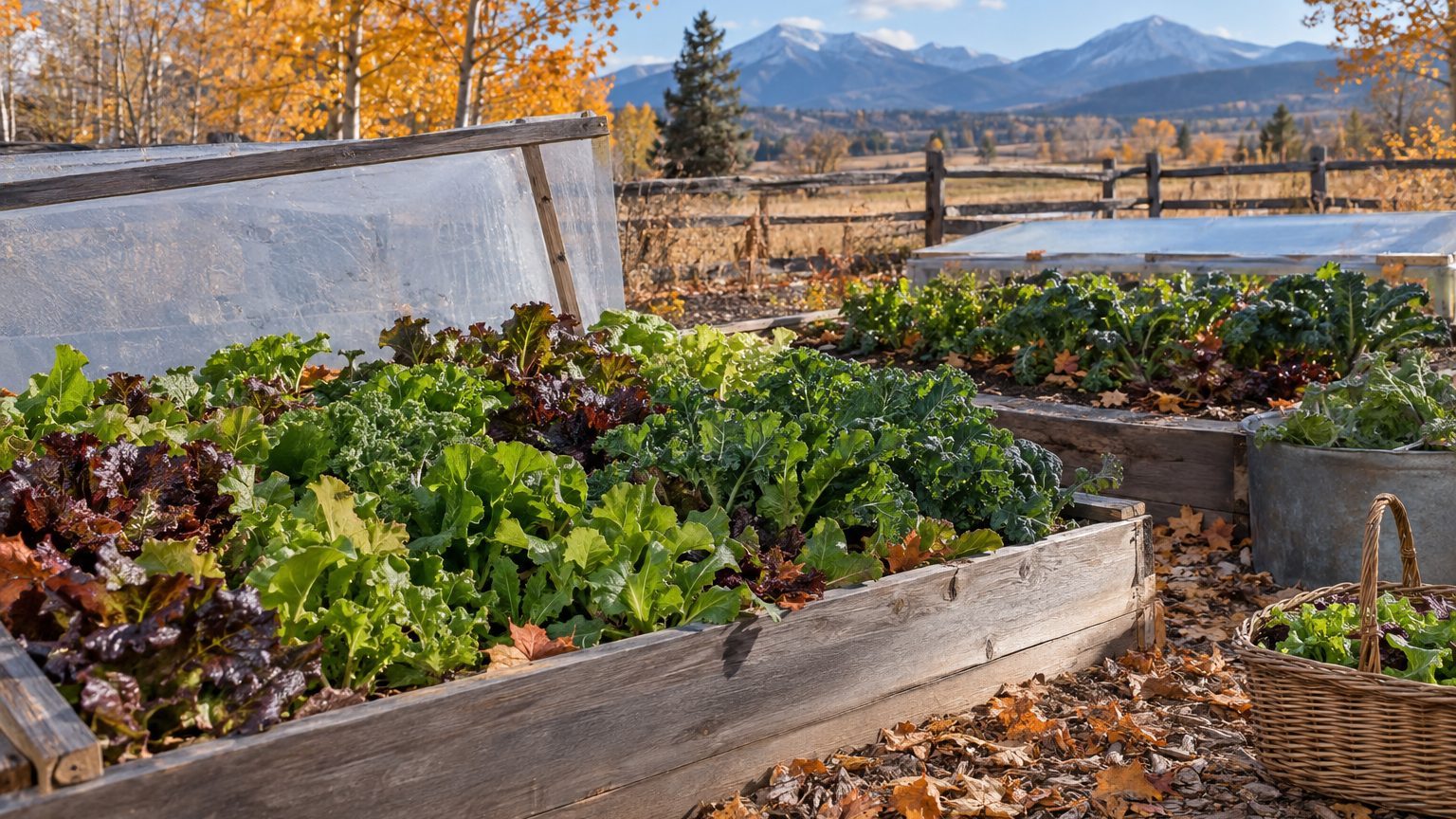

Hardy salad greens can go into Prince Edward Island beds in mid-to-late spring, and the sowings meant for winter harvest follow in late summer. Cold, not heat, makes almost every decision on the island: when to sow, what needs a cover, and how late a bed can still pay off. The dates and temperatures below come from the Charlottetown reference station.
When the soil is warm enough in Prince Edward Island
The average last spring frost at Charlottetown A, the Environment and Climate Change Canada station (climate ID 8300300), is May 16. The figure comes from the Canadian Climate Normals for 1981-2010. It is a mean date, so in roughly one year out of two the last frost lands later. Treat it as the middle of a window rather than a safe date.
That date is also a stand-in for what you actually care about. Seeds do not feel the air. They feel the soil, and soil warms after the frost risk ends, not at the same moment. A bed can be frost-free on paper and still sit cold and soggy, which is the condition in which a sown row stalls and rots instead of coming up.
Winter salad crops are the cool-season kind, so they tolerate soil that would sulk a tomato bed. That makes the wait shorter than for most vegetables. It does not make it zero.
Reading the soil instead of the calendar
A basic soil thermometer pushed a few inches into the bed in the morning tells you more than any normal. So does a handful of soil squeezed in your fist. If it crumbles when you poke it, the bed can be worked. If it smears into a slick ribbon, wait. Raised beds and containers shed water and warm sooner than level ground, and a sheet of row cover laid over a bed for a week or two ahead of sowing takes the chill off the top layer.
Spring sowings of salad greens are the practice round. The sowings that matter for winter eating go in later, once summer is fading, and the same soil logic applies in reverse. By then the soil is warm and holds that warmth well into autumn, so the problem becomes keeping seedlings from drying out, not coaxing them awake.
Why the station date does not travel
One station is not a province. Northern and upland districts of Prince Edward Island run weeks behind Charlottetown, and a sheltered garden near the water can run ahead of it. The Canadian normals also cover 1981-2010, while the US figures on this site use 1991-2020, so a comparison with Winter Salads for Indiana Gardens is a comparison of different decades as well as different climates. Treat May 16 as a starting guess and let your own bed correct it.
For the varieties that have actually been trialled on the island, the place to ask is Prince Edward Island Agriculture. This page talks in types, because a variety name without local trial results behind it is a guess.
How long the season lasts here
The average first fall frost at the same station is October 17. Count from May 16 to October 17 and the gap between the two mean dates is 154 days. Both are averages from the 1981-2010 normals, so the real window in any one year can open later and close earlier, or the reverse.
A window of 154 days sits in the middle. It is not the short, grudging season of a far-northern garden, and it is not the nine-month stretch of the Deep South. What matters is what it allows. It is long enough for a spring sowing of quick greens to be cut and cleared, and then for a second sowing to take its place in summer. The second sowing is the one that feeds a winter table.
What that length allows
With 154 days you can afford to stagger. A first sowing in spring, a second a few weeks later, and a final one in late summer keep the beds producing instead of bolting all at once. The step that does the most work is the last, because it has to reach useful size before the light fails. A seedling that is still tiny when the days shorten will mostly sit there, holding its size through the cold rather than growing.
The window also bears on transplanting. In a season this length, moving started seedlings into the bed is often worth the small root check for crops like lettuce, which tolerate it. Greens that dislike having their roots disturbed, such as spinach or mâche-type rosettes, are usually better sown where they will grow. The days saved by transplanting matter less when the window holds a second sowing anyway.
The succession sowing guide on this site lays out how to space those rounds. For the wider picture of what carries on when lettuce will not, see Winter Salads: What Grows When Lettuce Will Not. If you garden across the water, Winter Salads for New Brunswick Gardens has the numbers for the neighboring province.
Heat and water in Prince Edward Island
A count of days above 90 °F (32 °C) is a statistic from a reference station, not a description of a whole province. The facts behind this page carry no such count for Charlottetown A and no summer rainfall total, so none is quoted here. The island’s cool maritime summers suggest the heat figure is small, but that is an expectation and not a measurement, and the page will not dress it up as one.
When summer heat is small, the hot-climate worries (bolting in a heat wave, scorched leaves, wilting at midday) take a back seat. A cool damp summer brings a different list: mildew on the leaves, slow ripening, and fungal disease that spreads when foliage stays wet. Spacing for airflow, watering at the root in the morning rather than overhead in the evening, clearing old plant debris, and rotating beds from year to year are the practices that answer it. They cost nothing and they work.
The cold decides
The number that rules everything here is the winter low. At Charlottetown the mean daily minimum of the coldest month is -12.1 °C (10.3 °F), from the 1981-2010 normals. That is a mean, not a record low, so colder nights do happen. The reference city also sits in Canadian hardiness zone 5b (Natural Resources Canada, 1991-2020 normals). That is the Canadian system, built on seven climate variables, and it does not convert to a USDA zone.
Against that cold, the types sort themselves roughly like this:
| Group | Uncovered | With a cover | Cannot manage |
|---|---|---|---|
| Hardy leaf types (spinach, mâche, claytonia, kale-type leaves) | Usually stand through autumn and early winter | Stay in edible condition through the coldest weeks | Rarely |
| Tender leaf types (loose-leaf lettuce, arugula, mild Asian greens) | Fade with the first hard freezes | Keep going in a cold frame or low tunnel | Not in open ground in midwinter |
| Warm-season salad crops (basil, cucumbers) | No | No | Yes, for winter |
The table is a general guide by type, not a trial result, and a cover does not make a plant immune. It buys time and keeps leaves from freezing and thawing repeatedly.
The first fall frost, October 17 on average, sets the other limit. A sowing that goes in too late will not reach useful size before the days shorten, no matter how well it is covered afterward. Work backward from that date when you plan the last round.
Which winter salads suit Prince Edward Island
Choose by type, and let three facts about this place steer the choice. The season between mean frosts is 154 days, so quick cut-and-come-again greens and other early types suit it better than slow heading crops. The summers lean cool and damp, so disease resistance comes first when you read a seed packet. The winter cold, -12.1 °C at the coldest-month mean, means hardiness decides whether a plant gets a cover or gets skipped.
In rough order of priority:
- Resistance to mildew and leaf disease, stated on the packet or in the catalog description.
- Hardy leaf types, such as spinach, mâche, claytonia and kale-type greens, for the bulk of the winter beds.
- Early, fast types for the first and last sowings, when the clock is the problem.
- Heat tolerance last, because no heat figure for the island is part of this page’s facts and the summers lean cool.
This page names no varieties, and that is deliberate. A variety is only worth recommending when it has been trialled in conditions like yours, and this page does not hold those trial results. A name pulled from a catalog that did well in Ontario or Indiana might sulk under a wet Island July. Prince Edward Island Agriculture is where local guidance sits, so start there and ask which varieties have been tried locally.
Everything here assumes seed sown in beds and containers. Nothing on this site involves gathering greens from ditches, streams or fields, and wild plants can be seriously harmful in ways a garden bed never is.
Common questions
When should I sow winter salads on Prince Edward Island?
Quick spring sowings of hardy greens can go in once the soil is workable, which usually follows the May 16 average last frost at Charlottetown by some days. The sowings meant for winter harvest go in during late summer, timed to reach useful size before the average first frost of October 17.
Does the May 16 frost date apply across the whole island?
No. It comes from the Charlottetown A station and is a mean, so half of years run later. Northern and upland districts can run weeks behind it, so check your own bed with a soil thermometer.
Do I need a cover for winter salads here?
For anything past early winter, yes. The coldest month averages a daily minimum of -12.1 °C (10.3 °F). Hardy types may stand uncovered in autumn, but a cold frame or low tunnel keeps leaves in edible condition through January and February.
Is Prince Edward Island’s zone 5b the same as a USDA zone?
No. Charlottetown is zone 5b in the Canadian system, which uses seven climate variables where the USDA system uses one. Natural Resources Canada notes there are no simple conversions between them, and that Canadian zone 4a alone overlaps nine USDA zones, from 3a to 7a.