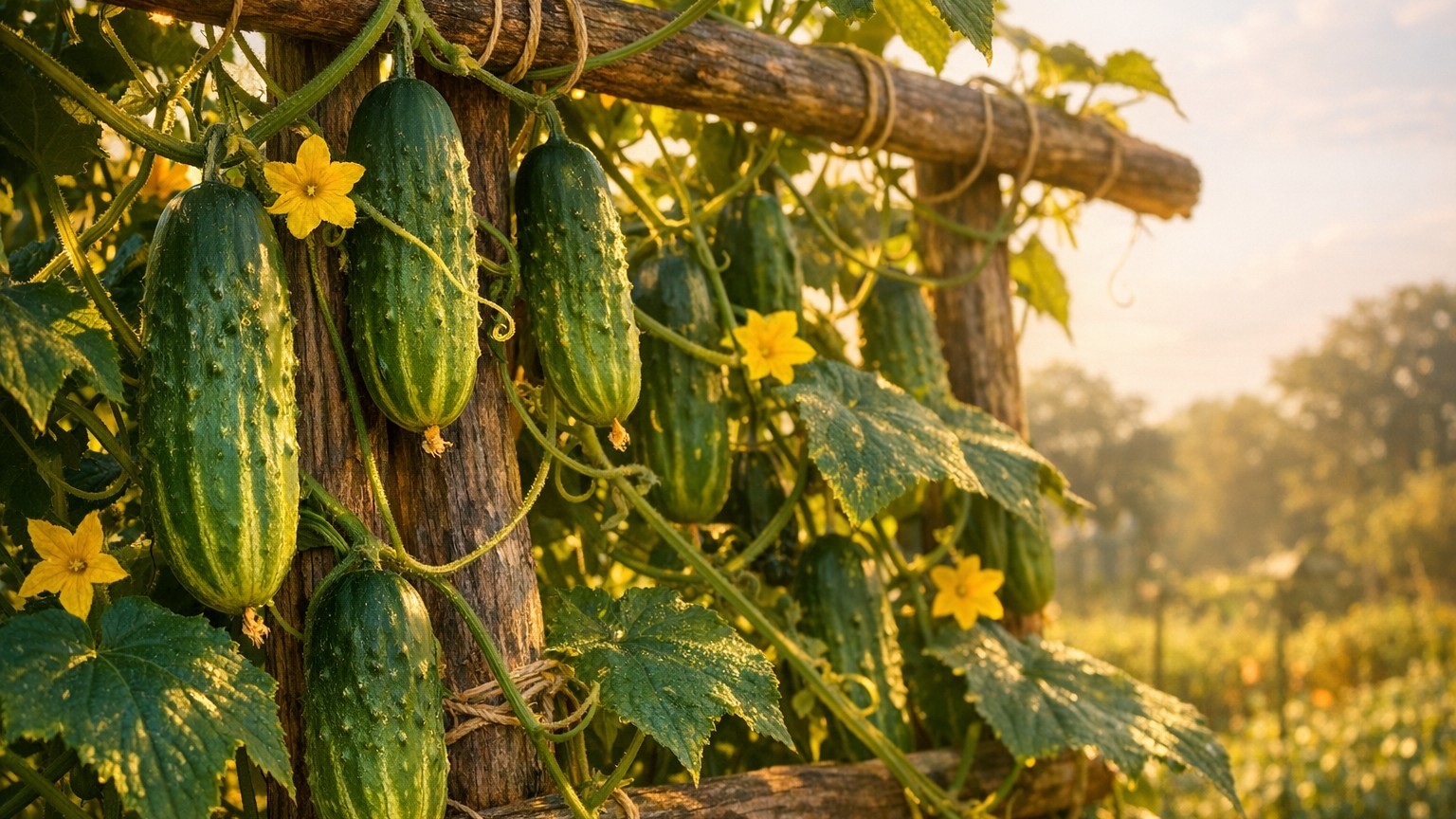

Rhode Island’s growing season runs long enough for both quick bush cucumbers and full-season vining types, but the state’s humid summers and cool, slow springs push the decision toward fast starters and disease-resistant trellised varieties over anything that needs bone-dry heat to thrive. The type matters more than the brand name on the seed packet.
The short answer for Rhode Island
Start with the calendar. The last spring frost at the reference station falls somewhere between April 7 and April 17, and the first fall frost lands between October 24 and November 3. That gap, roughly 190 to 210 days of frost-free ground, is generous for cucumbers, which typically need far less than that to produce a full crop. Season length is not what limits a Rhode Island garden. Heat is closer to average for cucumbers, and disease pressure from summer humidity is the real variable to plan around.
With 9.4 days a year averaging 90F or hotter, the state gets a moderate heat load, not a scorching one. That rules out chasing varieties bred for desert-style summers and points instead toward types that set fruit reliably in warm-but-not-blistering conditions, which is most of what’s sold as garden cucumbers anyway.
Given the long frost-free window, a Rhode Island grower has room to do more than one sowing. Bush-type pickling cucumbers, which mature quickly and take up little space, work well for an early planting right after the frost risk passes, with a second sowing in early summer to keep fresh cucumbers coming into September. Vining slicing cucumbers, trained up a trellis or fence, make better use of vertical space in a small yard and also keep foliage and fruit up off damp soil, which matters given the summer rain pattern here.
Parthenocarpic (self-fruiting, often labeled “burpless”) varieties deserve a serious look for Rhode Island specifically. They don’t depend on pollinator visits to set fruit, which helps in a season with unpredictable weather stretches, and many of the modern parthenocarpic lines carry stronger resistance to the powdery and downy mildews that thrive in humid coastal air. Trellised, they also get better airflow than a sprawling vine lying in wet grass.
None of this points to a single named cultivar this page can responsibly hand you. The right variety within each type changes from year to year as breeders update disease resistance packages, and the University of Rhode Island Cooperative Extension tracks what’s actually performed well in local trials. Use the type as your shopping list, then confirm the specific variety with them.
What will not work here
Long-season specialty cucumbers, the kind bred for regions with a hot, dry, extended summer, are a poor match for a state averaging under ten days a year above 90F. These varieties often need sustained heat to size up fruit properly and can sit stalled in a cool, damp Rhode Island July, producing small or bitter cucumbers even when the calendar says they should be ready.
Planting too early is the second common failure, and it’s a timing mistake specific to this state’s frost pattern. Because the last spring frost can arrive as late as April 17 at the reference station, and inland or low-lying gardens often run a week or two behind that, direct-sowing cucumber seed in early April risks both a frost kill and, just as damaging, cold soil that rots seed before it germinates. Cucumbers are a warm-soil crop. Seed sitting in ground still cold from a Rhode Island spring simply won’t sprout well, frost or no frost.
Ground-sprawling vining cucumbers are the third trap, and it comes down to the rain numbers. Summer rainfall averages about 10.3 inches across June, July and August, with July the driest month at 2.91 inches, June the wettest at 3.81. That’s not desert-dry, and it’s not drought-proof either. It means foliage that lies directly on the soil, as untrained vining cucumbers do, spends a lot of humid summer nights damp, which is exactly the condition that lets powdery mildew and bacterial wilt take hold. A vine trellised even two feet off the ground dries faster after a storm.
Finally, treating the season as a single planting event wastes the length Rhode Island actually offers. With close to 200 frost-free days on the calendar, a grower who sows once in May and calls it done is leaving a second harvest window unused. Cucumber plants tend to decline in productivity and disease resistance as they age through a long, humid summer, so a fresh succession sowing in late June or early July often outproduces a single spring planting left to struggle through August.
What changes across Rhode Island
Rhode Island’s USDA Plant Hardiness Zone rating spans 6a to 7b, according to the USDA Plant Hardiness Zone Map. That’s a meaningful spread for such a small state, and it means there is no single frost or planting answer that applies from the Massachusetts border to the shoreline. The USDA zone system is built on one measurement, the average annual extreme minimum winter temperature, so it speaks more directly to what survives winter than to summer cucumber timing, but it’s a useful marker for how much the climate shifts within the state’s own borders.
Coastal and island areas, moderated by the ocean, tend to sit in the warmer end of that range, closer to zone 7. Inland and northern sections of the state run cooler, closer to zone 6a. In practical terms for a cucumber grower, that usually translates to a slightly later safe planting date and a slightly earlier risk of a season-ending fall frost the farther a garden sits from the water and the farther north it sits in the state.
None of this tells an individual reader which zone their own yard falls into, and this page won’t guess. The zone spread here is wide enough that a garden in one county can be a full zone warmer or cooler than one less than an hour’s drive away. What it does mean is that a planting date or frost expectation borrowed from a neighbor two towns over, especially inland versus coastal, may not hold. The frost dates cited earlier come from a single reference station, and the whole point of a 6a to 7b range is that plenty of Rhode Island gardens sit measurably above or below that station’s normals.
Check the current USDA Plant Hardiness Zone Map by ZIP code before assuming which end of that range applies to a specific property, then adjust the general timing in this article accordingly, a little earlier for the milder coastal edge, a little later for cooler inland ground.
Where to check this for your own county
This article gives the state-level picture, built from a single reference weather station and a statewide hardiness zone range. A county recommendation will always beat a state one, because it accounts for local frost pockets, coastal moderation, and soil conditions this page can’t see.
The University of Rhode Island Cooperative Extension is the source to check next. Two things are worth looking for once there. First, a local planting calendar, if one is published for vegetable crops, which will reflect actual observed frost patterns in specific Rhode Island counties rather than the single-airport normals used on this page. Second, any record of cucumber variety trials or extension recommendations specific to southern New England conditions, since that’s where the real cultivar names belong, tested against the exact disease pressures and rainfall patterns of this region rather than a national seed catalog description.
Extension offices also typically field direct questions from home gardeners, often through a master gardener helpline or local office visit, which is useful for a problem this page can’t diagnose from a distance, like why a specific patch of ground stays wet longer than the rest of the yard or which side of a slope gets a lighter frost. That kind of hyper-local knowledge is what an extension office is built to hold, and it’s the natural next stop after reading a state-wide overview like this one.
Treat this page as the broad framework, the extension service as the fine print for the specific piece of ground being planted.
Checking this against your own garden
Every date and average in this article is a regional starting point, not a guarantee, and a gardener’s own observations will beat all of it once the season actually arrives. Three things to watch matter more than any calendar page.
Soil warmth by feel comes first. Cucumber seed wants soil that’s genuinely warmed through, not just air that feels pleasant. Pushing a bare hand a couple inches into the planting bed on a sunny afternoon gives a rough sense of this; soil that still feels cold and damp, even weeks after the official last frost date has passed, is telling a grower to wait, regardless of what the calendar says.
The first flush of male flowers is the second signal. Cucumber plants typically produce male flowers before female ones, and a plant that’s flowering but not yet setting fruit isn’t a problem, it’s a normal stage. What’s worth tracking is how long that stage lasts; an unusually extended gap before female flowers with tiny fruit at their base appear can point to stress, often heat or water related, worth adjusting for on that specific plot.
The first true leaves, the ones that appear after the rounder seed leaves, mark the point where a seedling is drawing real energy from its own roots rather than the seed. Slow, pale, or stalled true-leaf growth in a bed that’s had plenty of sun is often a sign of cool soil or thin fertility in that particular spot, both fixable, but only if noticed early rather than assumed away because a regional average says the season should be underway.