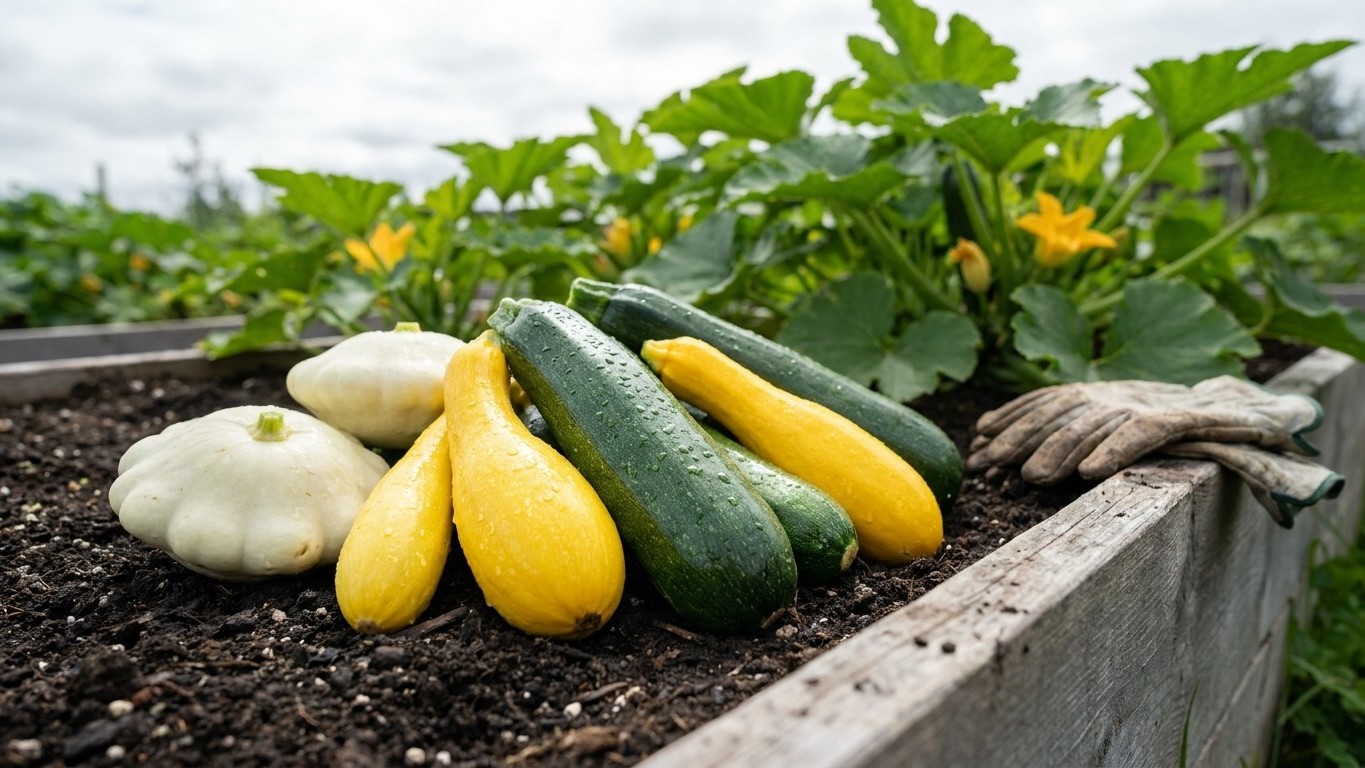

Rhode Island’s frost-free window runs long enough, typically 190 to 210 days at the reference station, that maturity length rarely decides which summer squash succeeds. What actually separates a good season from a disappointing one here is moisture management and mildew pressure, not the calendar.
The short answer for Rhode Island
Bush zucchini and yellow crookneck or straightneck varieties are the safest bet for most Rhode Island gardens. The state’s last spring frost falls between April 7 and April 17, and the first fall frost arrives between October 24 and November 3 at the reference weather station. That gap gives summer squash, which typically needs 45 to 60 days from transplant to first harvest, far more runway than it needs. Season length is not the constraint here.
Heat is the second variable, and Rhode Island runs moderate on that front: an average of 9.4 days a year reach 90F or higher at the reference station. That is not the searing, sustained heat load of a Deep South garden, so squash bred for extreme heat tolerance will not show off their strengths here. Instead, the state’s cooler, more humid summer air favors compact, open-growth types over sprawling vining ones.
Which type fits which yard
A small suburban lot benefits most from bush habit varieties, since they take up a fraction of the space a vining plant needs and still produce heavily through July and August. Pattypan and scallop types do well too, provided pollinators are active nearby, since their flower shape depends on consistent bee visits to set fruit. Vining summer squash types exist, but they ask for more square footage and more airflow than a typical Rhode Island backyard bed provides.
| Type | Best fit for Rhode Island | Watch for |
|---|---|---|
| Bush zucchini | Small to mid-size yards, quick harvest | Powdery mildew by late summer |
| Yellow crookneck/straightneck | Home gardens, reliable production | Squash vine borer if planted too early |
| Pattypan/scallop | Gardens with active pollinator traffic | Fruit set drops in poor pollinator years |
| Vining types | Larger plots with wide spacing | Humidity-driven fungal disease |
What will not work here
Varieties bred and marketed for sustained, dry, southern heat tend to underperform in Rhode Island, and the mismatch is the heat number, not the season length. With only 9.4 days above 90F on average, a squash selected to shrug off six or eight weeks of triple-digit stress simply never gets the growing conditions it was bred for. It will grow, but it won’t outproduce a variety chosen for a milder, damper climate.
The bigger trap is watering schedules borrowed from drier states. Rhode Island’s summer rainfall averages about 10.3 inches across June, July and August, which sounds generous, but the distribution matters more than the total. July, the peak fruiting month for most summer squash, is the driest of the three at 2.91 inches, compared with 3.81 in June and 3.59 in August. A gardener who waters once a week on the assumption that “10 inches of summer rain” covers the plant will find July gaps in that rainfall, especially on the sandy soils common along the coastal parts of the state, where water drains through within a day and does not linger for the plant to draw on later.
Close spacing recommended for arid-climate gardening guides is the other common failure point. Rhode Island’s humid coastal air, combined with that July dry spell followed by August’s return to wetter conditions, creates repeated cycles of damp foliage that favor powdery and downy mildew. Vining varieties planted tightly, or any variety crowded to save space, trap moisture around the leaves and lose the whole planting to mildew by late August in a bad year. Wider spacing and morning watering that lets foliage dry by midday matter more here than in a hot, dry climate where mildew pressure is lower to begin with.
What changes across Rhode Island
Rhode Island is small on a map, but the USDA Plant Hardiness Zone Map still splits it across zone 6a to 7b, a spread of roughly one and a half zones inside one state’s borders. That range is built on a single measure, the average annual extreme minimum winter temperature, but it tracks closely enough with spring soil warm-up and season length that it is worth taking seriously when planning summer squash.
Coastal areas and the islands, sitting at the warmer 7b end, tend to see soil warm earlier in spring and hold heat later into fall, which stretches the practical planting window a week or two beyond the state’s reference-station dates. Interior and upland sections, closer to 6a, cool off faster in the evenings and warm more slowly in spring, which delays direct-seeding and can push the safe transplant date later than what the reference station suggests.
None of this tells an individual gardener which zone their own yard sits in, and this page won’t guess. The reference-city frost dates cited here come from one airport weather station; a garden a few miles inland, at higher elevation, or in a low frost pocket can run a week or two colder on both ends of the season. The only way to know where a specific address falls is to check the USDA Plant Hardiness Zone Map directly, then treat the state-wide range in these facts as the outer bounds, not a prediction for one yard.
Where to check this for your own county
The University of Rhode Island Cooperative Extension is the state’s land-grant extension service, and it publishes the kind of county-level detail this page cannot. That is the resource worth checking before finalizing a planting date or a variety list.
Two things are worth looking for specifically. First, a local planting calendar, if the extension office publishes one for vegetable gardeners in a specific county or region of the state, since that calendar will already account for the coastal-to-inland difference this page can only describe in general terms. Second, any list of summer squash varieties the extension service has trialled locally, since those trials reflect actual performance against Rhode Island’s real disease pressure and rainfall pattern, not a seed catalog’s marketing claims written for a national audience.
A county-level recommendation from URI Cooperative Extension will always outrank the state-wide guidance on this page, and that is by design. This article works from statewide averages, frost-date ranges from one reference station, and a hardiness zone band that spans much of southern New England’s climate variety. A county extension agent works from what has actually grown, and failed, in gardens near the reader’s own address. When the two disagree, trust the county source.
Checking this against your own garden
Every date and average on this page is a starting estimate, and a gardener’s own observations will always beat it. Three signs are worth tracking before committing seed or transplants to the ground.
Soil warmth by feel is the first and most direct check. Summer squash seed wants soil that feels reliably warm, not just frost-free, at about two inches down, and a hand pressed into the bed at that depth in early morning will tell a gardener more than any calendar date. If the soil still feels cool to the touch a week after the reference-station frost date has passed, local conditions are running behind the average, and it is worth waiting.
The first flush of male flowers is the second signal. Summer squash plants typically open male flowers before female ones, and their appearance marks the point where pollinators start visiting the bed regularly. A garden that produces plenty of male flowers but no fruit set for a week or two afterward is often waiting on pollinator activity, not plant health, and that timing shifts from yard to yard depending on nearby flowering plants and hedgerows.
The first true leaves, the growth that follows the initial two rounded cotyledon leaves, show how fast a specific bed is actually moving compared to the state average. A plant that reaches true leaves noticeably faster or slower than a neighbor’s garden a few miles away is revealing something about that yard’s own microclimate, whether it is a warm south-facing slope or a low spot that holds cold air, information no state-wide page can supply.