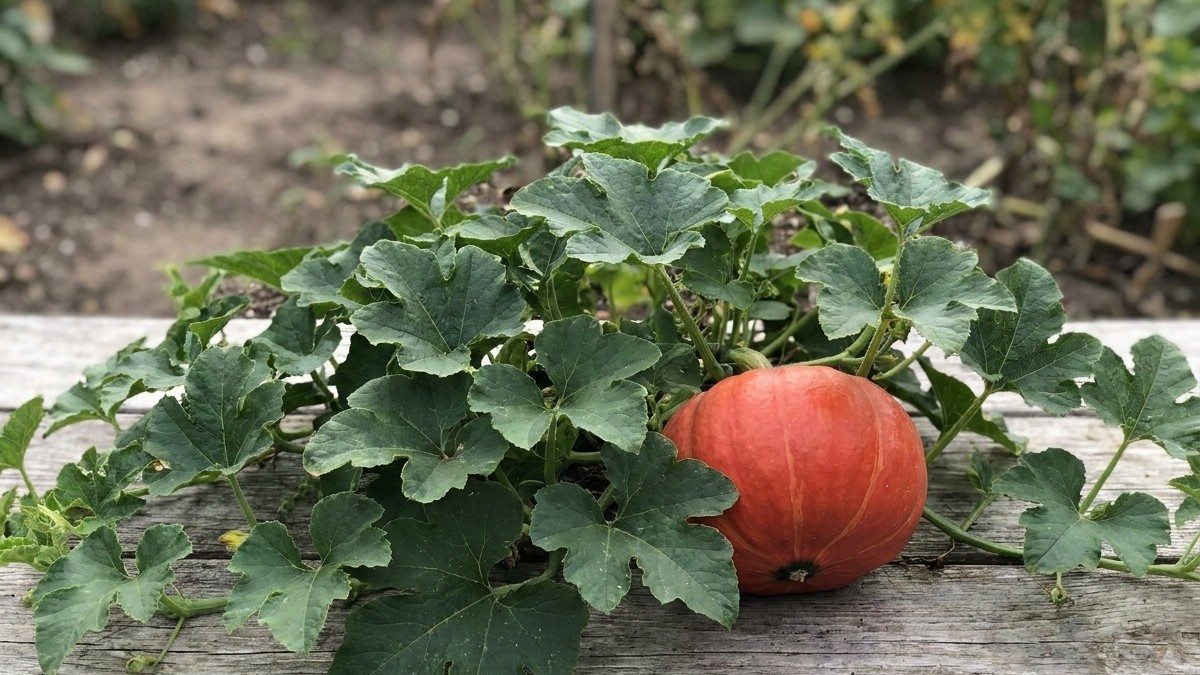

Cut pumpkins in Saskatchewan with the stem attached and before the first fall frost, which averages September 18 at the Saskatoon station. A pumpkin needs 45 to 55 days from flowering to mature, so only flowers that open by roughly late July to early August will ripen in time. Once cut, a whole pumpkin keeps three to six months in a cool, dark spot at 45 to 50 F.
The short answer
Counting back from the frost window
Environment and Climate Change Canada puts the average first fall frost at Saskatoon SRC on September 18. That is a mean, and it is the middle of a window, not a safe date. In one year out of two, the frost arrives later than September 18. In the other half, it arrives earlier, and your pumpkins don’t get a vote.
Now do the subtraction. Pumpkins take 45 to 55 days to mature after flowering (Utah State University Extension). Count back 55 days from September 18 and you land on July 25. Count back 45 days and you land on August 4. So in a year when frost shows up on the average date, the latest flower that can still give a ripe pumpkin opens somewhere between about July 25 and August 4. Treat that as a window, and lean toward its early edge if you want some margin.
The clock starts at flowering. It does not start at seeding or transplanting, and mixing those up ruins the math. A flower that opens on August 10 needs until September 24 at the very least, and as late as October 4. In an average year, frost beats it. Every week earlier the frost comes also pulls that flower cutoff back by a week.
One more caution. The September 18 figure comes from a single station, and a province is not one climate. Northern and upland districts run weeks behind Saskatoon, and this site does not publish a separate frost date for them. Also, the Canadian normals cover an earlier thirty-year period than the US figures used elsewhere on this site, so do not compare the two line for line.
Cutting and keeping
Harvest before frost, with the stem attached. A pumpkin cut with no stem loses its protective seal at the top, and that is where trouble starts. If you are unsure whether late fruit will color up in time, the guide on Will Pumpkins Ripen Before Frost in Saskatchewan? walks through that judgment call.
Storage is where the payoff comes. University of Illinois Extension says a whole pumpkin keeps three to six months in a cool, dark location between 45 and 50 F. Utah State University Extension adds only that pumpkins belong somewhere they will not freeze, and publishes no temperature or keeping time of its own.
The second storage fact is the one hardly anyone knows. Keep pumpkins away from ripening fruit and vegetables such as apples, potatoes, and tomatoes. Ripening produce gives off a gas that ages the pumpkin faster. That makes the porch beside the apple crate about the worst spot you could pick. And the 45 to 50 F range applies to a whole pumpkin only. It says nothing about a carved one, and no keeping time for carved pumpkins is published in the sources used here.
For the full growing picture, start with Growing Pumpkins in Saskatchewan.
When to sow here
Sowing date is the part you control, and it has to fit between a slow-warming spring and a fixed autumn deadline. Here is the arithmetic, step by step.
- Start with the last spring frost. At Saskatoon SRC, it averages May 18. Like the fall date, this is a midpoint. In one year out of two, the last frost falls later than that.
- Wait for the soil, not the calendar. Pumpkins are sown when the soil reaches 65 F. That is not the last frost date. Soil lags the air by weeks, so 65 F arrives well after May 18, and a cold, wet spring stretches the gap.
- Measure the span you have to work with. From May 18 to the July 25 end of the flower cutoff window is 68 days. To August 4, it is 78 days. That is the total stretch between the average last frost and the last useful flower.
- Subtract the soil’s lag. Every week the soil takes to reach 65 F comes straight out of those 68 to 78 days. Three weeks of lag, as a what-if and not a published figure, leaves you with 47 to 57 days. That is all the time the plant has to germinate, grow vines, and open its first useful flower.
- Add back what row covers buy. A row cover warms the soil enough to gain about two weeks. Fourteen days returned to that 47 to 57 day stretch is the difference between a comfortable season and a tight one.
- Check the result against the cutoff. Whatever date you sow, the flower that is going to make your pumpkin has to open before the window closes. The sources used here give no seeding-to-flower figure, so write down the date your first fruit-bearing flower opens each year. After one season, you will have a number that is true for your own garden.
The temptation is to sow on the average last frost date because the garden feels ready. Resist it. Cold soil stalls seed, and a seedling that sits idle for two weeks has burned days you cannot get back.
What goes wrong here
A season this short leaves little slack, and the failures tend to repeat from year to year.
- A late flower that never colors. Any flower that opens after the cutoff window gives a green fruit that runs out of days. Cut off new flowers once August is well along, so the plant puts its energy into the fruit already set, and stop counting on the late ones. Next year, sow earlier or use row covers to move the whole schedule forward.
- A fruit caught by frost. Because the September 18 date is a midpoint, a frost can land well before it. Watch the forecast through the first half of September, and cut mature pumpkins with the stem attached before a frost night. A frost-touched pumpkin is a poor candidate for months of storage, so use it first.
- A vine that dies back before the skin hardens. Early die-back means the fruit lost its supply line. Sort by firmness when you cut: the hard-skinned ones go to storage, the soft ones go to the kitchen. Insects often weaken vines well before frost, so see What Eats Pumpkin in Saskatchewan, and When for squash bugs and cucumber beetles instead of waiting to find the damage.
- A good pumpkin stored in the wrong place. A garage that dips below freezing will ruin a perfect harvest, and so will a shelf next to apples, potatoes, or tomatoes. Aim for a cool, dark spot at 45 to 50 F, away from ripening produce and anywhere frost can reach.
- A frost date borrowed from the wrong district. If you garden in the north or on higher ground, Saskatoon’s September 18 may be weeks too generous. This site publishes no separate date for those areas, so use your own first frost record as your guide and pull the flower cutoff back to match.
Common questions
Is September 18 a safe date to harvest by?
No. It is the average first fall frost at the Saskatoon SRC station, so in one year out of two, frost comes later, and in the other half it comes earlier. Plan to cut mature pumpkins ahead of it, and keep an eye on the forecast through early September.
Can I count the 45 to 55 days from the day I sowed?
No. Those days run from flowering. Counting from seeding makes the pumpkin look ready weeks before it actually is, and you end up with green fruit when frost arrives.
How long does a whole pumpkin keep?
Three to six months in a cool, dark location between 45 and 50 F, according to University of Illinois Extension. Keep it away from apples, potatoes, and tomatoes, which give off a gas that ages the pumpkin. Utah State University Extension notes only that pumpkins should be stored where they will not freeze.
How long does a carved pumpkin keep?
The sources used here do not publish a keeping time for carved pumpkins, so this page gives no figure. The 45 to 50 F range and the three to six months apply to a whole pumpkin, not to a cut one.