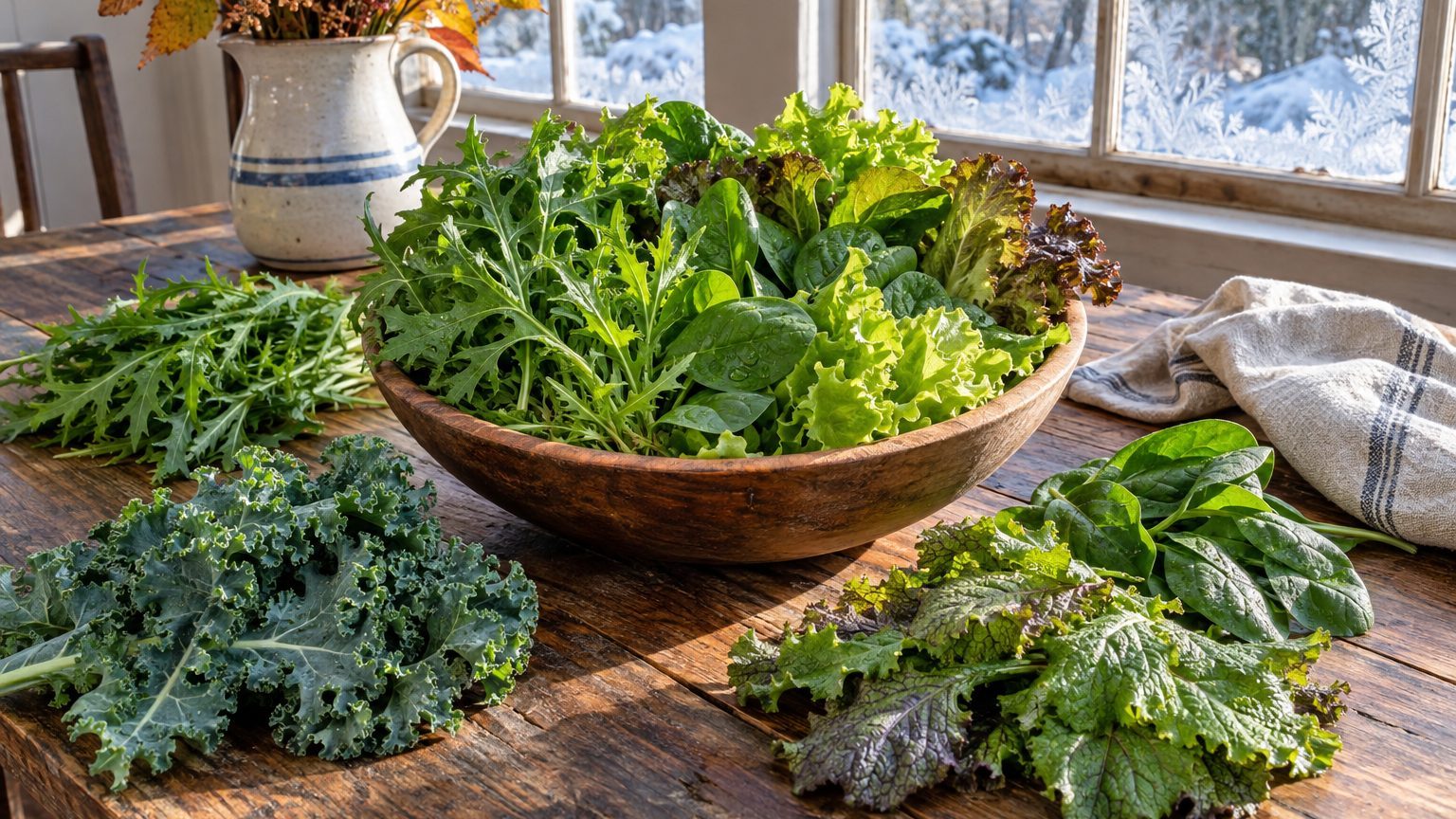

Loose-leaf lettuce, spinach, arugula, mustard greens and kale. In South Carolina, winter is a working season for the salad bed rather than a shutdown, and all five keep growing through most of it. The harder choice is which of them suit your corner of the state, since the Lowcountry and the Upstate are different gardens. The broader Winter Salads for South Carolina Gardens guide covers the full picture.
The short answer for South Carolina
Choose by type, not by cultivar name. Hardy brassica greens (kale, collards, mustard, mizuna) are the reliable backbone. Spinach and loose-leaf lettuce make the real salad bowl. Arugula fills gaps because it grows fast. Cold-loving extras like mâche and claytonia are worth a corner if your winters run colder.
The numbers explain why. The coldest month at the Charleston reference station has a mean daily minimum of 38.9°F, per NOAA’s 1991-2020 Climate Normals. That is the average night low in the dead of winter, and it sits above freezing. Cold-tolerant greens are rarely stressed by an average night like that, though individual freezes still happen.
Freeze timing sets the sowing frame. For the Charleston airport station (USW00013880), NOAA’s 1991-2020 normals put the last spring 32°F freeze between February 28 and March 17, and the first fall freeze between November 20 and December 5. Those dates are the 30-70% probability band for a 32°F freeze. They are odds, not promises. A freeze can arrive before the fall window or after the spring one. The exact sowing dates live in When to Sow Winter Salads in South Carolina.
How the types compare
| Type | Cold tolerance | Heat and bolting | Best role |
|---|---|---|---|
| Kale and collards | Very high | Hold on longest into spring | Reliable base, cut-and-come-again |
| Mustard and mizuna | High | Bolt readily as days lengthen and warm | Fast, peppery leaves |
| Spinach | High | Bolts in warm spring weather | Main salad green, cool months |
| Loose-leaf lettuce | Moderate | Turns bitter and bolts in warmth | Mild-weather salad bowl |
| Arugula | Moderate to high | Bolts quickly in warmth | Quick filler between crops |
| Mâche and claytonia | Very high | Dislike warm spells | Cold-corner extras, Upstate |
This page does not have a ranked list of named cultivars for South Carolina, so it recommends types. Trial results by variety belong to your county, covered below.
What will not work here

Start with the long autumn. A first fall freeze that may not arrive until the end of November, or even early December, means September and October soil is still warm. Lettuce seed in warm soil germinates poorly, and seedlings that do come up sulk. Sowing lettuce on the first cool-feeling weekend, only to watch it stall, is one of the most common failures here.
Spring is the other trap. With the last freeze falling between February 28 and March 17, the warm-up arrives early and fast. Spinach, arugula and lettuce respond to lengthening days and rising heat by bolting, sending up flower stalks and turning bitter. A sowing made in late winter, hoping for a long April harvest, tends to give you a few weeks of leaf before the plants run to seed. Plan on harvesting winter salads mostly from late fall through early spring and treat them as finished once the weather turns warm.
Slow, heading crops are a poor fit. Large-headed lettuce and heading cabbage need a long stretch of steady cool weather. Here that stretch is broken by warm spells and then cut short by spring heat. Fast leaf types dodge the problem because you start cutting before the heat arrives.
Then there is humidity. South Carolina’s damp air, especially near the coast, rewards open spacing and punishes crowding. Salad greens packed tightly in a bed stay wet longer after rain or dew, which invites leaf rot and mildew. Thinning feels wasteful when you have sown thickly, but crowded plants are the ones that turn slimy in January. Raised beds with good drainage and a little extra room between rows help more than any spray.
Finally, do not assume the mild reference figure applies everywhere. A 38.9°F average coldest-month night describes Charleston. The same source warns that the peninsula is milder than the airport station and that the Upstate runs several weeks tighter at both ends. A gardener there who relies on the coastal fall window will see their first freeze arrive earlier than planned.
What changes across South Carolina
The USDA Plant Hardiness Zone Map (2023 edition, built on 1991-2020 normals) places South Carolina across zones 7a to 9a. There is no single answer for the state. The zone system rests on one variable only, the average annual extreme minimum temperature. It tells you how cold the worst nights get, not how long the season runs or how hot spring turns.
That spread has practical consequences. At the mild end, the coast, hardy greens can stand through most winters with little protection. Lettuce and arugula keep producing, and the main pressure comes from humidity and early spring bolting. At the cold end, the northern part of the state and higher ground, hard freezes bite harder. Tender lettuce and arugula can be damaged, and growth slows for longer stretches.
A reader in the north should shift three things. Sow earlier in fall, because the first freeze comes sooner than the Charleston dates. Lean harder on kale, collards, spinach, mâche and claytonia. Keep a length of row cover or an old sheet handy for the coldest nights. Sowing for spring can also wait a little longer, since the last freeze runs later there.
Your own zone is not something this page can tell you. Look up your address on the USDA Plant Hardiness Zone Map and read the zone for your exact location. Even then, a low spot where cold air pools can run colder than a hillside a quarter mile away.
Where to check this for your own county
This page is the state-level answer, built from one reference station. A county recommendation beats it every time, because county advice reflects local frost patterns, soils and what actually grew well for local gardeners. Your starting point is Clemson Cooperative Extension, South Carolina’s land-grant extension service.
Two things are worth hunting for. The first is the local planting calendar for cool-season vegetables, with sowing and transplanting windows for leafy greens in your part of the state. The second is any list of varieties trialled or recommended in your county, so you can pick cultivars with a track record on local soil, rather than guessing from a seed catalog written for the whole country.
Clemson publishes maintenance calendars one species at a time for lawns, and the same habit of mind applies here: read the guidance that matches the crop in your bed, not a general one. The lawn calendars in my sources do not cover salad greens, so this page has no salad-specific Clemson calendar to cite. If you cannot find one online, your county Extension office can tell you what exists and what local gardeners are growing.
When state and county advice disagree, go with the county. Treat this page as the frame and the county office as the detail.
Checking this against your own garden
Every date above is a probability drawn from decades of records at one station. Your yard has its own record, and it outranks anything printed here. Three observations will teach you more about it than a chart will.
- Soil warmth by feel. Push your hand into the bed in the afternoon. If the soil feels warm like a sunlit patio, it is too early for lettuce and spinach seed; wait for it to feel cool. A bed that stays warm longer than a neighbor’s is telling you it is a sun trap, useful in January, a problem in October.
- First true leaves. The first pair of leaves is the seed leaves. The second pair, the true leaves, shows the plant has settled in. If seedlings sit at the seed-leaf stage for weeks, the spot is too cold, too shaded or too wet. If they race ahead and stretch, it is too warm.
- Where frost shows first. On the first frosty morning, walk the yard. Whitened grass marks the cold pockets, and bare patches mark the warm ones. Put the tender lettuce in the warm patch and the kale in the cold one.
Write the dates down. Two winters of notes beat any state average, and they will show you how far your garden sits from the Charleston numbers.
Common questions
What is the single best winter salad green for South Carolina?
There is no single winner, but kale and collards are the most forgiving across the state’s zone range, 7a to 9a on the USDA map. For a tender salad bowl, spinach and loose-leaf lettuce are the usual picks, with arugula as a fast filler.
Will winter salads survive a freeze in South Carolina?
Hardy types like kale, collards, spinach and mustard usually come through. Tender lettuce and arugula are more vulnerable, especially in the colder north. The Charleston reference station averages 38.9°F for the coldest month’s night low, but individual freezes still occur, so keep cover handy.
When should I stop expecting a harvest?
When spring warms. The last 32°F freeze at the Charleston airport station falls between February 28 and March 17, and heat soon after pushes spinach, lettuce and arugula to bolt. Plan to finish most winter salads by then and enjoy kale and collards a bit longer.
Is the Charleston data right for my garden?
Only if you garden near Charleston, and even then the peninsula is milder than the airport station. The Upstate runs several weeks tighter at both ends. Use the numbers as a frame and confirm with your county office at Clemson Cooperative Extension.