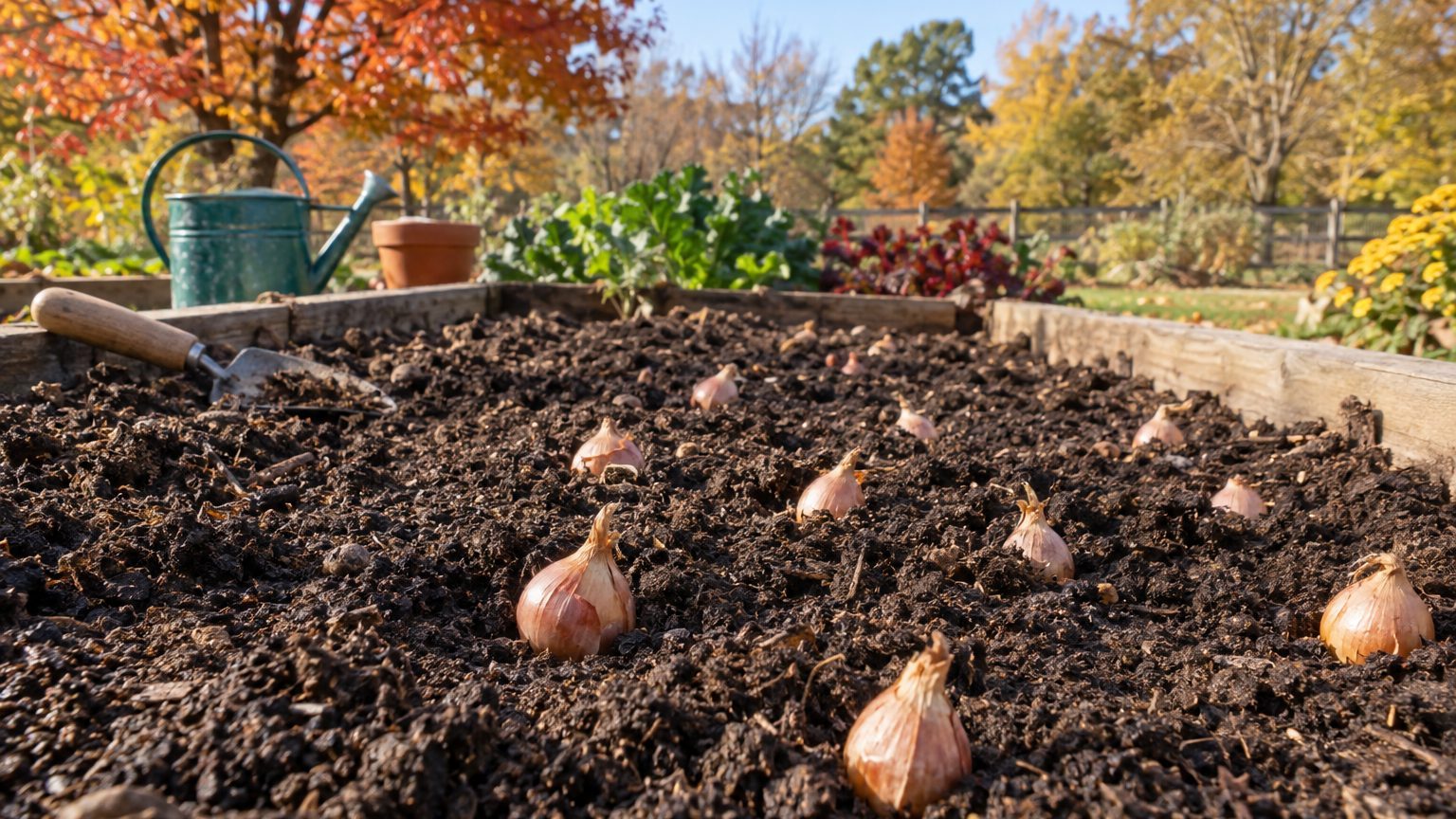

Plant shallots in Tennessee in the fall, with early spring as the backup. Fall sets go in around the first frost of the season, and spring sets go in as soon as the soil can be worked. The frost dates below turn that into a calendar, but they come from one Nashville weather station, and Tennessee stretches from the Mississippi River to the Appalachians. Treat every date as a starting point.
The short answer for Tennessee
Set fall shallots in the ground in the stretch around October 28 to November 8, and set spring shallots as soon as the soil is workable, ahead of March 31 to April 12. Those two bands are the first fall frost and last spring frost dates from the NOAA NCEI 1991-2020 Climate Normals for the Nashville station, and each one is a probability, not a promise.
What those frost dates measure
Each band is the 30 to 70 percent probability range for a 32°F freeze. In spring, March 31 to April 12 is the stretch of dates over which the odds of another freeze fall from likely to unlikely. In fall, October 28 to November 8 is the stretch over which a first freeze goes from unlikely to likely. Any single year can land outside the band. A freeze in the third week of April is rare in Nashville, but it happens.
Why fall comes first
Shallots are slow, cool-weather bulbs. A set planted in the fall grows roots while the soil is still mild, sits through winter, and puts up leaves early in spring, which gives it the longest possible stretch of cool weather to build a bulb. The cold itself is not the obstacle. The coldest month at the Nashville reference station has a mean daily minimum of 30.1°F, which is barely under freezing on a typical night. Dormant shallots handle that without trouble. The real limit comes at the other end, when summer heat arrives and the bulbs have to be finished and out of the ground.
| Planting window | Reference dates (Nashville) | What it means |
|---|---|---|
| Fall planting | Around October 28 to November 8, the first fall frost band | Main window. Roots form before winter, and the crop matures earliest. |
| Spring planting | As soon as soil is workable, ahead of March 31 to April 12, the last spring frost band | Backup window. Works, but the cool season left for growth is shorter. |
This page does not have a county-by-county planting date or a soil temperature threshold for Tennessee, so the calendar above rests on the frost bands alone. The variety you choose also shifts the timing a little, and The Best Shallots to Grow in Tennessee covers that side of the decision.
What will not work here
Planting in late April is the most common way to lose a shallot crop in Tennessee. The state moves from cool spring to hot summer quickly, and a set that goes in after the last-frost band has weeks of cool weather, not months. The bulbs end up small because the plant is forced to finish before it has built much.
Planting too early in the fall fails differently. Warm October soil pushes sets to sprout, and a winter with a 30.1°F mean minimum will not reliably knock that top growth back. Lush green leaves going into the cold are a liability. Wait for the first-frost band to approach before planting.
Northern calendars fail here too. Catalogs and garden guides written for much colder places often say to plant shallots in spring once the ground thaws, because their winters can heave or kill fall plantings. Tennessee winters rarely demand that caution at Nashville’s level of cold, so following northern advice means giving up the best window the state has.
Humidity defeats close spacing. Shallots grown tightly together hold moisture around the leaves and bulb necks, and a humid Tennessee May and June give rot every advantage. Crowded rows also dry slowly after storms. Give each bulb room for air to move, and hold off on thick, wet mulch once the weather warms.
Watering on a fixed weekly schedule is another failure, and it is the reverse of what a hot, dry state needs. Tennessee gets its rain throughout the year, so a bed on autopilot irrigation can sit wet right when the bulbs are sizing up. Check the soil before you water. Poorly drained spots are the ones where shallots rot first, so raise those beds or plant elsewhere.
Harvest and curing need the same attention. Shallots pulled in a wet spell and left in a damp spot will rot in storage no matter how well they grew. Pull them when the tops fall over and yellow, and cure them somewhere shaded with moving air.
What changes across Tennessee
Tennessee is not one garden. The Growing Shallots in Tennessee overview covers the crop as a whole, but the calendar depends on where in the state you are standing. On the USDA Plant Hardiness Zone Map (2023 edition, built on 1991-2020 normals), the state runs from 5b to 8a. That is a spread of several zones, so there is no single answer for the whole state.
That figure comes with a limit. The USDA system rests on one variable, the average annual extreme minimum temperature. It tells you about winter cold, not about when the last frost lands or how hot July gets. Shallots are hardy bulbs, so winter cold is rarely what decides their success. Frost timing and spring warmth decide it.
For a dated recommendation, the Nashville numbers on this page are the reference. East Tennessee and the Cumberland Plateau are cooler and run later in spring than Nashville, so the March 31 to April 12 band is too early for them. A gardener on the Plateau or at altitude should expect to push spring planting later. Fall is likely to shift the other way, since cold arrives earlier at elevation and sets need time to root first. This page does not carry frost bands for those areas, so treat that as the direction of the shift, not as a date.
I won’t guess which zone you are in. The USDA Plant Hardiness Zone Map lets you look up your location by ZIP code, and that is the right first step. Then compare your zone to the range above and decide whether you should lean toward the early or late end of the Nashville dates.
Where to check this for your own county
Your state extension service is the next stop. University of Tennessee Extension runs a county office across the state, and those offices have local people who know your soil, your frost pockets and your rainfall.
Look for three things when you get there:
- The local vegetable planting calendar, especially the dates for fall-planted alliums such as garlic and onions, since shallots follow similar timing.
- Any shallot or onion-family varieties that have been trialled in your county, not just in the state.
- Soil testing information, so you know what your bed needs before the sets go in.
A county recommendation beats a state one. This page is the state one, and it leans on a single Nashville station. A county agent can tell you how far your town sits from those numbers, and which varieties have actually performed there. If the extension office has no shallot-specific guidance, ask about garlic and onions. They share the same fall and spring windows and the same rot problems.
Checking this against your own garden
Your own observations outrank every date on this page. Three things are worth watching, and none needs equipment.
Soil by feel. Squeeze a handful of soil from the bed. If it crumbles and feels cool but not frozen or soggy, it is workable. A bed that reaches that point weeks before your neighbor’s is warmer and drains better, so it can run at the early end of the spring window. A bed that stays cold and clumpy runs late.
First leaves. Watch when fall-planted shallots send up their first green leaves. If they sprout within a few weeks of planting, your soil stays warm and you probably planted too early. If they wait until late winter, you have the slower, cooler microclimate. Write the date down and adjust next fall.
Frost on the lawn. On a clear morning in early spring, see where frost still lies. The low corner that stays white longest is your coldest spot and a poor place for early sets. The bed against a south wall that clears first is the one to plant first.
One nuance: a notebook with two seasons of these dates will serve you better than any table, including the one above. The Nashville bands describe odds across thirty years, while your notebook describes your yard.
Common questions
Can I plant shallots in spring in Tennessee?
Yes. Plant as soon as the soil is workable, ahead of the March 31 to April 12 last-frost band at Nashville. Fall plantings get a longer cool season, so spring ones tend to be the backup. The later you go past that band, the less cool weather the bulbs get.
Will winter kill fall-planted shallots?
At the Nashville reference station, the coldest month has a mean daily minimum of 30.1°F, which dormant shallots handle. That is an average, not a record low, and colder parts of the state in the 5b end of the zone range see harder winters. Ask your county extension office about mulching in your area.
What does the frost date actually mean?
It is a probability. The October 28 to November 8 band is the 30 to 70 percent range for a first 32°F freeze at the Nashville station, based on 1991-2020 data. A freeze can come earlier or later in any given year.
Can I use the Nashville dates for East Tennessee?
Only as a rough guide. East Tennessee and the Cumberland Plateau are cooler and run later in spring than Nashville, and this page does not have frost dates for those areas. Check with your county extension office for local numbers.