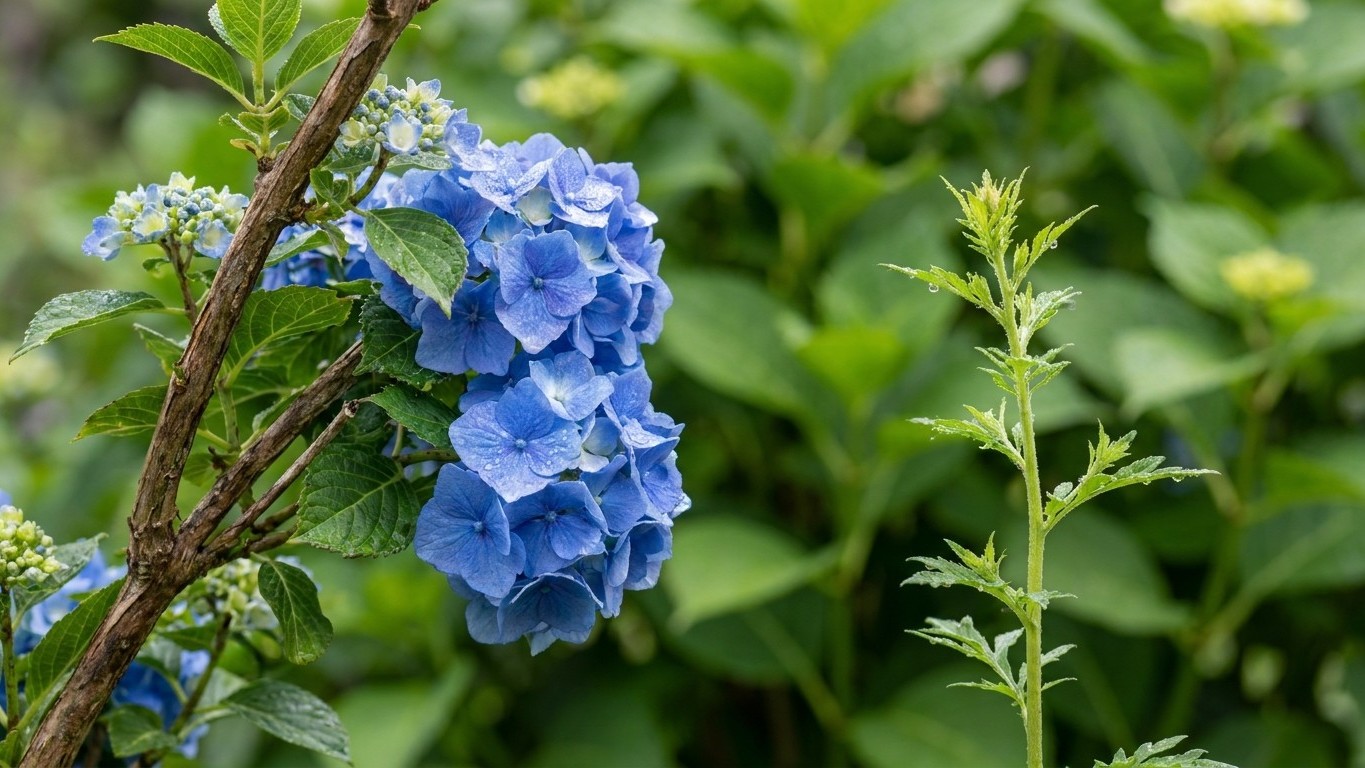

Most hydrangeas grown in Texas live through a Texas winter, because the roots of smooth, panicle, oakleaf and bigleaf types tolerate the cold across most of the state. What separates them is the flower buds. Panicle and smooth hydrangeas bloom on new wood, so a freeze that kills the stems still leaves summer flowers. Bigleaf and oakleaf types set their buds the previous summer, and one late freeze can erase a whole season of blooms.
What this comes down to in Texas
NOAA’s climate normals for Houston’s Bush Intercontinental Airport put the typical last spring freeze (32°F) in mid-to-late February, with a freeze into early March possible, and the first fall freeze around the start of December. Any hydrangea that builds its flowers on growth made after early March is safe from that window, and any that carries buds through winter is gambling on it.
Those dates describe the mild Gulf end of the state, and Hobby airport is usually milder than Bush Intercontinental. The Panhandle freezes much earlier in fall and much later in spring, while the Hill Country and North Texas follow their own calendars. Treat the Houston window as one reference point. It is not a calendar for the whole state.
The cultivars below run from the most cold-tolerant, which suit the shortest and coldest seasons, to the most freeze-sensitive. Zone ranges are USDA hardiness zones, which rest on the average annual extreme minimum temperature. Texas covers roughly zones 6 through 10.
Annabelle
A smooth hydrangea (Hydrangea arborescens), with big white mophead blooms on new wood. It can freeze to the ground every winter and still flower the next summer. Heat is its weak point, so it does best in the cooler north and west of the state, in morning sun with steady moisture.
Quick Fire
A panicle hydrangea (Hydrangea paniculata). Its white cones age to pink and then deep rose, and they form on new wood. It opens earlier than most panicles, which helps where the fall freeze arrives early.
Limelight
Another panicle hydrangea. Its flowers open lime green, turn white, then blush pink, all on new wood. The stems are stiff and handle winter weather and wind well. It flowers best with morning sun and some afternoon shade where summers are hot.
Endless Summer
A bigleaf hydrangea (Hydrangea macrophylla). It flowers blue or pink depending on soil pH, and it blooms on both old and new wood. If a freeze kills the buds, it can still flower later from new growth. That makes it a safer bigleaf choice for Texas than old-wood types like Nikko Blue.
Snow Queen
An oakleaf hydrangea (Hydrangea quercifolia). Its white cones age to pink and form on old wood. The shrub itself is tough through winter and tolerates heat better than bigleaf types, and its leaves turn red and bronze in fall. A late freeze can still cost it flowers some years.
Nikko Blue
A classic bigleaf hydrangea, with blue mopheads in acidic soil and pink in alkaline soil. It blooms only on old wood, so every bud has to survive the winter. Where freezes come late, expect leaves every year and flowers only some years.
Working it out for your own garden
How do you check whether a hydrangea will bloom after your last freeze?
Start with the wood. Look up whether the cultivar blooms on new wood, old wood or both. Then compare the date its buds wake up with the last freeze in your area.
Take Limelight in Houston. It blooms on new wood. The first fall freeze there usually comes around the start of December, so the flowers have months of margin on both sides. A freeze in early February might flatten the stems, but the plant regrows and still flowers. The farther north you go, the earlier that fall freeze arrives and the smaller the margin gets. That is why an early opener like Quick Fire fits the colder end of the state.
Now take Nikko Blue, which blooms on old wood. Its buds formed the previous summer and sit exposed on the stems all winter. A warm spell in January or February can wake them early, and the last freeze can still arrive in late February or early March. Buds that swell in a warm January or early February can stay exposed for weeks before that window closes. A mild winter can give you a mophead-covered shrub, while a late freeze gives you a green shrub with no flowers.
How can you tell winter damage from other hydrangea problems?
Scratch a stem with a thumbnail. Green underneath means the stem is alive, while brown and dry means that section is dead. Wait until the shrub has fully leafed out before cutting anything, because hydrangeas are slow to show which buds survived.
The pattern of damage tells you the cause. Black, limp leaf tips right after a freeze point to frost. Bare stems with fresh shoots at the base mean the top froze but the crown lived. A leafy plant with no flowers usually lost its buds to cold, or was pruned after the buds formed. Yellow leaves with green veins in summer have nothing to do with winter. That is usually high-pH soil locking up iron, which is common in the limestone soils of central Texas.
What changes across the state
Texas stretches across several climates, and the winter threat changes with each one. In the Panhandle and High Plains, hard freezes are common and last late into spring. Elevation and open terrain add swings in temperature, so smooth and panicle types are the dependable choices there. Bigleaf hydrangeas might survive but rarely flower well.
North Texas gets sharp Arctic fronts that follow warm spells, and occasional ice storms. Hill Country and central Texas add alkaline soil and strong summer heat to the mix. East Texas has acidic soils and more rain, which suits oakleaf and bigleaf types best. Along the Gulf, winters are mild enough that plants may leaf out early and then get caught by a late freeze. The warm end of the zone range, down toward the Rio Grande Valley, is too mild and too hot for most hydrangeas.
| Part of the state | Most reliable choices | Main winter risk |
|---|---|---|
| Panhandle and High Plains | Annabelle, Quick Fire, Limelight | Hard freezes late in spring |
| North Texas | Panicle and smooth types, Endless Summer | Warm spells followed by Arctic fronts |
| Hill Country and central | Snow Queen, panicles | Late freezes on swelling buds |
| East Texas and Gulf Coast | Snow Queen, Endless Summer | Early leaf-out, then a late freeze |
The mistakes this state punishes
Acting on a warm spell is a costly one. Warm days in late winter are common across Texas, and a hard freeze often follows within days. Gardeners who plant, fertilize or pull off protection during the warm stretch end up with soft new growth in front of a cold snap. Keep frost cloth handy until your area’s last-freeze window has passed, and hold off on feeding until then.
Choosing a bigleaf that blooms only on old wood for a spot with late freezes comes next. Nikko Blue is lovely, but it is the wrong bet in the Panhandle or on the exposed High Plains. In those areas choose a new-wood bloomer, or a reblooming bigleaf like Endless Summer that can recover from a freeze.
Pruning at the wrong time can cost flowers year after year. Cutting back bigleaf and oakleaf hydrangeas in fall or winter removes the buds that would have bloomed. Prune those right after they flower, and save the hard cutbacks for panicle and smooth types in late winter.
Late feeding is another quiet mistake. Heavy nitrogen in early fall pushes tender shoots that a freeze will kill. Mulch also matters, since a few inches over the crown insulates the roots, and pulling it away too early lets a late freeze reach them. On a freeze night, water the bed that afternoon, because moist soil holds heat better than dry soil, and cover the shrub with frost cloth. Take the cover off the next morning.
Checking this against your county
A freeze window for one airport in Houston is a starting point. Your own last and first freeze can fall weeks away from it, and microclimates in town or on a slope shift it again. Call or visit your county office of Texas A&M AgriLife Extension for local freeze dates and advice on soil testing. For everything about care beyond winter survival, our guide to growing hydrangeas in Texas covers soil, water and planting.
Common questions
Will hydrangeas come back after a hard freeze in Texas?
Almost always. The crown and roots are hardier than the stems. Scratch the bark in spring, and if you see green, the stem is alive. If the top is dead, new shoots will come from the base, and panicle and smooth types will still bloom on that fresh growth.
Do hydrangeas need to be covered during a Texas freeze?
Covering helps most when buds have already swollen after a warm spell, especially on bigleaf and oakleaf types. Use frost cloth or an old sheet that reaches the ground, and take it off the next morning. Plastic touching the leaves can transfer cold to them.
Which hydrangea is the most freeze-proof?
Annabelle and the panicle types such as Limelight and Quick Fire are the most dependable, because they flower on new wood. Their zone ratings reach into colder zones than anywhere in Texas.
Why did my hydrangea leaf out but never bloom?
Common causes are that a freeze killed the flower buds, or that the shrub was pruned after the buds had formed. Both hit bigleaf and oakleaf types that bloom on old wood. Switching to a reblooming bigleaf like Endless Summer, or a panicle, often helps.