
Texas gardeners do best with two groups of unusual roots. Heat-lovers such as jicama, ginger and turmeric use the long warm season, and cool-season roots such as daikon, celeriac and salsify take the fall-to-winter window. Which group leads depends on where you garden, because the state runs from hardiness zone 6a to 10a. This page gives the statewide decision, and your county can sharpen it.
The short answer for Texas
Pick by type, not by variety name. In the mild Gulf end of the state, heat-lovers go in after the last freeze and run until fall, while cool-season roots are sown in fall and harvested through a gentle winter. The farther north or higher you go, the more the first group shrinks and the more the hardy perennial roots matter.
The only dated figures this page has come from one reference point, Houston’s Intercontinental airport station (IAH), in NOAA’s 1991-2020 Climate Normals. There, the last spring frost falls between February 4 and March 1, and the first fall frost between December 1 and December 19. Those dates are not guarantees. They mark the band where the chance of a 32°F freeze sits between 30 and 70 percent. The coldest month there has a mean daily minimum of 43.7°F, which tells you winter is a growing season, not a shutdown.
Four types, one decision
| Type | Examples | Best window (Gulf reference) | Main risk |
|---|---|---|---|
| Heat-lovers | Jicama, ginger, turmeric | After the last freeze, through summer into early winter | A season too short farther north |
| Quick cool-season roots | Daikon, black radish | Fall sowing, winter harvest | Bolting when spring heat arrives |
| Slow cool-season roots | Celeriac, salsify, parsnip | Fall sowing, long cool stretch | Summer arrives before they size up |
| Hardy perennial roots | Jerusalem artichoke, horseradish | Planted once, harvested after top growth dies back | Spreading where you don’t want them |
Houston’s gap between frosts is roughly nine to ten months, which is generous. Few other states hand a gardener that much room for a second, cool-season crop. For exact sowing dates by month, see When to Plant Unusual Roots in Texas.
What will not work here
Spring-sown cool-season roots are the classic Texas failure. Houston’s last freeze can arrive as early as February 4, and heat follows fast. A celeriac or parsnip sown at that point has barely begun swelling when summer shuts it down, and the root ends up thin, fibrous or bolted. These slow roots belong in fall.
Parsnips raise a second problem. They are prized for sweetness that improves with cold, and a coldest-month minimum of 43.7°F offers very little of it. You can grow them on the Gulf coast, but expect a blander root than northern growers get. Salsify is more forgiving, but it also wants a long, cool run.
Weekly watering fails in the hot months. Jicama and ginger both sulk when soil swings from baked to soggy, and a once-a-week soak in July evaporates before the roots benefit. Mulch and small, frequent waterings work better. The opposite problem shows up in the humid Gulf summer: tight spacing traps moisture around crowns and shoulders, and rot follows. Give ginger and turmeric rhizomes room and good drainage, and raise beds if your soil is heavy clay.
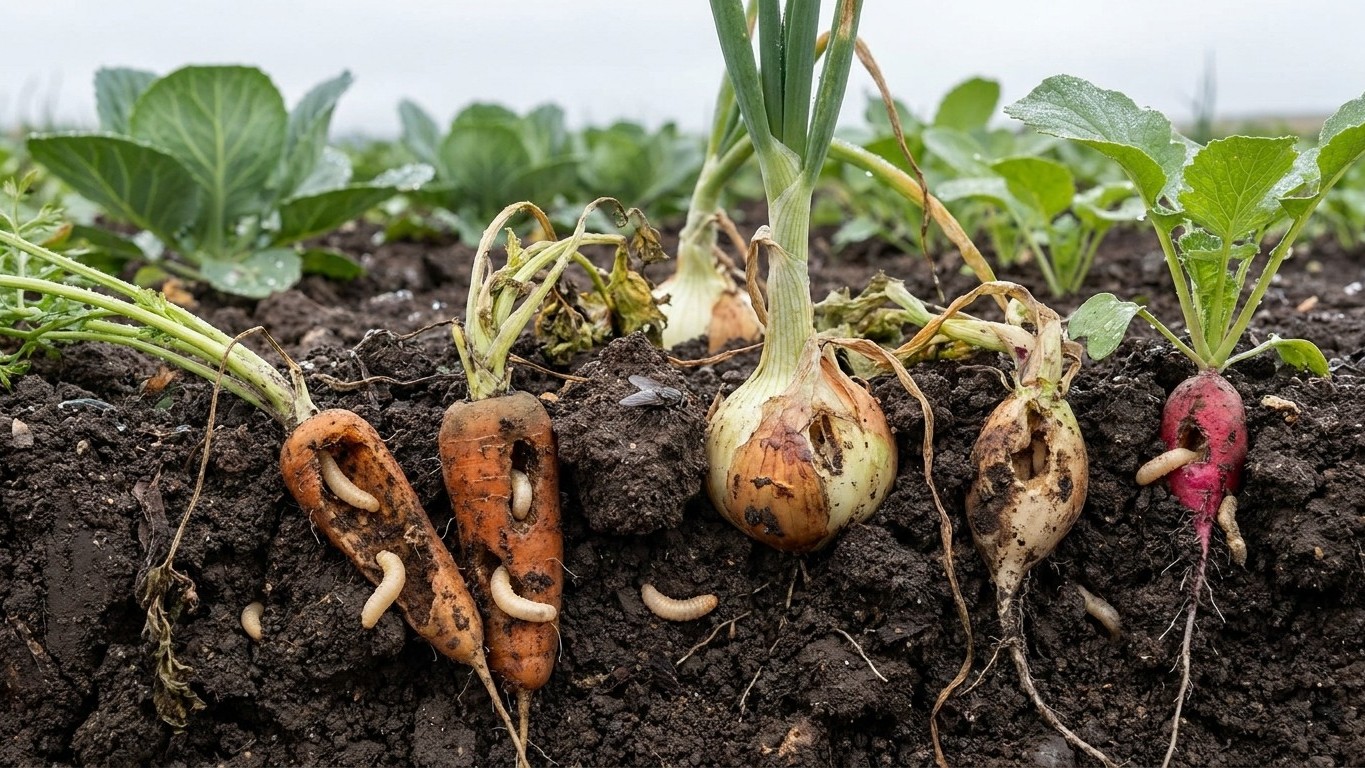
Warm soil brings its own pests. Root-knot nematodes, which swell and distort roots, thrive where winters stay mild, and unusual roots such as daikon are as vulnerable as carrots. Rotating beds and adding compost help more than any spray.
Flip the problem for the northern end of the state. There, the danger is a growing season too short for slow heat-lovers, and a plant that runs happily until December in Houston may be killed by an early fall freeze. This page does not have frost dates for the Panhandle or North Texas, so it will not guess them. What it can say is that the Houston window does not transfer.
What changes across Texas
The USDA Plant Hardiness Zone Map (2023, built on 1991-2020 normals) places Texas anywhere from 6a to 10a. That is a huge spread, and it means there is no single Texas answer. The system rests on one variable, the average annual extreme minimum temperature, so it tells you what winter does to a perennial root, not how long your summer lasts or how hot it gets.
Houston sits at the mild Gulf end. The Panhandle freezes months earlier in fall and later in spring. Hill Country and North Texas differ again, and high ground in the western part of the state runs colder than its latitude suggests. Even inside Houston, Hobby airport runs about two weeks milder than IAH, so a single metro area holds more than one planting calendar.
If you garden in the north or at altitude, shift three things. First, treat heat-lovers as a stretch: start ginger and turmeric rhizomes indoors or in containers you can move, and accept smaller harvests. Second, favor hardy perennial roots, since Jerusalem artichoke and horseradish handle cold that kills most other unusual roots. Third, sow cool-season roots in late summer so they size up in fall, then harvest or mulch heavily before hard freezes.
To find your own zone, use the USDA map and enter your ZIP code. This page cannot tell you which zone you are in, and a neighbor two valleys over may sit in a different one. The first article in this silo, Growing Unusual Root Crops in Texas, covers the crops themselves in more depth.
Where to check this for your own county
Your best next stop is Texas A&M AgriLife Extension, the state’s land-grant extension service. It runs county offices across Texas, and many have Master Gardener volunteers who answer local questions.
Look for two things. The first is a local planting calendar, ideally one written for your county or region instead of the whole state. The second is a list of varieties that have been trialled in your county, meaning someone grew them in your soil and weather and recorded what happened. Trial results beat catalog descriptions because they reflect your actual heat, rainfall and soil.
Ask your county office about local frost dates too, since those can differ by weeks from a state average. If you are unsure whether a root is worth the space, ask what the local office has seen fail. Extension agents hear about disasters long before they reach the websites.
A county recommendation will always beat a state one. This page is the state one: it sets out the types, the logic and the Gulf reference dates, and your county office supplies the local specifics. If the two disagree, go with the county.
Checking this against your own garden
Your own observations outrank every date on this page. Three are worth watching, and none needs equipment.
- Soil warmth by feel. Push your hand a few inches into the bed on a morning. Cold, clammy soil means heat-lovers like jicama and ginger will stall or rot. Soil that feels mild and slightly warm means it’s time to plant. A shaded bed will feel colder than a sunny one for weeks, which tells you where your warm microclimate sits.
- The first male flowers on squash or cucumber. If you grow either, the first flush of male blooms signals that the season has genuinely warmed. When they show up early in your yard, your spring runs ahead of the regional average. When they lag, your site is cooler or shadier.
- The first true leaves on a test sowing. Sow a short row of daikon or radish. The first true leaves, the ones after the seed leaves, show whether germination is steady. Slow, leggy or uneven growth points to heat stress or poor soil.
Keep a few notes on those three over a season or two. They will tell you more about your yard than a statewide chart can.
Common questions
Can I grow ginger and turmeric in Texas?
Yes, especially toward the Gulf, where the frost-free season at the Houston reference runs from roughly early March to early December. Plant after the last freeze, give them partial shade and good drainage, and expect to harvest late. Farther north, containers you can move indoors are the safer route.
Are parsnips worth trying in Houston?
Only as an experiment. The coldest month has a mean minimum of 43.7°F, which gives little of the chill that sweetens the root. Fall sowing gives them a chance, but celeriac, daikon and salsify are more reliable cool-season choices.
What is the easiest unusual root across the whole state?
Jerusalem artichoke is the most adaptable of the group, and it tolerates the cold of the northern end as well as Gulf winters. The catch is that it spreads. Give it its own bed or a deep container, and dig every tuber you can find at harvest.
Do the Houston frost dates apply to my yard?
Not unless you live in Houston, and even there they vary. The figures on this page come from the IAH station, and the Hobby airport area runs about two weeks milder. Treat them as a reference for the Gulf end of Texas and look up your own county’s dates through extension.