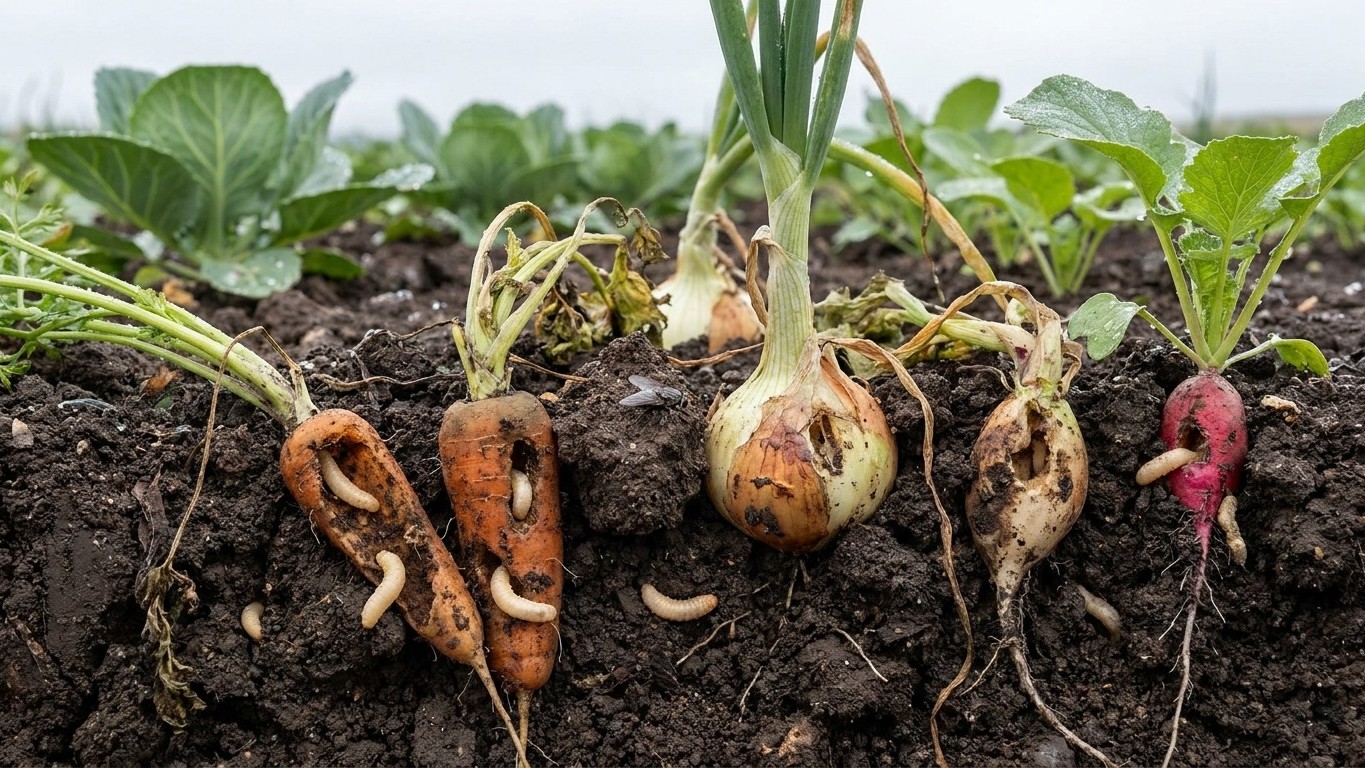

For most Utah gardens, the best unusual roots are the cold-tolerant, long-season ones: parsnips, salsify, scorzonera, and celeriac, plus perennials like sunchokes and horseradish. Tropical roots such as yacon and oca are gambles. Utah runs from high, cold valleys to a warm south, so which group fits depends on where your garden sits.
The short answer for Utah
Start with the numbers this page does have. At the Salt Lake City reference station, NOAA’s 1991-2020 Climate Normals put the last spring frost between April 12 and April 29. The first fall frost falls between October 18 and October 29. Both ranges are probabilities of a 32F freeze, specifically the band where the odds sit between 30 and 70 percent. They are not guarantees. Simple arithmetic gives roughly 172 to 200 days between them.
That sounds generous, and it is. But Salt Lake sits in a mild valley. Most of Utah is higher and colder, and southern Utah is warmer, so treat these dates as a best case for the northern valleys, not a statewide rule. The same station shows a mean daily minimum of 24.2F in the coldest month. That figure decides whether a root can stay in the ground over winter.
Choose by type, not by variety name
Variety names matter less than the type of root. This page does not have county trial data to rank individual cultivars, so the decision below is by group. For deeper background on the crops themselves, see Growing Unusual Root Crops in Utah.
| Type | Examples | Fit in Utah |
|---|---|---|
| Hardy, slow-sown taproots | Parsnip, salsify, scorzonera | Strong. They tolerate cold and can sit in the ground into winter. |
| Perennial roots and tubers | Sunchoke, horseradish | Strong. They shrug off cold and ignore frost dates. |
| Fast cool-season roots | Daikon-type radishes, turnips | Strong in spring and late summer. They dodge midsummer heat. |
| Long-season roots | Celeriac | Good in warmer valleys, tight at altitude. |
| Frost-tender tropical roots | Yacon, oca | A gamble. They need a long, frost-free run that most of the state lacks. |
If you want one dependable starting set, plant parsnips and a sunchoke patch. Add a quick radish or turnip crop for early wins.
What will not work here
A short season is the first thing that defeats the slowest roots. Those 172 to 200 days belong to a valley floor. A garden above it, in a mountain town or on a bench with cold air pooling, may have far fewer, and the page has no figure for those places. Celeriac, which sulks if it is rushed, and any tropical tuber are the first to fall short. Yacon and oca want months of warm growth and then a late harvest before frost. With a first fall freeze possible from October 18 onward in the mild valley, and earlier elsewhere, that harvest window can close before the roots have sized up.
Weekly watering and a dry summer
Utah summers are hot and dry, and a once-a-week soak does not suit roots. Parsnips and salsify need an evenly moist seedbed to germinate, and a crust that dries out between waterings can leave you with a bare row and a wasted packet of seed. Later, swings between bone dry and soaked produce split, forked, or woody roots. Daikon and turnips turn pithy and sharp in heat. If you cannot water several times a week at sowing, shift those crops to early spring or late summer, or put them on drip with mulch.
Soil structure compounds the problem. Many Utah beds are heavy clay or full of stones, and a taproot that hits either one forks. Loosen the bed deeply before sowing, or choose shorter, stockier types where the ground resists you.
Two traps in the other direction
Late sowing is one. Roots sown in July for a long-season crop still need weeks of growth before the October 18 to October 29 band, and the sooner you are into that band, the less margin you have. The other trap is sunchokes in the middle of a bed. They are hardy to the point of being pushy, and any tuber left in the ground comes back. Give them their own corner.
Winter is the quieter risk. A coldest-month mean minimum of 24.2F, measured at the Salt Lake reference station, means mulched parsnips can wait in the ground in a valley garden. At higher elevation, where the ground freezes harder, lift them before the freeze or mulch them deeply. Do not assume your garden matches the reference station.
What changes across Utah
There is no single answer for the state. The USDA Plant Hardiness Zone Map (2023 edition, built on 1991-2020 normals) spans zones 4a to 9a across Utah. That is six whole zones, and the system rests on one variable: the average annual extreme minimum temperature. A gardener in a 4a mountain valley and one in a 9a pocket of the south are growing in different worlds.
Because of that spread, Salt Lake City works here as a reference city, not as a statewide rule. Its frost dates and its 24.2F coldest-month minimum describe one mild valley. Nothing on this page tells you which zone you are in. Look up your own ZIP code on the USDA Plant Hardiness Zone Map and read the zone it gives your location.
If you are in the north or at altitude, shift toward the hardiest and fastest crops. Lean on sunchokes, horseradish, parsnips, and radishes. Treat celeriac as an experiment started early, and skip the tropical tubers unless you can protect them. Expect spring frost to arrive later and fall frost earlier than the Salt Lake dates, though this page does not have the numbers for those places.
In southern Utah, the problem flips. The season runs longer and warmer, which opens the door to the long-season roots. But heat is the bigger enemy there. Spring sowings of daikon and turnips bolt or turn bitter sooner, and the better window for cool-season roots may move to fall. Our guide to When to Plant Unusual Roots in Utah picks up the timing question from here.
Where to check this for your own county
A county recommendation beats a state one, and this page is the state one. It works from a single valley station and a statewide zone range. Your county office knows your elevation, your soil, and what has actually grown nearby.
Start at Utah State University Extension, the land-grant extension service for the state. This page does not have a Utah-specific root crop calendar from them, so look for it directly. Two things matter most when you get there:
- The local planting calendar for your county, which gives sowing windows tied to your own frost dates rather than Salt Lake’s.
- The vegetable varieties trialled in your county, so you pick cultivars that have performed in conditions like yours.
If the website does not list what you need, contact the county extension office. Staff there can often tell you which roots have worked locally, and which ones have failed.
One more point on reading calendars. Frost dates are built from probabilities, and the same station can give different dates depending on whether you pick the 30, 50, or 70 percent band. When an extension calendar gives you a date, check which probability it uses. A cautious gardener sowing tender seedlings picks the later spring date. Someone sowing hardy parsnips can go earlier and accept a small risk.
Checking this against your own garden
Your own observations outrank every date on this page. A south-facing wall, a low spot where cold air settles, or a bed that stays shaded until noon can shift your season by weeks. Three things to watch will tell you more than a calendar.
Soil warmth by feel. Push your bare hand a few inches into the bed in the morning. If it feels cold and clammy, hold off on sowing parsnips and salsify, which sulk in cold ground. A bed that feels comfortably cool-to-mild early tells you that spot warms ahead of the rest of your yard. Compare two beds and you have mapped your microclimate for free.
The first true leaves. Sow a quick row of radishes as a test crop, and note when the first true leaves (the second set, after the seed leaves) appear. A fast flush says the bed is warm and well drained. A slow, sulky one says it is cold, wet, or crusted, and slow roots will struggle there.
The first male flowers on squash. Squash flowers male blooms first, and their date tells you how much real heat your garden collects. Late blooms in a shaded or high garden mean the heat-hungry roots should stay off your list. Early ones suggest you can stretch toward celeriac.
Write the dates down for a season or two. Three entries in a notebook will serve you better than any statewide table.
Common questions
What is the easiest unusual root for a first Utah garden?
Sunchokes, if you have a spare corner. They are perennial, cold-hardy, and need little care. Among annuals, radishes of the daikon type and turnips are quick and forgiving if sown in spring or late summer, away from midsummer heat.
Can I grow yacon or oca in Utah?
You can try, but expect trouble. Both need a long frost-free run, and this page’s frost data (October 18 to October 29 for the first fall freeze at the Salt Lake reference station) comes from a mild valley. At higher elevation the window shortens. Treat them as experiments in a protected spot.
Will roots survive winter in the ground?
Hardy ones often can. The coldest-month mean minimum at the Salt Lake reference station is 24.2F, which is workable for mulched parsnips and sunchokes in a valley garden. Colder, higher places freeze the ground harder, so mulch deeply or lift roots before the freeze.
Do the frost dates here apply to my town?
Only if you garden in a mild valley like Salt Lake’s. The dates, April 12 to April 29 for the last spring frost, describe the 30-70 percent probability band of a 32F freeze at one station. Most of Utah is higher and colder, and the south is warmer. Check your county’s local calendar through extension before you sow.