
Wisconsin gardeners can grow melons successfully, but the state’s soil doesn’t reach planting temperature until well after the last frost risk fades, and the growing window runs anywhere from about 171 to 196 days depending on where in the state you garden. That range, plus a modest heat load and a wet start to summer, shapes almost every decision that follows.
When the soil is warm enough in Wisconsin
The question gardeners actually want answered isn’t “when’s the frost gone,” it’s “when can I put melon seed or transplants in the ground.” Those are two different dates. NOAA’s 1991-2020 Climate Normals, drawn from station USW00014839, place the last spring frost (32F freeze probability, 30-70% band) somewhere between April 16 and April 29. That’s a probability window, not a guarantee, and it describes the risk of frost, not the readiness of the soil.
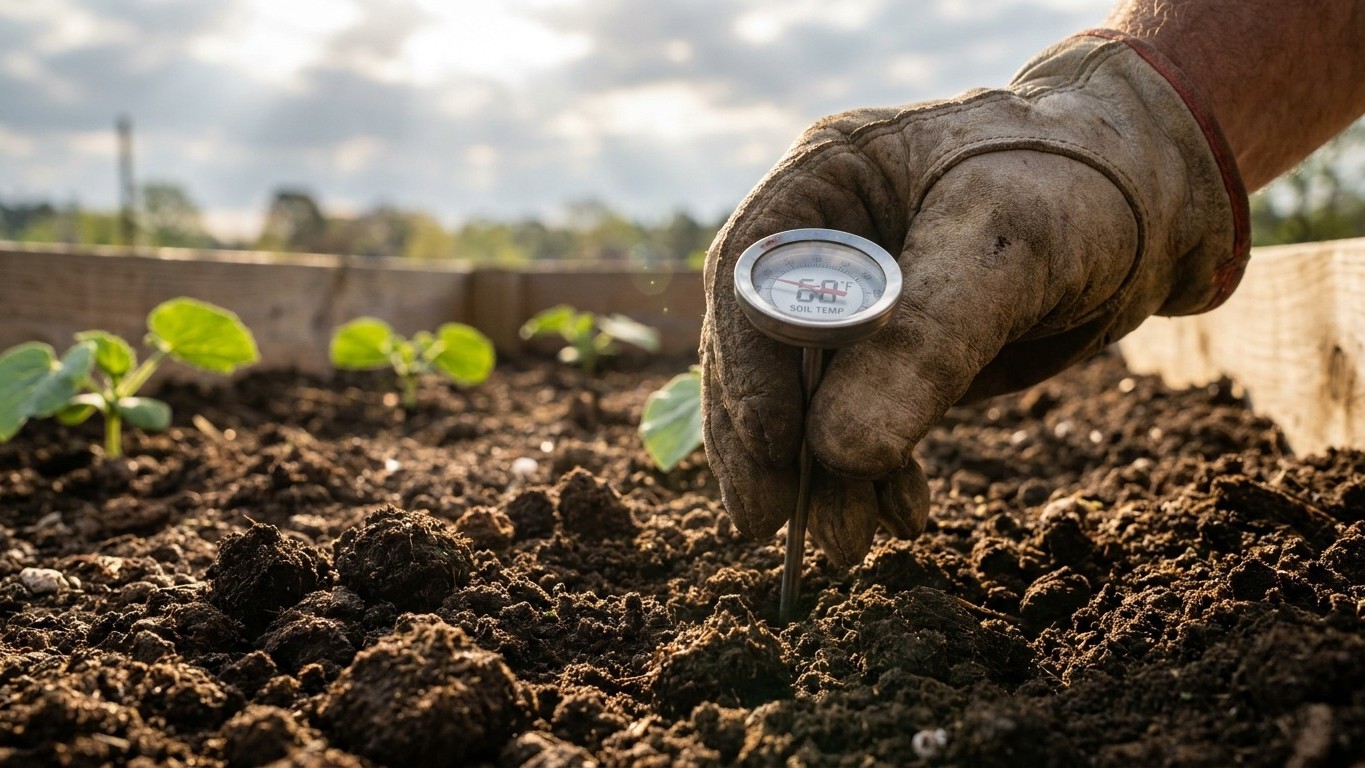
Melon roots stall in cold ground regardless of what the air temperature says. Soil needs to sit reliably in the 60s (Fahrenheit) before seed germinates well or transplants stop sulking, and that threshold typically arrives two to four weeks after the last frost date, not on it. In practice, that pushes direct seeding or transplanting into late May or even early June across most of the state. Rushing it doesn’t save time, it just produces a stunted plant that a warm-soil planting would have outgrown within days anyway.
Why the frost date moves so much across the state
The spread between April 16 and April 29 isn’t noise, it reflects real geography. Wisconsin’s hardiness zones run from 3b in the far north to 6a near the Lake Michigan shoreline (USDA Plant Hardiness Zone Map, 2023 edition, based on 1991-2020 extreme minimum temperatures), and that lake moderates spring warming near the shore while inland and northern counties swing colder and later. A gardener in a lakeside county can often push planting earlier than one thirty miles inland, even at the same latitude. This is one of the reasons a single statewide planting calendar never quite fits everyone.
Soil-warming technique matters more here than in milder states. Black plastic mulch laid a week or two before planting, raised beds (which drain and warm faster than flat ground), and floating row cover pulled over young plants all buy real days in a state where the growing window is already tight. None of these are exotic moves, they’re standard practice for northern melon growers, and they matter more than the exact calendar date chosen for planting.
How long the season lasts here
Subtracting the two NOAA frost windows gives the real answer to “how much time do I have.” With the last spring frost between April 16 and April 29, and the first fall frost between October 17 and October 29 (same source, same station), the frost-free season runs from about 171 days at the short end to about 196 days at the long end. That’s a real difference, roughly three and a half weeks, and it depends on exactly where in Wisconsin the garden sits.
A window at the long end, closer to 196 days, gives some room to maneuver: an early planting in late May, and enough season left afterward that a failed first attempt (cold snap, poor germination, pest damage) isn’t fatal. A window at the short end, closer to 171 days, removes that safety net. The first planting has to work, because there usually isn’t time to start over and still reach a ripe melon before fall frost shuts things down.
That distinction changes how much a transplant is worth. Melons resent root disturbance, so direct seeding is often the simpler, lower-risk choice where the season is long enough to absorb a slow start. But in the shorter end of Wisconsin’s range, a transplant started indoors under lights and moved out carefully (root ball intact, no delay in hardening off) can buy two to three weeks that the calendar otherwise won’t give. Whether that trade-off is worth the extra fuss is really a question of which end of the state’s frost range a given garden falls into.
Gardeners weighing a second sowing, or wondering whether to stagger plantings for a longer harvest, should work through the timing logic in our succession sowing guide, since the math changes with each week of season length available.
Heat and water in Wisconsin
Melons ripen on accumulated warmth, not on the calendar, and Wisconsin doesn’t hand out much of it. The Milwaukee reference station averages just 7.0 days a year at or above 90F (NOAA NCEI Climate Normals, 1991-2020). That’s a modest heat load, well short of what melon growers further south rely on, and it means the sowing date and the soil-warming technique matter more here than the raw temperature ever will. A vine that goes into cold or barely-warmed soil in a state with only seven hot days a year has little margin to make up for lost time later in summer.
Rainfall complicates things in the other direction. Summer rain across June, July and August averages about 11.4 inches (34.6 inches over the full year), with June the wettest month at 4.38 inches, July the driest at 3.4 inches, and August back up to 3.65 inches. That’s a wet start to the growing season by melon standards, and it arrives right when young plants are most vulnerable to fungal disease, not when they most need supplemental water.
This is not a hot, dry-summer state where irrigation decides fruit size and the final two weeks before harvest decide sugar content, the way it might in a warmer, drier territory. In Wisconsin, the bigger risk is a cool, damp stretch of June or July that keeps foliage wet, slows ripening, and invites powdery mildew and other fungal problems on the vines. Spacing plants for airflow, watering at the soil line rather than overhead, and avoiding working in the patch while leaves are wet all matter more here than any irrigation schedule.
Soil type still decides how far that 11.4 inches actually goes. The same rain drains through sandy ground within a day, while clay holds it for a week or more, so two gardens twenty miles apart can have very different watering needs even under identical rainfall. A rain gauge on the actual plot, not the regional average, is what settles whether supplemental watering is needed in a given week.
Which melons suit Wisconsin
Given a season that runs 171 to 196 days, a heat load of only seven days above 90F a year, and a wet start to summer, three things matter more than any variety name: earliness, disease resistance, and airflow. The state’s frost window rewards the earliest-maturing types in whichever melon category is being grown, simply because there’s rarely spare season to wait out a slow-ripening type. The wet June and July rewards types and rootstocks bred for resistance to powdery and downy mildew, since damp foliage is the recurring risk here, not drought. And the modest heat load rewards techniques, black plastic, row cover, raised beds, that make up for lost warmth rather than varieties bred for extreme heat tolerance, which this state simply doesn’t produce.
What this page won’t do is name a specific cultivar. That’s not caution for its own sake, it’s because variety performance depends on trials run in actual Wisconsin conditions, soil, and disease pressure, and those trials are exactly what the University of Wisconsin-Extension conducts and publishes for the state’s growers. A variety that thrives in a trial garden in one county can underperform thirty miles away under different soil and microclimate, and a name printed here without that local grounding would be a guess dressed up as advice.
The extension service’s county offices and published variety trial results are built specifically to answer the question this page can only frame: which type, in which category, has actually performed well under Wisconsin’s short season, cool summers, and wet start to the year. That’s the recommendation worth trusting, because it’s the one backed by seed planted in this state’s actual dirt, not a general description of a climate zone.