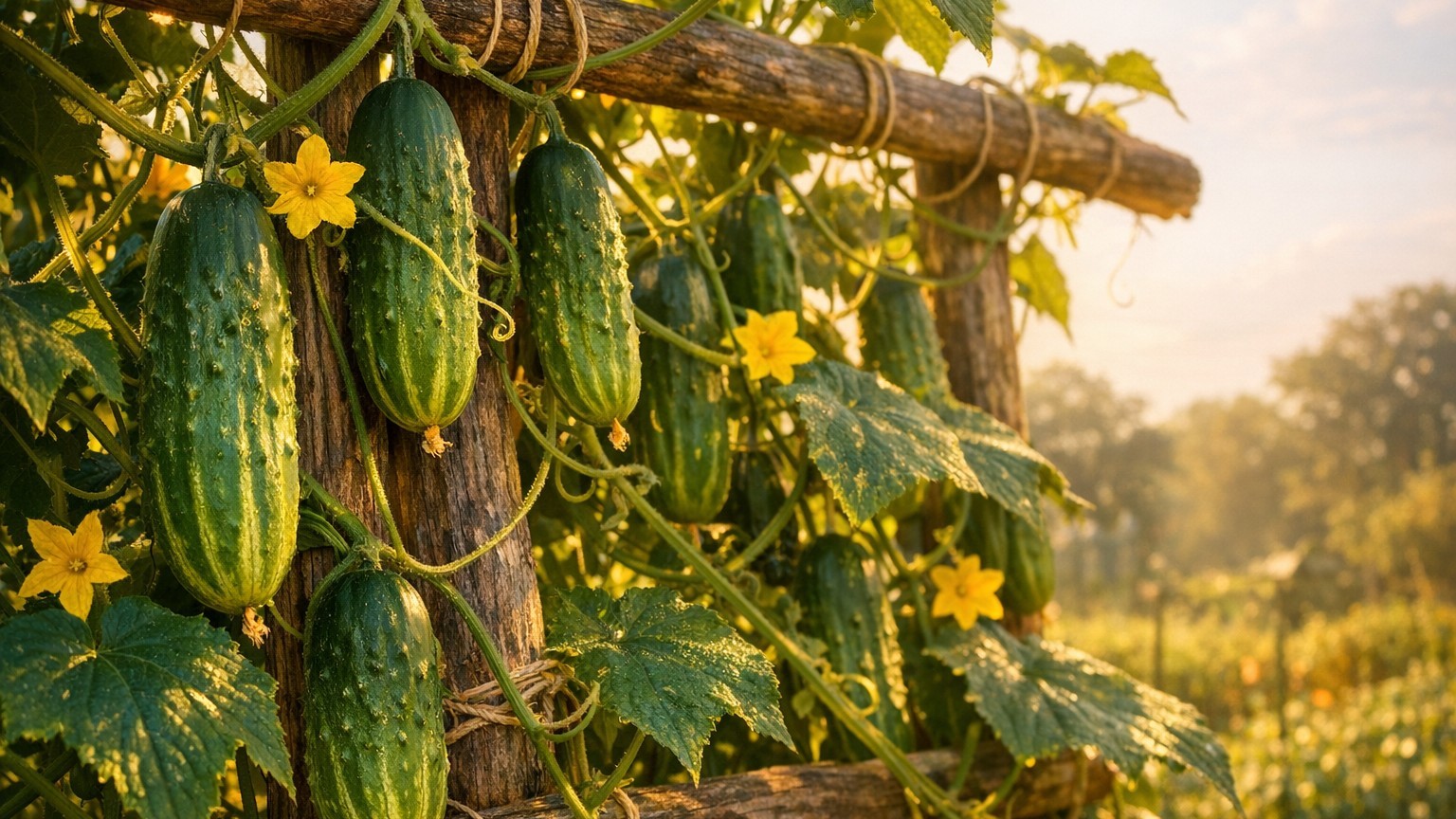

Wyoming’s growing season is too short and too unpredictable for long-maturing vining slicers planted straight from seed. The safer bet is compact, fast-maturing pickling or bush-type cucumbers, started as transplants or under cover, with parthenocarpic (self-fruiting) types worth considering where pollinator activity is short-lived at altitude.
The short answer for Wyoming
Start with the calendar, because it decides everything else. The last spring frost falls somewhere between May 7 and May 18, and the first fall frost arrives between September 24 and October 5. Stack the earliest possible spring frost against the latest possible fall one and the working season shrinks to around 129 days in a rough year, stretching to about 151 days in a generous one. At 6,000 feet, that’s already described as roughly 130 frost-free days, with frost possible in any month at higher elevations. That single fact rules out the slowest-maturing types before you even open a seed catalog.
Heat is not the limiting factor here the way it is farther south. Cheyenne’s normals show about 10.4 days a year reaching 90°F or higher, a moderate heat load rather than a punishing one. Cucumbers still want warmth to germinate and set fruit, but Wyoming gardeners are not fighting scorching afternoons so much as a compressed window to get any fruit at all.
Given that math, the decision comes down to type, not brand name. Bush and compact vining habits make sense for anyone gardening in a raised bed or a spot where a cold frame or row cover has to go over the plant more than once in a season. Pickling types generally reach harvest faster than large slicing types, which matters when every week of the growing window is accounted for. Parthenocarpic varieties, which set fruit without pollination, are worth asking about at your local extension office if a short, unpredictable bloom period is a concern, since they don’t depend on a steady overlap of male and female flowers and pollinator visits.
Transplants, not direct-seeded rows, are how most Wyoming gardeners buy back the weeks that frost dates take away. Starting seedlings indoors three to four weeks before the local last-frost date, then hardening them off and setting them out under a cloche or row cover, effectively banks time the open ground can’t offer. This page won’t name a specific cultivar, because no two Wyoming counties share the same trial results or the same microclimate. The University of Wyoming Extension, at uwyo.edu/uwe, is where the actual variety names tested for your area live.
What will not work here
Long-season vining slicers, direct-seeded into open ground on the last-frost date, are the most common disappointment. Even in the better years, that leaves roughly 150 days at best, and many varieties in that slicing category need most of that just to reach first harvest, leaving little margin for a slightly early fall frost or a cool stretch in July. Direct seeding compounds the problem: cucumber seed needs warm soil to germinate quickly, and soil temperature lags behind air temperature for weeks after the frost date passes. A gardener who waits for soil to warm naturally before direct seeding can lose two to three weeks that a transplant would have banked already.
Weekly watering schedules built for wetter regions also fail here. Summer rainfall across June, July and August averages about 5.8 inches total, and August, the driest of the three, brings only 1.52 inches on average. That’s not enough moisture arriving on its own to carry a shallow-rooted crop like cucumber through a Wyoming summer, even one without extreme heat. A once-a-week soaking, timed for a humid-climate garden, leaves the soil dry for days at a stretch here, and cucumbers respond to inconsistent moisture with bitter fruit and stalled growth long before they wilt visibly.
The disease logic runs backward here
Advice written for humid states tells gardeners to space cucumbers wide and keep foliage off the ground to prevent fungal disease. In Wyoming’s dry summer air, with only about 1.5 to 2.2 inches of rain per month, foliar fungal pressure is rarely the driving risk. The bigger threat is moisture loss: heavy mulch, which a humid-state gardener might avoid to keep air moving around the leaves, is instead an asset here for holding soil moisture between waterings. Importing humid-region spacing and mulching advice wholesale, without adjusting for the numbers above, is a mismatch that shows up as scorched or bitter fruit rather than mildew.
Unprotected plantings at higher elevation are the other clear failure point. Where frost is possible in any month, a cucumber planted without a row cover or cold frame on hand is one cold night away from losing the whole crop, regardless of which variety was chosen.
What changes across Wyoming
Wyoming’s hardiness range runs from zone 3a to zone 6a on the USDA Plant Hardiness Zone Map, a spread wide enough that no single planting recommendation covers the whole state. That range is built on one variable, the average annual extreme minimum winter temperature, so it speaks to overwintering risk more than summer growing conditions, but it’s also a useful proxy for how much elevation and latitude reshape a Wyoming garden from one county to the next.
A gardener working in a zone 3a mountain valley is dealing with a materially shorter and colder season than one in a zone 6a low-elevation basin. In the coldest pockets, floating row covers and cold frames stop being optional extras and become standard equipment, since frost risk extends further into what would otherwise count as the growing season elsewhere. In the milder, lower-elevation parts of the range, gardeners get closer to a conventional summer timeline, with more margin to direct-seed and less need to baby transplants through late cold snaps.
The heat and frost figures cited for this page come from a reference station near Cheyenne, which sits toward the milder end of that zone range. A garden at significantly higher elevation, or farther north, should expect a shorter frost-free window and a lower heat load than the Cheyenne numbers suggest, not the same numbers scaled down slightly.
None of this is something a state-level page can resolve for an individual garden. The right move is checking the USDA Plant Hardiness Zone Map directly for the specific location, rather than assuming which end of the 3a-6a range applies.
Where to check this for your own county
The University of Wyoming Extension, at uwyo.edu/uwe, is the source built for the county-level detail this page can’t provide. County extension offices typically maintain their own planting calendars, adjusted for the local frost dates and elevation rather than a statewide average, and they publish results from variety trials run specifically for Wyoming conditions.
Two things are worth looking for once there. First, the local planting calendar for cucumbers or vegetables generally, which will reflect the actual frost-free window for that county rather than the state-level range cited on this page. Second, any list of varieties trialled locally, which is where the specific cultivar names this page deliberately avoids naming would come from. A statewide page can responsibly describe types, bush versus vining, pickling versus slicing, parthenocarpic versus insect-pollinated, but the county office is where a gardener finds out which named varieties in each of those categories actually performed well in trials near them.
A county recommendation outranks a state one every time. Wyoming’s elevation range alone means two gardens 60 miles apart can have meaningfully different frost dates and growing-season lengths, and a county extension office’s calendar reflects that in a way this page, built around statewide normals, structurally cannot. Treat this page as the starting framework, the county office as the correction for the specific plot of ground being planted.
Checking this against your own garden
Every date on this page is a probability built from decades of averages, not a promise about this year’s weather. The garden itself gives better information, once a gardener knows what to watch for.
Soil warmth, checked by hand rather than instrument, is the first and most reliable signal. Cucumber seed germinates poorly in cold soil no matter what the calendar says, so soil that still feels cool and damp several inches down, even after the official last-frost date has passed, is a sign to wait or to keep relying on transplants a little longer.
The first flush of male flowers is the second signal worth tracking. Cucumbers typically produce male flowers before female ones, and a plant that’s flowering but not yet setting fruit is still building the structure it needs; a gardener who sees flowers appear unusually early or late compared to a neighbor’s garden is learning something specific about their own microclimate, whether that’s a warmer south-facing slope or a frost pocket that lags behind the rest of the yard.
First true leaves, the leaves that appear after the initial seedling leaves and actually resemble a mature cucumber leaf, mark the point where a transplant is ready to handle more direct sun and less coddling. A plant slow to reach that stage, compared to the same variety grown the previous year or by a neighbor, is telling the gardener that this particular spot runs cooler or shadier than assumed, information no state-level frost date can supply.