
Collards in Yukon are strictly a short-season, frost-to-frost crop: sow outdoors only after the average last spring frost near June 5, expect a working window of roughly eleven or twelve weeks, and plan for the first fall frost near August 25 to end the harvest. There’s no standing winter crop here, only a single, tightly timed spring-to-autumn planting.
When the soil is warm enough in Yukon

The date that matters isn’t the frost date itself, it’s the soil that follows it. Environment and Climate Change Canada’s Climate Normals for 1981-2010, recorded at the WHITEHORSE A station, put the average last spring frost at June 5. That figure is a mean, not a promise: in roughly half of all years, frost arrives later than that date, sometimes well into the month. Treat June 5 as the midpoint of a risk window, not as a green light.
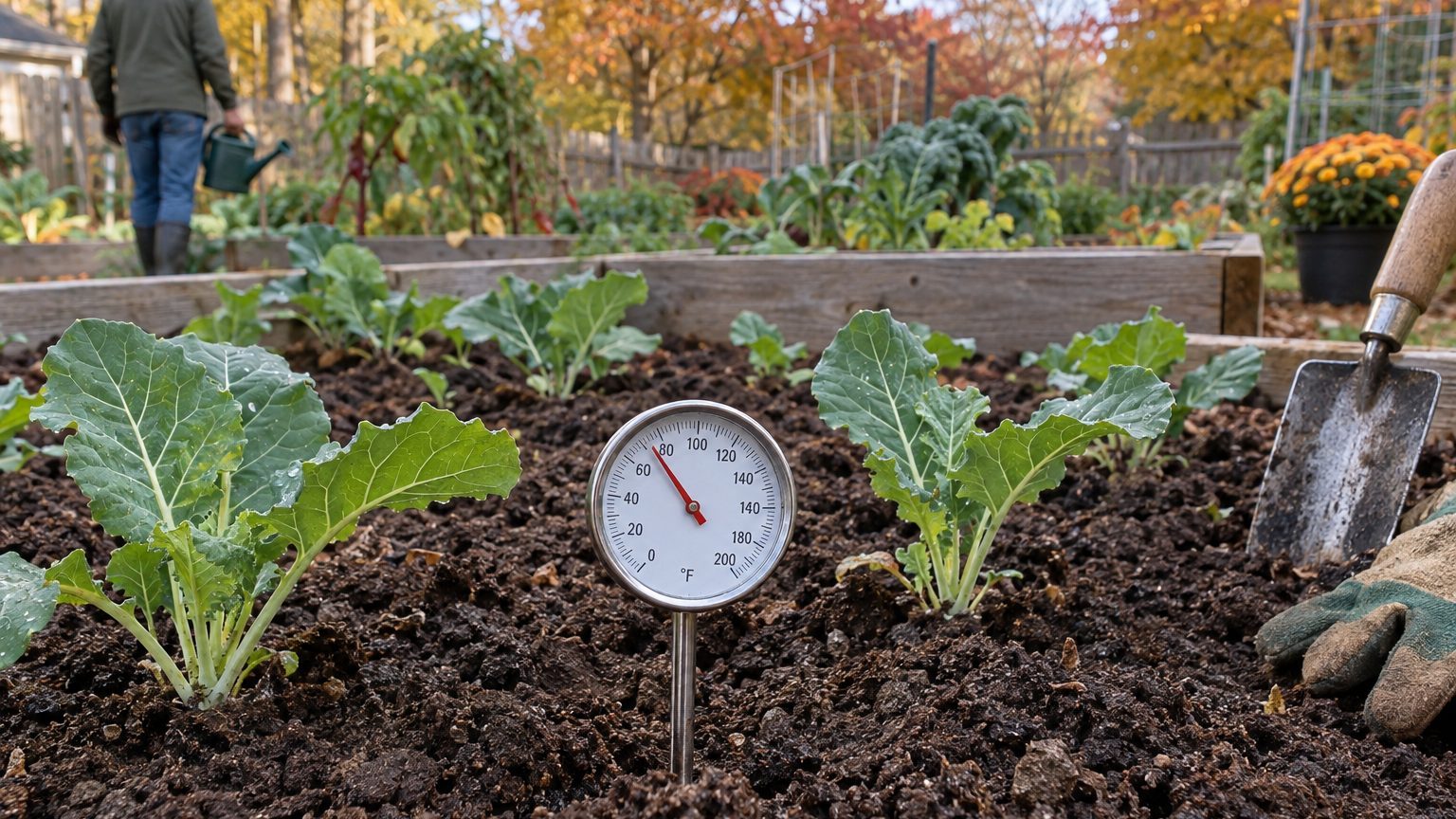
Collards germinate and grow on soil temperature, not air temperature, and soil lags behind the thermometer by days to weeks depending on how wet and shaded the bed is. A frost-free morning on the calendar doesn’t mean the top few inches of a Whitehorse garden bed have warmed enough for seedlings to take off. The practical move is to let the average date pass, then check the ground itself, warm, crumbly, and dry enough to work, rather than sowing on the date alone. A dark mulch or a cold frame pulled back on sunny days can shave a few days off that wait, which matters when the whole season is measured in weeks rather than months.
Yukon sits in Canadian hardiness zone 1b, based on Natural Resources Canada’s 1991-2020 normals for the reference city. That’s the Canadian seven-variable system, and it does not translate into a USDA zone number; the two scales measure different things and NRCan itself warns against converting one into the other. What the zone number confirms here is what the frost dates already say: this is a short, cool growing region where timing decisions carry more weight than variety choice alone.
One more thing worth setting straight before the seed goes in the ground: collards are brassicas, and so are cabbage, kale, mustard, turnip, and rutabaga. Any pest or disease pressure that shows up on one shows up on the others, which means a Yukon gardener who moves collards into a bed that grew turnips or cabbage the year before hasn’t rotated anything at all. Treat the whole brassica family as one rotation group, and manage pests through timing, spacing, and airflow rather than reaching for a product first.
How long the season lasts here
Subtract the two ECCC normals for the WHITEHORSE A station, average last spring frost on June 5 and average first fall frost on August 25, and the frost-free window comes to about 81 days. That’s the entire growing season for anything tender, collards included, and it’s short by almost any comparison across this site’s territory pages.
An 81-day window changes what’s worth attempting. In a region with a four or five month frost-free stretch, a gardener can sow collards in spring, harvest through summer, then sow a second round for a fall crop, stretching the harvest across the whole season. Yukon doesn’t offer that luxury. One sowing, made as soon as the soil is workable and warm, is realistically the only sowing this window supports. A second planting made even two or three weeks after the first risks running out of frost-free days before the plants reach a useful size, and there’s no cushion for a slow, cool start to the summer eating further into that margin.
That also settles the transplant question. Where the season runs long, starting seedlings indoors and setting them out is mostly a convenience. Where it runs 81 days, starting indoors four to six weeks before the average last frost and transplanting hardened-off seedlings right at the edge of that frost date is close to the only way to get a full-sized plant before the fall frost arrives. Direct-seeding still works, but it uses up growing days that a short-season garden can’t spare. For anyone weighing whether a second sowing is worth the risk, or how to stagger plantings in a territory with more room to work with, the succession sowing guide on this site lays out the timing math for windows longer than this one, and makes clear why Yukon’s own window doesn’t leave space for the same approach.
Heat and water in Yukon

There’s no meaningful count of days above 90°F to report for this territory, and no verified summer rainfall figure from the WHITEHORSE A station in the data behind this page, because at this latitude and elevation that kind of extreme heat almost never happens. The number that actually decides how this crop gets grown here isn’t a summer figure at all. It’s the winter one.
The mean daily minimum of the coldest month at the Whitehorse reference station is -19.2°C. That’s not a record low or a monthly average, it’s the typical low night of the coldest month, and it’s a number that ends any conversation about collards surviving in the ground over winter. In territories where the coldest month stays mild, collards can be left standing outdoors and picked leaf by leaf from November into March. Nothing about a coldest-month minimum near -19°C allows that here. Yukon’s collard crop is an autumn crop, full stop: it grows through the short summer and finishes at the first hard freeze, not a plant that waits out the cold season in the bed.
That reframes what to actually watch for through the growing months. Instead of tracking heat stress or drought, a Yukon gardener should watch for the opposite problem: a cool, short summer that slows growth and can leave plants smaller at frost than a longer season would allow. Cool, damp conditions late in the season also favor mildew and other foliar disease more than they favor lush growth, so spacing plants for airflow and avoiding overhead watering late in the day matters more here than in a hot climate, where the bigger risk is usually the plant simply cooking in the afternoon sun. Watering deeply but less often, and letting the soil surface dry between waterings, does more for a Yukon collard bed than any amount of shade cloth would.
Which collards suit Yukon
Match the type to the two numbers that define this territory: an 81-day frost-free window and a first fall frost that arrives, on average, by August 25. That combination points toward the earliest-maturing types available in the collard family, chosen specifically for northern or short-season growing rather than for size or leaf yield. A plant bred for a five-month growing season simply won’t finish here most years.
Cold tolerance in the leaf itself is worth weighing too. Collards generally handle a light frost better than many other greens, and in a territory where the average fall frost lands in late August, that tolerance can buy an extra week or two of harvest into early autumn before a hard freeze truly ends things. Because damp, cool late-season conditions raise the risk of mildew and other leaf disease here, disease resistance is a more useful selection criterion in Yukon than it would be in a drier or hotter territory, where sun and heat stress take priority instead.
None of that adds up to a variety name, and that’s deliberate. The seed trials that actually test which types mature fastest and hold up best under Yukon’s specific frost pattern and daylight conditions happen at the extension and agricultural research level, not on a general growing guide. Canada’s federal agriculture department, at agriculture.canada.ca, is the starting point for that regional trial information, since this page has no way to verify which specific collard types have actually been tested and grown successfully at this latitude. Choosing by type, then confirming with a local source, beats picking a name off a seed rack that was trialled somewhere with a five-month growing season and no relationship to a Yukon August frost.
Whatever type ends up in the ground, keep it in rotation with the wider brassica family in mind, not planted where cabbage, kale, mustard, turnip, or rutabaga grew the previous year. In a growing region this short, a bed weakened by repeated brassica pests or disease doesn’t get a second chance to recover before the season runs out.