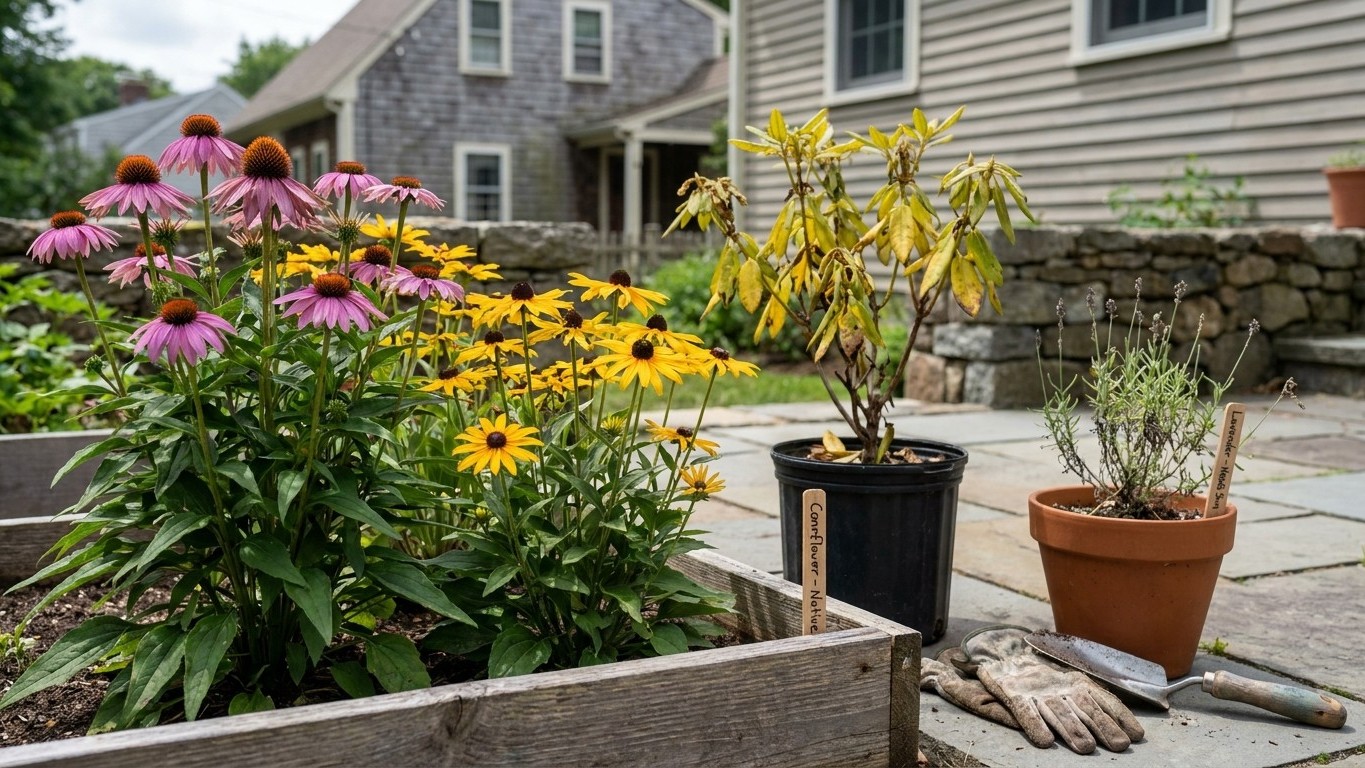

Massachusetts flowers that thrive share two traits: they tolerate a real winter and they don’t wilt the first humid week of July. The USDA Plant Hardiness Zone Map (2023, based on 1991-2020 normals) puts the state at zones 5a to 7b, and near Boston, NOAA’s NCEI 1991-2020 climate normals record the coldest month’s average low at 23.1°F, cold enough to kill anything rated below zone 6 that lacks winter protection. Before buying anything, match the plant tag’s hardiness rating to your own zone, not the mildest one listed for the state.
What thrives in Massachusetts

Some flowers shrug off a Massachusetts winter and come back stronger every June; others limp through July and quietly give up. The difference almost always comes down to one thing: whether the plant on the tag is actually rated for your yard’s cold, not the mild end of the state’s range. So before you dig a single hole, walk out back, check where your property actually sits on the hardiness map, and buy only what’s rated for that number or colder. Everything else on this page builds off that one check.
Cold hardiness comes first
With the USDA map putting most of the state at zones 5a to 7b, the safest bet for a perennial border is anything rated hardy to zone 5 or lower. Peonies, daylilies, hosta, and black-eyed Susan all fall in that range and shrug off a Massachusetts winter without mulch beyond a light layer. Anything rated zone 6 or 7, like many lavenders and some hydrangea cultivars, is a gamble in the colder inland pockets and the Berkshires, where actual winter lows run below the Boston reference used for the state’s official figures. Gardeners just across the border in New Hampshire face the same colder-inland problem, and the reasoning in our guide to flowers that thrive in New Hampshire applies just as well to anyone gardening west of Worcester or in the Berkshire foothills.
Humidity and drainage matter more than heat
Because the heat load here is moderate, the bigger threat to a flower bed is often wet feet in spring and humid air in midsummer, not scorching sun. Plants prone to powdery mildew or root rot in damp soil, like tall garden phlox and bee balm, need airflow and a spot that drains rather than a spot that bakes. Raised beds or amended clay soil solve most of this problem before it starts. Silvery, drought-tolerant plants like Russian sage and catmint handle the occasional dry stretch without extra watering once they’re established, which makes them dependable choices for a border that isn’t watered every day.
Native plants worth the space
Plants native to the wider Northeast region earn their space in a Massachusetts border because they need less babying once they’re settled in, and they feed pollinators that evolved alongside them. Establishment takes one to two growing seasons, during which a native still needs regular water, but after that most need little beyond an occasional dry-spell soak. That’s a real difference from imported ornamentals that often expect consistent moisture and fertilizer for their whole lives.
Plants to look for
Species native to New England and the broader Northeast that perform reliably in a home border include:
- New England aster (Symphyotrichum novae-angliae) for late-season purple bloom that feeds migrating monarchs
- Butterfly weed (Asclepias tuberosa) as a host plant for monarch caterpillars
- Bee balm (Monarda didyma) for hummingbirds and bumblebees
- Wild columbine (Aquilegia canadensis) for early-spring color in part shade
- Cardinal flower (Lobelia cardinalis) for wet, low spots where other perennials struggle
- Black-eyed Susan (Rudbeckia hirta) as a tough, self-seeding filler
All of these are winter hardy well within the state’s USDA range and don’t need the extra protection that a marginal zone 7 ornamental requires here. Buy the straight species where you can rather than a heavily bred cultivar. Straight species tend to keep the bloom shape, scent, and nectar chemistry that local bees and butterflies actually recognize, while some double-flowered cultivars have been bred in ways that make nectar harder to reach.
A native-heavy border also cuts down on fertilizer and pesticide use, since these plants aren’t fighting a soil and climate they weren’t built for. That’s a meaningful saving over a season, especially in a state where the growing season between the last spring frost and first fall frost is not particularly long to begin with.
Perennials that come back

At zones 5a to 7b, a wide range of perennials return reliably year after year without winter protection, but plenty of garden-center favorites sold in Massachusetts are perennial only in warmer climates and get grown here as annuals instead.
Reading a plant tag against your zone
A tag that says “hardy to zone 6” is telling you the plant survives winter down to that zone’s cold threshold. If your yard sits in a colder pocket, the tag’s promise doesn’t hold, and the plant may need a sheltered spot, a heavy mulch layer, or replacement most springs. Check your specific zone, not the state average, since the range from 5a to 7b covers a real difference in what survives a hard winter unprotected.
| Plant | Typical hardiness zone | Behavior in Massachusetts |
|---|---|---|
| Peony | Zone 3-8 | Reliable perennial statewide |
| Daylily | Zone 3-9 | Reliable perennial statewide |
| Lavender (‘Munstead’, ‘Phenomenal’) | Zone 5-9 | Survives in well-drained beds; fails in wet clay or exposed sites |
| Snapdragon | Zone 7-10 | Grown as an annual here, killed by winter |
| Lantana | Zone 9-11 | Grown as an annual here, killed by winter |
| Hosta | Zone 3-9 | Reliable perennial statewide, even in shade |
Snapdragons and lantana are good examples of the mismatch: both are true perennials where winters stay mild, and further south in states like North Carolina they can persist for years, a difference covered in our guide to flowers that thrive in North Carolina. In Massachusetts, treat them as one-season color and replant each spring rather than expecting them back.
Putting a border together
A border that holds interest from spring through fall is built in layers, not planted all at once in a single flush of color.
Height, bloom time, and repetition
Put the tallest plants, like Joe-Pye weed or tall garden phlox, at the back or center of an island bed, mid-height perennials like coneflower and black-eyed Susan in the middle, and low, spreading plants like catmint or creeping phlox at the front edge. Stagger bloom times so something is flowering from the point after the last spring frost through the first fall frost. Near Boston, NOAA’s 1991-2020 normals put that window at roughly April 1 to April 8 for the last spring freeze and November 3 to November 14 for the first fall freeze, though inland and higher-elevation parts of the state see a shorter season than that.
Repeat two or three colors through the border rather than scattering one of everything. A border with a repeated run of purple coneflower, purple aster, and purple salvia reads as a designed space. One of each in six different colors reads as a plant collection, not a garden.
- Leave 18 to 24 inches between mature perennial clumps so they aren’t fighting for root space by year three
- Plant in odd-numbered groups of three or five rather than singly, for a fuller look sooner
- Mulch bare soil between young plants the first year to keep weeds down while the border fills in
Resist the urge to fill every gap the first spring. Perennials spread, and a border that looks sparse in May usually looks crowded by August of the second year.
Local help
The UMass Extension maintains plant lists and diagnostic help specific to Massachusetts growing conditions, and its Master Gardener volunteers run plant clinics in many counties through the growing season. If you’re planning a border anywhere else in the state, our Massachusetts guides hub covers vegetable and lawn timing questions the extension gets asked most, alongside this flower-specific advice. Bring a soil sample or a photo of a struggling plant to a clinic before guessing at a fix.
Common questions
Can I grow hydrangeas in Massachusetts?
Panicle hydrangea (Hydrangea paniculata) and smooth hydrangea (Hydrangea arborescens) both bloom on new wood and survive the state’s winters without issue. Bigleaf hydrangea (Hydrangea macrophylla) is riskier because its flower buds form on old wood and can be killed by a cold winter even when the plant itself survives, which is why it sometimes leafs out fine but never flowers.
Why did my lavender die over the winter?
Wet soil in late winter is a more common killer than the cold itself. Lavender planted in heavy clay or a low spot where meltwater collects tends to rot at the crown before spring, even in a mild year. Raising the bed a few inches and choosing a sunny, well-drained spot fixes most repeat failures.
When is it safe to plant dahlias and other tender bulbs outside?
Wait until after your local last spring frost. Near Boston, NOAA’s 1991-2020 normals put that window at April 1 to April 8, but that’s a coastal, urban reading, and inland and higher-elevation areas typically see frost risk continue several weeks longer, so check conditions locally before moving tender bulbs outdoors.
Do I need to deadhead perennials for them to come back next year?
No, deadheading affects this season’s bloom length, not whether the plant survives winter. Most hardy perennials return from the roots regardless of whether spent flowers were removed, though deadheading some repeat bloomers like coneflower can extend flowering later into the season.
Related guides
- Flowers That Actually Thrive in New Hampshire, and the Ones That Struggle
- Flowers That Actually Thrive in Vermont, and the Ones That Struggle
- Flowers That Actually Thrive in New Jersey, and the Ones That Struggle