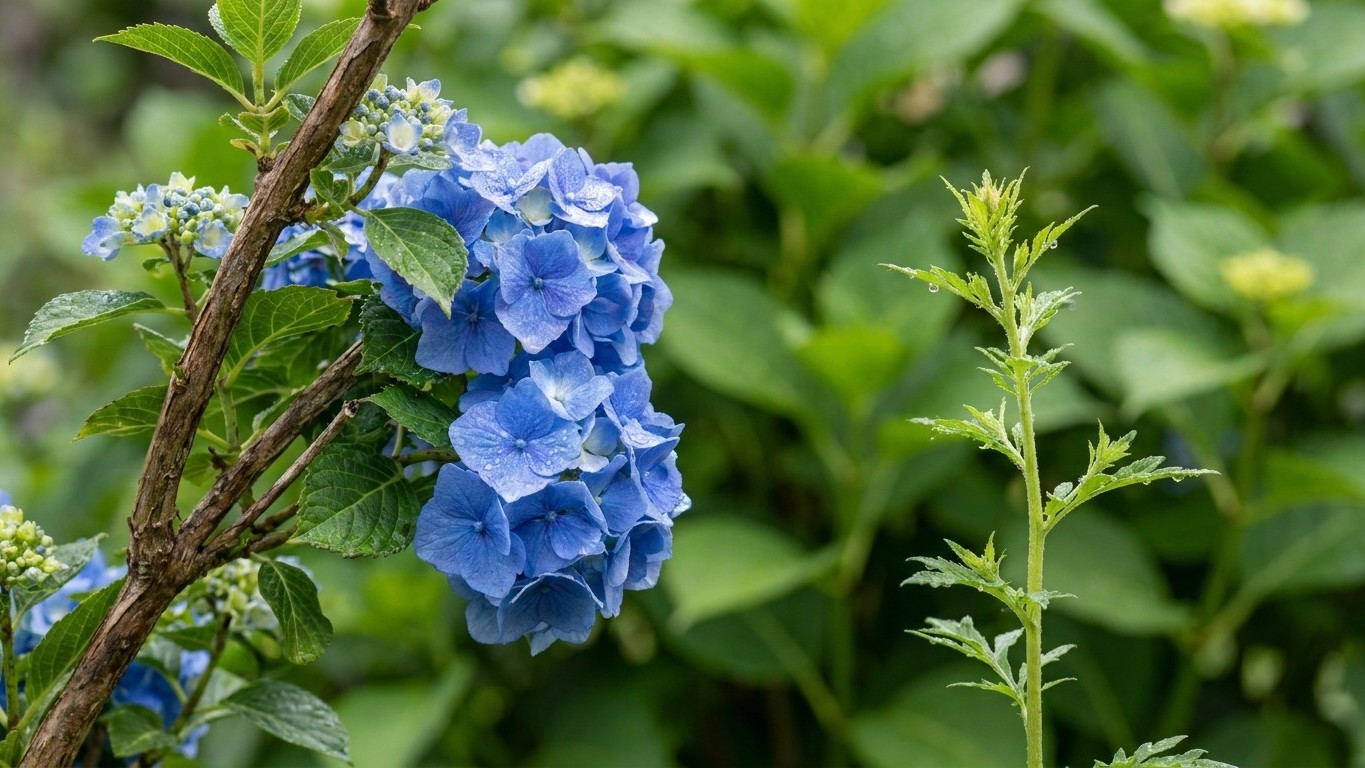

Panicle and smooth hydrangeas such as Annabelle come through Massachusetts winters with little drama, and oakleaf hydrangeas are hardy but do best in a sheltered spot inland. Bigleaf hydrangeas, the mopheads and lacecaps sold in blue and pink, survive too, but they often lose their flower buds and sometimes their stems. A cultivar’s zone rating tells you whether the plant lives. Its bud habit tells you whether it blooms. Those two traits matter more than any single frost date.
What this comes down to in Massachusetts

At Boston’s Logan station, the last spring freeze falls between April 1 and April 8, and the first fall freeze between November 3 and November 14, according to NOAA NCEI climate normals. Logan is a waterfront urban station and among the mildest spots in the state, so inland suburbs and the Berkshires get frost earlier in fall and later in spring.
Those dates matter because of how hydrangeas set flowers. Bigleaf and oakleaf types form next summer’s buds on this year’s stems, in late summer. A brutal January, or a freeze after a warm spell has coaxed the buds open, kills them while the stems stay green. Panicle and smooth hydrangeas bloom on stems grown the same spring, so winter can cut them to the ground and they still flower.
The USDA Plant Hardiness Zone Map puts Massachusetts anywhere from zone 5a to 7b. That system rests on one variable, the average annual extreme minimum temperature. It says nothing about late frosts, which is why bud habit deserves equal weight. The cultivars below run from most vulnerable to hardiest. Growers’ ratings differ slightly between nurseries, so read them as approximate.
Nikko Blue
This classic bigleaf blooms only on old wood and is usually rated for zone 6. Near the coast, on the Cape and on the islands, it often flowers well. Inland it frequently leafs out beautifully and never blooms, because the buds died over winter.
Snow Queen
An oakleaf hydrangea, rated for zone 5. It also blooms on old wood, but its buds stand up to cold better than bigleaf buds do. White cone-shaped flowers, burgundy fall leaves and peeling bark give it three seasons of interest. Inland gardeners should give it a sheltered spot.
Endless Summer
This reblooming bigleaf is generally rated for zone 4. It flowers on both old and new wood. When winter wipes out the old-wood buds, shoots grown that season still produce flowers, just later in summer. For gardeners set on blue or pink blooms, it is one of the more dependable bigleaf choices in Massachusetts.
Little Lime
A dwarf panicle that stays compact and is rated for zone 3. Flowers open lime green and age to pink on stems grown that spring. Winter has almost no say in whether it blooms, which makes it a good pick for small yards and exposed sites.
Limelight
A larger panicle that commonly reaches several feet. The stiff stems hold their heavy flower heads through wind and wet snow. It handles Berkshire winters without complaint.
Annabelle
A well-known smooth hydrangea, with large white flower heads. It blooms on new wood, so it can die to the ground and still flower the next summer. The stems can flop under rain, which is its main weakness.
Incrediball
A smooth hydrangea in the Annabelle mold, bred for thicker stems that keep the white flower heads upright. It has the same winter habits as Annabelle and the same reliable return after a hard season.
Working it out for your own garden
How do you match a hydrangea to your zone?
Find your zone on the USDA Plant Hardiness Zone Map by ZIP code, then pick cultivars rated at least one zone colder than yours. That gap is a cushion for the winters colder than average, which will come.
Take a garden mapped as zone 6. Nikko Blue is rated for zone 6, so it has no cushion, and one colder-than-average winter can cost it the year’s flowers. Endless Summer, rated for zone 4, has two zones of cushion, and Limelight, rated for zone 3, has three. In a zone 7 garden near the coast, Nikko Blue has one zone to spare and becomes a reasonable gamble.
Then factor in spring. If your garden sits inland, the last freeze comes later than at Logan, where it falls between April 1 and April 8. An old-wood bloomer that starts swelling buds in a warm stretch of late March has more time to be caught. Where late frosts are common, lean toward Endless Summer or the panicle and smooth types.
How can you tell whether winter killed a hydrangea?
Wait until trees around you have fully leafed out. Hydrangeas wake late, and a bare stem in April proves nothing. Then scratch a stem lightly with a fingernail. Green underneath means the stem lives. Brown, dry and brittle means it is dead.
If every stem is brown but fresh shoots rise from the base, the crown survived and a smooth or panicle type will still bloom. A bigleaf in the same condition will grow leaves and skip flowers for the year. Hold off on cutting until you can see which buds are alive, and check When to Prune Hydrangeas in Massachusetts for the timing by type.
What changes across the state
Massachusetts runs from salt water to mountains, and the hardiness range of 5a to 7b reflects it. The Cape, the islands and the Boston waterfront sit at the mild end, where the ocean takes the edge off the coldest nights. Bigleaf hydrangeas have their best odds there.
The Berkshires and the higher hills of central Massachusetts sit at the cold end. Winter lasts longer, spring arrives late, and frost can return after buds have started to move. Panicle and smooth hydrangeas are the safe bets in those places, with oakleaf types in sheltered corners.
Between those poles, the Pioneer Valley and the Worcester hills add their own wrinkles. Cold air settles in low spots on a still night, so a hollow in a yard can frost while a slope above it stays clear. A south-facing wall against the house can hold an old-wood bloomer that would die in the open lawn. Wind matters as much as temperature, since it dries out exposed buds and stems.
Snow cover also changes the picture. A steady snowpack, common in the hills, insulates the base of the plant, so smooth and panicle types regrow reliably. It does nothing for buds on stems that stick out above the snow line, which is where bigleaf flower buds get hurt.
The mistakes this state punishes

A common, costly mistake is buying a bigleaf for its flower color without checking where it came from or how it blooms. A plant in full bloom at a May garden center says nothing about whether it will flower after a winter in your yard. Check the tag for a zone rating and a note on whether it blooms on old or new wood.
The second is pruning at the wrong time. Cutting back an old-wood bloomer in fall or early spring removes the buds you were waiting for. Panicle and smooth types forgive almost any timing, while bigleaf and oakleaf types do not.
The third is reacting to a warm spell. A week of mild weather in March tempts gardeners to pull off winter mulch or wraps, and the hard freeze that follows catches swelling buds. Leave protection in place until the danger of a hard freeze passes in your area, then remove it gradually. Details are in Protecting Hydrangeas Through a Massachusetts Winter.
The fourth is late feeding. Fertilizer in late summer pushes soft new growth that has no time to harden before the first fall freeze, which arrives between November 3 and November 14 at Logan and earlier inland. Stop feeding by midsummer and let the plant harden off on its own schedule.
Checking this against your own garden
The dates and zones above are a starting point, and a figure from one reference station cannot describe every yard in the state. UMass Extension can help you with local frost pockets, the typical date of the last spring freeze and which cultivars tend to hold up in your area. For the rest of the basics, see the guide on growing hydrangeas in Massachusetts.
Common questions
Will Annabelle hydrangea survive a Massachusetts winter?
Yes. It is rated for zone 3 and blooms on new wood, so even a winter that kills every stem above ground leaves the roots alive. It regrows from the base and flowers the same summer.
Why does my bigleaf hydrangea grow leaves but never bloom?
The flower buds, formed on last year’s stems, were most likely killed by winter cold or a late freeze. The plant itself is fine. A reblooming cultivar such as Endless Summer gives you a second chance by flowering on new growth.
Which hydrangeas are best for the Berkshires?
Panicle types such as Limelight and Little Lime, and smooth types such as Annabelle and Incrediball. All are rated for zone 3 and bloom on new wood. Oakleaf types like Snow Queen can work in a sheltered spot.
Do hydrangeas in Massachusetts need winter protection?
Panicle and smooth types rarely do. Bigleaf and oakleaf types in colder inland gardens benefit from mulch around the base and, in exposed sites, a loose wrap around the stems to shield the buds.