
Twenty-five degrees Fahrenheit, give or take, is the average low of New Jersey’s coldest month at the Newark station, and that single number, not the odd record freeze, is what actually decides whether a flower’s roots survive winter here. The other half of the equation is nearly 21 days a year at or above 90F, sticky enough to wear down delphinium and lupine by August even after they’ve cleared the cold. Surviving one season means nothing without surviving both.
What thrives in New Jersey

New Jersey’s growing conditions swing between real winter cold and a long, sticky summer, and a flower has to handle both ends to earn a permanent spot in the border. The USDA’s 2023 Plant Hardiness Zone Map puts the state at zones 6a to 7b, with the coldest pockets in the northwest highlands and the mildest stretches along the coast and in the south. At the Newark reference station, NOAA’s 1991-2020 climate normals put the average low of the coldest month at 25.5F, and that mean minimum, not the record cold snap everyone remembers, is what actually decides whether a plant’s roots make it through winter.
Summer is the other filter. Newark averages 20.8 days a year at or above 90F, per the same NOAA 1991-2020 normals, and combined with the region’s humidity that heat load pushes cool-summer plants like delphinium and lupine into decline by August even where they’d cruise through July further north. A flower bred for the Pacific Northwest or coastal Maine often can’t take a New Jersey July, no matter how well it handled the winter before it.
Families that carry both traits
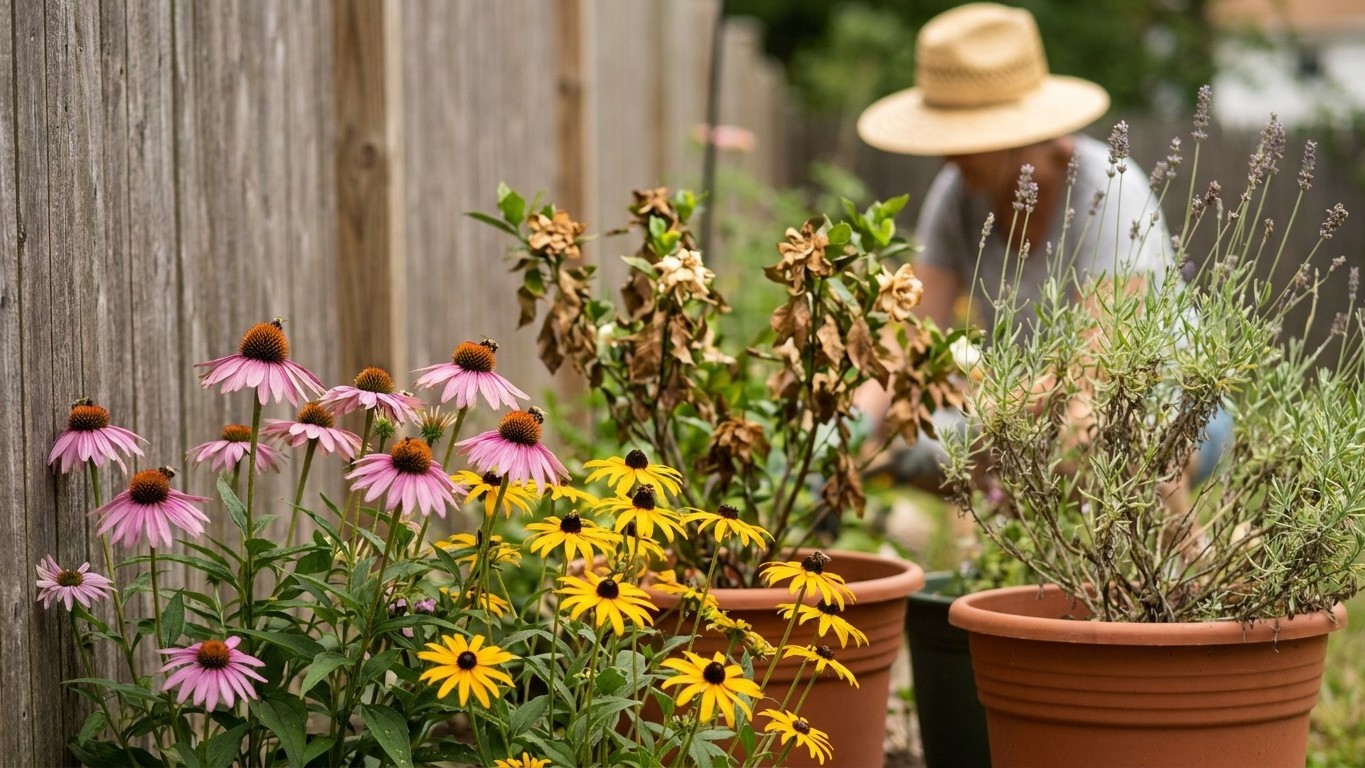
The daisy family, Asteraceae, does the heavy lifting in most New Jersey borders for a reason. Coneflower (Echinacea), black-eyed Susan (Rudbeckia), and the fall-blooming asters combine cold hardiness well below zone 6a with real tolerance for humid, muggy summers. Daylily (Hemerocallis) and garden phlox (Phlox paniculata) are the other two workhorses most gardeners lean on, and sedum, now often sold under the name Hylotelephium, adds drought tolerance for the sandy, fast-draining soils common in the Pine Barrens and along the shore.
Gardeners in the milder zone 7b pockets along the coast, similar in winter severity to parts of coastal New York covered in our guide to flowers that thrive in New York, can push the envelope with a few marginally hardy shrubby perennials that would fail outright in the colder 6a gardens of the northwest. Match the plant to your own zone, not the state average, since a tag that just says “zone 6” is a guess written for the whole range, not for your specific yard.
Native plants worth the space
Why natives need less once established
Plants native to the wider Northeast and mid-Atlantic region evolved with New Jersey’s freeze-thaw winters and humid summers already built into their growth cycle, so they need far less coddling once their root systems are in place. “Established” generally means one full growing season of regular watering while the roots push down past the topsoil. After that, a deep-rooted native like butterfly weed (Asclepias tuberosa) shrugs off dry spells that would wilt a shallow-rooted annual within days.
Purple coneflower (Echinacea purpurea), black-eyed Susan (Rudbeckia hirta), New England aster (Symphyotrichum novae-angliae) and wild bergamot (Monarda fistulosa) are native across most of the eastern half of the country, New Jersey included, and all four earn their space in a sunny border. Swamp milkweed (Asclepias incarnata) tolerates the wetter, heavier clay found in parts of central Jersey, while cardinal flower (Lobelia cardinalis) prefers that same damp ground and draws hummingbirds specifically for its red, tubular blooms.
Joe Pye weed (Eutrochium purpureum) and switchgrass (Panicum virgatum) add height at the back of a native planting without needing staking, and neither expects the rich, heavily fertilized soil that many garden hybrids demand. That lower fertility requirement is part of why natives cost less to keep once they’re settled in: no annual feeding program, and far less supplemental water after the first year or two.
The pollinator case for natives is concrete, not sentimental. Monarch butterflies lay eggs only on milkweed species, so a stand of swamp or common milkweed turns a flower bed into an actual monarch nursery rather than just a nectar stop. Native bees, many of which specialize on a narrow group of plants, show up in far greater numbers on native asters and goldenrod (Solidago) than on their cultivated Asian or European counterparts. Buy straight species or regionally sourced natives where you can, since some native cultivars have been bred for flower size or color in ways that reduce the pollen and nectar the wild species offers.
Perennials that come back

At New Jersey’s USDA zone 6a-7b, a long list of perennials returns reliably every spring: peony, hosta, daylily, hardy geranium, coreopsis, Salvia nemorosa, sedum, garden phlox, and most of the asters and coneflowers already mentioned above. These are typically rated hardy to zone 5 or colder on the tag, which gives them a real cushion below Newark’s coldest-month average low of 25.5F recorded in NOAA’s 1991-2020 climate normals.
Reading the tag against your zone
Plenty of popular garden flowers are perennial by nature but get grown as annuals in New Jersey because their hardiness rating never reaches this far north. Read the hardiness zone printed on the plant tag before assuming “perennial” means it survives your winter. A tag that reads “perennial in zones 8-11” is describing the Deep South and mild West Coast, not a state that drops into zone 6a most winters.
| Plant | Catalog hardiness zone | Behavior in New Jersey (zone 6a-7b) |
|---|---|---|
| Dahlia | Zones 8-11 | Grown as an annual, or tubers dug and stored indoors over winter |
| Lantana (Lantana camara) | Zones 9-11 | Grown strictly as a warm-season annual |
| Verbena bonariensis | Zones 7-11 | Often winterkills in colder 6a gardens, though it self-seeds freely enough to return on its own |
| Salvia guaranitica | Zones 7-10 | May persist through mild winters in warmer 7b pockets, usually needs replanting further inland |
| Canna | Zones 8-11 | Rhizomes need lifting each fall unless heavily mulched in a sheltered spot |
In warmer parts of the country covered in our guide to flowers that thrive in Tennessee, several of these, lantana especially, overwinter outdoors as true perennials. In New Jersey’s colder zone, plan on treating them as one-season plants unless you’re willing to dig and store the roots every fall.
Divide most of the reliably hardy perennials every three to four years, since daylily, hosta and coreopsis all bloom more heavily on younger, less crowded clumps than on an old, congested root mass left untouched for a decade.
Putting a border together
Height, timing, and repetition
A border reads well when height steps down from back to front and something is blooming from spring frost to fall frost, not just for two weeks in July. Stagger tall back-row plants like Joe Pye weed, garden phlox and asters behind mid-height coneflower and salvia, then finish the front edge with low, spreading plants like sedum or creeping phlox so nothing behind it gets hidden.
Succession of bloom matters more than any single show-stopping flower. At the Newark reference station, NOAA’s 1991-2020 climate normals put the last spring freeze between March 29 and April 6, and the first fall freeze between November 4 and November 16, though gardens further from the coast or at higher elevation typically see frost arrive later in spring and earlier in fall, often by a week or two. That leaves roughly seven months to fill with overlapping bloom:
- Early spring: peony, hardy geranium, and early daylily varieties open as soon as the soil warms
- Summer: coneflower, black-eyed Susan, garden phlox, and bee balm carry the border through the hottest, most humid stretch
- Fall: asters, sedum, and goldenrod take over as the summer bloomers fade, right up to the first freeze
Repeat two or three colors through the length of the border rather than scattering one of everything. A border with drifts of purple coneflower and blue salvia repeated every few feet reads as intentional. The same plants used only once each just look like a random plant collection.
Leave real space between new plants based on their mature spread, not their nursery-pot size. A gallon-pot coneflower looks lonely at eighteen inches from its neighbor in May, but by its second summer it fills that gap, and crowding plants too close now just means digging and dividing sooner than planned.
Local help
Rutgers Cooperative Extension runs New Jersey’s state extension service, and its county offices keep plant lists and Master Gardener volunteers who answer soil and pest questions specific to your part of the state, whether that’s the sandy Pine Barrens or the heavier clay further north. For more on gardening elsewhere in the state, our New Jersey guides cover vegetables, shrubs, and lawn care using the same local climate data. Call before you plant something questionable, since a five-minute conversation with a Master Gardener can save an entire season.
Common questions
Will lavender survive a New Jersey winter?
Most English lavender cultivars like ‘Munstead’ and ‘Hidcote’ are rated hardy to around zone 5, so they can survive New Jersey’s zone 6a-7b winters without trouble from cold alone. Lavender usually fails from wet feet, not frost, so plant it in a raised bed or sharply-draining sandy spot, since heavy clay that stays soggy through winter kills it faster than any freeze does.
Why did my dahlias not come back this year?
Dahlias are only hardy to about zone 8, well south of New Jersey’s zone 6a-7b, so an unprotected tuber left in the ground almost never survives winter here. Dig the tubers after the first fall frost blackens the foliage, let them air-dry for a few days, and store them in a cool, dark spot until you replant in spring.
What flowers hold up best against New Jersey’s humidity without getting powdery mildew?
Coneflower, black-eyed Susan, and sedum tend to shrug off a humid New Jersey summer better than garden phlox and bee balm, which are both prone to powdery mildew unless you buy resistant cultivars. Good airflow between plants matters almost as much as variety selection, since crowding is what turns a minor mildew problem into a plant that defoliates by August.
Can I start seeds outdoors before the last frost date?
Hold off on tender annuals until after your local last frost window, since Newark’s airport data from NOAA puts that window between March 29 and April 6, and most home gardens away from the coast see frost linger a week or two past that. Hardy perennials and cold-tolerant seeds like larkspur can go in earlier, but check your own county’s typical frost timing with the extension service rather than relying on the airport figure alone.
Related guides
- Flowers That Actually Thrive in New York, and the Ones That Struggle
- Flowers That Actually Thrive in Pennsylvania, and the Ones That Struggle
- Flowers That Actually Thrive in Rhode Island, and the Ones That Struggle