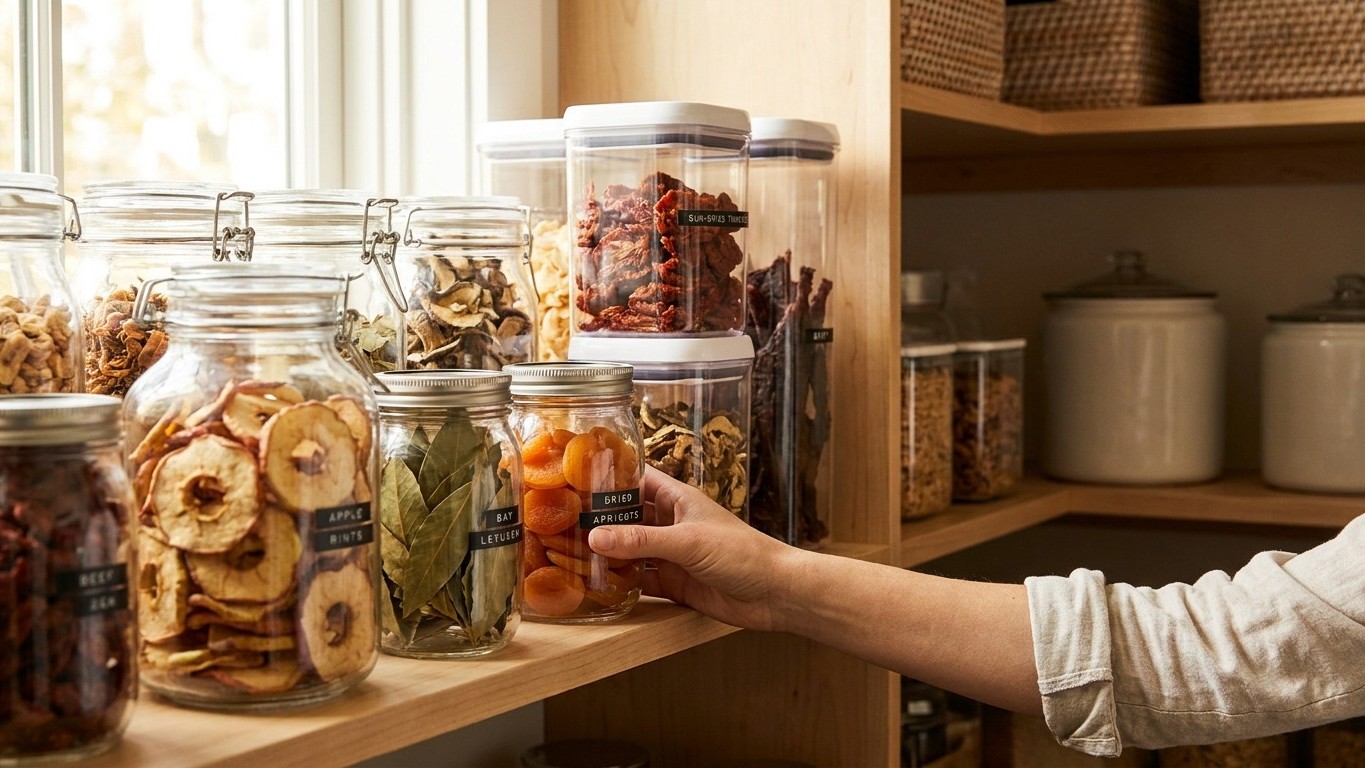

Nothing you do in the pantry decides whether dried food lasts. That decision gets made the moment moisture, light, or heat finds its way back into food that was only ever dehydrated, not sterilized. The National Center for Home Food Preservation (University of Georgia) notes that a dehydrator runs at 140 F, a temperature that pulls water out of food but never gets hot enough to kill everything living in it. That single fact explains almost everything about what shortens dried food and what leaves it untouched.
The short answer

What shortens dried food in storage is water finding its way back in. A food dehydrator dries at 140 F, according to the National Center for Home Food Preservation, and that heat is enough to drive moisture out of thin slices of fruit, vegetable, or meat over time. It is not enough to sterilize the food the way a pressure canner does. Dried food that looks finished can still carry mold spores, bacteria, or enzymes that survived the drying process in a dormant state, simply waiting for enough moisture to wake back up. Storage is the second half of preservation, not an afterthought to it.
What does not shorten dried food, at least not in the way people assume, is the specific dehydrator used to make it. A horizontal-flow dehydrator and a vertical-flow dehydrator both dry food using the same 140 F airflow. Once that food is fully and evenly dry and packaged correctly, the machine that produced it has no further influence on how long it keeps. The equipment matters enormously during drying itself, because uneven airflow, dripping juices, or flavor transfer between trays can leave a batch under-dried or contaminated before storage even begins. But a jar of properly dried apple rings does not “remember” which dehydrator made it.
This is the core distinction worth carrying forward: drying removes water, storage keeps water out. Anything that reintroduces moisture, whether that is a poorly sealed bag, a humid pantry shelf, or food that was never fully dry in the first place, shortens the food’s useful life. Anything that has nothing to do with moisture, light, or heat exposure after the food is packaged tends to be a red herring.
What actually decides it
Moisture migration
Dried food is hygroscopic, meaning it actively pulls moisture from the air around it. A slice of dried mango left uncovered in a humid kitchen will slowly reabsorb water vapor from the air, climbing back toward the moisture level where microorganisms can function again. Since drying at 140 F never sterilized the food to begin with, any moisture that creeps back in gives dormant mold spores and bacteria exactly what they need to become active again. This is the single biggest mechanism behind spoiled dried food, and it explains why airtight packaging matters more than almost anything else in this process.
Heat and light exposure
Separate from microbial spoilage, heat and light drive a slower kind of decline: oxidation. Fats in dried meats and some seeds turn rancid faster in warm, sunlit storage. Color pigments in dried fruits and vegetables fade under light. This is a quality problem more than a safety one, but it is still a mechanism that shortens how long dried food stays worth eating, independent of whether moisture ever gets back in.
The drying method itself
Horizontal-flow dehydrators push air sideways across each tray, which means every tray gets the same treatment and juices from foods like meat or tomatoes drip downward, away from the heating element. Vertical-flow designs push air upward through stacked trays, so flavors from a strong food like onion can drift into a milder one, and drips can land on the heating element rather than a tray below. None of that changes how long finished, properly dried food lasts on a shelf. What it changes is whether the food finished the drying process evenly and without cross-contamination in the first place, which is a separate question from storage life.
How to do it
- Let the dried food cool completely before packaging it, since warm food packaged too soon creates condensation inside the container.
- Check the batch for even dryness across every piece, not just the ones on top, before moving on to storage.
- Package the food in an airtight, moisture-proof container suited to the specific food you dried.
- Store the sealed container somewhere away from direct light and away from sources of heat.
- Label the container with the food and the date it was dried, so nothing gets forgotten at the back of a shelf.
- Check stored containers periodically for any sign of moisture inside the packaging, discoloration, or an off smell, and remove anything that shows these signs.
What goes wrong
- Case hardening. The outer surface of a piece dries and hardens while moisture is still trapped inside. It looks finished but isn’t, and that hidden moisture feeds mold in storage. Check pieces for pliability all the way through, not just surface dryness, and follow the specific drying guidance for that food if you’re unsure it’s done.
- Juice dripping onto the heating element. In a vertical-flow dehydrator especially, drips from wet foods can land on the element, scorching and creating off flavors that carry into the finished food. A horizontal-flow design routes airflow sideways so drips fall away from the element instead.
- Flavor transfer between trays. Strong-smelling foods dried at the same time as milder ones can leave their flavor behind, especially in vertical-flow machines where air moves upward through every tray in sequence. Dry strong and mild foods in separate batches when this is a concern.
- Storing in containers that aren’t truly airtight. A loosely closed bag or a container with a worn seal lets humidity creep back in over weeks, reactivating the exact spoilage risks that drying was meant to prevent. Switch to a container that seals completely.
- Storing in a warm, bright spot. A shelf near a window or a stove accelerates oxidation and fading, particularly in dried foods with any fat content. Move stored food to a cool, dark location instead.
Where the exact figures come from
The mechanism behind why dried food keeps or doesn’t is what matters here. It does not give a drying time, an internal temperature target, or a storage duration for any specific food, because those figures vary by food and the National Center for Home Food Preservation does not publish one general number that covers all of them. An untested time or temperature is dangerous precisely because dried food that looks finished can still harbor mold or bacteria that survived an inadequate drying process, and there is no way to tell by looking or smelling. For the specific food you’re drying and storing, use the National Center for Home Food Preservation’s guidance for that food (nchfp.uga.edu) rather than a general rule.
Common questions
Does refrigerating dried food make it last longer? Cold storage slows the oxidation that fades color and turns fats rancid, since it removes heat as a driver of that decline. It does not change the moisture-related spoilage risk, which depends on how well the container keeps humidity out rather than on temperature alone.
Can I store different dried foods together in the same container? Strong-flavored dried foods can transfer their flavor to milder ones over time, the same flavor-mixing mechanism seen in vertical-flow dehydrators during drying itself. Storing foods in separate airtight containers avoids this.
Why did my dried food go moldy even though it looked completely dry? This usually points to case hardening, where the outside dries and hardens while the inside stays moist. That trapped moisture feeds mold once the food is sealed away in storage, even though nothing looked wrong at the time.
Does it matter which dehydrator I used once the food is stored? Not once the food is fully and evenly dried. Horizontal-flow and vertical-flow dehydrators both operate at 140 F and can both produce food that stores identically well. Where the dehydrator design matters is during drying itself, in how evenly the food dries and whether drips or flavors cross between trays.