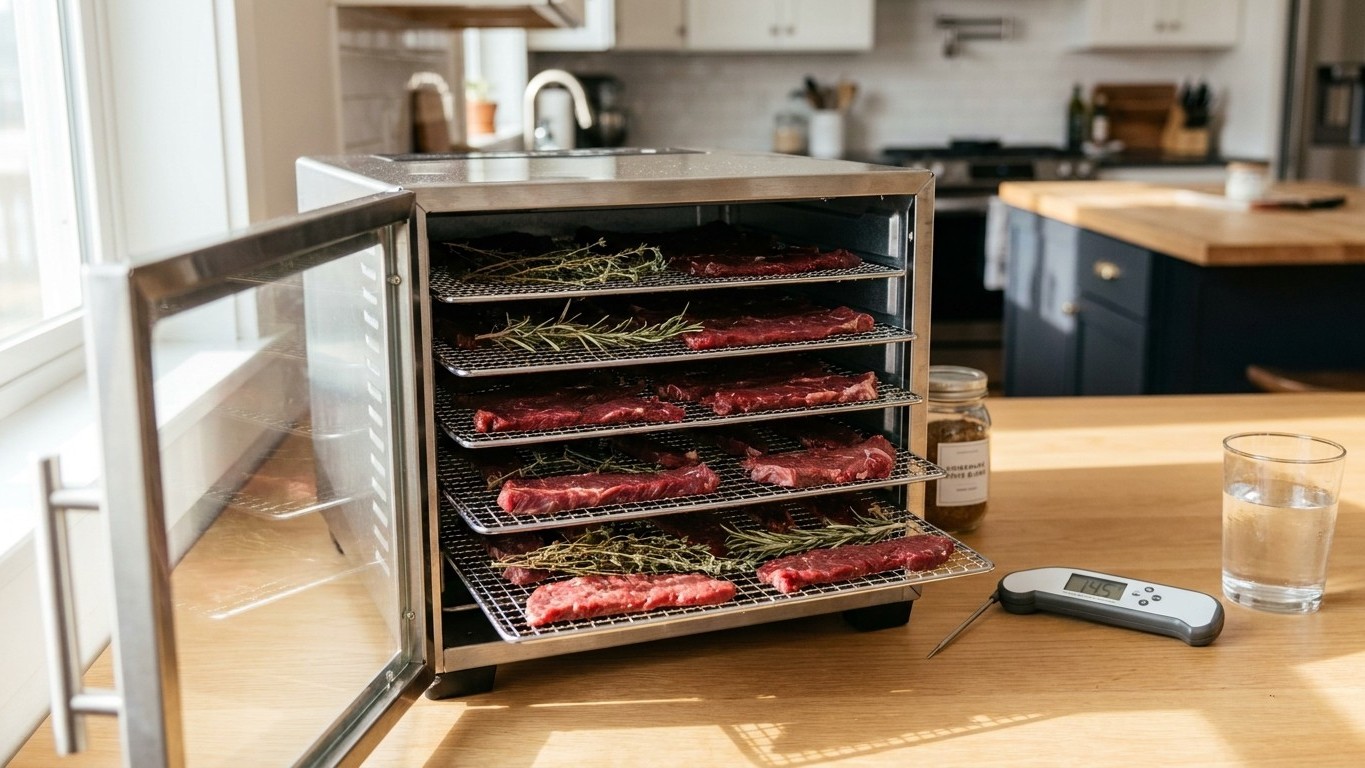

Pull the moisture out of a food and you stop most microbial growth cold, but drying is a preservation shortcut with a catch: it doesn’t cook anything. Whether that gap matters, and how much, depends entirely on what you’re putting in the dehydrator.
Drying

Drying works on a simple mechanism: bacteria, yeasts, and molds all need water to multiply, and pulling that water out of a food’s tissue starves them before they get started. That’s the entire trick. A dehydrator, an oven on low, or a sunny porch with good airflow all accomplish the same basic job, just at different speeds and with different amounts of control over temperature and humidity; choosing between a Dehydrator or Oven for Drying often comes down to which equipment you already have and how much control you want.
Understanding How Drying Preserves Food, and What It Does Not Do starts with this: what drying does not do is heat food to a temperature that kills existing pathogens. This is the part people gloss over. Canning relies on heat, sustained at a specific temperature for a specific time, to destroy microorganisms already present in the jar. Drying relies on removal of the environment those microorganisms need to grow. If a food went into the dehydrator carrying bacteria, and the drying temperature never got hot enough for long enough to matter, those bacteria don’t vanish. They go dormant. Add moisture back later, through poor storage or rehydration, and some of them can wake back up.
That distinction matters most with meat, poultry, and fish, which is why the guidance for drying jerky at home almost always includes a pre-heating or post-heating step aimed at an internal temperature, separate from the drying time itself. It’s also why fruit leathers and vegetable chips carry a different, lower level of concern: their starting bacterial load and their acid content behave differently.
Why the water number is the whole story
Food scientists talk about “water activity” rather than just moisture content, because it’s the water available for microbes to use, not the total water in the food, that determines whether something is shelf-stable. Properly dried foods drop into a range where mold, yeast, and most bacteria simply can’t function, which is why Knowing When Dried Food Is Actually Dry Enough is just as important as the drying process itself. That’s the entire safety logic behind sun-dried tomatoes, dried apple rings, and homemade beef jerky sitting in a pantry for months without refrigeration.
The National Center for Home Food Preservation, based at the University of Georgia, is the standing authority on how to dry specific foods safely, and its guidance extends past the dehydrator itself into Conditioning Dried Food at home, including the pretreatment steps, drying signs, and storage conditions for each one. Anyone drying meat, poultry, or a food they haven’t dried before should look up that food by name on the NCHFP site rather than guessing from a general dehydrator manual, since the safe approach varies more between foods than most people expect.
Which foods this method suits
Drying sits in a different safety category than canning, but the same pH 4.6 line that governs canning method choice still shapes how much risk a dried food carries and how it should be handled afterward. Foods above pH 4.6 are considered low-acid; foods at or below that line are acid. The split isn’t about whether a food can be dried, since almost anything can, it’s about how much the food’s own chemistry is doing to protect you once the water’s gone.
Acid foods dry with a wider margin for error. Their natural acidity already works against bacterial growth, so removing water on top of that gives a strong combined defense. Low-acid foods don’t have that chemical backup, which means the drying process itself, the pretreatment, and the storage conditions have to do all the work.
- Acid foods (fruits, and fruit-based products like the jams, jellies, marmalades, and fruit butters that pair with other preservation methods): benefit from natural acidity that suppresses bacterial growth on top of moisture removal, giving a wider safety margin during drying and storage.
- Low-acid foods (red meats, seafood, poultry, milk, and nearly all fresh vegetables): require closer attention to pretreatment, drying temperature, and internal heat during the process, since they have no acid backup if drying alone falls short.
The tomato sits in an odd spot worth flagging here too. Some tomato varieties are now known to test slightly above pH 4.6, putting them closer to the low-acid side than most people assume. Figs carry the same surprise. Neither fact changes how you’d dry them, but it explains why both tomatoes and figs get treated with extra caution across the broader canning and preserving literature, and why “it’s a fruit, so it’s acid” isn’t a safe assumption to lean on without checking the specific food.
What goes wrong
- Drying at too low a temperature or with too little airflow. Food dries slowly enough that mold or bacteria get a head start before the water activity drops low enough to stop them. The fix is a dehydrator or oven set to the temperature range recommended for that specific food, with space between pieces so air actually moves.
- Skipping the meat pretreatment step. Home dehydrators often can’t hold a temperature high enough to kill bacteria that might already be on raw meat or poultry, which is why guidance for jerky usually calls for a heating step, before or after drying, aimed at a specific internal temperature. Leaving that step out is the most common way homemade jerky becomes a real hazard rather than a snack.
- Underestimating “dry enough.” Food that looks dry on the outside can still be moist in the center, and that hidden moisture is exactly where mold or bacteria take hold during storage. The remedy is checking doneness by feel and appearance as described for that specific food, not by a fixed clock time, since humidity and slice thickness change how long drying actually takes.
- Storing dried food while it’s still warm. Warm food sealed into a container traps condensation, and that trapped moisture undoes the whole point of drying. Cooling completely before packaging solves this.
- Treating a dried food as sterile forever. Dried foods are shelf-stable, not immune to spoilage. Moisture from humid air, a poorly sealed container, or pests can bring a dried food back into a range where mold or bacteria can grow. Airtight storage and periodic checking are what keep it safe over time.
Where the exact times come from
The National Center for Home Food Preservation publishes tested guidance for drying specific foods, including meats, fruits, and vegetables, and that’s the source to check before loading the dehydrator.
The stakes for guessing are highest with low-acid foods stored in low-oxygen conditions, where Clostridium botulinum can grow. That organism needs three things at once: a moist, low-acid environment, a temperature between 40 and 120 F, and less than 2 percent oxygen. Botulinum toxin has no taste and no smell, so there’s no way to catch a mistake by checking how the food looks, smells, or tastes before eating it. Following a tested time and method is the only real safeguard.
Common questions
Can I dry food in an oven instead of a dehydrator?
Many foods can be dried in a conventional oven set to a low temperature with the door propped slightly open for airflow, but ovens often struggle to hold a low, steady temperature the way a dehydrator does. Check the NCHFP guidance for the specific food to see whether oven drying is listed as a safe option for it.
Does drying kill bacteria the same way canning does?
No. Canning relies on sustained heat to destroy microorganisms in the jar, while drying works by removing the water those microorganisms need to grow. Existing bacteria on a food going into the dehydrator aren’t necessarily destroyed, just deprived of the moisture that lets them multiply.
Why does jerky need a heating step if it’s already being dried?
Home dehydrator temperatures often aren’t high enough on their own to reach a safe internal temperature for raw meat or poultry. A separate heating step, either before or after drying, is aimed specifically at destroying bacteria that drying alone might not reach.
How do I know if a dried food has gone bad?
Look for visible mold, an off smell, or signs of moisture inside the storage container, and check that the container has stayed sealed since packaging. Because some risks, including botulinum toxin, produce no detectable taste or smell, any dried low-acid food stored under questionable conditions should be discarded rather than tasted to check.