
Delaware’s growing season runs warm enough for most pepper varieties to reach full ripeness, provided the seed goes in early and the plant avoids the two temperature traps that stall fruit set. Bell peppers, jalapeños, and other standard types can mature from transplant to harvest within the frost-free window most years, but timing the start date and reading your own site’s nighttime lows matter more than picking a “fast” variety.
The short answer

Wilmington’s climate record shows an average of 17.6 days a year at or above 90 F. That number matters more than most gardeners realize, because pepper flowers stop setting fruit once daytime highs push past that mark for any stretch of days. A plant loaded with blossoms can drop every one of them during a heat spell, even though the plant itself looks healthy and green. The flowers simply abort, and the plant waits for cooler conditions before trying again.
Seventeen-plus days above 90 F spread across a Delaware summer usually means a few short heat waves rather than one long stretch, which is actually good news for peppers. A plant that loses blossoms during a five-day spike in July often recovers and sets a fresh round once temperatures ease back into the 80s. The trouble comes when a heat spell lines up with the plant’s peak flowering window, which is why staggering transplant dates or planting a few extra seedlings can hedge against a bad stretch.
The other failure point sits at the opposite end of the thermometer. Nights that drop below 55 F cause the same kind of blossom drop as excessive heat, even if the days are pleasant. Pollen becomes less viable, flowers fail to set, and the plant stalls. This site tracks Delaware’s days-above-90 count because that figure comes from published climate normals, but it does not carry summer night minimums for this location. Nobody should guess at those numbers from a map or from how far north or south the county sits. Night temperatures depend on local terrain, elevation, distance from water, and whether a garden sits in a low spot where cold air pools. A grower needs to watch an actual outdoor thermometer at their own site through late spring and early fall, particularly in the first and last few weeks of the pepper season when a cool snap is most likely to slip in.
Put together, the practical picture is this: Delaware’s summer heat load is moderate, not extreme, and most seasons will not include a heat wave severe enough to wipe out an entire pepper crop. But the season’s edges, the cool nights of late spring and the cool nights of early fall, pose a real and site-specific risk that no regional average can predict.
When to start seed here
Working backward from a target transplant date is the most reliable way to schedule pepper seed starting, and the math is straightforward once you have the frost and soil numbers for your county.
- Find your local last frost window. At the Wilmington reference station, the last spring freeze at 32 F falls somewhere between April 3 and April 14 in most years. That is an airport-station figure, and suburban or rural gardens typically see their last frost land later, sometimes by one to two weeks, especially in low-lying areas or spots away from the moderating effect of pavement and buildings. Check your own county’s frost history rather than assuming the airport date applies to your yard.
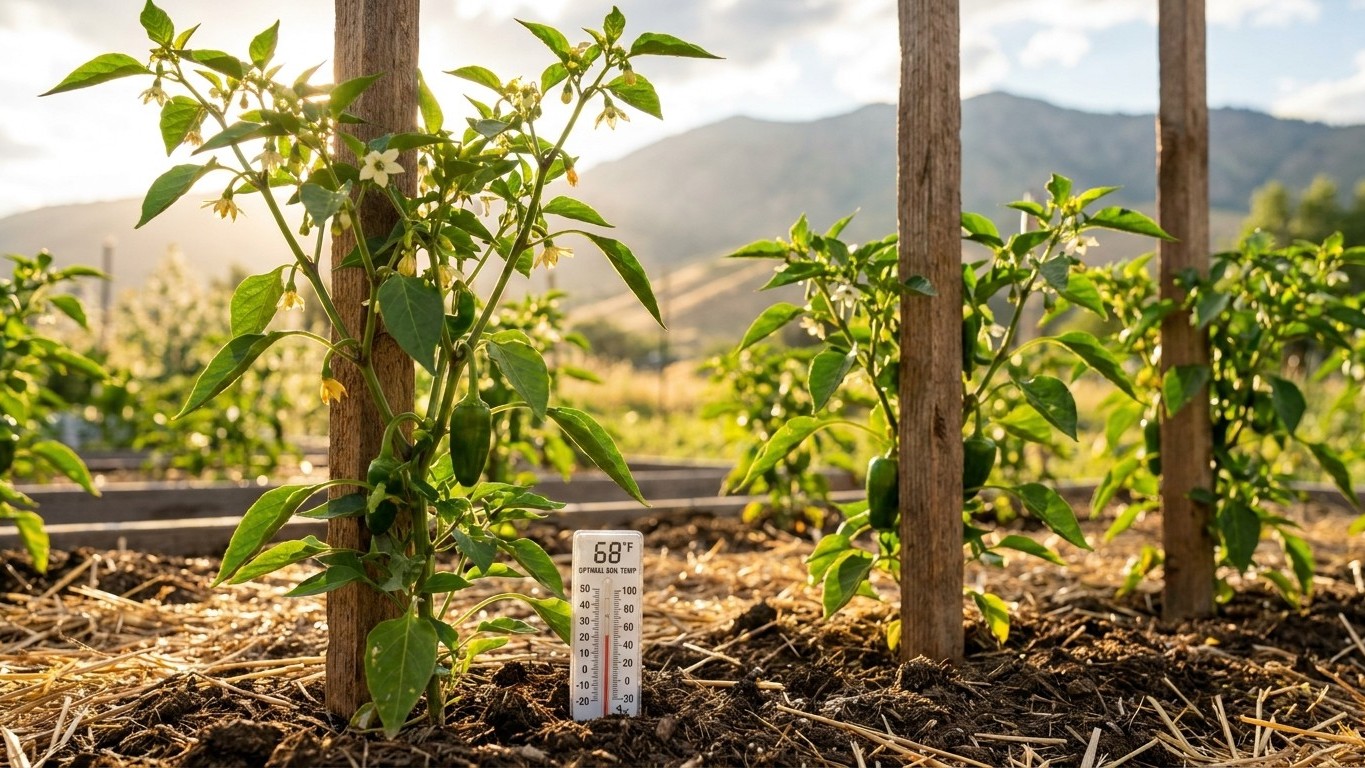
- Wait for soil, not just air, to warm. Peppers need soil at 60 F before transplanting outdoors. Air temperatures can feel mild while the soil underneath is still cold from winter, so a soil thermometer pushed a few inches into the bed gives a more honest reading than a weather app.
- Confirm frost has passed before moving plants outside. Even once soil hits 60 F, a late frost can still kill young transplants. Use the local frost window as a floor, not a target date to beat.
- Count backward 8 to 10 weeks from that transplant date to find your seed-starting date. If a grower plans to transplant in late April based on their county’s frost pattern and soil temperature, seed should go into trays indoors sometime in late February to early March, depending on whether they use the 8-week or 10-week end of the range.
- Adjust for your own microclimate. A garden that historically sees frost linger into late April, or soil that warms slowly because of heavy clay or shade, should start seed on the earlier end of that 8-to-10-week window and hold transplants a bit longer indoors under grow lights before moving them out.
This backward count is worth redoing every season rather than relying on memory, since a mild winter or a wet spring can shift both the frost date and the soil-warming timeline by a week or more in either direction.
What goes wrong here
- Blossom drop during a hot spell. When daytime highs climb into the 90s for several days running, pepper flowers abort instead of setting fruit. This is a normal, temporary response, not a sign of disease or nutrient trouble. The remedy is patience combined with light afternoon shade cloth over the most exposed plants during the worst of a heat wave, which can shave a few degrees off leaf and flower temperature and keep some blossoms viable.
- Blossom drop from a cool night. A late-spring or early-fall night that dips below 55 F can cause the same blossom failure as heat, even when daytime conditions look perfect. Since this site does not carry summer night-minimum data for Delaware, the only real defense is watching your own outdoor thermometer in the weeks bracketing your frost dates and using row cover or cloches on the coolest nights to buffer young plants until temperatures stabilize.
- Sunscald on exposed fruit. Strong summer sun can bleach and blister the skin of peppers that lose their leaf cover, whether from pruning, disease, or wind damage. The fix is leaving foliage intact rather than trimming leaves for “better airflow,” since that canopy is what shades developing fruit from direct afternoon sun.
- Blossom-end rot. This shows up as a sunken, leathery patch on the bottom of the fruit and traces back to inconsistent watering rather than a soil calcium shortage in most gardens. Peppers that dry out between waterings and then get soaked struggle to move calcium into developing fruit. Even, regular watering, especially through a mulched bed that holds moisture longer, does more to prevent it than any soil amendment.
Common questions
Can I still get a full harvest if I transplant late?
A late transplant, pushed by a slow-warming spring or a delayed soil temperature, shortens the window before fall’s cooling nights arrive. Since flowering-to-ripe-fruit typically takes 35 to 45 days once a plant starts flowering, a transplant delayed by two or three weeks can still ripen fruit, but it leaves less margin if a cool September arrives early. Starting seed on the earlier end of the 8-to-10-week indoor window helps protect against this.
Do all pepper varieties handle Delaware’s heat the same way?
Utah State University Extension’s guidance on peppers names varieties suited to home gardens but does not attach a heat tolerance rating, a days-to-maturity figure, or a fruit size to any specific one. Rather than chasing a named variety for heat performance, gardeners get more reliable results by managing the two failure points directly: shading plants during heat spikes and protecting them during cool snaps.
Should I worry more about heat or cold in Delaware?
Based on the published climate data, Delaware’s summer heat load is moderate, averaging 17.6 days a year at 90 F or above, which suggests short, survivable heat spells rather than sustained extreme heat. The cooler end of the risk, nights below 55 F, isn’t tracked at the site level here, so that threat depends entirely on your own garden’s location and needs to be monitored locally rather than assumed from regional averages.
How many pepper plants should I start to buffer against a bad stretch?
There’s no published figure specific to this question, so treat it as garden planning rather than a hard rule. Starting a few extra transplants beyond your target harvest count gives flexibility if one flush of blossoms is lost to a heat spell or a cool night, without requiring you to guess at temperature thresholds this site doesn’t carry.