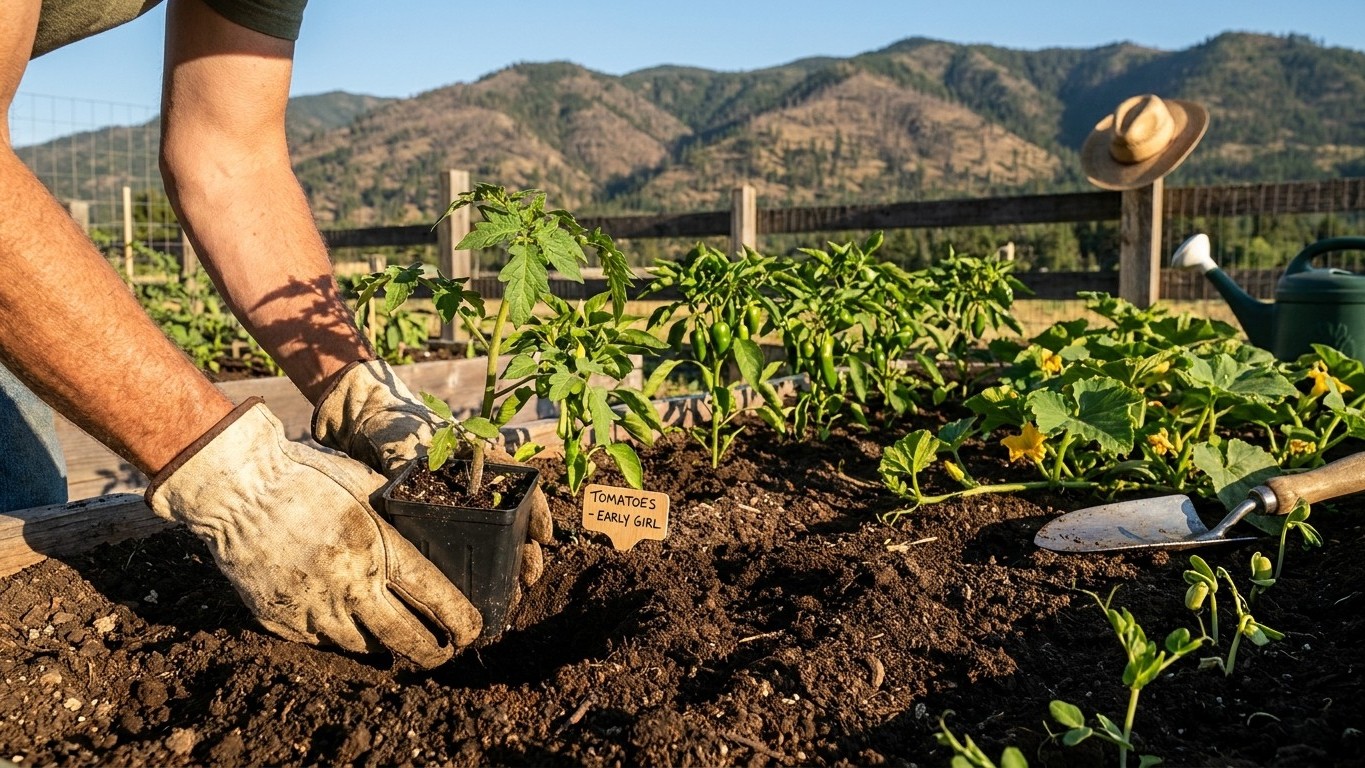

June is Colorado’s green light month. With the last spring frost behind most of the state (Denver’s average freeze window runs May 1 to May 11), the plains and valleys are clear to fill beds with tomatoes, peppers, squash, beans, corn, and melons. Higher ground still needs a second look before anything tender goes outside.
What goes in the ground in June

Soil temperature, not the date on the wall, decides what survives outside now. Beans germinate reliably once soil holds near 60°F. Squash and corn want closer to 65°F. Melons and other heat lovers do best when the soil has settled above 70°F, which on the Front Range and Eastern Plains usually happens by early to mid-June. Since Denver’s last frost falls between May 1 and May 11, by June the plains and lower valleys are past the freeze risk that keeps warm-season crops out of the ground earlier in spring.
That clears the way for transplanting tomatoes, peppers, eggplant, and basil, along with direct-sowing squash, cucumbers, pole and bush beans, corn, and melons. Sweet potato slips, if you grow them, also go in once nights stay reliably above 55°F. These are the crops that gamble the most on a late cold snap, and June is when that gamble finally pays off in most of the state.
Succession sowing keeps the harvest coming rather than arriving all at once. Drop in another round of bush beans every two to three weeks through early summer, and keep short rows of lettuce, beets, and carrots going in partial shade as daytime heat climbs. Radishes and spinach sown now will bolt fast once temperatures push past 80°F, so treat them as a quick catch crop rather than a main planting.
Elevation changes the math. Denver sits at 5,280 feet on the plains, and its frost dates apply to that band of the state. Mountain towns above 7,000 feet can still see frost into June, sometimes into July, which means tender transplants there need row cover on hand or a later start altogether. The Western Slope runs on its own schedule too, often a week or two behind or ahead of the Front Range depending on the valley. If you garden above 7,000 feet, hold tomatoes and melons a few more weeks and lean on cold-hardy crops in the meantime.
What to start under cover
June under cover is less about getting a head start on spring and more about setting up fall. Count backward from Colorado’s first fall frost, which lands between September 30 and October 12 for the Denver area. Broccoli, cabbage, and cauliflower need roughly 80 to 100 days from seed to harvest, which puts a June sowing date squarely on schedule for transplanting outside in July and pulling a mature head before the first hard freeze.
Start those brassica seeds in trays or a shaded cold frame rather than direct in the garden, since June soil often runs too hot for reliable germination of cool-season seed. A few hours of afternoon shade cloth over the tray keeps seedlings from cooking on a 90°F day.
Gardeners at higher elevation, where the frost-free window runs shorter, sometimes start winter squash or pumpkins indoors in early June rather than direct-sowing, simply to buy the extra two or three weeks those long-season crops need before an early mountain frost shuts things down. On the plains that step usually isn’t necessary since direct-sown squash has enough season left to mature on its own.
Two mistakes show up every year. Starting fall brassicas too early leaves you with leggy, rootbound seedlings baking in a tray by the time outdoor soil cools enough to receive them. Starting too late, past late June or early July, cuts it close against that October frost window and risks an unfinished harvest. Aim for the middle of the month if you’re unsure, and adjust based on how the current season is running.
What is ready to pick
Spring’s early plantings start paying off in June. Peas sown in April are filling pods now, and the difference between sweet and starchy comes down to picking before the pods swell too tight, when you can still see the outline of individual peas through the shell. Spinach and lettuce sown early are at their peak size before the heat pushes them to bolt, so harvest generously rather than letting them sit and turn bitter.
Radishes planted in May are usually ready within three to four weeks, and size is the tell: pull them once the shoulders push up out of the soil to about an inch across, since leaving them longer just invites a pithy, hollow center. Asparagus beds established in prior seasons wind down their cutting window this month, and rhubarb stalks are thick and ready, though the leaves stay off the table since they carry oxalic acid.
Strawberries hit their stride in June across most of the state, ripening fastest on plants with full sun exposure. If garlic went in the previous fall, scapes, the curling flower stalks, are ready to snap off now, which also redirects the plant’s energy into bulb growth. Check any stored winter squash, potatoes, or onions from the prior season for soft spots or sprouting; anything starting to turn should get used first rather than left in storage to spoil the rest of the batch.
The jobs that matter this month
Staking and caging go in now, before plants sprawl past the point where support does any good. A tomato left to flop for two weeks develops a different branching structure than one trained upright from the start, and untangling stems after the fact damages more than it fixes. The same logic applies to peas and pole beans on trellises.
Watering rhythm shifts as June heat builds. Deep, infrequent watering, enough to soak six inches down once or twice a week, trains roots to grow downward and tolerate dry spells better than a daily shallow sprinkle ever will. Mulch two to three inches deep around vegetables now locks in that moisture and keeps soil temperature from swinging as wildly between a hot afternoon and a cool night, which matters at Colorado’s elevation where that swing runs wider than in more humid states.
Pest scouting pays off this month more than any other. Colorado potato beetles show up on potato and eggplant leaves just as plants are putting on their first real growth, and aphid colonies can explode on new squash and bean growth within days. Checking the undersides of leaves once a week catches both before they spread past the point of easy control.
Thin direct-sown carrots and beets to their final spacing while seedlings are still small enough that pulling extras doesn’t disturb the roots you’re keeping. And keep succession sowing on schedule, since a gap of even three weeks between plantings shows up later as a gap in the harvest basket.
What not to do in June
Skipping the hardening-off step is the mistake that shows up most. A tomato or pepper seedling grown indoors or in a greenhouse needs several days of gradually increasing outdoor exposure before it goes into the ground full time; skip that step and a plant that looked healthy on the shelf can scorch or stall within 48 hours outside.
Shallow, frequent watering does more harm than good once June heat sets in. It looks like care, but it trains roots to stay near the surface, which leaves plants far more vulnerable the moment a hot, dry stretch hits. Switch to deep soaks rather than a daily light spray.
Heavy nitrogen feeding at the wrong point costs a harvest rather than helping one. Once tomatoes, peppers, and squash start flowering, a high-nitrogen fertilizer pushes leafy growth at the expense of fruit set. Save the nitrogen-heavy feeding for the early leafy growth stage, and switch to a balanced or phosphorus-leaning feed once flowers appear.
At higher elevations, pulling row covers or cold frames too early after a stretch of warm days is a classic setup for disappointment, since a single clear night at 7,000 feet or above can still drop below freezing well into June. Keep protection within reach until the local frost-free stretch is well established, not just after a few warm afternoons in a row.
Checking this against your own county
A state-wide frost window is a starting point, not an instruction for your specific yard. Elevation alone can shift planting dates by two to three weeks between a Denver-area garden at 5,280 feet and a mountain valley at 7,500 feet or higher. The Western Slope runs on its own pattern too, distinct from both the Front Range and the mountain corridor. Local terrain, whether you’re in a low frost pocket or on a wind-exposed ridge, moves things further still.
For a planting calendar tuned to your county, along with soil testing and pest identification support, Colorado State University Extension is the reference to check before locking in a planting date based on a state-wide average.
Common questions
Is it too late to plant tomatoes in Colorado in June?
No. June sits comfortably past the Denver-area last frost window of May 1 to May 11, so tomato transplants set out this month have a full season ahead before the first fall frost between September 30 and October 12. At higher elevations with a shorter season, earlier June is better than late June for tomatoes specifically.
Can I still direct-sow corn or beans in June in Colorado?
Yes, and for many plains gardens June is the prime window, since soil has had time to warm past the 60 to 65°F threshold both crops need to germinate reliably. Bean plantings can continue in succession every two to three weeks through early summer.
What vegetables can I start from seed indoors in June for a fall harvest in Colorado?
Broccoli, cabbage, and cauliflower started indoors or in a shaded tray in June are timed to transplant outside in July and mature before the Denver-area first fall frost of September 30 to October 12.
Does elevation change what I can plant in June in Colorado?
Yes. The frost dates cited for the Denver area apply to a station at 5,280 feet. Mountain towns above 7,000 feet can still see frost risk into June or later, so tender transplants there should wait or go out with row cover on hand as backup.