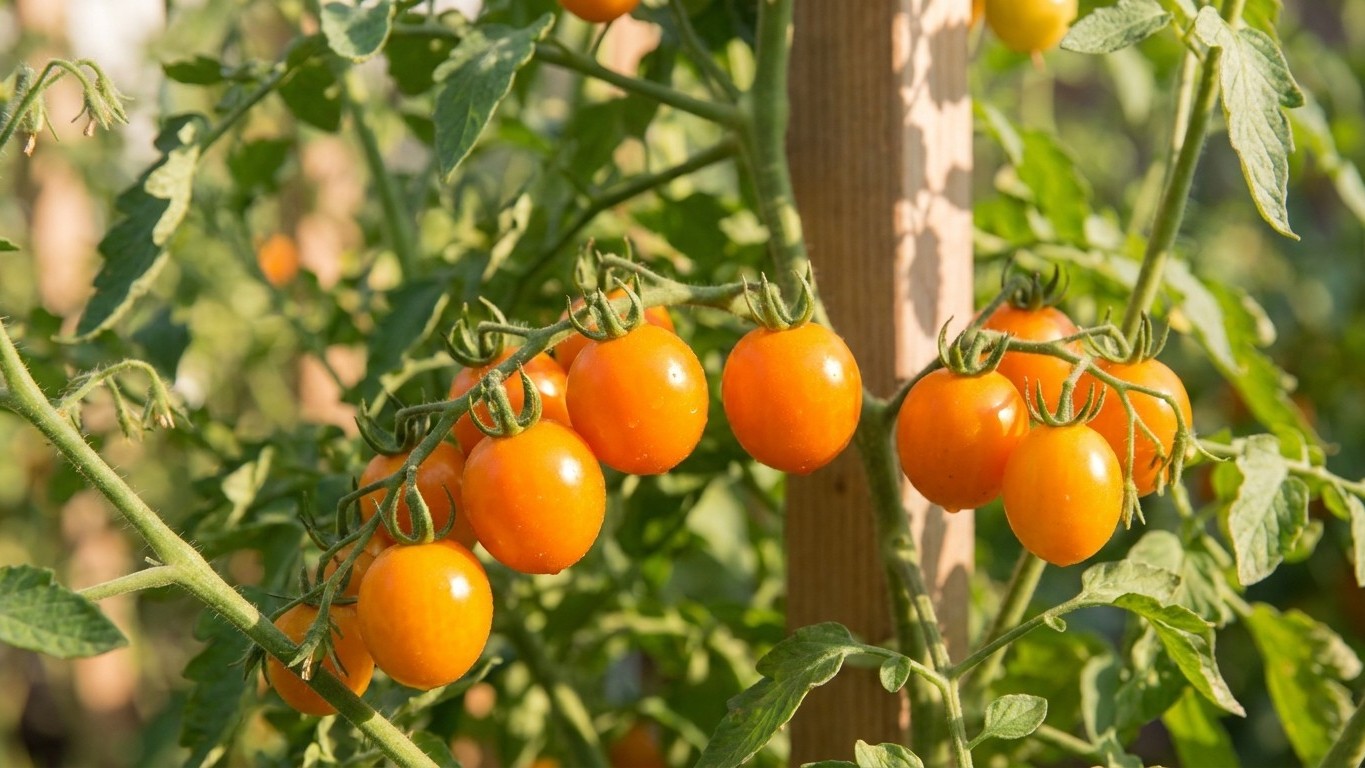

A mimosa tomato is an indeterminate grape variety bred for orange, fruity-flavored fruit that’s ready for the table in about 60 days from transplant. That number puts it firmly in the early-to-mid season bracket, but whether “early” is early enough depends entirely on where the plant is growing, not on the seed packet.
What Brandywine actually is

Set the naming confusion aside for a moment: what matters here is the plant in front of you, not a lookalike name. This is a grape-type tomato, orange-skinned, sold on flavor described as fruity and suited to salads and snacking rather than sauce or canning. The catalogue lists 60 days to maturity, and that figure is counted from transplant, not from the day the seed goes into a tray. That distinction matters more than most gardeners assume, because a seed sown indoors in March might sit for five or six weeks before it ever reaches the garden bed, and none of that indoor time counts toward the 60 days.
The habit is indeterminate. That single word changes the whole growing plan. An indeterminate vine keeps growing and setting fruit until frost kills it, which means this plant is not a one-and-done cropper. It needs a tall cage or a sturdy stake, because left unsupported an indeterminate grape tomato sprawls into a tangle that’s hard to pick and prone to rot where fruit touches soil.
For the kitchen, the use case is narrow and clear: fresh eating. Grape tomatoes this size aren’t bred for thick sauce or long simmering. They’re bred to be pulled off the vine, rinsed, and tossed into a bowl or eaten standing at the counter. That’s worth knowing before you plant a dozen of them expecting a winter’s worth of canned tomatoes.
Where it ripens in time, and where it is a gamble
Sixty days from transplant sounds simple until you try to fit it inside an actual growing season, and that’s where the arithmetic starts to matter more than the seed packet’s confident number.
Start with the frost-free window for your area, meaning the stretch between the average last frost in spring and the average first frost in fall. Subtract about two weeks from the front end, because soil needs to warm before a tomato transplant will do anything but sulk; setting plants into cold soil doesn’t speed things up, it just stalls them until the ground catches up anyway. Then subtract the 60 days to maturity. What’s left over is your actual picking window, the stretch of time you get to harvest before the vine runs out of season.
In a region with a long, forgiving frost-free window, that arithmetic leaves weeks of margin. A gardener in a place where frost holds off well into October has room for the two-week soil-warming delay, the 60-day countdown, and still a long harvest tail afterward. That’s a comfortable outcome for an indeterminate variety, because the whole appeal of “keeps fruiting until frost” only pays off if there’s real time left after the first fruit ripens.
In a short-season region, the same math gets tight fast. If the frost-free window itself is barely longer than the two-week soil delay plus the 60-day countdown, there’s almost nothing left over. The plant might ripen its first fruit right around the same week frost arrives, which defeats the point of choosing an indeterminate grape tomato in the first place. In that situation, the picking window isn’t measured in weeks, it’s measured in a handful of days, and a single early cold snap can wipe most of it out.
This isn’t a case where the variety is impossible in short-season country. Sixty days is a modest number as tomatoes go, shorter than many beefsteak types that run 80 days or more. The honest way to use this arithmetic is to run it yourself: check your local average last and first frost dates (NOAA’s National Centers for Environmental Information publishes station-level frost data at ncei.noaa.gov), do the subtraction described above, and see what margin you’re actually working with before committing garden space and a tall stake to this plant.
The two ways a season goes wrong
A frost-free window that looks generous on paper can still fail a tomato in ways a frost table doesn’t show, and there are two separate failure modes worth knowing apart.
In the north, the problem isn’t frost dates, it’s accumulated warmth. A region can have a decent number of frost-free days on the calendar while still running cool nights through much of the growing season. Tomato flowers won’t set fruit when nighttime temperatures fall below 50°F, because the plant simply doesn’t do the pollination work it needs to at that temperature. A season can be “long enough” by the calendar and still short on the warm nights that actually push fruit from flower to ripe.
In the south, the failure runs the opposite direction. Above roughly 86°F, tomato pollen turns sterile, and flowers drop instead of setting fruit. That’s why growers in hot regions typically don’t try to run one long unbroken season. Instead they plant a spring crop that finishes before the worst heat arrives, let the plant coast or stall through the hottest weeks, and then bring on a second, autumn crop once temperatures ease back down. The middle of summer, in that climate, is effectively dead time for fruit set no matter how healthy the vine looks.
For a 60-day variety like this one, the cool-night problem in the north is the bigger practical risk. A short maturity window is an advantage in a marginal-heat climate, since the plant can often squeeze a full cycle in before cold nights become the norm, but it doesn’t protect against a stretch of chilly nights arriving mid-season and stalling fruit set regardless of the calendar date. In hot southern regions, the same short maturity is actually an asset: it fits neatly into a spring window before the 86°F cutoff arrives, and again into a fall window afterward.
What it resists, and what it does not
The published resistance profile for this variety lists four named diseases, and the grades matter as much as the names. Gray Leaf Spot, Alternaria Stem Canker, and Fusarium Wilt races 1 and 2 are all rated High. Late Blight is rated Intermediate.
That difference between High and Intermediate isn’t a rounding error. High resistance means the plant is bred to substantially block the pathogen from taking hold. Intermediate means something more limited: the plant slows the disease down and typically shows less severe symptoms than an unprotected variety, but it does not stop late blight outright. In practice, that means a grower in a region where late blight is common still needs to watch for it, still needs airflow, staking, and prompt removal of infected foliage, and shouldn’t treat this variety as safe to ignore on that front just because it carries some resistance.
Just as important is what isn’t on the list. These four are the only diseases with published resistance ratings for this variety. Common tomato problems like early blight, septoria leaf spot, verticillium wilt, or root-knot nematodes aren’t covered by any resistance claim here, published or implied. If those pressures are common in your soil or your region, this variety offers no built-in defense against them, and the usual precautions (crop rotation, mulching, resistant rootstock where grafted plants are used) still apply exactly as they would for a variety with no resistance ratings at all.
Resistance summary
| Disease | Rating |
|---|---|
| Late Blight | Intermediate |
| Gray Leaf Spot | High |
| Alternaria Stem Canker | High |
| Fusarium Wilt (races 1, 2) | High |
Growing it without the usual mistakes
Because this is an indeterminate vine, the support has to be built for the long haul, not just for a young plant. A short tomato cage that works fine for a determinate bush will be outgrown within weeks here. A tall stake, at least the height of a person, or a heavy-gauge cage built for indeterminate growth, keeps the vine off the ground through a full season of continued growth.
Spacing follows from the same habit. An indeterminate plant that’s still adding foliage and fruit clusters in late summer needs more elbow room than a compact determinate variety, both for airflow (which matters directly for that Intermediate late blight rating) and for physical space to sprawl up its support without crowding neighboring plants into a humid, disease-friendly tangle.
Feeding needs a cutoff point that a lot of gardeners skip. Because the vine keeps growing and setting new flower clusters right up until frost, it’s tempting to keep fertilizing all season. But late-season nitrogen pushes leafy growth at the expense of ripening fruit, and on a variety that’s already racing a calendar in shorter-season climates, that’s fruit-ripening time you can’t afford to waste on extra foliage. Tapering off nitrogen once the plant is fruiting well, and shifting to a lower-nitrogen feed if you feed at all, keeps the plant’s energy pointed at the grapes rather than the vine.
The mistake this timing specifically invites is treating 60 days as the finish line rather than the start of a long harvest. Because it’s indeterminate, the first ripe fruit at day 60 isn’t the end of the story, it’s the opening of a harvest window that should keep running until frost. Gardeners who plant this expecting one quick flush and then let the plant go, skipping the ongoing tying-in and pruning of suckers that indeterminate vines need, end up with a sprawling, disease-prone mess exactly at the point the vine should still be productive.
Common questions
Can I count the 60 days from when I sow the seed instead of transplant?
No. The published figure is measured from transplant into the garden, not from seed. Indoor time before transplanting doesn’t count toward that number, so factor in your own seed-starting schedule separately when planning a harvest date.
Does the Intermediate late blight rating mean I don’t need to spray or watch for it?
No. Intermediate resistance slows the disease and generally reduces severity, but it doesn’t prevent infection. In areas with a history of late blight, keep up with airflow, staking, and monitoring just as you would with an unrated variety.
Will this variety keep fruiting all summer in a hot southern climate?
Not reliably through the hottest stretch. Once temperatures push past roughly 86°F, tomato pollen goes sterile and fruit set stalls, regardless of the plant’s resistance ratings or maturity date. Many southern growers plan around this with separate spring and fall crops.
Is this a good tomato for someone who wants to can or make sauce?
Not really. It’s a grape-type variety bred for fresh eating, salads, and snacking. The size and flavor profile aren’t suited to the volume or texture needed for canning or long-cooked sauce.