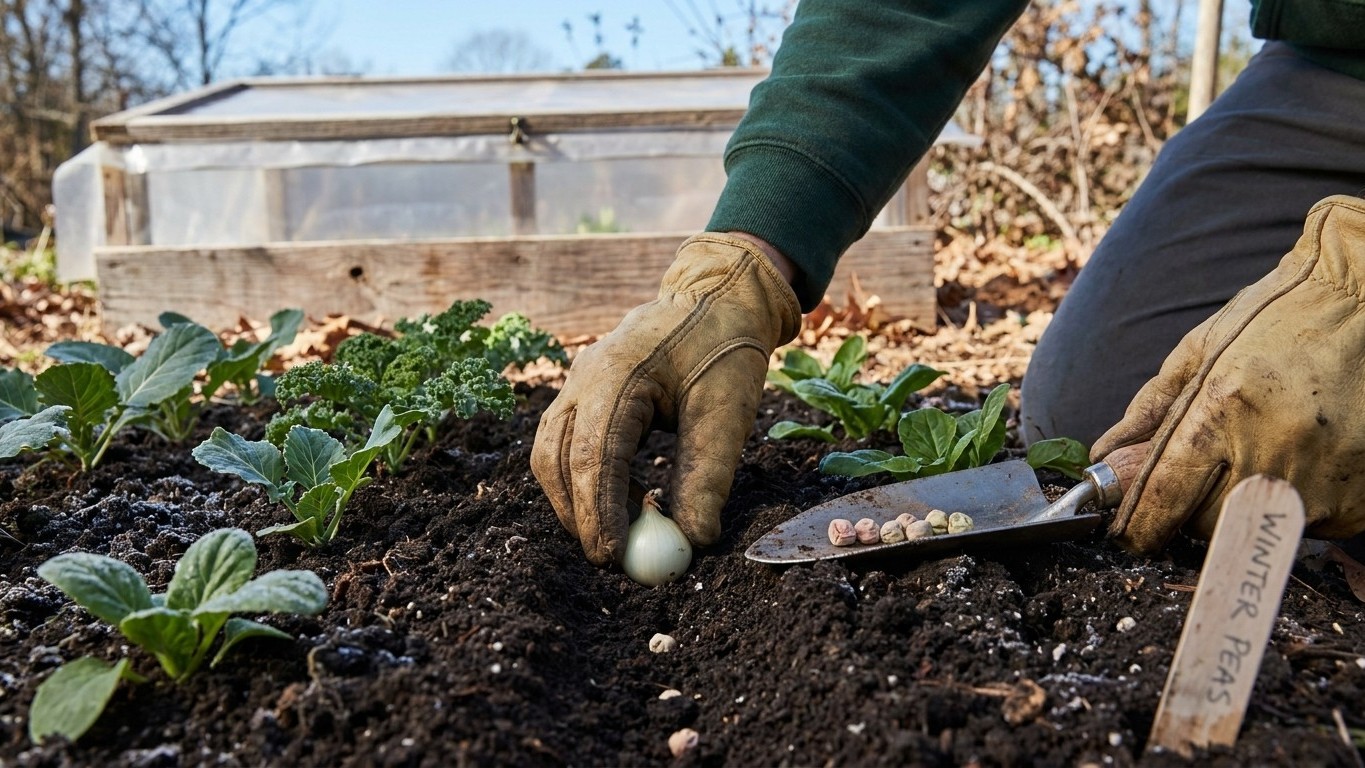

January in Georgia means garden work more than garden planting for most of the state. South Georgia’s coastal plain (zone 8b-9b) can still direct-sow hardy greens, onions and English peas. North Georgia’s mountains (zone 6a-7a) are firmly in the frost window and the real jobs are dormant pruning, seed ordering and soil prep, not seed-starting outdoors.
What goes in the ground in January

Soil temperature decides what survives, not the date on the calendar. Georgia spans USDA hardiness zones 6a through 9b, and that range matters more in January than almost any other month. Using Atlanta as the reference point, NOAA’s 1991-2020 climate data puts the last spring frost between March 11 and March 29. That means most of the state is still weeks, sometimes over a month, from being safely past frost. Mountain counties in north Georgia typically freeze earlier in fall and later in spring than that Atlanta window; the coastal plain runs milder on both ends.
For the coastal plain and much of south-central Georgia, the ground is often workable enough to direct-sow a short list of cold-hardy crops: collards, kale, spinach and mustard greens tolerate hard frost and often taste better after one. Onion sets and shallots can go into prepared beds where the soil isn’t waterlogged. English peas, planted as seed, handle the cold soil of a south Georgia January better than almost anything else on the list. Carrots and beets can go in on the milder end of that zone range, though germination slows in cold soil and patience is part of the deal.
North Georgia is a different story. Ground is frequently too cold or too wet to work, and pushing seed into it wastes both seed and time. The safe moves there are dormant, not active: bare-root fruit trees, roses, and cane fruit like blackberries and raspberries can be planted while they’re still dormant and the ground isn’t frozen solid. Garlic, ideally planted in fall, can still go in on a mild window if it missed that slot, though yields suffer the later it goes. A cold frame or a simple low tunnel buys a few extra weeks on any of the greens listed above, which matters more in the mountains than anywhere else in the state.
What absolutely does not belong in the ground this month, anywhere in Georgia: tomatoes, peppers, squash, beans, corn, cucumbers. These are warm-season crops that die at the first hard freeze, and January sits well inside the frost window across the entire state. If the itch to plant something warm-season is strong, forcing rhubarb crowns or chicory roots indoors in a dark, cool spot gives a harvest without risking a single outdoor seed.
What to start under cover
Seed-starting math works backward from the last frost window, not forward from January 1. Using the Atlanta reference of March 11 to March 29, count the weeks each crop needs before it’s ready to go outside, then subtract from that window rather than from any fixed date.
Onions from seed need the longest lead time on the list, roughly 10 to 12 weeks before transplanting. Starting seed indoors in January lines up almost exactly with that math for a March transplant date, which is why January is the standard window for onion seed in Georgia, not February. Peppers need 8 to 10 weeks under lights before they go out, so a January start also fits for gardeners planning to set plants out once soil has warmed past the frost window. Cole crops like broccoli and cabbage need 6 to 8 weeks and can be started slightly later in the month for a spring transplant, though starting them alongside onions and peppers isn’t a mistake either.
Tomatoes are the crop most gardeners rush, and January is early for most of the state unless the plan is a very late-February or March transplant under protection. Two failure modes show up every year. Starting too early means plants sit under grow lights for eight or ten extra weeks, growing tall, thin and rootbound in cell packs that were never meant to hold them that long. Starting too late means running out of runway before the frost window closes, especially for onions, which punish a late start with smaller bulbs no matter how well they’re grown afterward. The fix for both is the same: write down the transplant date first, then count backward.
What is ready to pick
Little comes out of a Georgia garden from open ground in January, and that’s honest across most of the state, not just the mountains. What’s still standing tends to be what went in during fall and has simply held on.
Overwintered kale and collards are the reliable performers. Both sweeten after repeated frost exposure, so a plant that looked rough in December can taste noticeably better by late January. Leeks left in the ground do the same job, standing through freezes that would finish off almost anything else. Under a cold frame or low tunnel, spinach, mustard greens and lettuce keep producing at a slower pace, worth checking every week or two rather than daily.
Indoors, sprouts and microgreens fill the gap when nothing outside is worth cutting. A tray of pea shoots or sunflower sprouts on a windowsill takes a week to ten days and gives fresh greens regardless of what the thermometer outside is doing.
Stored crops need a hands-on check this month, not just a glance. Winter squash should be firm all over; any soft spot near the stem end means it’s on its way out and should be used first, not stored longer. Potatoes and onions in storage deserve the same treatment: pull anything that’s gone soft, sprouted early, or started to smell, because one rotting onion in a mesh bag will take its neighbors down with it.
The jobs that matter this month
January carries more real deadlines than its quiet appearance suggests, and skipping them costs the whole season ahead rather than just the month.
Pruning and planning
Dormant pruning is the single biggest task on the calendar. Apple and pear trees, blueberry bushes, and blackberry and raspberry canes can all be cut back while they’re leafless and inactive, which reduces disease spread and shapes the plant before spring growth starts. One caution belongs here: spring-flowering shrubs like azaleas and camellias set their buds on last season’s wood, and pruning them now removes the coming bloom. Save those for after they flower.
Seed catalogs move fast, and popular varieties, particularly heirloom tomatoes and specialty onions, sell out well before planting season. Ordering now, alongside sketching out where each crop will go, avoids the scramble of settling for whatever’s left on the shelf in March.
Soil and structure
A soil test through the local extension office takes a few weeks to come back, and amendments like lime take even longer to change soil pH once applied. Sending a sample now means the results and the fix are both in place before spring planting starts, instead of guessing at fertility all season. Turning the compost pile, cleaning and sharpening tools, and repairing raised beds or fencing while the garden is otherwise idle are all jobs that take an afternoon now or an entire frustrated weekend later once planting season is underway.
What not to do in January
The most common mistake is trusting the air instead of the soil. A run of 60-degree afternoons feels like spring, but soil temperature lags well behind air temperature, and Georgia’s frost window (March 11 to March 29 at the Atlanta reference point, later still in the mountains) doesn’t close just because one warm week showed up in January. Planting anything warm-season on the strength of a mild spell almost always ends in a dead seedling once the next freeze arrives.
The flip side of that same mistake is uncovering cold frames or pulling mulch off perennials too early after a warm stretch. That mulch layer is doing its job precisely because more cold is still coming; removing it early exposes roots and crowns to a freeze they were otherwise protected from.
Fertilizing with nitrogen this month is another trap. Dormant plants aren’t actively growing and can’t use the nutrients, and a nitrogen push can trigger tender new growth that a hard freeze then kills outright. Hold off until active growth actually resumes. Working wet or saturated soil is the last one worth naming: walking on or tilling soil that’s still soggy from winter rain compacts it, and that compaction can affect drainage and root growth for an entire season, not just a week.
Checking this against your own county
A state-wide answer for January is a starting point, not an instruction. Georgia’s hardiness range runs from 6a in the mountains to 9b on the coast, and elevation alone can shift a frost window by several weeks between two counties that are only a couple hours apart by car. The Atlanta reference numbers used throughout this page reflect an urban airport site; a farm at higher elevation in north Georgia will freeze earlier and thaw later, while the coastal plain runs consistently milder on both ends.
The most reliable next step is checking those local numbers directly through the UGA Cooperative Extension, which publishes county-level guidance and planting calendars built for Georgia’s actual range of climates rather than a single statewide average.
Common questions
Can I plant tomatoes in Georgia in January?
No. Tomatoes are a warm-season crop killed by frost, and January falls well inside Georgia’s frost window statewide, with the last spring frost running March 11 to March 29 at the Atlanta reference point and later in the mountains. Tomato seed can be started indoors this month for a later transplant, but the plants themselves have no place outdoors yet.
Is it too early to start seeds indoors in January?
It depends on the crop. Onions, needing 10 to 12 weeks before transplanting, and peppers, needing 8 to 10 weeks, are typically started in January to line up with a March transplant date. Tomatoes, needing only 6 to 8 weeks, are often started later in the month or into February to avoid leggy, rootbound plants sitting too long under lights.
What vegetables can handle frost in a Georgia January?
Collards, kale, spinach and mustard greens all tolerate hard frost, and several actually improve in flavor after repeated cold exposure. Onion sets, shallots and English peas can also go into workable soil, particularly in south Georgia’s milder zones.
Why does my county’s frost date differ from what I read online?
Most published frost dates for Georgia are anchored to an Atlanta-area station, which sits in an urban heat island. Real frost timing shifts with elevation and latitude, meaning north Georgia’s mountains typically see frost weeks earlier in fall and later in spring than that reference point, while the coastal plain runs milder in both directions. County-level extension data is the more accurate source for any specific location.