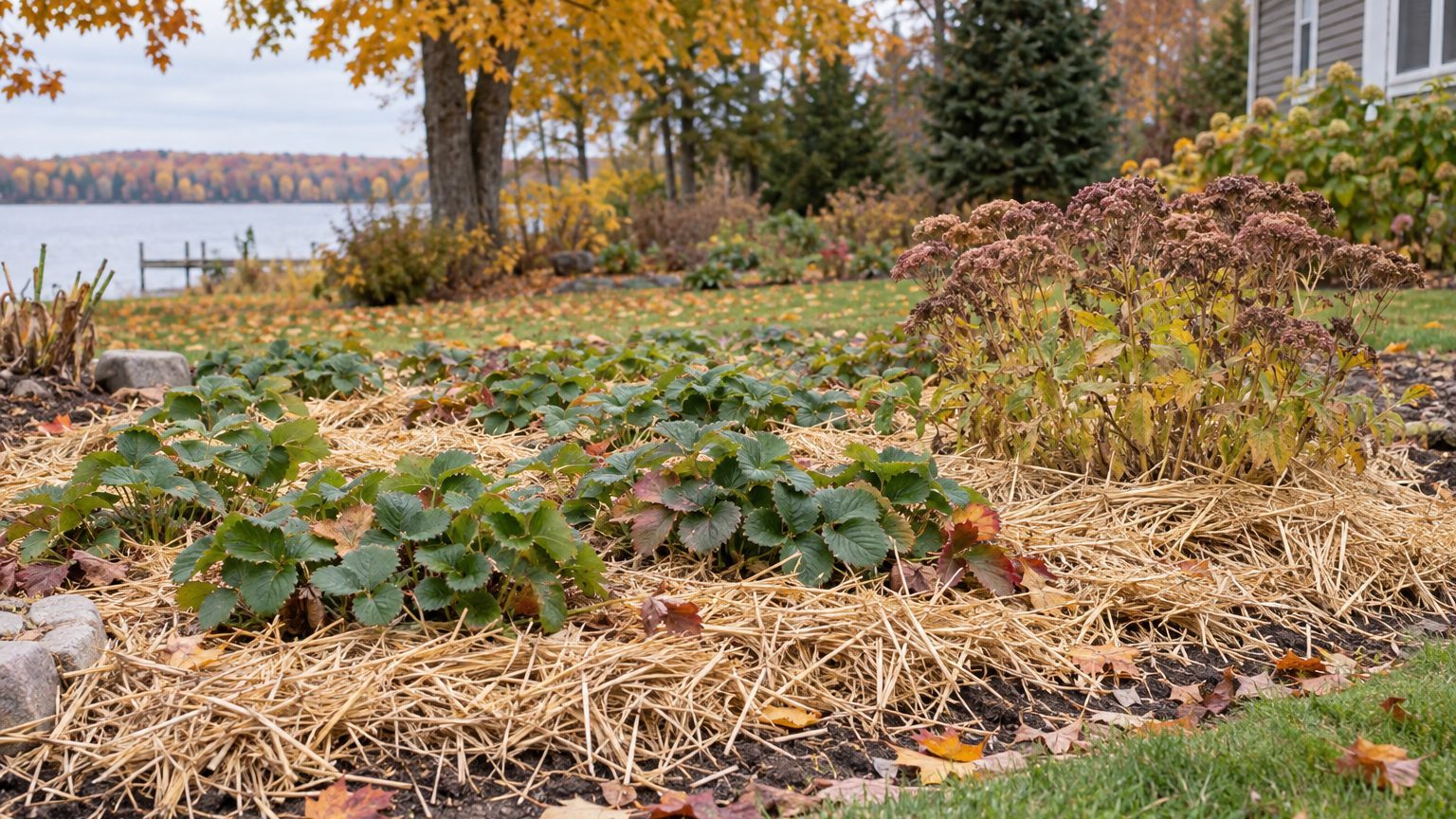

In Atlanta, winter mulch goes down after the first freeze. NOAA’s 1991-2020 normals put that freeze between November 13 and December 1, so on the calendar the job falls in late November into December. North Georgia and the mountains freeze several weeks earlier, and the job moves up with them. Around Atlanta the average night in the coldest month stays above freezing, so mulch there is optional for hardy plants. Strawberries and plants at the edge of their hardiness still benefit from a layer 2 to 3 inches deep.
When to put winter mulch down in Georgia
Why does winter mulch wait until the ground freezes?
Mulch does not warm the soil. It slows temperature swings. In cold country its value is that frozen soil stays frozen through a January warm spell. The freeze, thaw and refreeze cycle is what pushes shallow roots and crowns up out of the ground. A layer spread over soil that is still warm from fall holds moisture against stems and crowns, and rot follows. Mice and voles also move into a dry, sheltered layer before winter has even started. That is why gardeners in colder climates wait until the ground has begun to freeze.
For a date in Georgia, start with the freeze itself. NOAA’s NCEI 1991-2020 Climate Normals for the Atlanta station put the first 32°F freeze between November 13 and December 1, using the 30 to 70 percent probability band. Atlanta’s airport is an urban heat island, though. North Georgia and the mountains freeze several weeks earlier, and the coastal plain runs milder. If your garden sits in the hills north of the city, expect to spread mulch earlier in the fall than the Atlanta dates suggest. If you are in the southern part of the state, expect to spread it later.
Do you need winter mulch in Atlanta?
Mostly no, and the temperature record explains why. The mean daily minimum of Atlanta’s coldest month is 35.6°F (NOAA NCEI Climate Normals 1991-2020). The average January night stays above freezing, so the soil does not lock up solid the way it does in the northern states. Heaving is not the problem to solve here. Mulch earns its place by holding moisture through dry winter stretches, slowing winter weeds, and giving you something to pull over plants on the occasional hard-freeze night. NC State Extension puts the moisture case this way: “Provide a 3-inch layer of mulch to reduce water loss and maintain uniform soil moisture and temperature around roots.” That line was written about trees, but the same depth logic applies to beds.
The practical call for the Atlanta area is mulch after the first freeze, late November through December, and treat it as optional for established hardy plants. Spend the effort on strawberries, new plantings and anything rated close to your local winter lows. In the colder north, treat it as a real task and time it to the first freeze of your own ZIP code.
| Part of Georgia | First fall freeze | What winter mulch does | When it goes down |
|---|---|---|---|
| Atlanta area | November 13 to December 1 (NOAA, 30-70% band) | Holds moisture, slows weeds, serves as a frost-night cover | After the first freeze, late November through December; optional for hardy plants |
| North Georgia and the mountains | Several weeks earlier than Atlanta | Keeps soil frozen once it freezes and protects crowns from heaving | Once the ground starts to freeze, earlier in the fall than in Atlanta |
| Coastal plain | Milder than Atlanta | Moisture, weed control, cover on frost nights | After the first frost, later than in Atlanta |
Your county extension office can tell you how your own spot compares with these three. The Georgia guides cover other fall chores that run on the same calendar. For dates tied to your county, check the First and Last Frost Dates in Georgia.
Strawberries
What does winter mulch do for strawberry crowns?
A strawberry plant grows from its crown, the short, thick stem at soil level where the leaves and roots meet. Everything the plant does next season starts there. In the colder part of Georgia, where nights drop below freezing for weeks at a time, repeated freezing and thawing can lift the crown out of the soil and leave the roots exposed to wind and cold. A layer of mulch applied after the ground starts to freeze keeps the soil temperature steady so that doesn’t happen. Straw also shields the crowns from bare, drying cold.
In and around Atlanta, the coldest month’s average minimum is 35.6°F (NOAA NCEI). Heaving is not the main worry there. Straw serves three other purposes. It holds soil moisture during dry winter spells, it suppresses weeds that would otherwise fill the bed by March, and it lets you cover the plants quickly when a hard freeze is forecast. Strawberries set blossoms early, and a late freeze can nip them, so having the straw ready matters most in late winter. Pull it over the plants for the night and rake it back the next morning once temperatures climb.
What kind of straw works, how deep, and when does it come off?
Use clean straw, meaning wheat or similar straw that is not full of seed heads. Hay is a poor substitute because it carries weed seed, and you will be pulling grass out of the bed all spring. Pine straw is a common regional alternative, since it stays fluffy and lets air through. Whatever you use, keep the layer loose. NC State Extension says “A 2-inch to 3-inch layer of mulch suppresses most annual weed seeds and makes it easy to hand-pull any that do germinate.” That is the range to aim for. Going deeper does not buy more protection, and a heavy, wet pile smothers the crowns.
In the Atlanta area, keep straw on hand and cover the plants on freeze nights; in the colder north, spread it after the ground begins to freeze. Either way, spring is the other half of the job. Pull the straw back from the crowns when new growth starts and the worst of the cold has passed. The First and Last Frost Dates in Georgia can help you gauge when that is for your county. Leaves that stay buried turn pale and soft. Rake the straw into the aisles, where it keeps weeds down and keeps berries off the dirt. Other strawberry tasks, from planting to renovating, are covered in Growing Strawberries.
Perennials and borderline plants
Which perennials benefit from winter mulch in Georgia?
Hardiness zone decides who needs it. The USDA Plant Hardiness Zone Map (2023, built on 1991-2020 normals) runs from 6a-9b across Georgia, and that map rests on one thing, the average annual extreme minimum temperature. A plant rated well below your local winter lows can sit through the season untouched. A plant rated close to them is the one to mulch. The colder north of the state sits at the low end of that range, and Atlanta and the coastal plain sit above it, so the same perennial can need cover in the mountains and nothing at all in the city.
Mulch is most useful for three groups. Plants set out this fall have shallow, unestablished roots and little reserve. Perennials sold as marginal for your zone should have a layer over the root zone, as should anything whose tag lists a zone at or just under your own. Perennial herbs are the usual borderline case, and Getting Perennial Herbs Through the Winter goes through which ones need cover. Established hardy perennials in the Atlanta area can skip winter mulch, though a thin layer still holds moisture through dry spells.
How do you mulch around a perennial crown?
Make a ring, not a pile. Spread the mulch in a doughnut around the plant and leave a small gap right at the crown, where stems meet soil. Mulch heaped against the crown holds moisture on the one part of the plant that most needs to stay dry in winter, and rot starts there. For depth, the NC State Extension range holds: “A 2-inch to 3-inch layer of mulch suppresses most annual weed seeds and makes it easy to hand-pull any that do germinate.” Stay inside it. More is not better, and a deep mound is how a ring turns into a volcano.
Shredded leaves, pine straw and shredded bark all work, provided they are loose enough that air and water pass through. In the Atlanta area, ring the plants after the first freeze (late November through December); in North Georgia and the mountains, do it earlier, once the ground begins to freeze. The Mulching Without Killing the Plant guide covers the ring method and materials in more detail.
What goes wrong
Mulching too early is the most common error. Spread over soil that is still warm and damp, mulch traps heat and moisture against crowns and stems, and plants that should be going dormant stay soft and wet. In the colder part of the state, early mulch also gives voles and mice a ready-made shelter, and they chew bark and crowns through the winter. Wait for the first freeze, which for Atlanta falls between November 13 and December 1, and wait for the soil itself to cool in the north.
Matting is the second problem. Whole leaves and wet, fine mulch pack into a slick layer that sheds air. Underneath, plants stay soggy and crowns rot. A layer that feels cold, sour or slimy when you lift it has already failed. Shred the leaves, fluff straw with a rake, and keep the layer inside the 2 to 3 inch range NC State Extension gives.
Rodents are a risk only where the ground freezes, which in Georgia means the colder hills and mountains. Keep mulch pulled a little way back from trunks and crowns so nothing can nest against them, and check the layer now and then for tunnels. Around Atlanta, voles are a year-round garden pest, but a winter layer is not what draws them in.
Forgetting to uncover is the last one, and the most avoidable. Strawberries left under straw once growth starts come up pale and weak, and perennials with mulch still piled on the crown stay cold and wet in spring. Pull mulch back from crowns as soon as new growth appears and the hardest freezes are behind you. Put a note on the calendar when you spread it, so the removal date doesn’t depend on memory.
Common questions
Is it too early to mulch in October in Georgia?
Yes, for winter protection, even in North Georgia. Soil is still warm in October, and mulch spread then holds moisture around crowns and invites rodents before the cold arrives. Wait for the first freeze. In Atlanta that falls between November 13 and December 1, and in the mountains it comes several weeks sooner.
Do strawberries need winter mulch in Atlanta?
A light layer of clean straw is worth putting on. Atlanta’s coldest-month average minimum is 35.6°F (NOAA NCEI), so the soil does not stay frozen, but straw holds moisture, slows weeds and can be pulled over the plants on a hard-freeze night, which protects early blossoms.
How thick should winter mulch be?
NC State Extension recommends “A 2-inch to 3-inch layer of mulch” for weed suppression, and a 3-inch layer around tree roots to hold moisture. Stay within that range, keep it loose, and keep it off the crown or trunk.
Can I use leaves or pine straw instead of straw?
Yes, with care. Shred leaves first, because whole leaves mat into a wet sheet. Pine straw stays fluffy and drains well. Either one should go on after the first freeze and come off crowns when growth resumes in spring.
Related guides
- When to Mulch Strawberries and Perennials for Winter in Alabama
- When to Mulch Strawberries and Perennials for Winter in Hawaii
Sources : site.extension.uga.edu