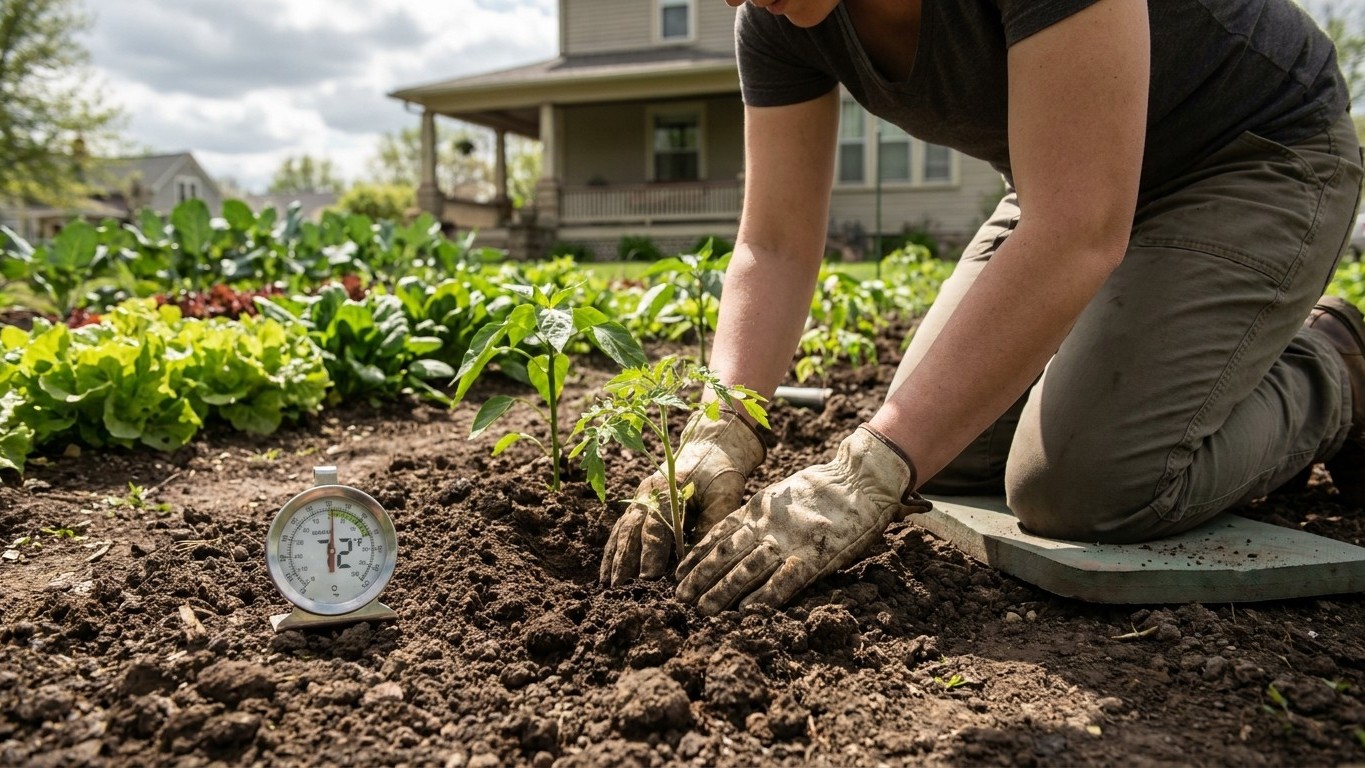

May is Michigan’s real planting month, but it splits into two halves. Early May still carries frost risk across most of the state, so cool-season crops and hardy transplants go in first. Once the ground warms and the last frost passes (around April 30 near Detroit, later into May farther north), tomatoes, peppers, beans and squash can safely follow. The dividing line is soil temperature, not the date on the calendar.
What goes in the ground in May

Soil temperature decides far more than air temperature does. A 70-degree afternoon means nothing to a bean seed sitting in soil that’s still in the 50s. That’s the trap early May sets: it feels like summer is here, but the ground hasn’t caught up yet.
In the first half of the month, direct-sow peas, spinach, lettuce, radishes, carrots and beets. Onion sets and seed potatoes go in now too, since both tolerate a light frost without damage. Transplants of cabbage, broccoli, kale and other brassicas can go outside as soon as they’ve been hardened off, because they shrug off the occasional cold night that would kill a tomato seedling outright.
The second half of May is when the gamble shifts in the gardener’s favor. Once the local last-frost window has passed, which lands around April 30 in the Detroit area and stretches into early-to-mid May across most of the Lower Peninsula, it’s time to move tomatoes, peppers and squash out of pots and into beds. Corn, beans and cucumbers can go straight into the ground once soil has warmed enough for the seed to germinate rather than rot.
| Timing | Safe to plant | Still risky |
|---|---|---|
| Early May | Peas, spinach, lettuce, radishes, onion sets, seed potatoes, hardy brassicas | Tomatoes, peppers, beans, squash, cucumbers |
| Late May | Tomatoes, peppers, beans, squash, cucumbers, corn | Tender herbs like basil in northern counties or low-lying frost pockets |
The gamble narrows the farther north or the higher the elevation. A garden near Traverse City or in a valley that collects cold air overnight should treat the second half of May the way southern Michigan treats the first half: useful, but still watching the forecast.
What to start under cover
By May, most of the heavy indoor seed-starting is behind a Michigan gardener. Tomatoes and peppers started six to eight weeks before the last frost are already at transplant size. But May still has a role for seed trays, and it’s worth using it.
Count backward from the fall frost window instead of the spring one for anything with a long season. With first fall frost landing between October 6 and October 21 in zone 6a, a crop that needs 90 days to mature has to go in the ground, not the seed packet, by early-to-mid July at the latest. That means starting slow growers like leeks, celery and Brussels sprouts indoors now, so they’re ready to transplant once earlier crops clear out of the bed.
The two ways this goes wrong are opposites. Start too early and the seedlings outgrow their pots before the weather cooperates, ending up rootbound and leggy on the windowsill. Start too late and there isn’t enough calendar left before the fall frost shows up to bring the crop to harvest. May sits in the middle: late enough that most spring starts are already past the risky window, early enough that fall-crop starts still have time to catch up.
Cold frames earn their keep this month too. Use them to harden off tender transplants gradually rather than moving pots straight from a warm windowsill into open ground, which shocks the plant and stalls growth for a week or more.
What is ready to pick
Asparagus is the headline crop of a Michigan May. An established bed sends up spears through most of the month, and the rule for cutting is simple: harvest while the spear is still tight and under about 7 to 8 inches, before the tip starts to open and turn woody.
Rhubarb stalks are thick enough to pull by early-to-mid May in most gardens, and the harvest can continue for weeks as long as a few leaves are left on the crown each time. Chives and other perennial herbs that overwintered outdoors are back in full growth and ready to cut.
Anything sown directly in the ground in April, spinach, lettuce, radishes, is starting to size up. Radishes sown in early April are often ready by early May since they mature in as little as three to four weeks. Lettuce and spinach can be picked leaf by leaf well before the full head forms, which stretches the harvest and avoids the bitterness that comes with letting greens sit too long in warming soil.
Stored crops from the previous season, onions, potatoes, winter squash, deserve a check now too. Warmer air in the storage space speeds up any rot that started over winter, so a walk-through to pull soft or sprouting specimens saves the rest of the batch.
The jobs that matter this month
Weeding wins or loses the season right here. May weeds are small and shallow-rooted, which makes them easy to pull now and brutal to deal with by July once they’ve seeded themselves through the whole bed.
Staking and support structures need to go in before plants need them, not after. A tomato cage or trellis is simple to set over a six-inch seedling and a wrestling match once the plant has sprawled sideways for a month. The same goes for peas, which climb fast once the weather warms.
Mulch applied now locks in the soil moisture May’s fluctuating weather tends to waste, and it keeps soil temperature more even for young roots that are still establishing. Hold off on a thick layer around warm-season transplants for another week or two if the soil hasn’t fully warmed, since mulch also slows the soil’s own warming.
Succession sowing keeps radishes, lettuce and spinach coming instead of arriving all at once. Dropping in a new short row every 10 to 14 days through May spreads the harvest out over weeks instead of days.
Pest scouting starts in earnest this month. Colorado potato beetle adults emerge as soil warms, and asparagus beetle shows up right when the spears do. Checking the undersides of leaves weekly catches an infestation while hand-picking still works, before it needs anything stronger.
Watering rhythm matters more for May transplants than for established plants, since new roots haven’t reached the moisture that deeper soil holds. A deep soak two or three times a week beats a light daily sprinkle for building roots that can handle a dry stretch later.
What not to do in May
The classic Michigan May mistake is trusting the air instead of the soil. A run of 75-degree days in early May feels like permission to plant tomatoes, but the soil six inches down can still be cool enough to stall root growth or invite rot. Push a soil thermometer in before making the call, not a hand held over the bed.
Pulling row covers or cold frame lids off too soon after a mild stretch is the second trap. A few warm days don’t retire the frost risk, especially with the last frost window stretching into mid-May across much of the Lower Peninsula and later in northern counties. Keep protection within reach until the local frost window has genuinely closed.
Heavy nitrogen feeding at the wrong moment causes its own damage. Loading up tomatoes or peppers with nitrogen right after transplanting pushes leafy growth at the expense of flowering and fruiting, and it can make young plants more attractive to aphids. A modest, balanced feed at planting works better than a heavy dose meant to force growth.
Direct-sowing warm-season seed into soil that hasn’t warmed enough is the last common error. Beans and squash seed sitting in cold, wet soil often rot before they germinate, which wastes both the seed and the head start the gardener was trying to get.
Checking this against your own county
A statewide May calendar is a starting point, not an instruction. Michigan’s hardiness zones run from 4a to 6b under the USDA system, and that range alone shows how differently the season behaves between the Upper Peninsula and the southern tier near Ohio and Indiana.
Elevation and the Great Lakes both shift the timing further. Lake effect keeps shoreline counties cooler in spring and warmer in fall than inland areas at the same latitude, and low-lying spots that collect cold air overnight can run frost risk weeks past what a county average suggests.
For a planting calendar built around a specific county rather than the state as a whole, Michigan State University Extension maintains the reference most Michigan gardeners rely on.
Common questions
Is it safe to plant tomatoes outdoors in May in Michigan?
It depends on where in the state and where in May. Southern counties near Detroit are typically past their last frost by April 30, so early-to-mid May is usually safe. Northern counties and low-lying frost pockets should wait until later in the month and confirm with a local forecast before moving transplants outside.
What vegetables can go directly into the ground in early May?
Peas, spinach, lettuce, radishes, carrots, beets, onion sets and seed potatoes all tolerate the cooler soil and occasional light frost that early May still brings.
When does asparagus finish producing in Michigan?
Established beds keep sending up spears through most of May, with harvest typically tapering off as the weather warms further and the plant shifts energy into producing the ferny top growth that feeds next year’s crop.
How do I know if my soil is warm enough to plant beans or squash?
A simple soil thermometer pushed a few inches into the bed gives a more reliable answer than air temperature. Waiting for consistently warmer soil, rather than a single warm afternoon, avoids seed rot and poor germination.