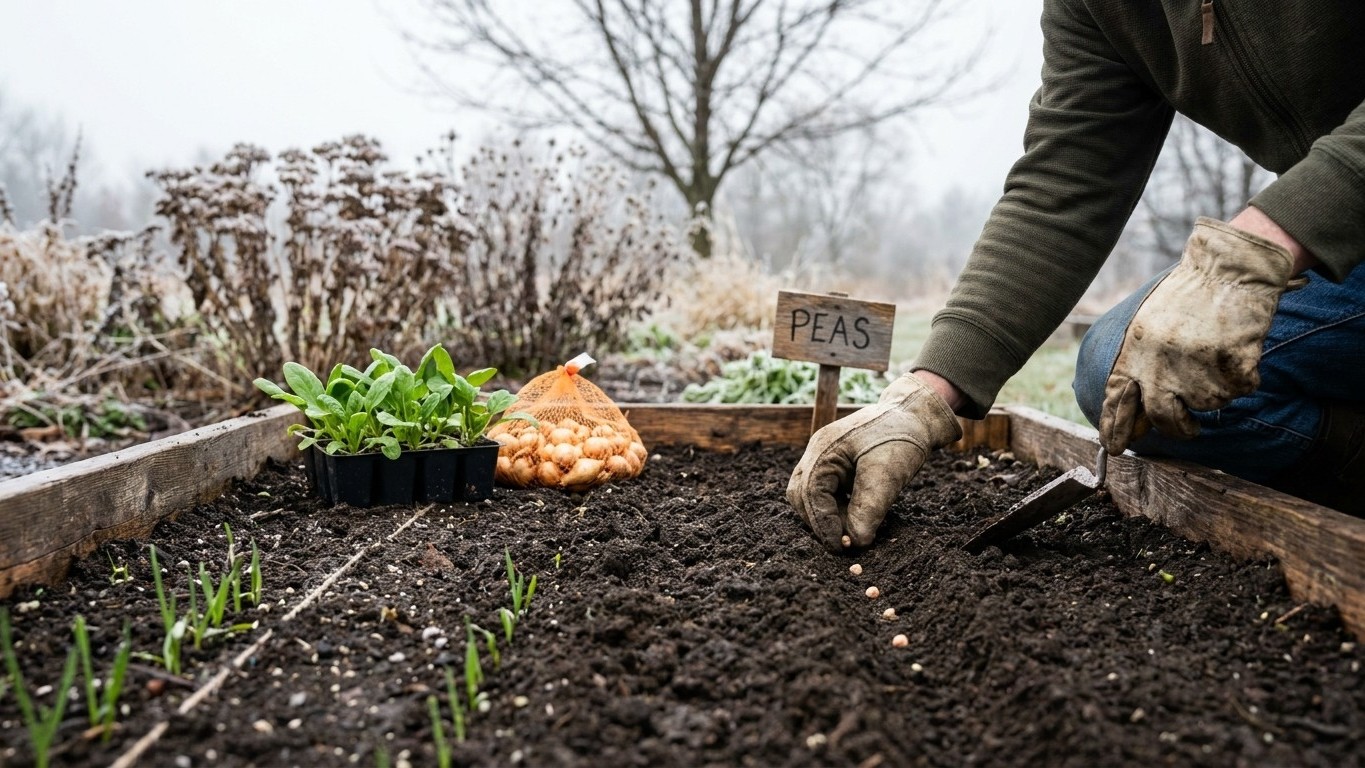

Michigan’s last frost dates make April a cold-hardy month, not a tender-crop month: with frost typically lingering into late April in the Detroit area and into early-to-mid May across most of the Lower Peninsula, this is the window for peas, greens, onions, and bare-root plantings, while tomatoes and peppers stay indoors under lights.
What goes in the ground in April

The decision here isn’t the calendar page, it’s the thermometer. Soil temperature, not air temperature, tells cold-hardy seeds when to germinate and tender roots when they’ll simply sit and rot. With the last spring frost landing around April 30 in the Detroit area and slipping into early or mid-May across most of the Lower Peninsula, April sits almost entirely inside the frost window for the majority of the state. That rules out corn, beans, squash, and any tomato or pepper transplant going into open ground. It does not rule out much else.
Peas go in as soon as the soil can be worked, sometimes weeks before the frost date, because pea seed germinates in cold, wet ground and the seedlings shrug off a light frost. Spinach, lettuce, and other leafy greens follow the same logic. Onion sets and onion transplants tolerate the cold soil and a frost or two without damage, and so do radishes, carrots, and beets sown directly. Potatoes can go in from mid-to-late April once the soil has dried enough to work without turning to mud, with the understanding that late frosts may nip early foliage without killing the plant.
April is also prime time for anything dormant and bare-root. Fruit trees, brambles, grapevines, asparagus crowns, and rhubarb divisions all go into the ground while they’re still asleep and the soil has thawed enough to dig. Garlic, usually a fall crop in Michigan, can still be planted in early spring if it was missed the previous autumn, though yields tend to run smaller than fall-planted bulbs. None of this is a gamble the way a tomato transplant in mid-April would be. It’s simply matching the plant’s tolerance to the month’s real conditions rather than to what the weather happened to feel like on a warm afternoon.
What to start under cover
Seed-starting math runs backward from the frost date, not forward from the day you feel like planting. Tomatoes, peppers, and eggplant generally need six to eight weeks indoors before they’re ready to move outside, and since most of the Lower Peninsula doesn’t clear its last frost until early or mid-May, starting these under lights in April lines up correctly for a grower whose local frost falls in that window. A gardener closer to the Detroit area, with frost tapering off around April 30, can count from that slightly earlier date instead.
Cucurbits, squash, melons, and cucumbers, resent having their roots disturbed and grow fast once started, so they only need three to four weeks indoors before transplanting. Starting them too early is one of the two classic mistakes: the vines outgrow their pots, the roots circle and tangle, and the plant spends its first weeks outside recovering from transplant shock instead of growing. The opposite mistake, starting too late, leaves a gardener with a six-inch tomato seedling in late May instead of a sturdy, budding transplant, and a shortened harvest window that Michigan’s season can’t always make up.
Brassicas like broccoli and cabbage split the difference, started indoors in this window and hardened off for transplant a few weeks before the last frost, since they tolerate cold better than tomatoes but still benefit from a head start most Michigan seasons don’t offer if sown directly.
What is ready to pick
Not much comes out of a Michigan garden in April, and there’s no point pretending otherwise. The outdoor harvest is thin at best. What’s realistic is anything that overwintered under mulch or snow: kale and leeks left in the ground often sweeten after repeated freezes and can be dug as soon as the soil softens enough to get a fork in. Parsnips behave the same way, and gardeners who left a row in the ground through winter are often rewarded with the best-tasting roots of the year right now.
A cold frame or low tunnel extends the list considerably. Spinach, mâche, and hardy lettuces started the previous fall or even in late winter under cover are often ready to cut by April, well ahead of anything sown in open soil. Indoors, sprouts and microgreens fill the gap for households wanting something fresh and fast, ready in a week to ten days from seed with no outdoor exposure at all.
This is also the month to walk the root cellar or pantry shelf with a critical eye. Stored potatoes start sprouting eyes as the weeks pass, squash softens at the stem end first, and onions that have gone soft or sprouted green shoots need to be used or composted before they spread rot to the rest of the bin. Sorting through storage now, rather than waiting for a bad smell to force the issue, saves more of the harvest than it costs in time.
The jobs that matter this month
April rewards the gardener who gets ahead of the growing season instead of chasing it. Dormant pruning of fruit trees, brambles, and grapevines needs to finish before buds swell and break; prune too late and the plant bleeds sap and energy it needed for new growth. Dormant oil sprays for overwintering insect eggs on fruit trees follow the same logic, timed to go on before buds open and while temperatures stay above freezing during application.
Soil, beds, and tools
Soil that’s still wet from snowmelt shouldn’t be worked; digging or tilling clay soil while it’s saturated compacts it into clods that take a full season to break back down. Wait for a handful of soil to crumble rather than smear before turning beds or working in compost. This is also the moment to finish edging beds, repair winter damage to fencing and trellises, sharpen and oil pruners and hoes, and finish turning the compost pile now that it’s thawed enough to break apart.
Planning ahead
Seed orders for the varieties that sell out, particularly regionally adapted tomatoes and open-pollinated favorites, should be finalized now if they haven’t been already, since popular varieties routinely go out of stock before the ground even warms. Mapping out this season’s crop rotation on paper, so nightshades and brassicas don’t land in the same bed they occupied last year, takes twenty minutes and prevents a summer of disease pressure that’s hard to undo once it starts.
What not to do in April
The single most common April mistake in Michigan is planting warm-season crops because the air finally felt like spring. A 70-degree afternoon doesn’t mean the soil six inches down has caught up; tomato and pepper roots sit in soil that’s still in the 40s and simply stall, turning purple and stunted even if they survive the cold snap that follows. Wait for the soil itself to warm, not the forecast.
Uncovering perennials, roses, or strawberry beds too early after a mild stretch is the second trap. A week of 60-degree days can fool a gardener into pulling back mulch, only for a hard frost the following week to hit newly exposed crowns and buds that the mulch had been protecting all winter. Leave winter protection in place until the frost risk has genuinely passed for the local area, not just until the weather feels warm.
Nitrogen fertilizer applied too early pushes soft, leafy growth on perennials and lawns before the plant has the root structure to support it, and that tender new growth is exactly what a late frost damages worst. Hold off on nitrogen-heavy feeding until growth is already underway and the frost risk has eased, and favor a balanced or phosphorus-leaning feed for anything going into the ground this month instead.
Checking this against your own county
A statewide April is a starting point, not an instruction. Michigan’s frost dates shift by weeks depending on elevation, distance from Lake Michigan or Lake Huron, and simple latitude, which is why the USDA Plant Hardiness Zone Map places the state anywhere from zone 4a to 6b depending on location. A garden near the lakeshore, buffered by the water’s slow-changing temperature, often lags weeks behind an inland garden at the same latitude. For a planting window tied to an actual county rather than the state average, Michigan State University Extension publishes county-level guidance and a Michigan Garden Calendar worth checking before committing seed to soil.
Common questions
Is it safe to plant tomatoes outdoors in April in Michigan?
No. The last frost typically doesn’t clear until around April 30 in the Detroit area and into early or mid-May across most of the Lower Peninsula, and tomatoes need both frost-free air and warm soil to establish. Start them indoors instead and transplant after the local frost risk has passed.
Can I still plant garlic in April if I missed fall planting?
Yes, though spring-planted garlic in Michigan typically produces smaller bulbs than garlic planted the previous fall, since it misses the root development that happens over winter dormancy.
What vegetables can handle a Michigan frost in April?
Peas, spinach, lettuce, kale, onions, radishes, carrots, and beets all tolerate light frost once established, which is why they’re the reliable direct-sow choices for this month.
Why is my soil still too cold to plant even though the air feels warm?
Soil warms far more slowly than air, especially clay-heavy Michigan soils that hold moisture and cold longer than sandy ground. A run of warm days can raise air temperature into the 60s or 70s while the soil several inches down remains in the 40s, which is exactly the gap that stalls warm-season transplants.