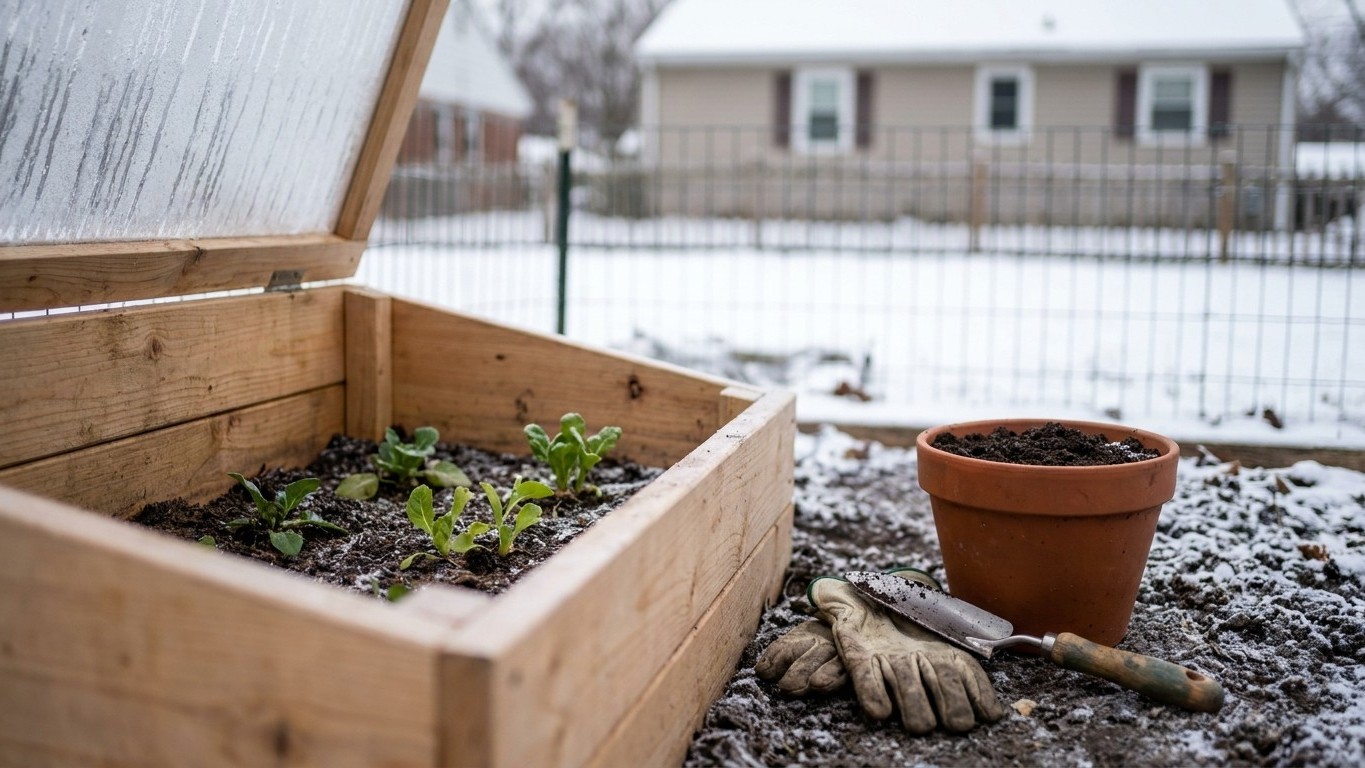

January in Missouri sits weeks, sometimes months, ahead of the last frost. With the average last spring freeze falling between April 6 and April 20 (NOAA NCEI, 1991-2020 Climate Normals, Kansas City International Airport station), almost nothing goes into open soil this month. The real work is dormant planting, cold-frame greens, indoor seed starting, and the prep that decides whether the spring garden gets ahead or falls behind.
What goes in the ground in January

The decision here isn’t the calendar, it’s the soil. Ground that’s frozen solid or waterlogged from snowmelt can’t be worked no matter how mild the air feels for an afternoon. Across most of Missouri’s hardiness range (USDA Plant Hardiness Zone Map, zones 5b to 7b, based on average annual extreme minimum temperature), soil temperatures in January sit well below what any seed needs to germinate, and the last frost is still ten to fourteen weeks out depending on where in the state you garden.
That said, a few things genuinely belong outdoors this month, provided the ground is workable rather than frozen or muddy:
- Garlic and shallots, if fall planting was missed or delayed. A late push works as long as cloves get four to six weeks of cold before growth starts, so far-southern Missouri gardeners have a real shot at this into early January.
- Bare-root fruit trees, brambles, and dormant shrubs, if a nursery ships them this early and the planting hole isn’t fighting frozen clay.
- Cold frames and low tunnels holding spinach, mache, claytonia, and other greens sown back in fall. These aren’t new plantings, they’re protected survivors that keep producing through the cold.
Indoors, this is also the month to force rhubarb crowns or Belgian endive roots in a dark, cool basement, a low-effort trick that turns dormant roots into fresh harvests weeks before anything stirs outside. None of this replaces spring planting. It just keeps hands busy and a few crops moving while the ground itself stays off-limits.
What to start under cover
Seed-starting math runs backward from the last frost window, not forward from today’s date. With frost clearing between April 6 and April 20 across the state (arriving roughly five days earlier at St. Louis’s downtown station than at the Kansas City airport reading, and later still in the far north), a gardener counts back the number of weeks a given crop needs before it’s ready to move outside.
| Crop | Weeks before last frost to sow | Risk if timing slips |
|---|---|---|
| Onions and leeks (from seed) | 10 to 12 weeks | Started late, bulbs stay undersized all season |
| Celery and celeriac | 10 to 12 weeks | Slow germinators; late sowing means a short, weak stalk |
| Peppers and eggplant | 8 to 10 weeks | Started too early, plants stall in small pots and never recover vigor |
Onions, leeks, and celery are the January anchors, since a 10-to-12-week head start counted back from an April 6-20 window lands squarely in this month for much of the state. Peppers and eggplant sit on the edge, worth starting late in January only if the grower has strong supplemental light; started too soon under weak window light, they turn leggy and rootbound long before it’s warm enough to plant them out.
The two failure modes run in opposite directions. Start too early without grow lights and the seedlings stretch, flop over, and never fully recover even after transplanting. Start too late and there’s no runway left, the plant reaches transplant size just as the last-frost window opens, with no cushion for a cold snap or a rainy stretch that delays hardening off.
What is ready to pick
Little to nothing comes out of open Missouri soil in January. But “nothing outdoors” isn’t the same as “nothing to eat from the garden,” and a well-planned fall garden keeps paying off well into winter.
Kale, leeks, and Brussels sprouts left standing under mulch or snow cover often taste sweeter after hard freezes, since cold converts stored starches to sugars. A cold frame with spinach, arugula, or mache sown back in fall can still be cut lightly this month, as long as harvesting waits for the warmest part of the day and the frame isn’t opened during a deep freeze. Indoors, sprouts and microgreens on a windowsill or under a small light fill the gap in under two weeks from seed, giving fresh greens with zero dependence on outdoor weather.
This is also the month to walk the root cellar or basement storage shelves. Check winter squash for soft spots near the stem end, a sign it’s turning even if the skin still looks firm. Potatoes that have started sprouting eyes or gone soft and rubbery should get pulled and used first. Onions with a sour smell or dark, wet patches near the neck are past saving and belong in the compost before they spread rot to the rest of the bin. A few minutes of checking now prevents losing a whole crate to one bad squash sitting against its neighbors.
The jobs that matter this month
A garden in the deep of winter isn’t idle, it’s catching up on the jobs that never fit during the growing season. Skip them now and the cost shows up in June, not January.
Pruning and ordering
Dormant pruning of apple, pear, and stone fruit trees, along with brambles and grapevines, is best done while the plant is fully asleep and the branch structure is visible without leaves in the way. Cutting now, rather than waiting for a warm day in March, reduces stress on the plant and lowers disease risk since wounds seal before sap starts moving. This is also when seed catalogs move fastest. Popular tomato and pepper varieties, along with anything from a small regional seed company, can sell out weeks before the last frost even arrives, so ordering early beats discovering a favorite variety is gone in March.
Soil, tools, and structures
Frozen or dry ground is easier to walk without compacting, which makes January a reasonable time to plan next season’s crop rotation on paper, decide where nitrogen-hungry crops follow nitrogen-fixing ones, and pull a soil test if the ground isn’t frozen solid. Compost piles built in fall benefit from a turn now to keep the center from going anaerobic. Tool maintenance (sharpening pruners and hoes, oiling wood handles, cleaning rust off shovel blades) takes an afternoon and pays back all season in cleaner cuts and less effort. Raised bed frames, trellises, and fencing damaged by fall storms or freeze-thaw heaving are far easier to repair before anything is growing around them.
What not to do in January
The most common mistake this month is trusting the air instead of the soil. A run of 55-degree days can feel like spring, but the ground underneath stays cold for days after the air warms, and soil temperature, not air temperature, is what seeds and roots actually respond to. Direct-sowing anything warm-season based on a mild afternoon almost always ends in rot rather than germination.
A related trap is uncovering cold frames or pulling row cover after a few warm days, only to have plants exposed when the next freeze rolls back in. Hardened-off winter greens can handle real cold; the same plants suddenly exposed after a week of soft, warm growth are far more vulnerable. Keep protection in place through the whole cold season and vent on warm days rather than removing covers outright.
Fertilizing dormant plants is also a waste at best and a hazard at worst. Nitrogen applied to dormant fruit trees or perennials in January doesn’t feed anything, since the plant isn’t actively growing, and it can wash away with snowmelt before roots ever wake up to use it. Save the feeding for when new growth actually appears. Last, resist starting long-season warm crops like tomatoes indoors this early without strong supplemental lighting; without it, they’ll be leggy and struggling long before the ground is ready for them.
Checking this against your own county
A statewide frost window is a starting point, not a instruction for a specific backyard. The April 6-20 range comes from a station north of the city, and Missouri’s spread runs wide: the downtown station reads about five days earlier in spring, and far-southern Missouri, tucked into the Ozarks and the Bootheel, runs milder still. Elevation, valley cold pockets, and how close a property sits to a lake or river can shift these windows by two or three weeks in either direction.
For a county-level planting calendar and localized frost data, the University of Missouri Extension is the reliable next stop, since their county offices track conditions this statewide page can’t.
Common questions
Can I plant grass seed in Missouri in January?
No. Cool-season grasses need soil temperatures well above what January delivers to germinate, and seed sown on frozen or snow-covered ground mostly washes away or gets eaten before spring. Wait for the soil to warm in early spring or plan for a fall seeding window instead.
Is it too early to start tomato seeds in January?
For most of Missouri, yes, unless there’s strong grow-light setup. With the last frost not arriving until April 6-20, tomatoes started in January typically outgrow their pots and turn rootbound weeks before it’s safe to transplant them outside.
What vegetables can survive a Missouri winter outdoors?
Kale, leeks, Brussels sprouts, and some hardy spinach varieties can survive under mulch or row cover, often improving in flavor after a hard freeze. Cold frames extend that list to include mache, arugula, and claytonia.
When should I prune fruit trees in Missouri?
Late winter, while trees are fully dormant, is the standard window, and January fits that as long as wood isn’t frozen brittle enough to shatter under the cut. Pruning before spring growth starts reduces stress and lets wounds heal before sap begins moving.