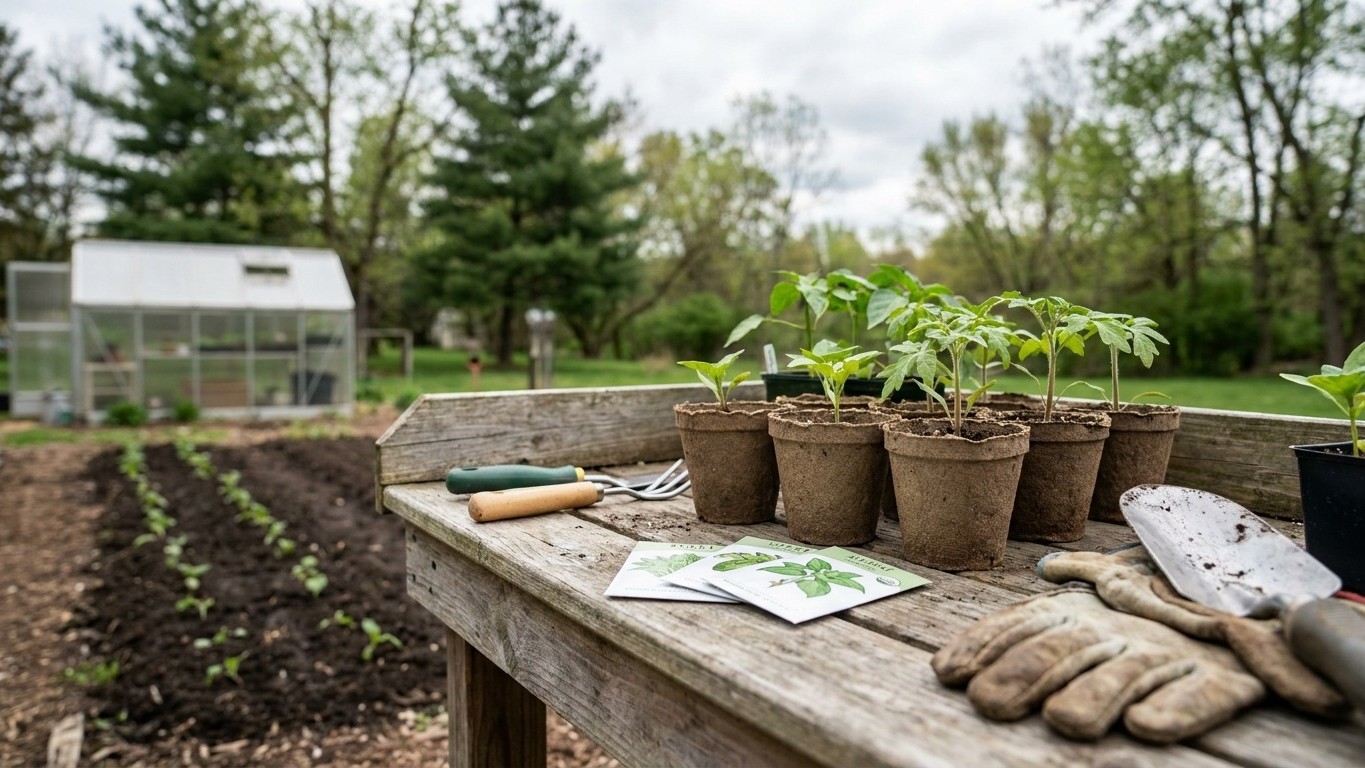

April in New Brunswick sits well ahead of the average last frost, so open-ground planting stays limited to the toughest crops: peas, hardy greens, onion sets and shallots, plus bare-root trees and canes while they’re still dormant. Everything tender waits. What decides the calendar here isn’t the date on the wall but whether the soil itself has thawed, drained and warmed enough to work.
What goes in the ground in April

New Brunswick’s average last spring frost lands around May 23, based on the 1981-2010 Canadian Climate Normals recorded at the Moncton station. That’s a mean date, not a safe one: in roughly half of all years, frost arrives even later than that. April, falls entirely before the frost window closes, which rules out anything warm-season for the next several weeks no matter how mild a stretch of weather feels.
That doesn’t mean the garden sits idle. Once the ground has thawed and drains without turning to soup underfoot, usually by the back half of the month in most of the province, a short list of crops tolerates the cold soil and the risk of another freeze:
- Peas, direct-sown as soon as soil crumbles rather than sticks to a shovel
- Onion sets and shallots, which shrug off a light frost once rooted
- Hardy greens like spinach and arugula, sown thin and thinned again later
- Bare-root fruit trees, berry canes and roses, planted while still dormant, before buds break
Garlic, if it wasn’t tucked in the previous fall, is best left for next fall rather than forced into a spring planting that rarely bulbs as well. Cold frames and low tunnels earn their keep here: they let you push lettuce and brassica transplants outside two to three weeks ahead of open-ground timing by trapping just enough heat to offset a cold night. Indoors, this is also the last easy window to force rhubarb crowns or chicory roots in a dark, warm spot for an early harvest, since both lose their punch once outdoor growth resumes on its own.
| Crop | Frost tolerance | Go in open ground this month? |
|---|---|---|
| Peas | High | Yes, once soil is workable |
| Spinach, arugula | High | Yes |
| Onion sets, shallots | Moderate-high | Yes |
| Tomatoes, peppers, squash | None | No, wait past frost window |
| Bare-root trees and canes | Dormant, no active growth | Yes, before bud break |
New Brunswick sits in Canadian hardiness zone 5a, according to Natural Resources Canada’s Plant Hardiness Site, using 1991-2020 normals for the reference city. That number comes from a seven-variable Canadian scale and doesn’t translate to a USDA zone; the two systems aren’t built the same way, so don’t lean on it to cross-check anything against a US planting chart.
What to start under cover
Indoor sowing this month is really an exercise in counting backward from that average last-frost date of May 23. Tomatoes need roughly six weeks indoors before they’re ready to go outside, which puts their start date in the first half of April if it hasn’t happened already. Peppers and eggplant, slower to size up, want closer to eight weeks, so those trays should already be under lights; if they aren’t, starting now still beats skipping them; just expect smaller transplants at setting-out time. Cucumbers, squash and melons move fast and only need three to four weeks under cover, so April is exactly on schedule for those.
Brassicas for an early planting, cabbage, broccoli, kale, run about five to six weeks from seed to a transplant sturdy enough for the cold frame, which means starting them now sets up a mid-to-late spring move outdoors once the ground firms up.
The two ways this goes wrong both come from bad timing. Start too early and the seedlings outgrow their pots weeks before it’s safe to plant them out; they turn leggy, stretch toward the light, and sulk when finally transplanted with a cramped, tangled root ball. Start too late and there isn’t enough runway left before the frost window closes, so plants go into the ground undersized and never quite catch up over the shortened growing season that follows. Neither mistake is fixable once it’s made, which is the whole argument for doing the backward math from May 23 rather than guessing.
What is ready to pick
Little comes out of open ground in New Brunswick this month, and that’s just the honest state of things this early in the season. But the kitchen doesn’t have to run empty. Rhubarb or chicory forced indoors in a dark, warm corner should be ready to cut by now, offering the first genuinely fresh stalks of the year well ahead of anything outdoors. Cold frames that were seeded to hardy greens earlier in the cold season may already be yielding thinnings of spinach or arugula, cut a few leaves at a time rather than all at once, which keeps the planting producing longer.
Indoors, sprouts and microgreens fill the gap fastest: most are cuttable within one to two weeks of sowing on a windowsill tray, which makes them the quickest fresh crop available in any month, April included.
This is also the point in the year to give stored crops a hard look. Squash, potatoes and onions held since fall are at their most vulnerable now, as rising indoor and outdoor temperatures wake up rot and sprouting that stayed dormant through the coldest weeks. Check squash for any soft spot near the stem end, sort out potatoes that have started sprouting eyes or gone soft, and pull onions that feel spongy when squeezed. One turning specimen left in the pile spreads faster than most gardeners expect, so it’s worth a few minutes to sort through the bin rather than assume everything’s holding fine.
The jobs that matter this month
April rewards work that has nothing to do with sowing. Dormant pruning of fruit trees and berry canes needs to wrap up before buds swell and break; cuts made after growth starts cost the tree more sap and more stress than the same cut made a few weeks earlier. If seed hasn’t been ordered yet, this is the last comfortable stretch to do it. Popular varieties of peas, beans and squash sell out from suppliers earlier each season, and a short list is far easier to fix now than after the good stock is gone.
Soil that has thawed and dried enough to crumble in your hand, rather than smear, is ready for testing and amending; working wet soil compacts it and undoes months of structure-building in one afternoon. Turning the compost pile now speeds up decomposition as temperatures climb, giving you finished compost sooner rather than later in the season. Tools that sat idle over winter deserve a real cleaning and a sharpening pass, since dull pruners and hoes do more damage to plant tissue than a clean cut ever would.
Raised beds, cold frame frames and fencing often take a beating over winter from frost heave, snow load or wildlife pressure; walking the garden now to spot loose boards, sagging wire or heaved posts means fixing them before they fail mid-season, when a break lets in deer or rabbits at the worst possible moment. And circle back to that stored-crop check mentioned above, because it belongs on this list too: a rotating squash or a sprouting potato caught early saves the rest of the bin.
What not to do in April
The classic misstep here is trusting the air instead of the soil. A run of 60-degree afternoons feels like permission to set out tomatoes or peppers, but soil at 45 degrees stalls root growth and stunts warm-season transplants even if they don’t die outright. Wait for the soil itself to warm, not just the forecast.
A related mistake is uncovering mulch, row cover or protected perennials too early after a mild spell. New Brunswick’s average last frost of May 23 means a warm week in April is very often followed by a hard freeze, and tender new growth that got pulled into the open by premature warmth has no protection left when that freeze lands.
Nitrogen timing trips people up too. Feeding a heavy dose of nitrogen to dormant or barely-active plants pushes soft, watery growth that a spring frost cuts down fast, and it does nothing for roots that aren’t yet drawing on it anyway. Hold off until plants are visibly growing. And resist tilling or digging wet, muddy soil just because the calendar says it’s time: working soil before it drains compacts it into clumps that take a full season to break back down, undoing far more good than an early start provides.
Checking this against your own county
A province-wide month is a starting point, not an instruction. New Brunswick’s coast, its river valleys and its higher inland ground don’t warm up on the same schedule, and elevation alone can shift a frost window by two or three weeks in either direction. The dates and zone figures here come from a single reference station and city; treat them as the middle of a range for your own ground, not the edges of it.
For a more local read, Agriculture and Agri-Food Canada’s site is a reasonable starting point (agriculture.canada.ca), and Natural Resources Canada’s Plant Hardiness Site lets you check the zone rating closer to your own community rather than relying on the provincial reference point alone.
Common questions
Is it too early to plant tomatoes outdoors in April in New Brunswick?
Yes. The average last frost falls around May 23, and tomatoes have zero frost tolerance. Keep them indoors under lights and wait for both the soil and the calendar to catch up.
Can I still plant garlic in April?
Garlic is best planted in fall for a proper bulb next season. A spring planting in April usually produces smaller, less developed bulbs, so it’s a fallback rather than a first choice.
What’s the easiest crop to direct-sow outdoors this month?
Peas. They tolerate cold soil and light frost better than almost anything else on the list, and they go in as soon as the ground stops sticking to a shovel.
Why does the hardiness zone number matter if I’m not comparing it to a US zone?
Because it’s still useful on its own terms. New Brunswick’s Canadian zone 5a rating, built from seven climate variables rather than one, gives a rough sense of winter severity for perennials and fruit trees, even though it can’t be lined up against a USDA number from elsewhere on this site.