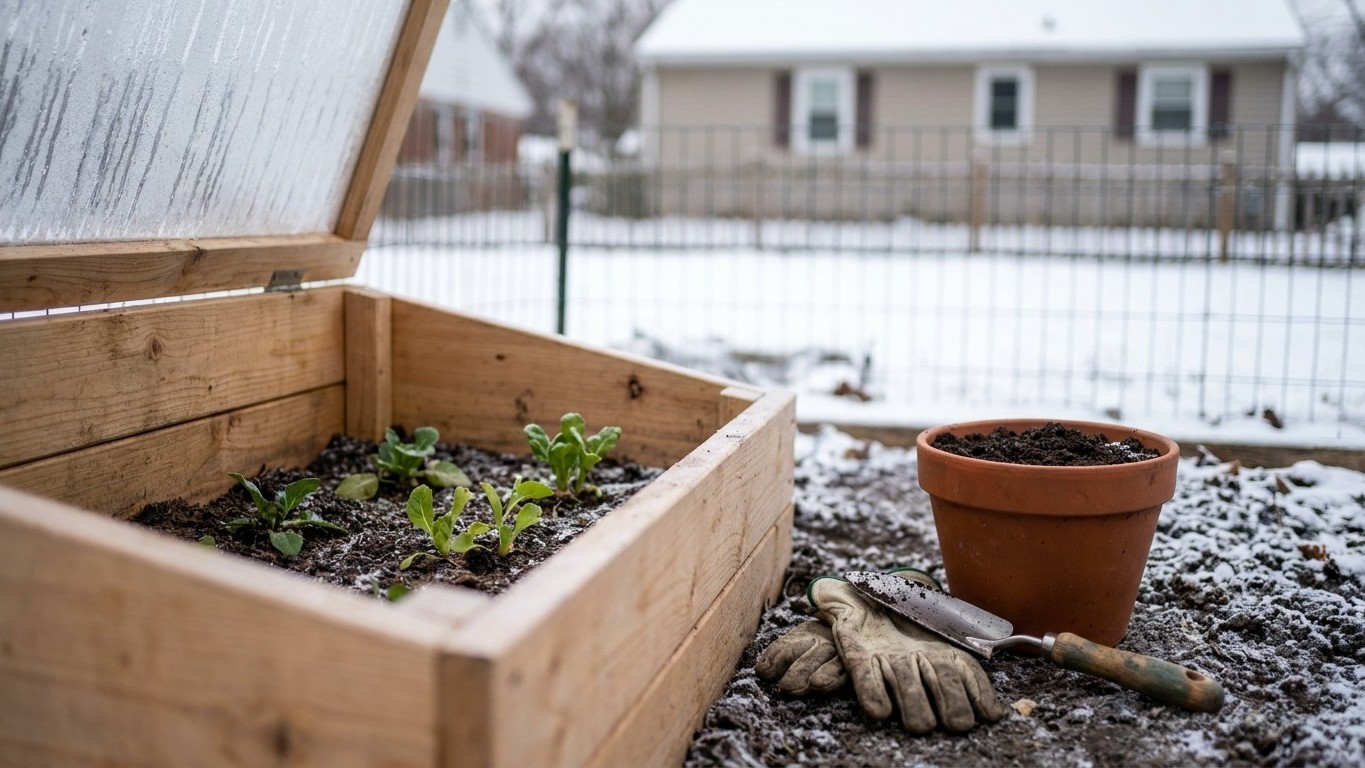

January in New Brunswick means frozen ground, snow cover, and a growing season that is months away. Nothing goes into open soil this month. The real work is forcing a few crops indoors, keeping cold frames from failing, ordering seed before good varieties disappear, and getting the infrastructure ready for the thaw that starts the season proper.
What goes in the ground in January

Soil temperature decides what can be planted, not the date on a calendar. A gardener in a mild coastal pocket and one on high ground near the Quebec border are working with different soil temperatures on the same day, and in January both are usually the same answer anyway: frozen solid.
New Brunswick sits at Canadian hardiness zone 5a, based on the reference city of Moncton. That number is built from seven climate variables, not one, and it does not translate to a USDA zone on the American side of the border, so treat it as a description of a long, cold dormant season rather than a planting guide by itself. The average last spring frost at the Moncton station runs to May 23, and the average first fall frost lands around October 2. Those are means from a thirty-year record, not guarantees: in roughly half of all years the spring frost arrives later than May 23, sometimes weeks later. Nothing about January changes that math, it just puts the reader firmly in the middle of the dormant stretch, months before the frost window even opens.
What is still realistic
Garlic and shallots that went into the ground in fall are already doing their quiet underground work and need nothing from the gardener but patience. New allium planting is off the table until the soil softens. Cold frames and low tunnels only help if they hold enough heat to keep the soil workable underneath, and in most of the province that is not the case in January, so treat anything already established under cover as protected, not as an invitation to sow something new. The one genuinely productive move is forcing: digging a rhubarb crown or chicory roots, bringing them into a dark, cool space indoors, and coaxing an early harvest weeks ahead of anything the garden itself could offer. Bare-root fruit trees and canes wait for a thaw; ordering them now for spring delivery is the useful version of that job.
What to start under cover
The slow growers are the ones worth starting now, counted backward from the frost window rather than forward from today. Onions and leeks grown from seed are famously unhurried, often wanting something in the range of twelve to sixteen weeks under lights before they are ready for the garden. Measured back from the May 23 average last frost, that lands the sowing date squarely in late January, which is exactly why this is the month alliums go under lights while almost everything else waits.
Two ways to get this wrong, and both cost real time later. Start too early, before the plant has anywhere productive to put its energy, and the result is a rootbound, leggy seedling that sulks for weeks after transplant instead of growing. Start too late, and the seedling never reaches transplant size before the window that suits it has closed, forcing either a rushed, undersized transplant or a season lost entirely. Onions and leeks tolerate an early start better than most vegetables because they are naturally slow, but even they have a ceiling: sown too far ahead of the frost window, they will need repotting more than once just to survive indoors long enough.
Peppers, tomatoes, and other warm-season transplants are not a January job here. Their own backward count from a late-May transplant date lands their seeding several weeks later, and starting them now only produces leggy plants competing for space under lights that the alliums need first.
What is ready to pick
Outdoors, there is little to nothing. Anything left standing under snow, like kale or leeks that overwintered in place, can still be dug out and is often sweeter after hard cold than it was in fall, but reaching it means clearing snow down to the crown and checking that the plant hasn’t rotted at the base first.
Cold frames that have held their heat may still be offering hardy greens such as spinach or mache, though growth this time of year is slow enough that harvest is more of a bonus than a reliable food source. Indoors, sprouts and microgreens are the one crop that runs on a schedule the weather cannot touch, ready in a week or two from seed regardless of what is happening outside the window.
The bigger job this month is triage on what is already stored. Squash, potatoes, and onions put away in fall need a check-in: squash that feels soft at the stem end or has a sunken, damp spot is starting to break down and should be used first, potatoes that have gone soft or sprouted eyes in storage should be pulled before they spread rot to their neighbors, and onions with any give when squeezed near the neck are past their peak. A single soft squash left in a bin can take down several good ones around it within a couple of weeks.
The jobs that matter this month
Dormant pruning is the marquee job. Apple, pear, and other fruit trees are leafless now, which means the branch structure is fully visible and every cut can be made with intent instead of guesswork. Cane fruits like raspberries benefit the same way: removing dead or crossing wood while the plant is fully dormant reduces the chance of spreading disease that a summer cut can carry from tool to wound. This work has a real deadline, since pruning too close to spring growth stresses the plant right as it wakes up.
Seed catalogs move fast in the weeks after the new year opens, and popular varieties, especially the disease-resistant tomatoes and the reliable regional corn types, sell out before spring planting season even arrives. Ordering now, rather than waiting, is the difference between growing the variety planned and settling for whatever is left.
Soil testing does not care about the season. A sample can go out to a lab in January just as well as in April, and getting results back now means any lime or amendment recommendations can be applied while there is still time for them to work before planting begins. Compost piles that have not frozen solid can still be turned to keep the decomposition going; ones that have frozen simply wait, but adding kitchen scraps to the pile in the meantime keeps material building for when it thaws.
Frozen ground is, oddly, a good time to walk on beds and paths without compacting soil, which makes it the right window for repairing raised bed frames, mending fencing, and sharpening and oiling pruning tools before they see spring use.
What not to do in January
A run of unusually mild days is the most common trap. A week of thaw can feel like spring arriving early, and the instinct to pull back winter mulch or uncover a cold frame fully follows close behind. The ground underneath is still deeply cold, and a hard freeze almost always follows a mild stretch this early in the year; crowns and roots exposed too soon can take real damage from that swing back down.
Pruning during a hard, deep freeze is another mistake worth naming. Wood that is bone-cold and brittle is more prone to splitting or cracking under the pruning cut than the same branch on a milder dormant day, and a cracked cut heals poorly compared to a clean one.
Fertilizing dormant beds with nitrogen this month wastes the product and can do more harm than good. Plants that are not actively growing have nowhere to put that nitrogen, and much of it simply leaches away with snowmelt before spring growth even starts, right when the plant could actually use it.
Starting warm-season seedlings early because indoor space feels available is the last common error. Peppers and tomatoes started in January, well ahead of their own backward count from the frost window, spend weeks as overgrown, leggy plants competing with the onions and leeks that actually belong under lights this month.
Checking this against your own county
A province-wide average is a starting point, not an instruction. The May 23 and October 2 frost averages come from the Moncton station specifically, and elevation, distance from the Bay of Fundy, and northern latitude all shift those windows by real weeks. A garden near Edmundston or in the northern uplands is working with a shorter, later season than one on the milder coast.
For local detail, the federal agriculture department maintains resources worth checking against conditions in a specific county: agriculture.canada.ca.
Common questions
Can garlic still go in the ground in January in New Brunswick?
No. Garlic planted for the following season goes in during fall before the ground freezes. By January the soil is frozen across nearly the whole province, and any garlic not already planted waits until the ground thaws.
Is it too late to start onion seeds indoors in January?
It is closer to the right time than late. Counted back roughly twelve to sixteen weeks from the May 23 average last frost, late January is exactly when slow-growing alliums like onions and leeks typically go under lights.
What does hardiness zone 5a actually mean for a New Brunswick garden?
It is the Canadian zone rating for the Moncton reference city, built from seven climate variables rather than one, and it does not convert directly to a USDA zone. It signals a long, cold dormant season, not a specific planting date.
Should winter mulch come off during a mild January stretch?
No. A few mild days do not mean winter is over, and a hard freeze often follows close behind. Pulling mulch too early exposes roots and crowns to a refreeze that a stable snow cover would have prevented.