
December in New Mexico means the open garden is closed for the season across most of the state, but garlic and shallots can still go into workable ground, cold frames keep hardy greens alive, and dormant fruit trees are ready for pruning. The real work this month happens under cover, in storage, and on paper as you plan next year’s beds.
What goes in the ground in December

Nothing tender goes into open soil in New Mexico in December, and there is no point pretending otherwise. Using the Albuquerque area as a reference point, the first fall frost typically arrives between October 29 and November 9, so by the time December opens, the ground has already had weeks to cool and, in many counties, to freeze at the surface. That single fact, soil temperature rather than the date on a calendar, decides everything this month. Air can feel mild on a sunny December afternoon in the Rio Grande Valley while the soil six inches down stays locked below the range where roots can grow.
Garlic and shallots are the exception, and a real one. If your ground is still workable, not frozen solid or waterlogged, cloves and shallot sets can go in through early December in the lower elevations of the southern part of the state. They need the cold to trigger bulb formation, so a late planting is not a failure, it is closer to the plan. Mulch heavily after planting, four to six inches of straw, to buffer the freeze-thaw cycles that heave cloves out of loose soil.
Cold frames and low tunnels stretch the season for anything already established. Spinach, mache, and claytonia that were seeded in fall will sit nearly dormant under cover, growing slowly on sunny days and holding steady through hard freezes as long as the cover keeps wind and direct exposure off the leaves. This is not new planting so much as season extension, but it is the closest thing to active growing most New Mexico gardens see this month.
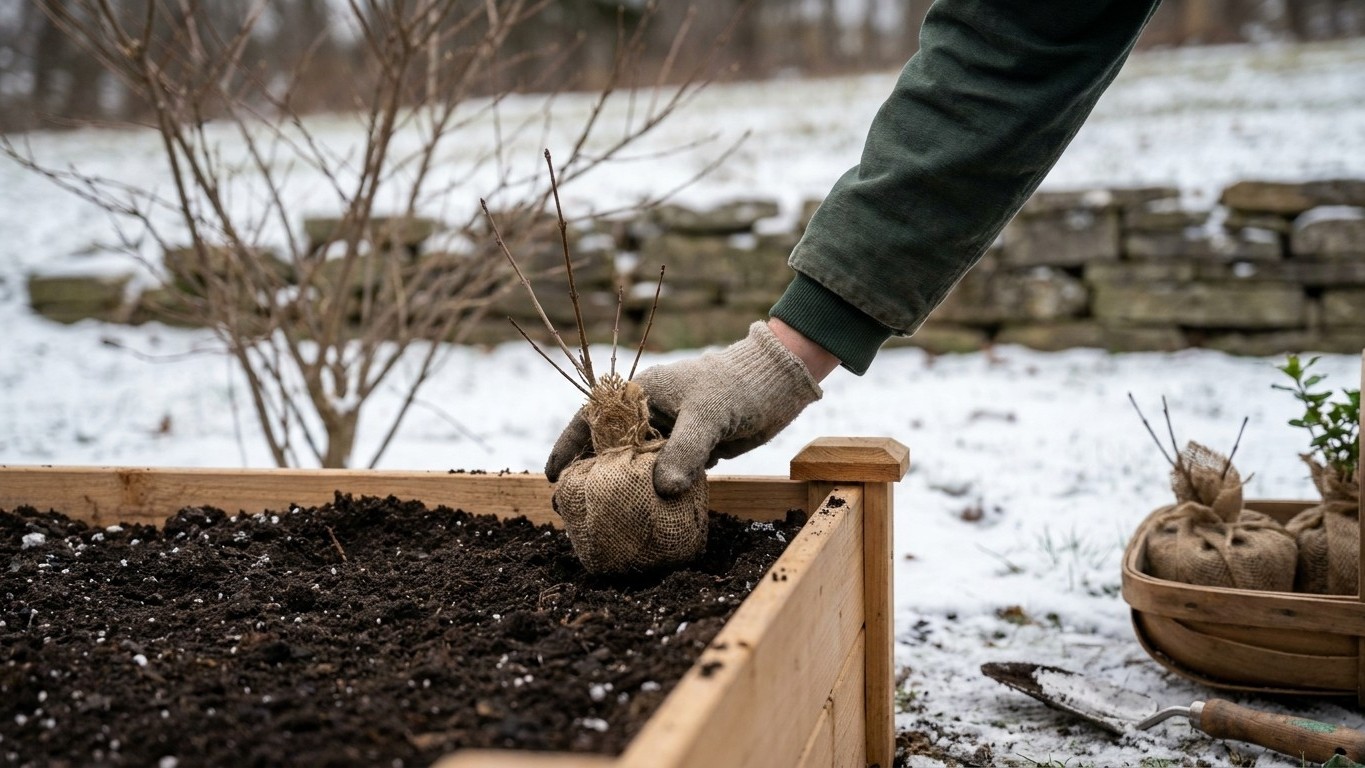
Bare-root and dormant plantings are the other legitimate December job outdoors, mainly in the warmer valleys of the southern counties. Bare-root fruit trees, roses, and cane fruits can be set out while they are fully dormant, provided the ground can still be dug. Forcing rhubarb or chicory indoors, digging a root, potting it, and holding it in a dark, cool spot, gives you a harvest when the garden itself has nothing to offer.
What to start under cover
Seed starting in December works backward from the last spring frost window, not forward from the date on the seed packet. In the Albuquerque area that window falls between March 31 and April 12. Count back from the early end of that window, not the late end, because a plant that is ready too soon is far easier to manage than one that is not ready at all.
Onions and leeks are the classic December starts. They need eight to ten weeks of indoor growth before they go out as transplants, and they tolerate being held a little longer if spring is slow to arrive. Starting onion seed indoors now, under strong light, puts transplant-ready seedlings in your hands right around the point when the soil is workable in most valley locations.
Peppers, especially the slower hot varieties New Mexico gardeners lean on for chile, are worth starting late in the month in the coldest zones of the state, and can wait until January in the warmest. Peppers are notoriously slow from seed to transplant size, often ten to twelve weeks, so counting backward from an early-April frost window puts a hard deadline on when seed needs to hit the tray.
The two ways this goes wrong are worth naming plainly. Start too early and you get rootbound, leggy seedlings sitting on a windowsill for weeks longer than they should, stretching toward weak light and stalling out before they ever see soil. Start too late and short-season crops like onions never bulk up before summer heat shuts down their growth. Both mistakes trace back to the same fix: work from the frost window for your own elevation, not a fixed date on a printed chart.
What is ready to pick
Little comes out of an open New Mexico garden in December, and the honest answer is that most harvesting this month happens in cold frames, in storage, and indoors rather than in open beds. That is not a gap in the calendar, it is the season working as designed.
Kale, collards, and leeks that were left in the ground under mulch or row cover often survive New Mexico’s dry winter cold and can still be picked as needed, leaf by leaf or stalk by stalk, through the coldest months. Leeks in particular hold in the ground far better than most vegetables and can be pulled through a hard freeze once the surrounding soil is loosened.
Cold-frame greens, spinach, mache, arugula, are ready whenever there is enough daylight and warmth for a few leaves to size up, which in December means slow, intermittent harvests rather than a steady supply. Sprouts and microgreens grown indoors on a counter or under a grow light fill the gap for anyone who wants fresh greens on a schedule they control rather than one the weather sets.
Stored crops need a hands-on check this month. Winter squash, potatoes, and onions put into storage in fall should be gone through by hand: squash with a soft spot or a sweet smell is starting to break down and should be used first, potatoes that have sprouted or gone green need to be pulled from the bin, and onions with any give in the neck are on their way out. One rotting squash left in a box of a dozen will take the others down with it if it is not caught early.
The jobs that matter this month
December carries plenty of work, even with the beds empty, and skipping it costs real ground come spring.
Pruning and dormant care
Fruit trees and cane fruits are fully dormant in December across New Mexico, which makes it the right window for structural pruning. Cutting back apple, pear, and stone fruit trees now, while there is no leaf cover to hide the branch structure, lets you see exactly where to remove crossing limbs, water sprouts, and damaged wood. Wait too long into a warm spell and buds start to swell, and every cut after that point costs the tree more energy to heal.
Ordering and planning
Seed catalogs move fast in the weeks after the new year opens, and popular chile, tomato, and pepper varieties sell out of the strongest germination stock first. Ordering in December, before the January rush, is the difference between getting the variety you actually want and settling for whatever is left. This is also the natural point to sketch next season’s rotation, deciding which beds grew heavy feeders like squash and corn so you can plan legumes or a cover crop there instead.
Soil, tools, and storage
A soil test taken now gives you the whole winter to source and apply amendments before spring planting, rather than scrambling in March. Turning a compost pile, even a slow one, keeps the decomposition moving instead of letting it freeze solid into an inert block. Tools benefit from the downtime too: cleaning soil off blades, sharpening pruners and hoes, and oiling wooden handles now means everything is ready to go the first workable day of spring instead of sitting in the shed with a dull edge and rust starting at the joints. Beds, fencing, and cold frame frames that took a beating over the growing season are easier to repair with nothing planted around them.
What not to do in December
The most common mistake this month is trusting the air instead of the soil. New Mexico can throw a stretch of sixty-degree afternoons in the middle of December, and that warmth tempts gardeners into setting out tomato or pepper transplants that have been hardening off indoors. The soil has not warmed with the air, and a cold snap a few days later, which is just as normal for this month as the mild spell was, kills the transplants outright. If it is December, hold warm-season starts indoors regardless of what the thermometer says on a given afternoon.
Uncovering cold frames and row covers too early after a mild stretch is the same mistake in reverse. A few warm days do not mean the freeze risk has passed, and greens that were coasting along fine under cover can take frost damage the moment that cover comes off and a clear, cold night follows. Leave the cover on and vent it during the warm hours instead of removing it outright.
Feeding nitrogen at the wrong point in the season is a quieter mistake but a real one. Garlic, overwintering greens, and dormant fruit trees do not need a nitrogen boost in December. Nitrogen pushes soft new growth, and soft growth is exactly what gets killed by the next hard freeze. Save the nitrogen for when active spring growth actually starts, and use December for phosphorus and potassium amendments or plain compost instead, which support root development without forcing tender new shoots into a month that will not protect them.
Checking this against your own county
Everything above is a state-wide starting point, not an instruction for your specific yard. New Mexico’s elevation runs from low desert basins to mountain valleys, and that difference alone can shift frost windows by two weeks or more between a southern valley floor and a high northern county. Hardiness across the state spans USDA zones 4b to 9a, a range wide enough that a planting date that works in Las Cruces can be weeks off in Taos or Santa Fe.
For a planting calendar built around your own county and elevation, the New Mexico State University Cooperative Extension Service is the source to check before committing seed or transplants to the ground.
Common questions
Can I still plant garlic in December in New Mexico?
Yes, as long as the ground is workable and not frozen solid. Garlic and shallots planted in early December still have time to establish roots before the coldest stretch of winter sets in, and both actually need the cold period to form proper bulbs.
Will a mild December afternoon hurt my cold frame plants if I leave the cover on?
No. Venting the frame briefly on a warm, sunny afternoon prevents overheating, but leaving the cover in place through the day and night protects against the freeze that typically follows a mild spell in New Mexico’s winter pattern.
Is it too late to start onion seeds indoors in December?
No, December is close to ideal in most of the state. Onions need eight to ten weeks of indoor growth before transplanting, which lines up well with a last spring frost window that, at the Albuquerque reference station, falls between March 31 and April 12.
Should I prune fruit trees if we’ve had an unusually warm winter?
Prune based on dormancy, not air temperature. As long as buds have not begun to swell, the tree is still dormant and safe to prune, even after a run of mild days. Once buds swell, hold off until the tree has leafed out and finished its first flush of spring growth.