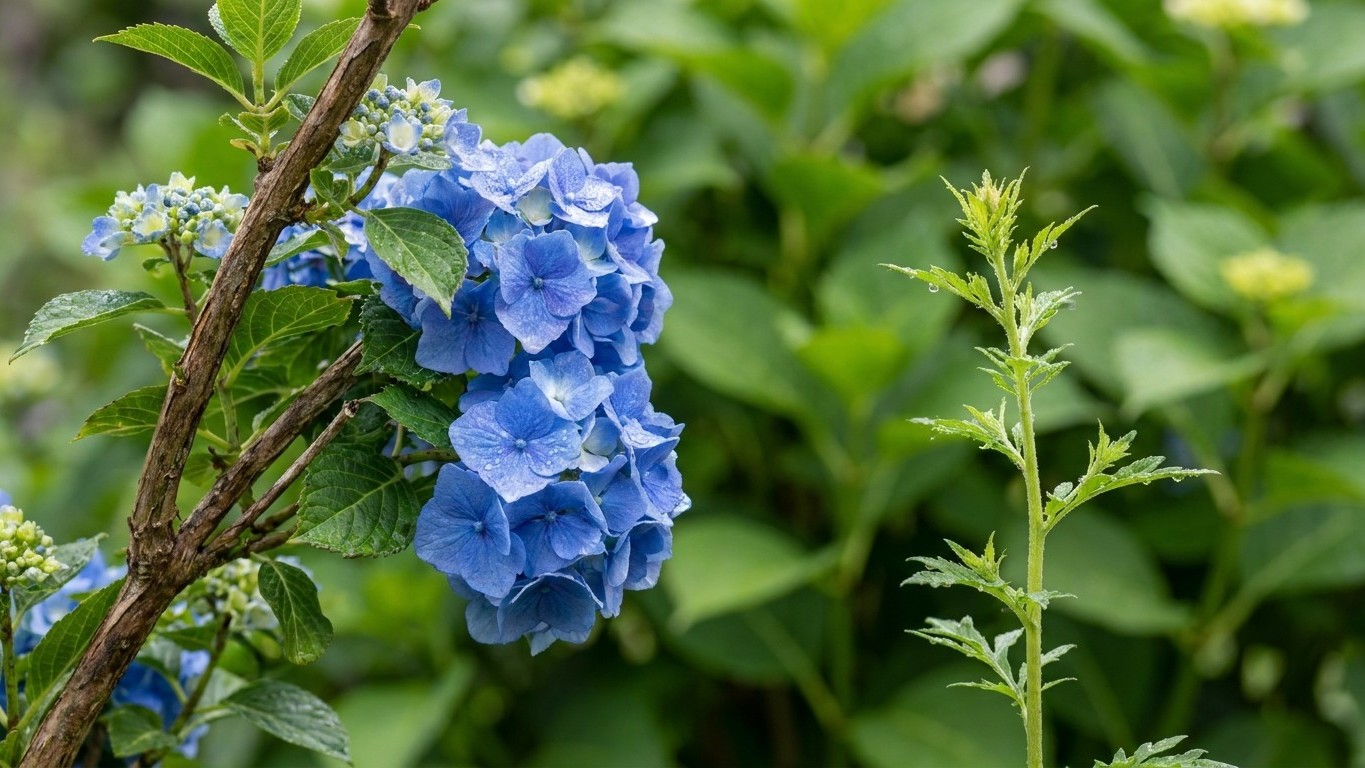

Most hydrangeas in New Mexico don’t die from cold alone. They lose flower buds and top growth to dry wind, to swings between mild afternoons and hard freezes, and to a spring cold snap that arrives after the buds have swollen. The fix is short. Mulch deeply once the ground has cooled, water during dry stretches, break the wind, and hold off pruning until the shrub shows you which stems are alive.
What this comes down to in New Mexico

When does winter protection go on and come off?
At Albuquerque, the reference city, the last spring frost falls between March 31 and April 12, and the first fall frost between October 29 and November 9 (NOAA NCEI U.S. Climate Normals, 30-70% freeze probability band at 32°F). The reference station has roughly seven months between the mean last spring frost and the mean first fall frost, so protection belongs to the other five: on in November, off in mid to late April. Those dates come from an airport. Suburban and rural gardens usually see the last spring frost one to two weeks later and the first fall frost one to two weeks earlier, and higher ground shifts both further.
What actually hurts hydrangeas in a dry winter?
Bigleaf and oakleaf hydrangeas set next year’s flower buds in late summer, on stems that stay standing all winter. A hard freeze kills those buds or the stems carrying them. The shrub usually sprouts again from the base, which means a healthy green plant with no flowers. Panicle and smooth hydrangeas bloom on stems grown in the current season, so the same dieback costs them a little height and nothing else.
Dryness can do as much harm as cold. Winters here are often sunny and low on snow, and wind keeps pulling moisture out of bare stems while frozen or parched soil can’t resupply them. The result looks exactly like frost damage: brittle, tan stems with dead buds. A hydrangea going into winter with dry roots takes both hits at once.
Warm spells add a third problem. A run of mild afternoons in February or March can wake the buds, and the next freeze catches them with their protective scales already loosened. Late freezes in early spring are a common way bloom is lost, well after the coldest nights have passed.
The USDA Plant Hardiness Zone Map, built on a single variable (the average annual extreme minimum temperature), puts New Mexico in zones running from roughly 5 in the northern mountains to roughly 8 in the southern lowlands, depending on where you stand. That range tells you how cold the lowest night gets. It says nothing about wind, dry soil or a late freeze. For which species and types come through at all, see Which Hydrangeas Survive a New Mexico Winter.
Working it out for your own garden
How do you tell whether your hydrangea blooms on old wood or new wood?
Look at what the plant did last year. If flowers opened on stems that were already there the previous summer, it blooms on old wood. That covers bigleaf (mophead and lacecap), mountain and oakleaf hydrangeas. If flowers opened on shoots that grew this spring, it blooms on new wood. That covers panicle hydrangeas and smooth types such as Annabelle, which tolerate winter dieback because they bloom on new growth. Reblooming bigleafs carry buds on both, but their first flush still depends on old stems surviving.
This decides when you prune. New-wood types can be cut back in late winter, before growth starts, and a freeze-killed top is no loss. Old-wood types get no fall or winter pruning at all. Wait until the leaves open in late spring, then remove only what is dead. Any shaping happens right after flowering, before the new buds form.
To find out what is dead, scratch a stem with a thumbnail. Green underneath means alive. Brown and dry means cut it back to the first live bud. In a cold year, an old-wood shrub can look lifeless into May and then push growth from low on the stem.
How do you match protection to your own frost window?
Start from the reference-city window and shift it for your yard. Say your garden runs one to two weeks colder than the airport. Your first fall frost may come in mid to late October rather than the end of the month. Mulch goes on after leaves drop and the soil surface has cooled, usually a couple of weeks after that first frost, so for you that means early to mid November. In spring, the reference window ends April 12. A cold garden should keep frost cloth within reach through the last week of April, and longer at elevation.
Here is how that plays out for two shrubs. A smooth hydrangea like Annabelle, planted in spring, has all summer to build the new stems that carry its blooms, and a freeze that kills the tops in winter simply resets it. A bigleaf mophead of the old-wood kind has to get through every freeze between October and the end of April with its buds intact. In a garden where hard freezes can come into April, that run of events only works with cover, a sheltered spot, or luck. Bloom will be unreliable otherwise.
What changes across the state
New Mexico does not have one winter. Elevation moves the numbers a great deal. Gardens in the northern mountain towns and high valleys get longer, colder winters, later springs and an earlier first frost than the Albuquerque reference, and snow cover there acts as free insulation when it falls. Gardens in the low southern valleys have milder winters and an earlier spring, which sounds better for hydrangeas until the buds wake early and a late freeze catches them.
The eastern plains bring a different problem. Cold fronts can sweep in with little warning and a steady wind, and there are few hills or buildings to slow it. Plants there need a windbreak more than they need extra mulch. In the northwest and southwest high desert, big daily temperature swings stress stems, and the dry air pulls moisture from them fast.
Soil matters too. Much of the state has alkaline, low-organic soil that drains fast and holds little water, so winter watering counts for more than it would in a clay garden back east. That same alkalinity drives flower color, which is covered in Why Hydrangeas Are Pink in New Mexico, and How to Turn Them Blue. Winter protection will not change it.
Within a single yard, the spot counts nearly as much as the county. A planting tucked against a north or east wall, out of the afternoon sun and west wind, comes through winter in far better shape than one in the open.
The mistakes this state punishes

One common mistake is mulching too early. Piling chips around the crown while the soil is still warm holds heat and moisture against the stems and gives mice and voles a cozy place to nest. Wait for a hard frost and for the top inch or two of soil to cool, then spread shredded bark, pine needles or wood chips over the root zone.
Pruning bigleaf or oakleaf hydrangeas in fall removes next year’s flower buds. Fertilizing late in summer pushes soft new growth that freezes first. Skipping winter water is a third, and it is a quiet one. When the soil is dry and unfrozen for a few weeks, a deep soak is worth doing, ideally on a mild afternoon so it can drain before night.
Wrapping a shrub in plastic does harm on sunny days. The air inside heats fast and buds can break early, then freeze that night. Burlap, frost cloth or a wire cage stuffed with dry leaves lets the plant breathe. On the exposed side, a burlap screen on stakes stops the wind from stripping the stems.
The last mistake is uncovering on the first warm weekend. A mild week in March tells you nothing about April 12, and a cold garden may see freezes later than that. Take covers off in stages once the reference window has passed for your area, and keep the frost cloth where you can reach it. Planting an old-wood bigleaf in an open, west-facing spot and expecting bloom is the same bet in a different form.
Checking this against your county
The Albuquerque dates are a starting point for your yard, not a schedule for it. Your county office of New Mexico State University Extension can tell you the typical frost dates, wind exposure and soil conditions near you. Pair that with the state guide to growing hydrangeas in New Mexico for planting and care outside of winter.
Common questions
Should I cover my hydrangeas with plastic?
No. Plastic traps heat and moisture, so buds can break early on a sunny day and freeze that night. Use burlap, frost cloth or a wire cage filled with dry leaves, and remove covers in stages in spring.
Do hydrangeas need water in winter here?
Yes, when the weather stays dry. If there has been no rain or snow for a few weeks and the soil isn’t frozen, give them a deep soak on a mild afternoon. Roots that go into winter dry leave stems more exposed to the wind.
My hydrangea looks dead in April. Is it?
Probably not yet. Scratch a stem with a thumbnail. Green means alive, and brown means cut back to the first live bud. Old-wood types can take until May or later to show growth, so hold off on any big cuts until then.
What about hydrangeas in pots?
Roots in a container freeze harder than roots in the ground. Move the pot to an unheated garage or a sheltered spot once the plant is dormant. Water it lightly every few weeks, and bring it back out after the last spring frost has passed for your area.