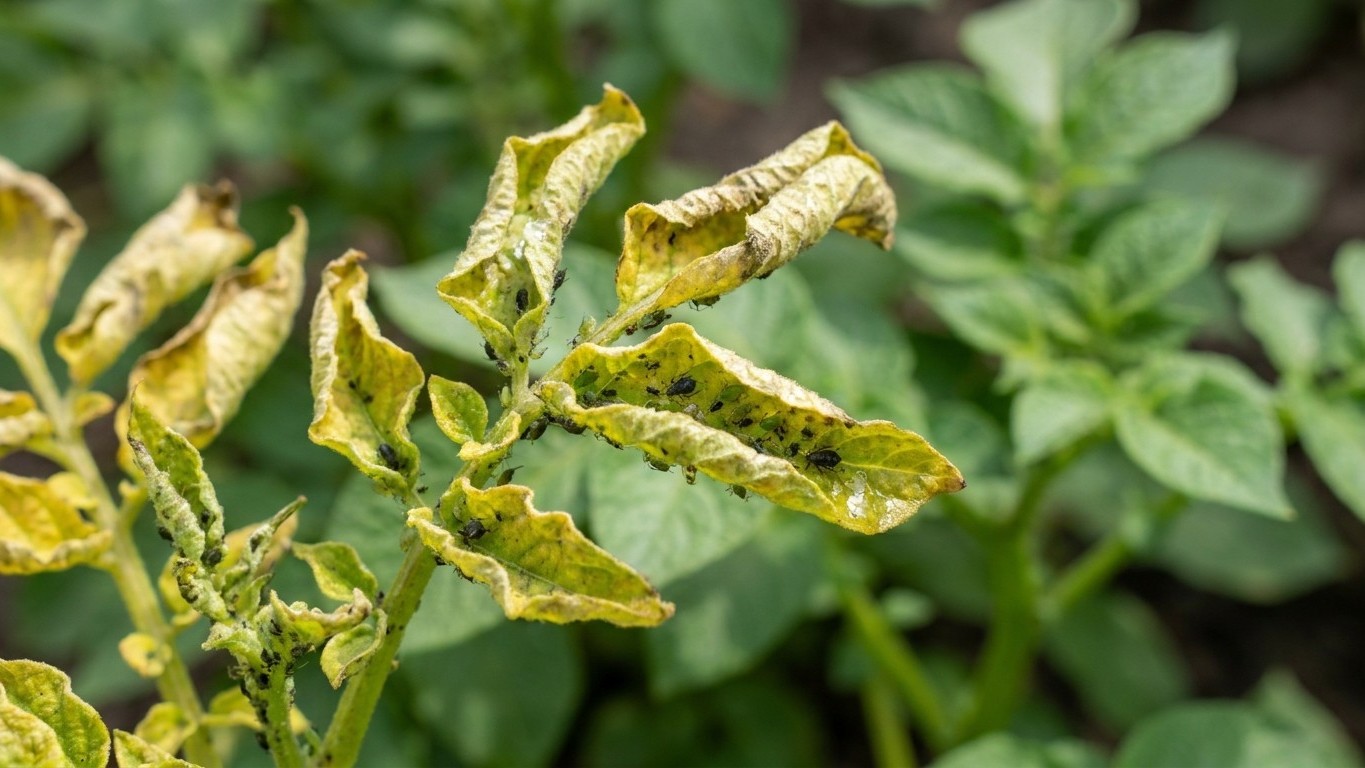

Aphids on potato plants cause leaves to become crinkled and curled, but that visible damage is the smaller problem. According to Utah State University Extension, aphids transmit virus diseases that affect plant growth, which means the insect itself is often a delivery mechanism for something far more damaging than its feeding ever could be.
The short answer
Utah State University Extension lists curled, crinkled leaves as the visible sign of aphid activity on potatoes. That description matters because it tells you what you’re looking at before you even find the insect: distorted new growth, leaves that pucker or roll rather than lie flat, sometimes a sticky residue where aphids have been feeding. Gardeners tend to focus on that cosmetic damage and treat it as the whole story.
It isn’t. The same source is explicit that aphids transmit virus diseases that affect the plant growth, and that single sentence changes how you should think about the pest. A few aphids feeding on a leaf will slow growth a little and leave some curling behind, damage a healthy potato plant can usually shrug off. A virus introduced through that same feeding can move through the plant’s vascular system, reduce yield for the rest of the season, and, if the plant was grown for seed, carry into next year’s tubers.
This is also the reasoning behind Utah State University Extension’s insistence on certified seed potatoes. Certified seed has been inspected and tested to be free of the viruses aphids spread, which means starting with clean stock removes the worst-case outcome before a single aphid ever lands on a leaf. Spraying is reactive. Certified seed is preventive, and prevention is where the real leverage is with a pest whose bite matters less than its cargo.
So the short answer to why the virus matters more than the insect is straightforward: the insect causes curling and modest stunting that a plant can tolerate, but the virus it carries can undercut growth for the entire season and persist into future plantings if infected tubers are saved and replanted. Treating the aphid as the whole problem misses the part of the equation that actually determines whether this season’s potato crop, and next year’s seed, turns out healthy.
What actually decides it
The mechanism comes down to how aphids feed. An aphid doesn’t chew leaf tissue the way a beetle does. It inserts a needle-like mouthpart into the plant’s vascular tissue and draws out sap, and that probing motion is exactly how plant viruses move from an infected plant to a healthy one. The aphid picks up virus particles while feeding on a diseased plant, then carries them on its mouthparts to the next plant it probes, sometimes within minutes. A single aphid moving through a row of potatoes can inoculate several plants before it ever settles down to feed for long enough to cause visible curling.
That timing detail is what separates virus transmission from ordinary feeding damage, and it’s the part gardeners most often miss. The curling described by Utah State University Extension shows up after sustained feeding, which means by the time you notice crinkled leaves, virus transmission from a brief probing visit may already have happened elsewhere in the row. Waiting for visible leaf damage before acting treats the symptom as the trigger, when the transmission event that matters most can occur before any symptom is visible at all.
This is also why aphid numbers and virus risk don’t scale together in a simple way. A heavy, established aphid colony causes plenty of curling and sap loss, but it’s often less dangerous for virus spread than a handful of aphids moving quickly through a planting from an infected source. Winged aphids migrating in from another infected potato patch, or from infected weeds nearby, are the ones most likely to introduce a virus that wasn’t already present. A resident colony that’s been feeding on the same healthy plants all season is mostly just causing the direct feeding damage Utah State University Extension describes.
What this means practically is that leaf curling tells you aphids have been present and feeding, but it doesn’t tell you whether a virus has been introduced, or when. The two problems, feeding damage and virus transmission, run on different timelines and different risk profiles, even though they start with the same insect.
What to do about it
- Start with certified seed potatoes. Since the virus risk begins with infected stock, planting certified seed removes the source of infection before aphids are ever a factor. This is the preventive step Utah State University Extension points to when discussing why virus diseases matter for potato growth.
- Check plants regularly for aphids and curling. Look at the undersides of leaves and new growth, where aphids cluster and where curling first appears, so an infestation is caught before it spreads across the planting.
- Use a strong water stream to dislodge insects. Utah State University Extension lists this as a first response: a forceful spray of water knocks aphids off the plant and reduces their numbers without any chemical input.
- Apply insecticidal soaps if aphids persist. These act on contact and are gentler on beneficial insects than broader-spectrum options, making them a reasonable next step when water alone isn’t controlling the population.
- Move to appropriate insecticides for heavier infestations. When soaps and water aren’t enough, Utah State University Extension calls for appropriate insecticides, chosen for the situation rather than a specific named product, since the right choice depends on the extent of the infestation and the stage of the crop.
The order matters because each step escalates only as needed. Starting with certified seed and mechanical removal keeps intervention minimal for the majority of cases, and reserves chemical control for infestations that don’t respond to gentler methods. Identification still comes first in every case: knowing that curling is aphid-related, rather than a symptom of something else entirely, is what makes the rest of this sequence worth following in the first place.
What goes wrong
- Mistaking curling for drought stress. Potato leaves can pucker or roll when the plant is short on water, which looks similar to aphid-related curling at a glance. Checking the undersides of leaves for the insects themselves, or for the sticky residue they leave behind, is what separates the two.
- Assuming that killing the aphids solves everything. Removing the insects stops further feeding damage, but if a virus was already transmitted before treatment, the plant’s growth can still be affected. Controlling aphids is about preventing new transmission, not reversing damage that already occurred.
- Treating light aphid presence as harmless because the damage looks minor. A small number of aphids can still introduce a virus, especially if they arrived from an infected plant nearby. Low visible damage doesn’t mean low risk, since the two things don’t move on the same timeline.
- Saving seed potatoes from a plant that had aphids and curling during the season. This is exactly the scenario certified seed programs are designed to prevent, since virus-affected tubers can carry the problem into the following year’s planting without any visible sign on the tuber itself.
Common questions
Do all aphids on potatoes carry viruses?
Not every aphid is carrying a virus at every moment; transmission depends on whether the aphid has recently fed on an infected plant. But because Utah State University Extension notes that aphids transmit virus diseases affecting plant growth, any aphid presence should be treated as a potential risk rather than dismissed as harmless.
Can I just wait until I see curled leaves before treating aphids?
Waiting means virus transmission may have already occurred before the curling described by Utah State University Extension becomes visible. Regular checks for aphids themselves, rather than waiting for symptoms, catch the problem earlier in its timeline.
Does a strong water spray actually get rid of aphids?
Utah State University Extension lists a strong water stream as one of the published methods to dislodge aphids from potato plants, alongside insecticidal soaps and appropriate insecticides for heavier infestations.
Why does certified seed matter if I’m treating aphids anyway?
Certified seed addresses the virus at its source, before aphids are even part of the picture. Treating aphids controls new transmission during the season, but starting with certified seed prevents the crop from carrying a virus into the ground in the first place.