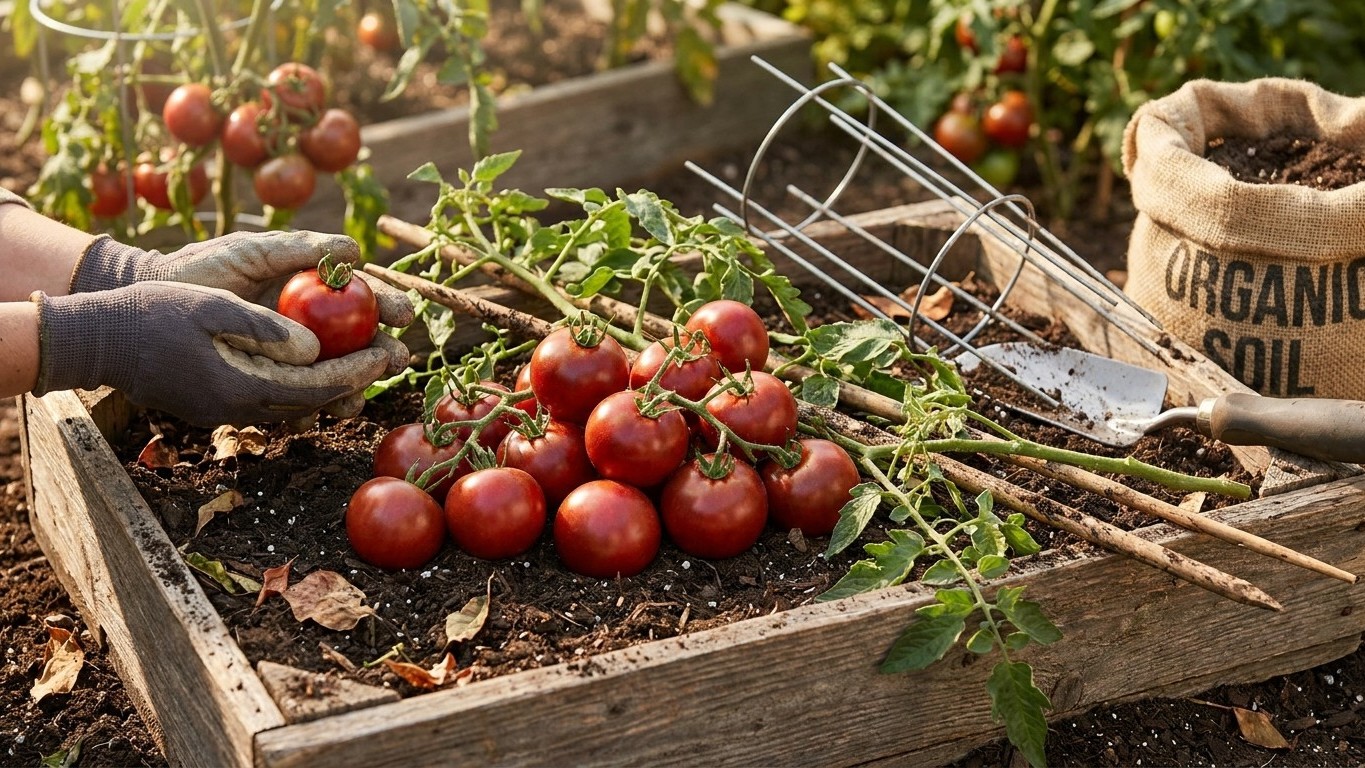

The Ponchi Mi tomato is a determinate, sweet-fruited variety that reaches harvest in 63 days from transplant, which puts it firmly in the short-season category most gardeners can grow from coast to coast. That number alone answers most of the timing question. What it doesn’t answer is how much room that leaves you once your local frost dates, soil temperature, and midsummer heat get factored in.
What Brandywine actually is
Before comparing calendars, it helps to know what kind of plant you’re actually working with. The Ponchi Mi is listed as a determinate tomato, meaning it grows to a fixed size, sets most of its fruit in a relatively tight window, and then tapers off rather than producing continuously through the season. That habit changes the staking conversation: determinate plants generally do fine with a single stake or a compact cage rather than the tall trellis systems built for sprawling indeterminate vines.
The catalogue figure for days to maturity is 63, and it’s counted from transplant, not from the day you sowed seed indoors. That distinction matters more than it sounds. Seed-to-transplant time (typically five to seven weeks for tomatoes started indoors) is separate math, and conflating the two is the single most common reason gardeners think a “fast” variety is running late. Count your 63 days from the day the seedling actually goes into the ground outside, not from the packet date.
The fruit itself is described as sweet-flavored, which pairs naturally with the determinate habit: a concentrated flush of sweet, ready-together tomatoes suits people who want to can, sauce, or preserve in one or two big batches rather than pick a handful every day for three months. That’s a different gardening experience than a slow-ripening indeterminate slicer, and it’s worth deciding up front which one actually fits your kitchen habits before you commit garden space.
Where it ripens in time, and where it is a gamble
Sixty-three days is short by tomato standards, which means the Ponchi Mi has more built-in margin than most varieties in nearly every part of the country. But margin isn’t automatic. It’s the result of a small piece of arithmetic every gardener can run for their own zip code.
Start with your area’s frost-free window, meaning the stretch between the average last spring frost and the average first fall frost. Subtract roughly two weeks from the start of that window, because tomato transplants shouldn’t go into ground that hasn’t warmed enough to support root growth, even if the air itself is technically frost-free. Then subtract the 63 days to maturity. What’s left over is your actual harvest cushion, the number of days you have to pick fruit before the season closes back down.
In regions with a long, generous frost-free season, that cushion can stretch to two or three months, more than enough room to let a second round of side shoots or a late-set fruit finish ripening even if the first flush comes in early. In places with a genuinely short growing season, the same variety can still work, but the cushion shrinks to a few weeks rather than a few months, and there’s little room for a late transplant date, a cool spring, or a rough patch of weather to eat into that margin without pushing part of the crop past the first frost.
This is where a 63-day variety earns its reputation as a safer bet than a 90-day slicer. Even gardeners working with a frost-free window on the shorter end of the national range generally have enough days left after the soil-warming subtraction to fit this timeline comfortably, provided the transplant goes in as soon as the soil is actually ready rather than on a fixed calendar date. The specific frost dates for any given town are available through your county extension office or a local weather station’s historical records, and it’s worth checking those directly rather than relying on a national average, because frost timing can shift by two or three weeks between towns thirty miles apart, especially in hilly or coastal terrain.
The practical takeaway: this variety is not the one that forces a hard geographic cutoff the way a 90-day beefsteak does. The gamble, if there is one, isn’t about whether the season is long enough. It’s about whether the two limits below get in the way before the calendar does.
The two ways a season goes wrong
A frost-free window tells you how many days you have. It doesn’t tell you whether those days are warm enough to actually grow a tomato, and that’s where two separate failure modes come in, one at each end of the map.
In northern gardens, a season can be technically long enough on paper and still fall short in practice, because tomatoes need accumulated warmth, not just frost-free air, to move through flowering and fruit set. Nights that drop below 50°F interfere with pollen viability, so a string of cool nights in early summer can stall fruit set even while the days themselves are pleasant. For a 63-day variety, this matters less than it would for a slow 90-day type, simply because there’s less total time exposed to a marginal early-season cold snap, but a run of unseasonably cool nights right after transplant can still delay the first flush by a week or two.
In southern and hot-summer regions, the opposite problem shows up in the middle of the season rather than at the edges. Once daytime temperatures push past roughly 86°F, tomato pollen tends to go sterile, and blossoms drop without setting fruit. This is why many warm-climate growers don’t treat tomatoes as a single long season at all. Instead they run a spring crop that finishes before the worst heat arrives, then a second planting in late summer that matures once temperatures ease back down in fall. For a 63-day variety, this actually plays to its strength: it’s short enough to slot into either of those two windows cleanly, avoiding the heat-sterility gap that traps longer-season varieties in the middle of summer with nothing to show for it.
Given the maturity length here, the heat-sterility risk matters more strategically, not because the plant is more vulnerable to it, but because its short cycle is exactly what makes a two-crop spring/fall strategy realistic in hot climates where a longer variety simply couldn’t fit twice.
What it resists, and what it does not
The catalogue data for the Ponchi Mi lists no published disease resistances at all. That’s worth saying plainly rather than glossing over, because it’s easy to assume a modern variety carries at least some built-in protection when in fact none is claimed here.
This matters practically. Without a listed resistance code, there’s nothing on record to suggest this variety slows or tolerates common pressures like verticillium wilt, fusarium wilt, or the various leaf-spot diseases that show up in humid gardens. That doesn’t mean the plant is unusually fragile, only that no formal resistance testing or grading has been published for it, so growers shouldn’t plant it in disease-heavy soil expecting a built-in safety net that isn’t there.
The distinction between “resistant” and “unrated” comes up constantly in tomato catalogues, and it’s a meaningful one. A variety graded with intermediate resistance to a disease will still get infected, it just slows the disease’s progress enough to often still produce a usable crop. A variety with no rating at all is simply untested on that front, which puts it in the same category, practically speaking, as a variety known to be susceptible. Growers dealing with a history of soilborne disease in their beds should lean on crop rotation, resistant rootstock if grafting, and clean sanitation practices rather than counting on the plant itself to carry any resistance, because none is documented.
Growing it without the usual mistakes
Because this is a determinate variety, the support and feeding plan should look different from what works for a big indeterminate vine, and treating it the same way wastes effort in both directions.
A single sturdy stake or a standard cage is generally sufficient support, since the plant won’t keep growing taller and sprawling the way an indeterminate type does. Spacing can be tighter than for large sprawling varieties too, since the plant’s final size is fixed rather than open-ended. The more common mistake with determinate types is over-fertilizing with nitrogen late in the season, which pushes leafy growth at the expense of the fruit set the plant is trying to concentrate into its one main flush. Feeding heavily early, then backing off nitrogen once flowering starts, tends to serve determinate varieties better than a steady feeding schedule carried all the way to harvest.
The mistake this particular timing invites is picking too early out of impatience, or assuming a short 63-day plant means a short window to work with once harvest starts. Because the crop comes in over a compressed period rather than trickling in over months, it’s worth planning ahead for what happens with a large batch of ripe fruit arriving at once, whether that’s canning, sauce-making, or sharing, rather than expecting the slow daily trickle typical of indeterminate slicers. Succession planting two or three weeks apart is the standard way to spread a determinate harvest out if a single big flush doesn’t suit your kitchen rhythm.
Common questions
Is 63 days measured from seed or from transplant?
From transplant. The seed-starting period indoors, typically several weeks depending on your setup, happens before that 63-day clock even starts.
Does a short growing season rule this variety out?
Generally no. A 63-day cycle carries more built-in margin than most tomato varieties, so even gardens with a comparatively short frost-free window usually have enough days left after accounting for soil warming, provided the transplant goes out as soon as the soil is genuinely ready rather than on a fixed date.
Does this variety resist common tomato diseases?
No resistances are published for it. Growers in areas with a history of wilt or leaf-spot pressure should rely on rotation and sanitation rather than assume the plant carries protection it isn’t rated for.
Why does it matter that this is a determinate tomato?
Determinate plants set most of their fruit in one compressed window rather than trickling out fruit over months. That means simpler staking and tighter spacing, but it also means planning for a big harvest all at once rather than a slow daily supply.