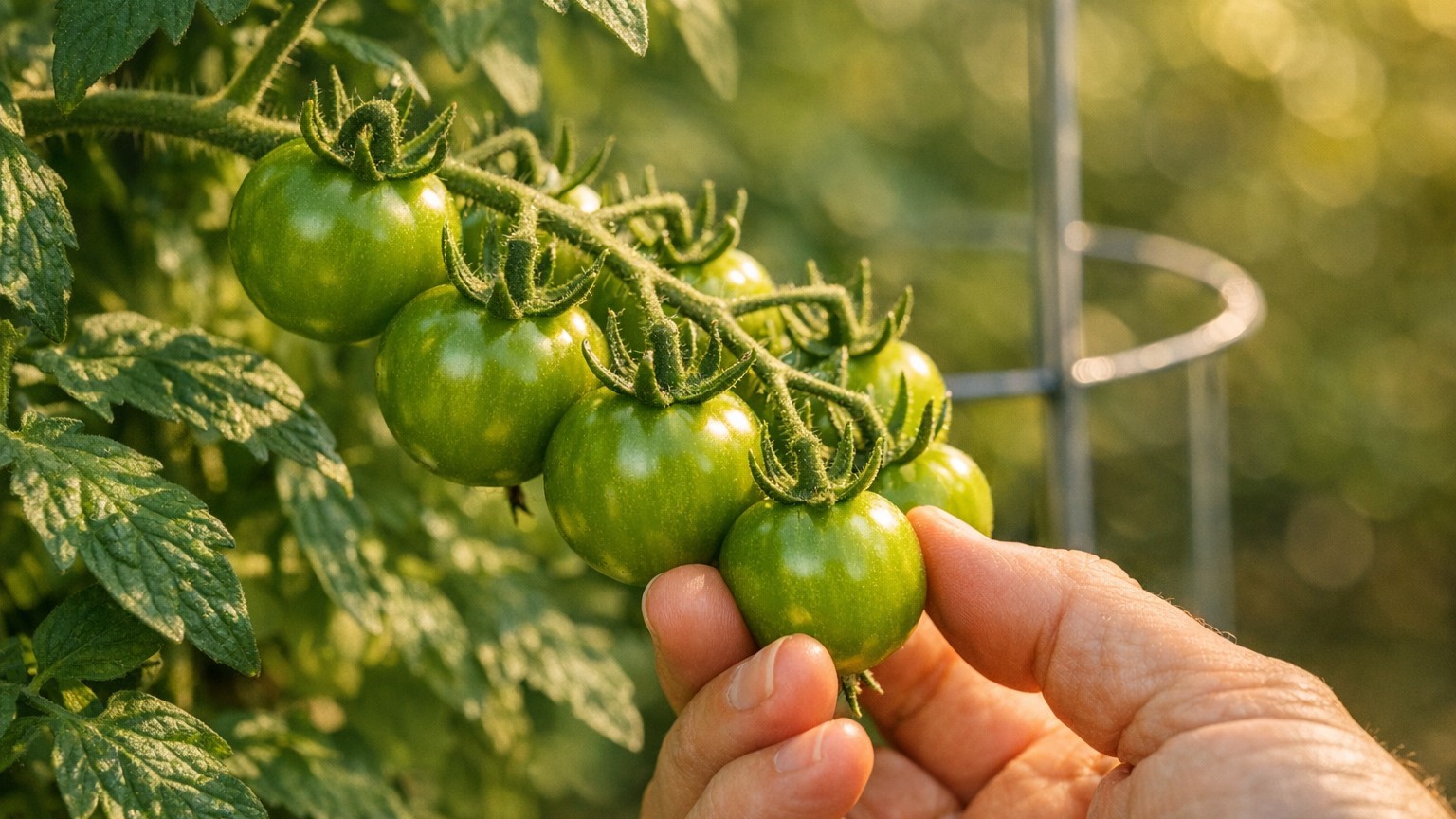

Sungreen 4029 is an indeterminate cherry tomato that ripens green rather than red, with small 15–20 gm fruit built for salads and snacking, and it reaches harvest in 58 days counted from transplant. It carries high resistance to Tomato Mosaic Virus and intermediate resistance to Tobacco Mosaic Virus. Whether that 58-day clock fits your growing season, and what its indeterminate habit demands from you in return, is the part worth working out before you buy the seed packet.
What Brandywine actually is
Three facts decide whether Sungreen 4029 belongs in a given garden. First, the maturity figure: 58 days, and that count starts at transplant, not at the day the seed goes into a tray indoors. A gardener who starts seed six weeks before their last frost and transplants on schedule is the one for whom 58 days means anything; count from sowing instead and the whole calendar shifts.
Second, the growth habit. This is an indeterminate vine, meaning it keeps growing and setting fruit until frost stops it, rather than producing one flush and quitting like a determinate bush. That single fact rules the rest of the season: it needs a tall cage or a stake set at planting time, and it rewards a gardener who keeps picking rather than one who wants a single harvest weekend.
Third, the fruit itself. These are small, 15 to 20 grams each, picked green-ripe rather than left to redden, with a flavor described as sweet with a tangy kick. That green-ripe habit matters at harvest time: you are watching for a color and texture change within green, not waiting for red, which trips up gardeners used to reading ripeness by color shift alone. The fruit’s job is the salad bowl and the snacking bag, not the canning pot, and that use should shape how many plants you actually need.
Where it ripens in time, and where it is a gamble
The arithmetic that matters here is simple, even if no two gardens run it the same way. Start with your frost-free window: the stretch between your area’s average last spring frost and its average first fall frost. Subtract roughly two weeks from the front end, because tomato roots sit and sulk in soil that hasn’t warmed past the mid-60s Fahrenheit, so transplanting the day frost risk ends rarely gives you a head start. Subtract the 58 days to maturity from what’s left. Whatever remains is your harvest window, the stretch where the vine is actually producing ripe fruit rather than still building toward it.
A 58-day variety is on the short end of the tomato calendar, and that number does a lot of the work for gardeners in shorter-season regions. In places where the freeze-free stretch runs on the tighter side, a plant that needs 58 days after a warmed-up transplant has real room to spare, even after the two-week soil buffer comes off the front. That’s the whole appeal of a fast cherry type: it forgives a late spring in a way a 90-day beefsteak never will.
In longer-season regions, the math stops being the limiting factor at all. Where the frost-free window runs long, 58 days barely dents it, and the conversation shifts from “will it finish” to “how many plantings can I fit in,” a point the next section covers directly.
This page isn’t going to hand you a specific frost date for your address, because that figure isn’t something to guess at. Your state’s cooperative extension office and the National Oceanic and Atmospheric Administration’s climate data both publish local frost-date normals, and running Sungreen 4029’s 58-day figure against your own numbers, rather than a national average, is the only version of this math worth trusting. What holds everywhere: a variety this fast is one of the more forgiving choices for a gardener nervous about a short window, and one of the more flexible for a gardener with season to spare.
The two ways a season goes wrong
A long frost-free window on paper doesn’t guarantee a good tomato season, and two limits explain why. The first hits northern gardens even when their calendar looks generous: tomatoes don’t just need days without frost, they need accumulated warmth, and they stop setting fruit when nighttime temperatures drop below 50°F. A cool, cloudy summer can leave a technically frost-free window mostly empty of productive growing days, no matter what the calendar says.
The second limit sits at the other end of the thermometer. Once daytime temperatures climb above roughly 86°F, tomato pollen turns sterile, flowers drop without setting fruit, and the plant effectively takes a break in the middle of the hottest stretch of summer. This is why growers in hot-summer regions plant twice: a spring crop that finishes before the heat peaks, and an autumn crop started once temperatures ease back down, rather than expecting one vine to carry the whole season.
For a 58-day variety like Sungreen 4029, the heat-sterility limit matters more than the cold-accumulation one. Its short maturity window is already an advantage against a cool, stingy summer up north; a fast finisher doesn’t need much accumulated warmth to get there. But that same speed is what makes it well suited to dodging the heat window down south: a spring-planted crop can realistically finish, or come close to finishing, before the worst of summer arrives, and a second planting can go in once the heat breaks for a fall harvest. The plant’s speed is an asset against cold, and a tool for timing around heat, rather than a defense against it.
What it resists, and what it does not
The published catalogue figures for Sungreen 4029 list two resistances, and they are not equal. Tomato Mosaic Virus resistance is rated high, meaning the plant is well protected against that specific virus under normal pressure. Tobacco Mosaic Virus resistance is rated intermediate, and that distinction is worth taking seriously: intermediate resistance means the plant slows the disease’s progress and symptoms tend to be milder, not that the plant is immune to it. A gardener who treats “intermediate” the same as “high” is setting themselves up to lose plants they thought were covered.
Just as important is what isn’t on that list. No resistance is published for fusarium wilt, verticillium wilt, late blight, or root-knot nematodes, the diseases and pests that account for most tomato failures in home gardens. That absence isn’t a flaw in the variety so much as a fact to plan around: this is a plant with real, specific protection against two mosaic viruses and no catalogued protection against the more common soil-borne threats. Crop rotation, avoiding wet foliage late in the day, and mulching to keep soil-borne spores from splashing onto lower leaves all still matter here exactly as they would for any tomato with no listed resistance to those problems.
Growing it without the usual mistakes
The habit drives the whole plan. Because Sungreen 4029 is indeterminate, it keeps growing and setting fruit until frost, and that means the support structure has to go in at transplant time, not weeks later once the vine has already flopped. A cage bought for a compact determinate bush will be outgrown by midsummer; this variety wants a tall cage or a stake tall enough to handle a vine that’s still adding height in September.
Spacing matters for the same reason. An indeterminate vine keeps branching all season, and crowding it against neighboring plants early on sets up the kind of dense, damp foliage that soil-borne fungal problems love, which is a real risk here given the gaps in its resistance profile. Give it more room than a bush type would need, and keep pruning suckers back enough that air can move through the plant.
Feeding follows a different rhythm than a heavy feeder might suggest. Once the plant starts setting fruit heavily, easing off nitrogen matters more than pushing it, since excess nitrogen on an indeterminate vine tends to buy more leafy growth at the expense of the fruit set you’re actually after. A balanced feed that favors phosphorus and potassium once flowering starts keeps the plant’s energy where the harvest is.
The timing mistake specific to this variety is treating the 58-day mark as the finish line rather than the starting gun. Because it’s indeterminate, that first ripe cherry tomato is the beginning of a harvest that continues for weeks, and gardeners who plant expecting one big picking day end up with overripe fruit dropping while they wait for a “real” harvest that already started.
Common questions
Is Sungreen 4029 ready to eat when it’s still fully green?
Yes. This variety ripens green rather than red, and the catalogue describes the flavor at that green-ripe stage as sweet with a tangy kick. Look for a slight softening and a shift in the shade of green rather than waiting for red, which never comes.
Does 58 days to maturity include the time spent starting seeds indoors?
No. That figure is counted from the day of transplant into the garden, not from sowing. Add whatever weeks your seedlings spend indoors before transplant to get the total time from seed to harvest.
Will intermediate resistance to Tobacco Mosaic Virus keep the plant from getting sick?
Not entirely. Intermediate resistance means the plant tends to slow the disease and show milder symptoms if exposed, not that it’s immune. Full protection at that level isn’t published for this variety, only a partial, intermediate rating.
Can this variety handle a short growing season?
Its 58-day maturity is on the fast end for tomatoes, which gives it real margin in shorter-season areas once you account for the two or so weeks soil needs to warm before transplanting. Run the arithmetic against your own area’s frost-free window rather than assuming, since local conditions vary widely even within the same state.