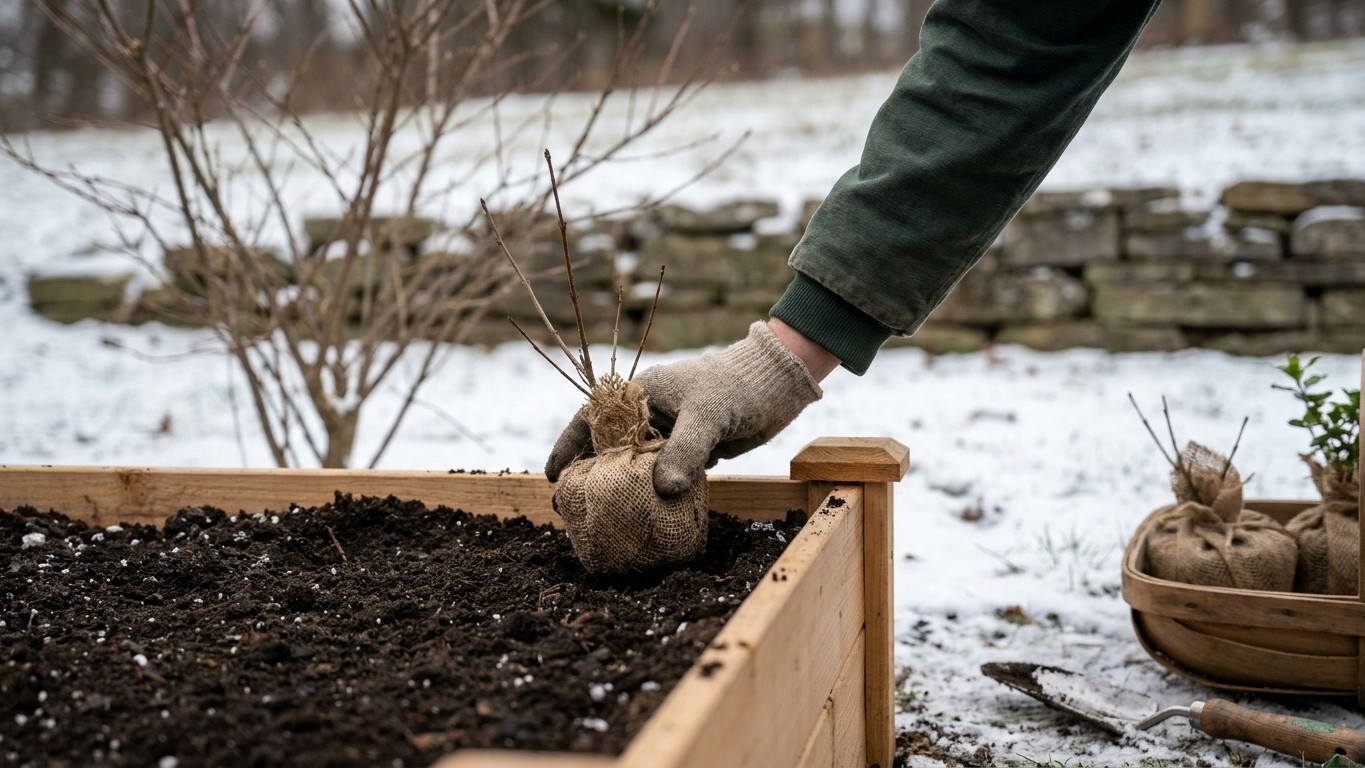

West of the Cascades, December sits well past the first fall frost and months before the last spring one, so open-ground planting is nearly off the table. What actually works this month is garlic and shallots in workable soil, bare-root fruit stock and roses while dormant, cold frames or low tunnels for hardy greens, and indoor starts timed off the spring frost window rather than the calendar page.
What goes in the ground in December

The calendar says December, but the soil and the frost window are what actually decide anything here. NOAA’s Climate Normals for the Portland station put the first fall freeze between November 11 and November 27, which means by this month that threshold has already passed across most of western Oregon. The ground is cold, daylight is short, and root growth on most vegetables has effectively stopped. That is the honest starting point: for the vast majority of vegetable crops, this is not a planting month.
What still works is narrower but real. Garlic and shallots can still go into workable, well-drained beds if the ground has not turned to soup, since both need a stretch of cold to size up properly and tolerate being planted later than the classic fall window. Bare-root fruit trees, cane berries, and roses are typically sold dormant through winter nurseries, and planting them now, while they are not pushing leaves, gives roots a head start before spring growth demands water and energy. The same logic applies to dormant perennials and hedging stock.
Cold frames and low tunnels extend the season without pretending it is spring. Under cover, hardy greens like spinach, mache, and some lettuce varieties can hold or even put on slow growth, especially if the frame traps enough daytime heat to keep soil workable. Forcing is another option many gardeners skip: dug chicory roots or dormant rhubarb crowns can be brought into a dark, cool space indoors to produce tender shoots, which is less about “planting” and more about coaxing a harvest out of dormant material.
The USDA Plant Hardiness Zone Map places Oregon across a wide 4a to 9b range, and that spread matters more in December than almost any other month. A bed that is merely damp near the coast can be frozen solid in the Cascades foothills or in the high desert east of the mountains, so what is “workable soil” changes by the week depending on where in the state a garden sits.
What to start under cover
December is not for jumping the gun on tomatoes or peppers, but it is exactly the right window for a narrower group of slow starters, and the arithmetic is worth doing by hand rather than trusting a packet date. Onions and leeks are the classic case: seed started roughly 10 to 12 weeks before transplanting out performs far better than seed rushed later, because both crops build a modest root and top growth slowly before they ever go outside. Counting back from the last spring frost window of March 6 to March 21, a transplant date in mid to late February lands seed-starting squarely in December, which is why gardeners with grow lights or a bright cool room often begin onion and leek trays this month rather than waiting for January.
Hardy flowering annuals that benefit from a long cool start, sweet peas among them, also do well sown indoors or in a cold frame now, since they tolerate the slow pace of short winter days better than heat-loving seedlings do.
The two ways this goes wrong are mirror images of each other. Start too early relative to that spring frost window and the plants sit indoors far longer than intended, running out of pot space, going rootbound, and stretching into leggy, weak-stemmed seedlings that never quite recover once transplanted. Start too late and long-season crops like onions never bulk up properly before day length and heat shift them into bulbing mode with too little leaf growth behind them. The fix in both directions is the same: work backward from the local frost window instead of a fixed date on a seed packet, and adjust week to week if trays are visibly stalling or stretching under available light.
What is ready to pick
Little comes out of an open December garden west of the Cascades, and that is worth saying plainly rather than padding with crops that are really a fall memory. What still feeds a household comes from three places: overwintering beds, cold frames, and storage.
In the open ground, kale, leeks, and some hardy Brussels sprouts varieties often hold through cold snaps and can be picked as needed, sometimes even improving in flavor after a frost sweetens the sugars in the leaves. Under a cold frame or low tunnel, spinach, mache, and cold-tolerant lettuce can still be cut a little at a time, though growth is slow enough that a frame planted for winter harvest should be treated as a slow-release pantry, not a productive bed.
Indoors, sprouts and microgreens are the fastest return on effort this month, ready in one to two weeks from seed on a windowsill or under light with no outdoor risk at all.
Storage crops need active checking now, not just cold storage and forgetting about them. Winter squash should be firm with no soft spots or sweet smell of fermentation starting at the stem end. Potatoes kept in the dark should be checked for sprouting or soft, wet rot, which spreads fast to neighbors in the same bin. Stored onions worth pulling are the ones going soft at the neck or showing mold at the root end, since one turning onion can take out several others around it if left in a sealed bag or box.
The jobs that matter this month

A quiet garden still has a full task list, and December is when the difference between a good and a rough spring often gets decided.
Pruning and plant care
Dormant pruning of apple and pear trees, blueberry bushes, and cane fruit is a December-through-winter job specifically because the plants are leafless and their structure is easy to see, and because cuts made while sap is not actively running heal with less stress on the plant. Stone fruit trees are generally the exception, since pruning them while wet and dormant raises the risk of certain fungal issues that are less of a problem if pruning waits for drier, warmer weather later.
Soil, planning, and seed
Soil testing and amending now gives lime or organic matter time to work into the ground well before spring planting starts competing for attention. Turning a compost pile, even just once, keeps decomposition moving through the cold months instead of stalling completely. Ordering seed early matters more than it sounds: popular varieties, especially of onions and slow-growing perennials, sell out from suppliers well before spring rush, and a gardener planning next year’s rotation now can order exactly what a four-bed or six-bed rotation plan calls for instead of settling for whatever is left in February.
Maintenance that pays off later
Cleaning and sharpening pruners, shears, and hoes now means no fumbling with rusted, dull tools on the first workable day of spring. Repairing raised bed frames, trellises, and fencing while nothing is growing avoids doing it around live plants later. And a walk through the stored crop room every week or two, pulling anything starting to rot, protects everything else sitting next to it.
What not to do in December
The most common mistake this month is trusting a mild, sunny afternoon over what the soil and calendar actually say. A warm stretch does not mean the ground has warmed enough for anything beyond the hardiest crops, and pushing warm-season seed or transplants into cold, damp soil almost always ends in rot or seed that simply sits without germinating.
Uncovering cold frames or low tunnels too early after a mild spell is a close second. A few warm days can tempt a gardener to pull back covers to “harden off” greens, but December’s mild spells are routinely followed by hard cold snaps, and plants that were protected suddenly take the full hit unprotected.
Feeding nitrogen at the wrong point in the season is another classic slip. High-nitrogen fertilizer pushes soft, leafy growth, and soft new growth is exactly what gets damaged worst by frost. Anything overwintering outdoors, whether it is garlic, a young fruit tree, or a cold-frame green, is better left unfed or fed very lightly until growth naturally resumes in spring.
Working wet, heavy soil, particularly clay, is worth avoiding as well. Walking on or digging into saturated ground compacts it, squeezing out the air pockets roots need, and that damage can linger into the growing season long after the soil dries out. If a bed is squelching underfoot, the better move is to wait, mulch it, and leave it alone until it firms up.
Checking this against your own county
A statewide December picture is a starting point, not an instruction for a specific yard. Oregon’s elevation swings, the divide between the wetter west side and the high desert east of the Cascades, and even local cold-air pooling in low-lying valleys can shift real planting and pruning windows by several weeks in either direction from what applies near Portland. A garden at higher elevation or east of the mountains should expect a longer dormant stretch and a later, shorter window for the same tasks described here.
For dates and guidance tuned to a specific county, Oregon State University’s Extension Service maintains local offices and planting resources built around exactly this kind of regional variation.
Common questions
Can I still plant garlic in December in Oregon?
Yes, in most of western Oregon garlic and shallots can still go into workable, well-drained soil this month, though earlier fall planting generally gives bulbs more time to establish roots before hard cold sets in.
Is it too late to prune fruit trees in December?
No, December falls within the dormant pruning window for apples, pears, and cane fruit, since the plants are leafless and cuts heal with less stress while sap is not actively flowing. Stone fruit is usually better left until later, drier weather.
What vegetables can survive outdoors in an Oregon winter?
Kale, leeks, and some hardy Brussels sprouts varieties commonly hold through winter cold in the open ground west of the Cascades, while spinach, mache, and cold-tolerant lettuce do better with the extra protection of a cold frame or low tunnel.
When should I start onion seeds indoors for an Oregon garden?
Working back roughly 10 to 12 weeks from the local last spring frost window of March 6 to March 21 puts onion and leek seed-starting in mid to late December for most of western Oregon, though gardeners east of the Cascades should check their own local frost data before setting a date.