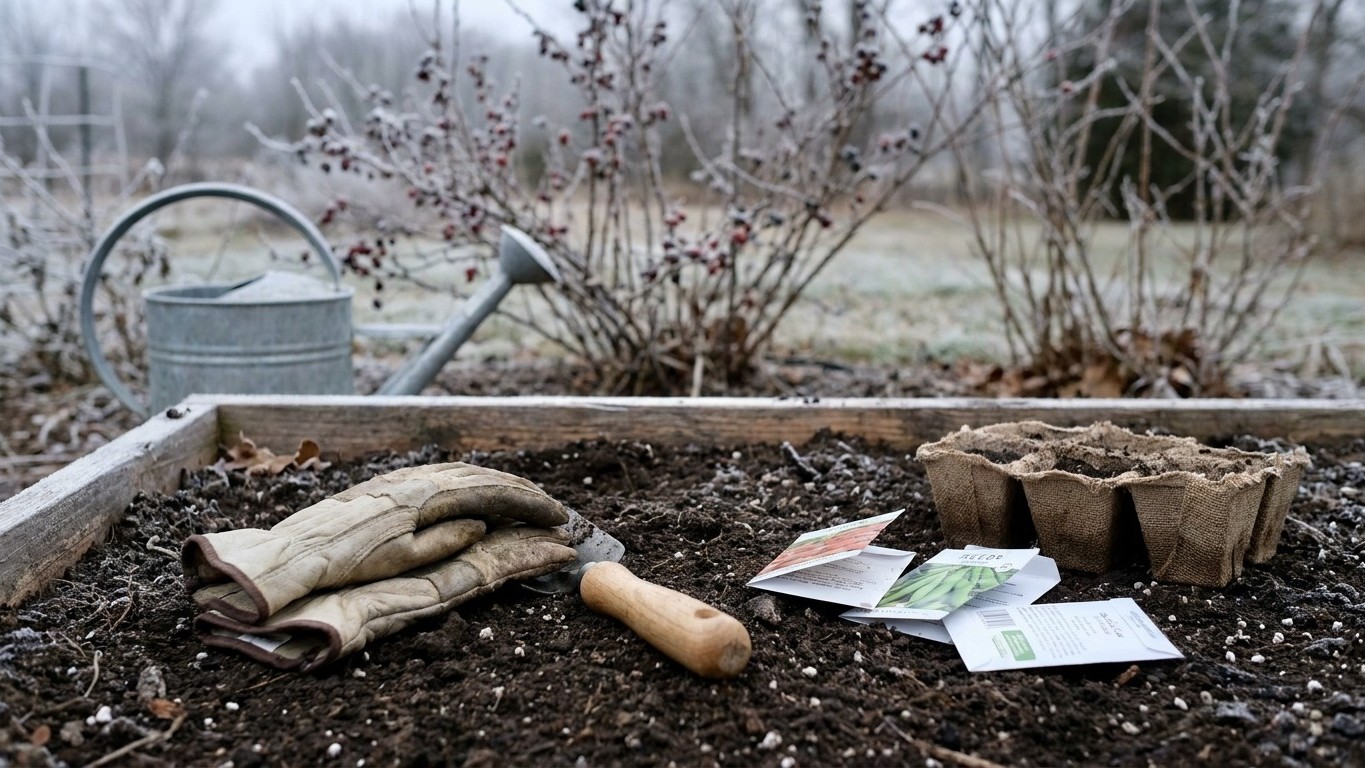

Western Oregon gardeners can tuck in garlic, shallots, fava beans and bare-root fruit stock this month, plus hardy greens under a cloche. East of the Cascades, the ground is still frozen or under snow, so February belongs to indoor seed starting, dormant pruning and planning rather than digging. The last spring frost across the Portland area falls between March 6 and March 21, which sets the pace for everything below.
What goes in the ground in February

The calendar says February, but the soil doesn’t care what the calendar says. What matters is soil temperature and how far out the last frost sits, and in western Oregon that frost window (March 6 to March 21, per NOAA NCEI’s 1991-2020 climate normals) is still one to seven weeks away. That’s close enough to start moving, but not close enough to plant tender crops outdoors and expect them to survive.
In the Willamette Valley and other lowland areas west of the Cascades, garlic and shallots can still go into workable ground if you missed the fall window, though fall-planted cloves will always outperform a February planting. Bare-root fruit trees, cane berries and asparagus crowns are dormant right now, which makes this the correct planting window for them, not a compromise. Fava beans tolerate real cold and can go direct into the ground. Hardy peas, spinach and arugula can go in under a cold frame or low tunnel where the soil drains well and isn’t waterlogged.
East of the Cascades and across the high desert of central and eastern Oregon, the picture is different. Colder hardiness zones and a much shorter frost-free season mean the ground is often still frozen or covered, and nothing goes into open soil this month. The honest move there is a cold frame for the toughest greens, or nothing outdoors at all until the thaw is well underway.
| Region | Ground status in February | What’s realistic |
|---|---|---|
| Western Oregon (Willamette Valley, coast) | Workable in most winters, wet more often than frozen | Garlic, shallots, favas, bare-root stock, cold-frame greens |
| Central/Eastern Oregon (high desert) | Frozen or snow-covered | Cold frame only, or nothing outdoors |
Neither region should treat a warm afternoon as a green light. The frost window doesn’t close until mid-to-late March at the earliest, and one mild week doesn’t move that date.
What to start under cover
Seed starting indoors runs on its own math, counted backward from the last frost window rather than forward from today’s date. With frost clearing between March 6 and March 21 in western Oregon, onions and leeks, which need 10 to 12 weeks of growth before transplanting, should already be up by early February if they weren’t started in December. If you’re only starting them now, don’t panic, just expect smaller transplants than the ideal.
Broccoli, cabbage and other brassicas need roughly 6 to 8 weeks under cover before they go outside, which puts a February start right in the sweet spot for transplanting in April, once the soil has warmed past the frost window. Peppers and eggplant, needing 8 to 10 weeks, are right at their starting line now if you count back from early-to-mid March. Lettuce and other quick greens are more forgiving and can be started in batches through the month for a rolling supply of transplants.
The two ways this goes wrong are familiar to anyone who’s started seeds before. Start too early, and you get leggy, rootbound seedlings straining against their cell packs weeks before the ground or the air is ready for them. Start too late, and the transplant goes into the garden undersized, losing weeks of growing season it will never fully make up. Both mistakes trace back to the same fix: count backward from your local frost window, not from the seed packet’s suggested date, since packets are written for a national average that doesn’t match western Oregon’s mild, wet late winter or the high desert’s much colder one.
What is ready to pick
Little comes out of an open garden bed in February, and that’s normal, not a failure. What’s actually on the table this month comes from crops planted months ago and stored crops holding steady in the pantry.
Overwintered kale, chard and leeks that made it through winter in western Oregon gardens are often sweeter now than they were in fall, since cold weather converts starches to sugars in these crops. In colder parts of the state, anything left in the ground is likely still under snow and inaccessible until a thaw. Brussels sprouts, if you grew them, can often still be picked stalk by stalk through winter in milder areas.
Cold frames extend the picture further, holding spinach, mache and arugula in harvestable condition well past what open ground allows. Indoors, sprouts and microgreens fill the gap for anyone craving something fresh and green, ready in a week to ten days with no garden required at all.
This is also the month to go through the root cellar or pantry shelf with a critical eye. Stored squash should feel firm, without soft spots or a sweet fermenting smell. Potatoes that have started sprouting eyes or gone soft should be used first or composted. Onions with any give at the neck, or a whiff of decay, need to come out before they spread rot to the rest of the bin.
The jobs that matter this month

February looks quiet from the porch, but the work list is long, and skipping it costs real ground come spring.
Pruning and cleanup
Dormant pruning of fruit trees, grapes and cane berries belongs here, done before buds break and while the plant’s structure is easy to see without leaves in the way. Wait too long and you’re cutting into active growth, which stresses the plant and slows fruiting. This is also the window to clean up any leftover diseased material from last season, since fungal spores and overwintering pests are still dormant and easier to remove now than once they’re active.
Soil, seed and planning
Order seed now, before the popular varieties sell out, a real risk with heirloom tomatoes and specialty peppers that move fast every year. Pull last season’s garden map and plan crop rotation, since planting the same family in the same bed two years running builds up soil-borne disease and pest pressure. A soil test, done through OSU Extension or a home kit, tells you what to amend before planting season arrives rather than guessing after seedlings struggle.
Maintenance that pays off later
Turn the compost pile if it isn’t frozen solid, since aerating it now keeps the pile active and ready for spring application. Clean and sharpen pruners, shears and shovels, both to make the work easier and to stop spreading disease between plants with a dirty blade. Repair raised beds, fencing and trellis structures while the garden is empty and the work is easy to see, rather than discovering a broken support once it’s holding up a loaded tomato plant.
What not to do in February
The most common February mistake in Oregon is trusting the air temperature over the calendar. A run of 60-degree days in the Willamette Valley can feel like spring, but the frost window doesn’t close until sometime between March 6 and March 21, and a late freeze after a mild spell is exactly the kind of event that kills tender transplants set out too soon. Keep warm-season crops like tomatoes, peppers, beans and squash indoors or in the seed packet until well after that window has passed and the soil itself has warmed, not just the air.
The same mild spell tempts gardeners to pull mulch off garlic beds or open up cold frames early, thinking the cold is over. Leave the protection in place. Uncovering hardy crops during a warm week only to have a freeze follow days later shocks the plants far worse than leaving them covered through a slow, steady thaw.
Nitrogen fertilizer is another trap this month. Feeding nitrogen now pushes soft, leafy growth on anything already in the ground, and that new growth has no frost tolerance at all. Hold off on nitrogen until the frost window has closed and growth is happening in conditions the plant can actually sustain. If soil needs amending, work in compost or a balanced, slow-release amendment instead, and save the nitrogen boost for when the season is actually moving.
Checking this against your own county
A statewide frost window is a starting point, not a fixed instruction. Oregon runs from coastal fog to Willamette Valley farmland to Cascade elevation to high desert, and each of those shifts the last frost date by weeks in either direction. Elevation alone can push a mountain-adjacent garden’s frost-free date well past a valley floor twenty miles away, and the hardiness zone range across the state, 4a to 9b under the USDA system, reflects just how wide that spread really is.
Before committing to any date in this article, check it against Oregon State University’s Extension Service, which tracks county-level planting guidance and local frost data specific to your growing region.
Common questions
Can I plant potatoes in Oregon in February?
Not in most of the state. Potatoes need soil that has warmed and drained well after winter, and with the last frost falling between March 6 and March 21 in western Oregon, most gardeners plant seed potatoes in March or April. East of the Cascades, wait even longer.
Is it too early to start tomato seeds in February?
For most of western Oregon, yes, if you’re aiming for an early transplant date. Tomatoes typically go outside well after the frost window closes and the soil has warmed, so starting seed too early in February often produces leggy, rootbound plants by the time it’s safe to transplant.
What vegetables survive winter in the ground in Oregon?
Kale, leeks, chard and Brussels sprouts commonly overwinter in western Oregon gardens, especially with a layer of mulch. In colder, higher-elevation, or eastern Oregon locations, survival depends heavily on snow cover acting as insulation.
When should I prune fruit trees in Oregon?
Dormant pruning is best done in late winter, before buds break, which makes February a solid window for most of the state as long as the wood isn’t frozen solid at the time of cutting.