
January in Oregon means almost nothing new goes into open ground west of the Cascades, and even less east of them. What the month actually offers is dormant planting, cold frames, indoor seed starting, and a stretch of pruning and planning work that sets up everything that follows once soil temperatures climb.
What goes in the ground in January

The decision here isn’t the calendar, it’s soil temperature and the frost window. In western Oregon, the last spring frost typically falls between March 6 and March 21, based on NOAA’s 1991-2020 climate normals for the Portland station. That means January sits roughly six to eight weeks ahead of the point where the ground reliably clears of frost risk. Soil in the Willamette Valley in January is usually cold, saturated, and unworkable for long stretches after winter rain. East of the Cascades, the picture is more extreme: high desert conditions mean frozen or snow-covered ground for much of the month, with a growing season that opens later and closes earlier than the western valleys.
So the honest answer, for most of the state, is that nothing new gets direct-sown or transplanted into open garden beds this month. That’s not a gap in the calendar, it’s just where the season sits.
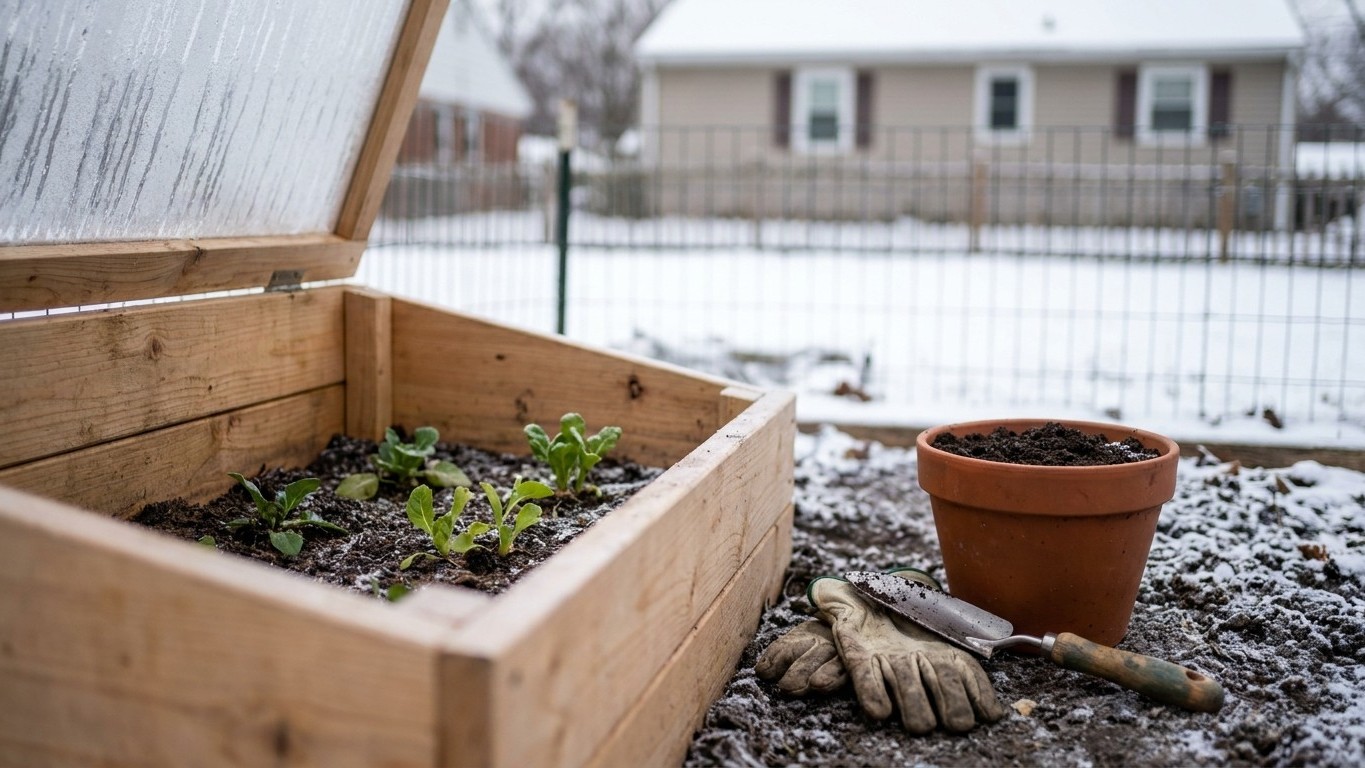
What does still happen outdoors: garlic and shallots can go into workable beds where the soil hasn’t frozen and drains well, though most western Oregon growers already got their garlic in during fall and January plantings are a fallback rather than the plan. Bare-root fruit trees, cane berries, roses, and other dormant woody plants can be planted this month precisely because they’re dormant. Cold frames and low tunnels let hardy greens (spinach, mâche, some lettuces) sit through the cold with protection rather than being newly sown in open soil. Rhubarb crowns and chicory roots can be lifted and forced indoors in a dark, cool space for an early harvest that has nothing to do with outdoor soil conditions at all.
What to start under cover
Seed starting this month is a math problem, and the math runs backward from that March 6-21 frost window, not forward from January 1. Onions and leeks grown from seed generally need 10 to 12 weeks of indoor growth before they’re ready to go out, which puts the ideal start somewhere in the six weeks before or right around the start of January, depending on which end of that frost range applies to a given garden. Starting now still works for most western Oregon gardeners, especially those closer to the later end of the frost window.
Early cabbage, broccoli, and other hardy brassicas typically need six to eight weeks under cover before transplanting, which lines up with a January start for a March or early April move outdoors, assuming beds have dried out enough by then.
Peppers, eggplant, and tomatoes are a different story. Even though the official frost window closes in March, these crops need warm soil, not just frost-free air, before they can go outside, and that point often doesn’t arrive until well into spring in western Oregon. Starting them indoors in January risks the first failure mode: leggy, rootbound plants sitting in small pots for months longer than they should, stressed and stretched by the time the ground finally warms. The second failure mode runs the other way, waiting too long on onions or leeks and running out of the slow early growth they need before daylight lengthens and bulbing kicks in. Getting the sequence right matters more than getting an early start on everything at once.
What is ready to pick
Little comes out of open ground in January, and there’s no point pretending otherwise. What’s still on offer takes some looking. Overwintered kale, collards, and leeks that were planted the previous summer often keep producing right through cold snaps, sometimes tasting sweeter after a frost has hit them. Brussels sprouts left standing in the garden can be picked stalk by stalk as they finish sizing up.
Cold frames and low tunnels are doing real work this month if they were set up in fall: lettuce, spinach, mâche, and other hardy greens can be cut steadily as long as the protection holds. Indoors, sprouts and microgreens fill the gap for anyone wanting fresh greens without relying on outdoor conditions at all, ready in one to two weeks from seed with no soil warmth required.
Storage crops need checking now, not later. Winter squash, potatoes, and onions put up in fall should get a look-over for soft spots, sprouting, or the telltale smell of one bad specimen affecting its neighbors. Apples in cold storage are worth the same check. Catching a squash that’s starting to go before it spreads to the rest of the bin is a small task that saves a much bigger loss.
The jobs that matter this month

January carries the garden’s off-season work, and there’s a full list of it with real deadlines attached.
Pruning and dormant-season care
Dormant pruning of fruit trees, apples and pears especially, should happen while the trees are still fully dormant and before buds begin to swell. In western Oregon’s mild winters, that window can close earlier than gardeners expect, so this isn’t a job to leave for a warmer month. Cane berries (raspberries, blackberries) also take their structural pruning now, cutting out spent canes before new growth starts competing for the plant’s energy.
Ordering, planning, and soil work
Seed catalogs move fast. Popular varieties, especially disease-resistant tomatoes and early brassicas, sell out by late winter, so ordering now beats discovering a favorite is gone in February. This is also the natural point to sketch out crop rotation for the coming season, since nothing is competing for attention in the beds yet. Soil testing and amending pays off now because amendments like lime need weeks to months to shift pH before planting season arrives; a fall or winter test through Oregon State University’s Extension Service gives that lead time. Turning compost keeps the pile active through cold weather instead of stalling out. Tools benefit from the same slow season: cleaning and sharpening pruners, hoes, and shovels now means they’re ready when the workload picks up. Raised beds, trellises, and fencing are easier to repair while nothing is growing in or on them. None of this is filler. It’s the work that either gets done in the quiet months or gets rushed, badly, once the season starts moving.
What not to do in January
The classic mistake in western Oregon is trusting a warm afternoon. A stretch of 55 to 60 degree days in January feels like an invitation, but air temperature isn’t soil temperature, and cold, wet soil will stall or rot warm-season transplants set out too early. The fix is simple: wait for the soil itself to warm, not just the air, and use a soil thermometer if there’s any doubt.
The same mild spell tempts people to pull mulch or row covers off beds early, thinking the cold has passed. It hasn’t, not reliably, not with a frost window that can run as late as March 21 in the Portland area and later in colder pockets. Pulling protection too soon exposes tender growth to a cold snap that mulch or a cover would have blocked entirely.
Nitrogen fertilizer is the third trap. Applying it to dormant plants or empty winter beds does little for growth that isn’t happening yet, and much of it simply leaches away with winter rain before spring roots are active enough to use it. Where feeding matters this month, it’s compost and slow-release organic matter worked into beds ahead of the amendments schedule, not a shot of fast nitrogen aimed at plants that aren’t ready to use it.
Checking this against your own county
Everything above is a starting point built on data for the Portland area, not a fixed instruction for the whole state. Elevation shifts frost timing by weeks on its own, and the divide between western Oregon’s valleys and the high desert east of the Cascades changes the entire growing calendar, not just the dates on it. Coastal fog, valley cold pockets, and mountain-adjacent gardens all move these windows further still. The USDA Plant Hardiness Zone Map places Oregon across zones 4a to 9b, a range wide enough that a single statewide answer can’t cover it. For local frost dates and a planting calendar built for a specific county, Oregon State University’s Extension Service is the resource worth checking.
Common questions
Can I plant vegetable seeds outdoors in Oregon in January?
In most of the state, no. Soil is too cold and wet in western Oregon, and often frozen in central and eastern Oregon. Garlic and shallots are the main exceptions where beds happen to be workable, and even those are usually better planted in fall.
Is it too early to start tomato or pepper seeds indoors in January?
For most western Oregon gardens, yes. These crops need warm soil outdoors, which often doesn’t arrive until well after the official frost window closes in March. Starting them in January risks leggy, rootbound plants sitting under lights far longer than they should.
What can I harvest from an Oregon garden in January?
Overwintered kale, leeks, and Brussels sprouts left in the ground, plus anything protected under cold frames or row covers. Indoors, sprouts and microgreens fill in, and stored squash, potatoes, and onions should be checked regularly for spoilage.
What’s the most important garden job in Oregon in January?
Dormant pruning of fruit trees and cane berries tops the list, since it needs to happen before buds swell, a window that can close earlier than expected in a mild western Oregon winter. Soil testing and seed ordering are close behind.