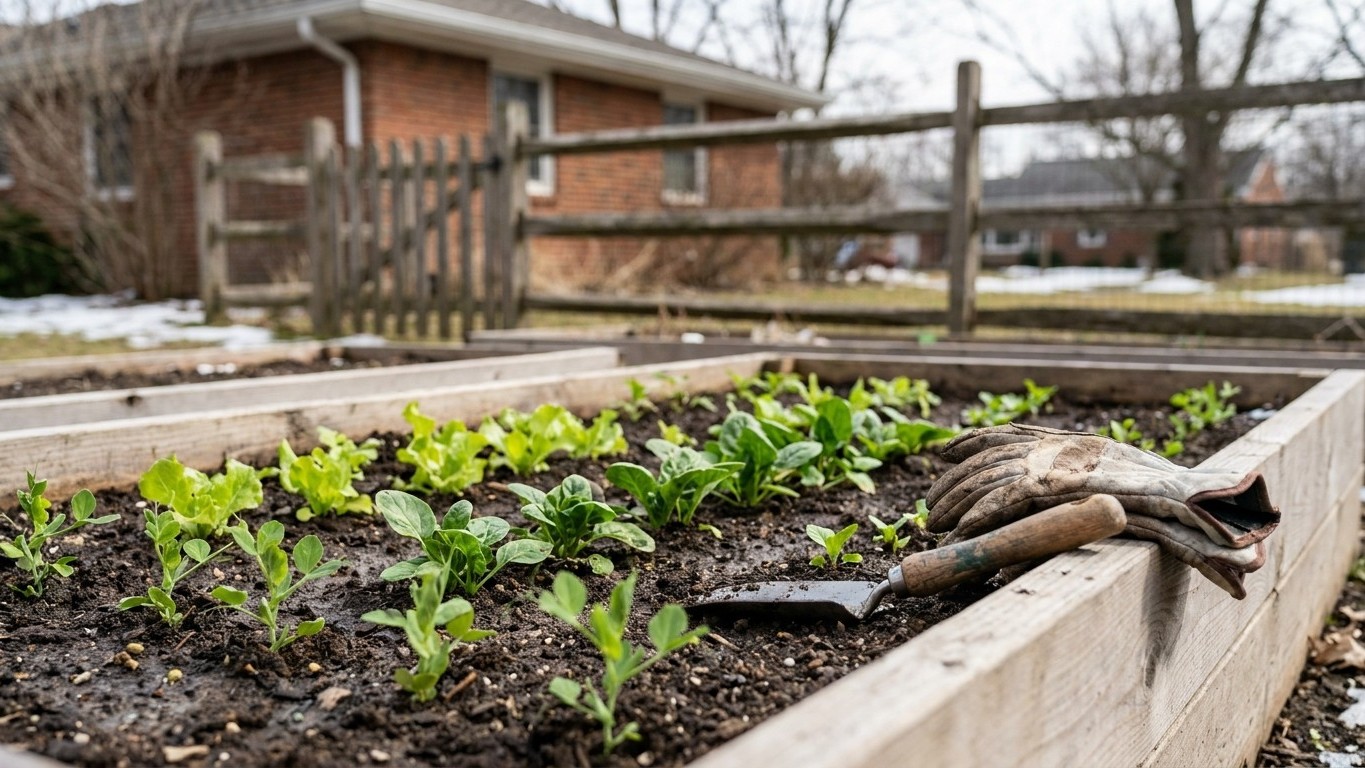

March in western Oregon is a hinge month. The Willamette Valley’s last spring frost typically falls between March 6 and March 21, so early March still carries real freeze risk while late March often clears it. Peas, spinach, hardy greens, onion sets, and bare-root fruit trees can go in now. Tomatoes, peppers, and beans still wait for warmer soil and a longer daylight stretch.
What goes in the ground in March
The calendar says March, but the soil doesn’t care what the calendar says. What decides whether a seed germinates or rots is soil temperature, not the date on a seed packet. In the Willamette Valley, that soil is usually still cold and often waterlogged for the first half of the month, warming only as the last frost window (March 6 to March 21, per NOAA’s 1991-2020 climate normals for the Portland station) closes out.
That timing matters because it splits March into two halves. Early in the month, frost is still a live possibility almost everywhere west of the Cascades, so anything tender stays indoors. By the back half, hardy crops have real margin to establish before the next cold snap.
What tolerates this in-between window well: peas (direct-sown as soon as soil can be worked without clumping), fava beans, spinach, arugula, and cold-hardy lettuce varieties. Onion and shallot sets or transplants go in now too, since alliums shrug off a light frost without much trouble. Garlic planted the previous fall is already up and growing; there’s little benefit to planting new garlic this late, though it can still be tucked in where ground allows if it wasn’t done earlier.
Bare-root fruit trees, cane berries, and roses are still shippable and plantable this month while they’re dormant, and March is often the last comfortable window before buds break and the roots have a harder time establishing. Cold frames and low tunnels are worth building or reopening now, since they buy two to three weeks of extra warmth for the same seeds listed above.
Central and eastern Oregon are a different climate entirely. The high desert east of the Cascades runs colder, drier, and with a far shorter frost-free season than the Willamette Valley, so nothing in this section should be read as a green light there without checking local frost data first.
What to start under cover
The arithmetic for indoor starts runs backward from the last frost window, not forward from today’s date. With the Willamette Valley’s frost clearing between March 6 and March 21, tomatoes and peppers started indoors typically need six to ten weeks of growth before they’re ready to face outdoor soil, and most Willamette Valley gardeners still hold transplant day until well into May because the soil, not the air, needs to warm first. That means March is a reasonable window to start tomatoes, peppers, and eggplant indoors under lights, aiming for a transplant date closer to mid-spring rather than the calendar frost date itself.
Brassica transplants for spring, like broccoli and cabbage, go in under cover now too, since they only need four to six weeks before they can handle a hardening-off period outdoors. Cucumbers, summer squash, and melons should wait; they only need three to four weeks of indoor lead time, so starting them now risks rootbound, leggy seedlings sitting in cell trays for a month with nowhere to go.
That’s the first failure mode: starting warm-season crops too early and ending up with stretched, weak stems by the time the ground is actually warm enough to receive them. The second failure mode runs the other direction, mostly a risk in the shorter growing season of central and eastern Oregon, where starting too late means the transplant misses its window entirely and runs out of season before the first fall frost arrives. Either way, the fix is the same: count backward from your local frost window, not forward from today.
What is ready to pick
March harvests in the Willamette Valley lean heavily on what survived winter rather than what was planted this month. Overwintered kale, chard, and leeks that made it through the cold months are often at their sweetest right now, since a stretch of frost converts starches to sugars in these crops. Sprouting broccoli, planted the previous summer for exactly this purpose, starts producing small side shoots this month that taste better than anything the plant offered in fall.
Cold frames planted in late winter with lettuce, spinach, or mustard greens should be producing steadily by now, and it’s worth checking them every few days rather than every week, since growth accelerates fast once daylight lengthens. Indoors, sprouts and microgreens remain the fastest route from seed to plate, ready in five to fourteen days depending on the variety, and they don’t care what the outdoor frost window is doing.
This is also the month to go through the root cellar or pantry storage with a critical eye. Winter squash that’s developed soft spots or a sunken area near the stem is on its way out and should be used first. Potatoes that have started sprouting eyes are still edible once the sprouts are removed, but they’re losing quality fast. Onions that feel soft when squeezed, rather than firm, are past their storage life. Sorting through stored crops now, rather than waiting for visible mold, saves more of the harvest than any other single task this month.
The jobs that matter this month
March closes out the dormant pruning window for fruit trees and cane berries. Apples, pears, and most stone fruit can still be pruned while buds are tight, but once they swell and break, pruning cuts stress the tree and invite disease in a way dormant cuts don’t. If pruning hasn’t happened yet, this is the deadline, not a suggestion.
Seed catalogs thin out fast this time of year. Popular varieties of tomatoes, peppers, and specialty greens sell out well before planting season peaks, so ordering now beats discovering a favorite variety is gone in April.
Soil testing and amending pays off more in March than almost any other month, because amendments like lime or compost need weeks to integrate before spring planting ramps up. Turning the compost pile now speeds up decomposition as temperatures rise, and finished compost from a fall pile is usually ready to spread by now.
A few smaller jobs round out the list: cleaning and sharpening pruners and shovels before the heavy planting season starts, repairing raised beds and fencing while beds are still mostly empty, and mapping out crop rotation on paper before the ground fills up and old habits take over. None of these tasks are glamorous, but skipping them in March usually means doing them under pressure in April, when there’s less time and higher stakes.
Dormant oil and disease prevention
Fruit trees benefit from a dormant oil spray before buds break, targeting overwintering insect eggs and fungal spores before they become an active infestation. This only works in the narrow window between the coldest part of winter and bud swell, which for most of western Oregon lands squarely in March.
What not to do in March
The most common mistake in this stretch is planting warm-season crops outdoors because a few sunny, mild days made the air feel like spring. Air temperature and soil temperature move on different schedules; soil often lags weeks behind a warm afternoon, and a tomato or pepper set out too early will simply sit stalled, or die outright, when the next cold night arrives. The frost window running through March 21 is a real risk, not a formality to ignore because the forecast looks friendly.
Uncovering cold frames and removing row cover too early after a mild spell is the second classic error. A few warm days followed by a cold snap can undo weeks of protected growth in one night. Better to vent covers during the day and close them back up at night until the frost window has clearly passed, rather than removing protection altogether at the first sign of sun.
Nitrogen timing trips people up too. Applying a heavy dose of nitrogen fertilizer this early pushes soft, fast growth on perennials and fruit trees right when a late frost can still hit, and that tender new growth is far more frost-sensitive than mature wood. It’s better to hold off on nitrogen-heavy feeding until growth is already underway and the frost risk has genuinely passed.
Working wet soil is the last trap. Tilling or digging beds while soil is still saturated compacts the structure and creates clods that take a full season to break down. If a handful of soil forms a tight ball that doesn’t crumble when pressed, it’s still too wet to work.
Checking this against your own county
Everything above is built around Willamette Valley conditions and the frost data recorded west of the Cascades. That’s a starting point, not an instruction specific to any one yard. Elevation changes frost timing by weeks even within the same county, and the divide between the Cascades’ west side and the high desert to the east separates two genuinely different climates within the same state. Oregon’s USDA hardiness zones span 4a to 9b, a range wide enough that a planting date reasonable in Portland can be weeks off in Bend or in the Wallowas.
The most reliable next step is checking local data directly through Oregon State University’s Extension Service, which publishes county-level guidance and planting calendars built for the state’s specific microclimates.
Common questions
Is it too early to plant tomatoes outdoors in March in Oregon?
Yes, in the Willamette Valley and anywhere west of the Cascades. The last frost window runs March 6 to March 21, and even after that, soil is usually still too cold for tomatoes to thrive; most gardeners wait until May.
Can garlic still be planted in March?
Garlic is best planted in fall for a summer harvest, but where ground is workable and fall planting was missed, it can still go in this month, though bulb size at harvest will likely be smaller.
What vegetables are frost-tolerant enough for March planting?
Peas, fava beans, spinach, arugula, hardy lettuce, and onion sets all tolerate the frost risk that persists through this window without significant damage.
Does this planting timeline apply to eastern Oregon too?
No. The frost data here reflects conditions west of the Cascades. Central and eastern Oregon’s high desert climate runs colder with a shorter frost-free season, so timelines should be checked against local Extension data rather than applied statewide.