
Start pepper seed indoors 8 to 10 weeks before your last spring frost, then hold transplants until soil reaches 60 F. In coastal Virginia, that frost date runs March 20 to April 3, per NOAA climate normals, which puts indoor sowing around mid-January to early February. Inland and mountain counties push both dates later. The bigger risk isn’t the calendar, it’s what happens after transplant.
The short answer
Coastal Virginia averages 26.0 days a year at or above 90 F, based on NOAA NCEI Climate Normals from 1991-2020 measured at the Virginia Beach reference station. That’s not a curiosity, it’s the number that decides whether your pepper plants set fruit at all during the hottest stretch of July and August. Pepper flowers drop when daytime highs push past 90 F, and 26 days is enough heat load to stall a planting that goes in too early or sits in full sun with no afternoon relief.
Utah State University Extension is blunt about this: pepper fruit set fails at both ends of the thermometer, not just the hot one. Nights below 55 F cause the same blossom drop as days above 90 F. Growers who fixate on beating the heat often forget the plant is just as vulnerable to a cool snap in late spring or early fall.
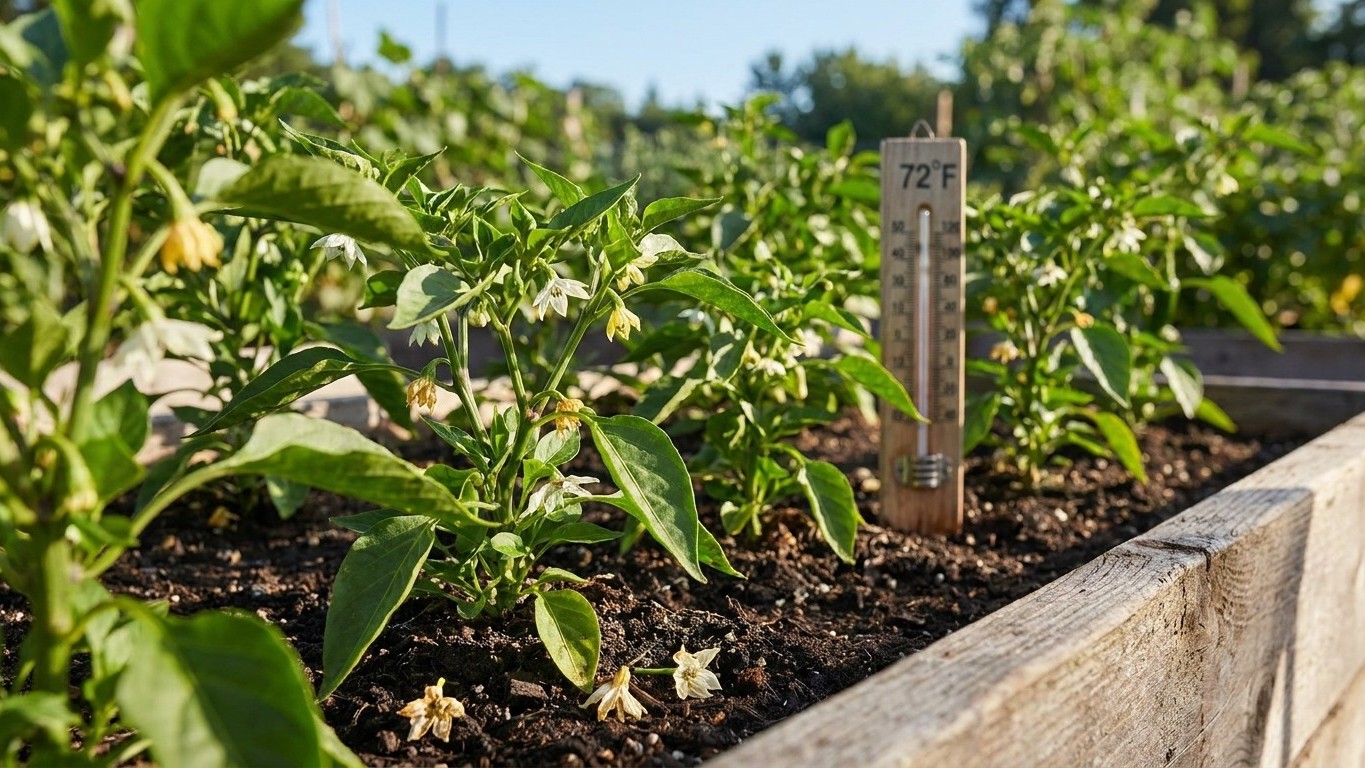
Here’s where this gets specific to your yard rather than to the state as a whole: this data set carries daytime highs above 90 F for the region, but it does not carry summer nighttime lows. Virginia’s geography runs from tidewater flats to Blue Ridge slopes, and nighttime temperatures on a valley floor can sit ten degrees below a ridge a few miles away, even on the same date. There’s no shortcut here. Don’t estimate your overnight lows from your latitude, and don’t borrow the coldest month’s average and assume summer nights follow the same pattern. Watch a thermometer in your own garden during the transplant window and again in early fall, because that’s the only way to know if you’re inside the 55 F floor pepper flowers need to set fruit.
So the short answer has two parts. The 26 days above 90 F tells you the hot end is a real and recurring risk in coastal Virginia, one that shows up most years, not as a freak heat wave. The cool end is just as real but unmeasured here, and it’s on you to track it locally, especially if you’re gardening at elevation or in a low-lying frost pocket where cold air settles overnight.
When to start seed here
The math is the same one Utah State University Extension lays out for any pepper crop: work backward from your transplant date, and never plant a seedling outside until both frost risk and soil temperature clear their thresholds. Here’s how that plays out for a Virginia calendar.
- Find your local last frost window. For coastal Virginia Beach, NOAA NCEI’s 1991-2020 normals put the 32 F freeze probability window at March 20 to April 3. That’s the mild end of the state. The Blue Ridge and southwest Virginia run weeks later, so if you garden inland or at elevation, use your own county extension office’s frost data rather than the coastal figure.
- Count back 8 to 10 weeks for indoor sowing. If your last frost falls in the March 20 to April 3 range, counting back 8 weeks lands you in late January; counting back 10 weeks lands you in mid-January. Choose the longer window if your indoor setup runs on the cool or dim side, since pepper seedlings are slow starters compared to tomatoes.
- Don’t transplant on the frost date alone. Frost passing is only half the requirement. Soil needs to reach 60 F before pepper roots will grow instead of just sit there. A cheap soil thermometer, checked a few inches down in the bed you’re planting, tells you more than any calendar date.
- Push the whole schedule later if you’re inland or at elevation. Every week your local last frost date runs behind the coastal March 20 to April 3 window, shift your indoor sowing date back by the same week. The 8 to 10 week countdown stays fixed, it’s the frost anchor that moves.
- Resist the urge to start earlier “just in case.” Seedlings held indoors past 10 weeks get root-bound and stall in the pot, and that stress carries into the field even after transplant. Early isn’t the same as ahead.
None of this schedule guarantees fruit set once the plants are in the ground. That’s a separate problem, tied to what the summer actually does once transplants are established, and it’s worth planning around before you ever pick up a seed packet.
What goes wrong here
Getting the sowing date right solves one problem. These are the ones that show up later, once plants are in the ground and the Virginia summer takes over.
- Blossom drop during a hot spell. With 26.0 days a year averaging 90 F or above in coastal Virginia, a run of these days during flowering will knock blossoms off before they set fruit. There’s no fix once it’s happening, only avoidance: time your transplant so early flowering doesn’t land in the first heat wave of summer, and give plants afternoon shade if a stretch of 90-plus days is forecast.
- Blossom drop from a cool night. Utah State University Extension notes fruit set fails just as easily below 55 F as it does above 90 F. Because this site doesn’t track summer night minima for Virginia, you have to catch this one yourself with a thermometer in your own garden, especially on plants set out early or gardened at elevation, where nights can dip well below what daytime highs would suggest.
- Sunscald on exposed fruit. Peppers that lose leaf cover to aggressive pruning or storm damage end up with fruit sitting in direct summer sun for hours at a stretch. The fix is to leave foliage in place rather than stripping it back, since leaves are doing real work shading the fruit they’re attached to.
- Blossom-end rot on the first fruit. This shows up as a sunken, leathery patch on the bottom of the pepper, usually tied to uneven watering rather than a soil deficiency. Keeping soil moisture consistent, with mulch and a regular watering schedule instead of feast-or-famine soakings, prevents most of it.
Common questions
What soil temperature do pepper seeds need to germinate indoors?
Indoor sowing skips the outdoor soil temperature question entirely, since seeds start in trays or pots under controlled warmth. The 60 F threshold applies to the ground outside, at transplant time, not to the indoor seed-starting mix.
Can I start pepper seeds too early in Virginia?
Yes. Utah State University Extension’s 8 to 10 week window exists because pepper seedlings held longer than that indoors tend to stall and become root-bound in their containers, and that stress doesn’t disappear once they’re transplanted outside.
Does the 26 days above 90 F affect all of Virginia the same way?
No. That figure comes from the Virginia Beach reference station in NOAA’s 1991-2020 climate normals, representing coastal conditions. Inland valleys, the Piedmont, and mountain counties will run their own heat totals, and this data set doesn’t publish a separate count for those areas.
How do I know my nighttime lows if this site doesn’t list them?
Track it yourself with an outdoor thermometer through late spring and again into early fall. Since summer night minima aren’t part of this data set and shouldn’t be guessed from latitude or from winter averages, a direct reading in your own garden is the only reliable way to know if you’re crossing the 55 F floor that pepper flowers need.