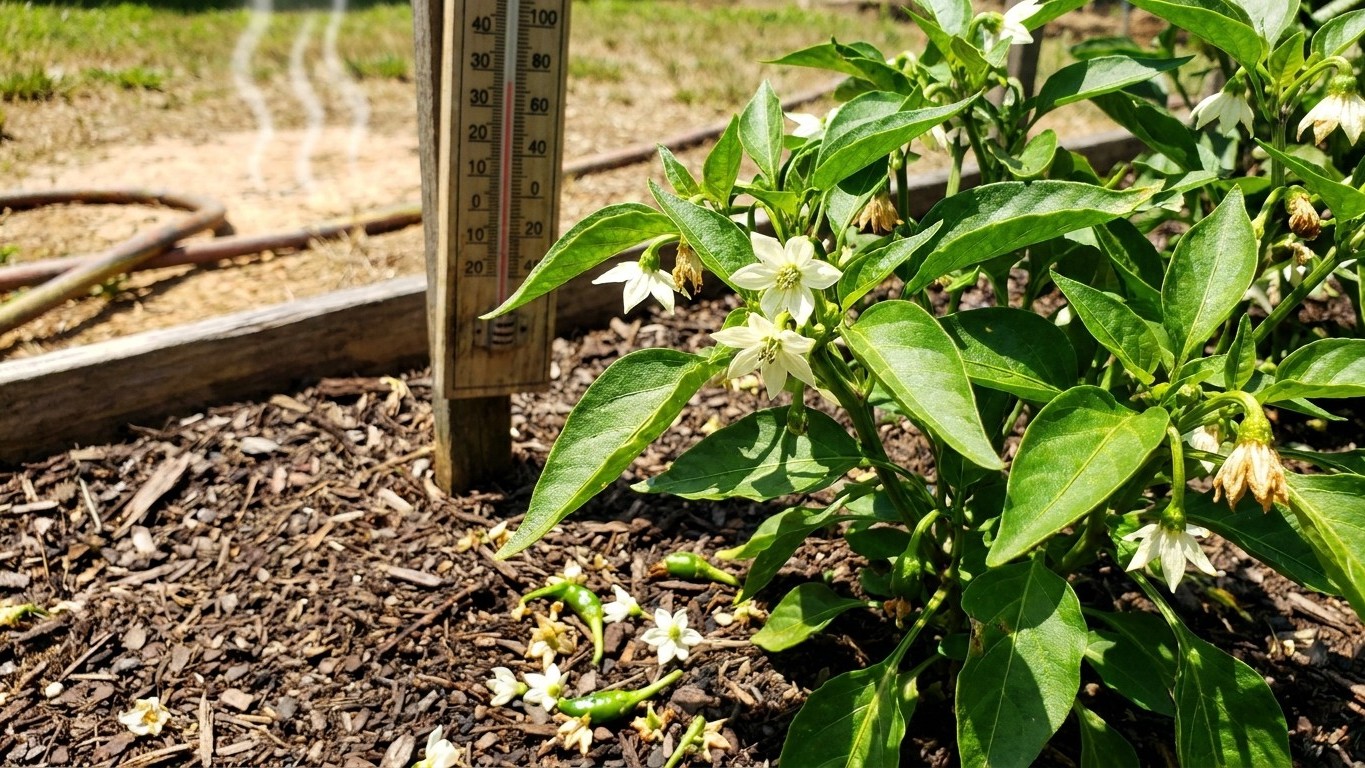

Peppers in Idaho stall out for one of two reasons: a stretch of 90-degree-plus days that sterilizes pollen inside the bloom, or a run of cool nights that keeps that pollen from releasing at all. Boise’s reference station logs an average of 47.5 days a year at or above 90°F, enough on its own to knock blossoms off mid-summer. The night-time threshold, 55°F, matters just as much, but this site doesn’t track summer lows for the state, so growers need to watch their own thermometer.
The short answer
Forty-seven and a half days. That’s the average number of days a year the Boise reference station reaches 90°F or hotter, based on NOAA’s 1991-2020 Climate Normals. It isn’t a temperature average, it’s a headcount of days that cross a threshold pepper plants can’t tolerate for long stretches.
Above 90°F, pepper pollen turns sterile inside the flower. The bloom can look perfectly fine from the outside, but nothing forms behind it. The plant senses the flower won’t produce anything worth feeding and drops it rather than waste resources on it. A single hot afternoon rarely causes lasting damage; it’s back-to-back days, the kind Boise sees close to seven weeks’ worth in a typical year, that strip a plant of most of its blossom set.
The other edge of the range gets less attention but hurts just as much. Nights that drop below 55°F interfere with pollen release inside the flower just as surely as heat does, and a pepper plant sitting through several such nights in a row can go weeks without setting a single fruit, even while it keeps blooming steadily. Utah State University Extension, whose pepper guidance covers this exact mechanism, describes fruit set failing at both ends of the range, not just at the hot one.
This is where Idaho growers need to do their own homework. This site tracks days at or above 90°F for the state, and that number, 47.5 at the Boise reference station, is solid ground to plan around. But nighttime summer lows aren’t part of that dataset, and Idaho’s geography makes them nearly impossible to guess from a spot on a map. A garden in a low valley near Boise runs warmer overnight than one forty miles away at higher elevation, and elevation, not latitude, decides that difference. Guessing a night low from how far north or south a county sits will lead you wrong more often than not.
The practical move is tracking your own overnight temperatures during bloom, with a thermometer in the actual garden rather than a weather app’s regional estimate. Repeated nights under 55°F while plants are flowering point to the cool end as your limiting factor. A stretch of daytime highs over 90°F points to the other end. Either way, the fix starts with knowing which one you’re actually fighting, since the remedies for a heat problem and a cold-night problem aren’t the same.
When to start seed here
Working out a sowing date for peppers in Idaho means counting backward from two moving targets, the last frost and the day the soil actually warms up. Here’s how to run that math for your own county.
- Find your last spring frost date. At the Boise reference station, NOAA’s 1991-2020 Climate Normals put the last 32°F freeze in the 30 to 70 percent probability band between April 23 and May 7 (station USW00024131). Boise sits in a low valley; most of Idaho runs higher and colder, so a mountain valley or a northern county should expect a later window, sometimes by several weeks. Check frost data for your own county rather than assuming Boise’s window applies statewide.
- Wait for soil, not just air, to hit 60°F. Utah State University Extension sets transplant timing at a soil temperature of 60°F, measured after the frost date has passed. Air can feel warm over soil that’s still sitting at 55°F, especially in irrigated valley ground that releases winter cold slowly. A soil thermometer pushed a few inches down tells the real story better than a calendar does.
- Set your transplant date at whichever comes later. If your last frost falls in early May but your soil doesn’t cross 60°F until the third week of May, plant on the soil date. Transplanting into cold, wet soil sets peppers back further than a short wait ever would.
- Count back 8 to 10 weeks for indoor sowing. Utah State University Extension recommends starting pepper seed indoors 8 to 10 weeks before that transplant date. If your target transplant window sits in early May, sowing indoors lands somewhere in late February to early March; push both dates later for higher, colder counties.
- Rebuild the math every year from your own site. Frost dates and soil warm-up shift from one year to the next and from one side of a valley to the other. Treat the Boise range as a reference point for the math, not a fixed calendar to copy.
What goes wrong here
- Blossom drop during a hot spell. When daytime highs push past 90°F for several days running, the kind of stretch Boise logs close to 48 times a year on average, pollen inside the flower turns sterile and the bloom falls without setting fruit. Afternoon shade cloth pulled over the row for the two or three harshest hours of sun keeps flower temperature low enough for pollen to stay viable through the run.
- Blossom drop after a cool night. Nights under 55°F shut down fruit set almost as effectively as heat does, though whether this is your actual problem depends on your own overnight readings, not on anything tracked here by state. If flowers keep opening and falling without setting fruit outside a hot stretch, check nighttime lows during bloom before assuming heat is to blame. Row cover pulled over plants in the evening during a cold snap holds enough warmth to protect a night’s worth of blooms.
- Sunscald on exposed fruit. Idaho’s clear skies and elevation intensify sunlight on fruit left without leaf cover, producing pale, papery patches on the sun-facing side of the pepper. Skip heavy pruning that strips foliage from around developing fruit, and let the plant’s own canopy provide the shade it’s built to give.
- Blossom-end rot on developing fruit. A soft, sunken patch at the blossom end usually traces back to uneven watering rather than a true soil calcium shortage. Deep, consistent irrigation, paired with a layer of mulch to hold soil moisture steady through hot afternoons, generally corrects it without any soil amendment added.
Common questions
Why do pepper blossoms fall off without producing fruit in Idaho?
Fruit set fails at both ends of the temperature range. Daytime highs above 90°F sterilize pollen inside the flower, while nights below 55°F keep that pollen from releasing properly. Idaho growers need to identify which end is causing the drop, since a heat spell and a cool night call for different fixes.
How many days does Idaho typically see above 90°F?
At the Boise reference station, NOAA’s 1991-2020 Climate Normals show an average of 47.5 days a year reaching 90°F or higher. That figure describes the reference station’s heat load and doesn’t account for elevation differences across the rest of the state, which can run noticeably cooler.
When is it safe to transplant peppers outside in Idaho?
Transplant after the last frost date has passed and once soil temperature reaches 60°F, per Utah State University Extension guidance. At the Boise reference station, the last 32°F freeze typically falls between April 23 and May 7, but Boise is a low valley; higher and colder parts of Idaho should expect a later frost-free window and should check their own local data.
Can shade cloth fix blossom drop caused by heat?
Shade cloth placed over plants during the hottest afternoon hours can lower flower temperature enough to keep pollen viable through a heat spell, addressing drop caused by days above 90°F. It won’t help blossom drop caused by cool nights below 55°F, which requires warming the plant overnight instead, such as with row cover during a cold snap.