
Start pepper seed indoors roughly 8 to 10 weeks before you plan to set plants outside. For most Mississippi gardens working off the Jackson-area frost window, that lands somewhere between late December and late January, depending on your county and which end of the transplant window you’re aiming for.
The short answer
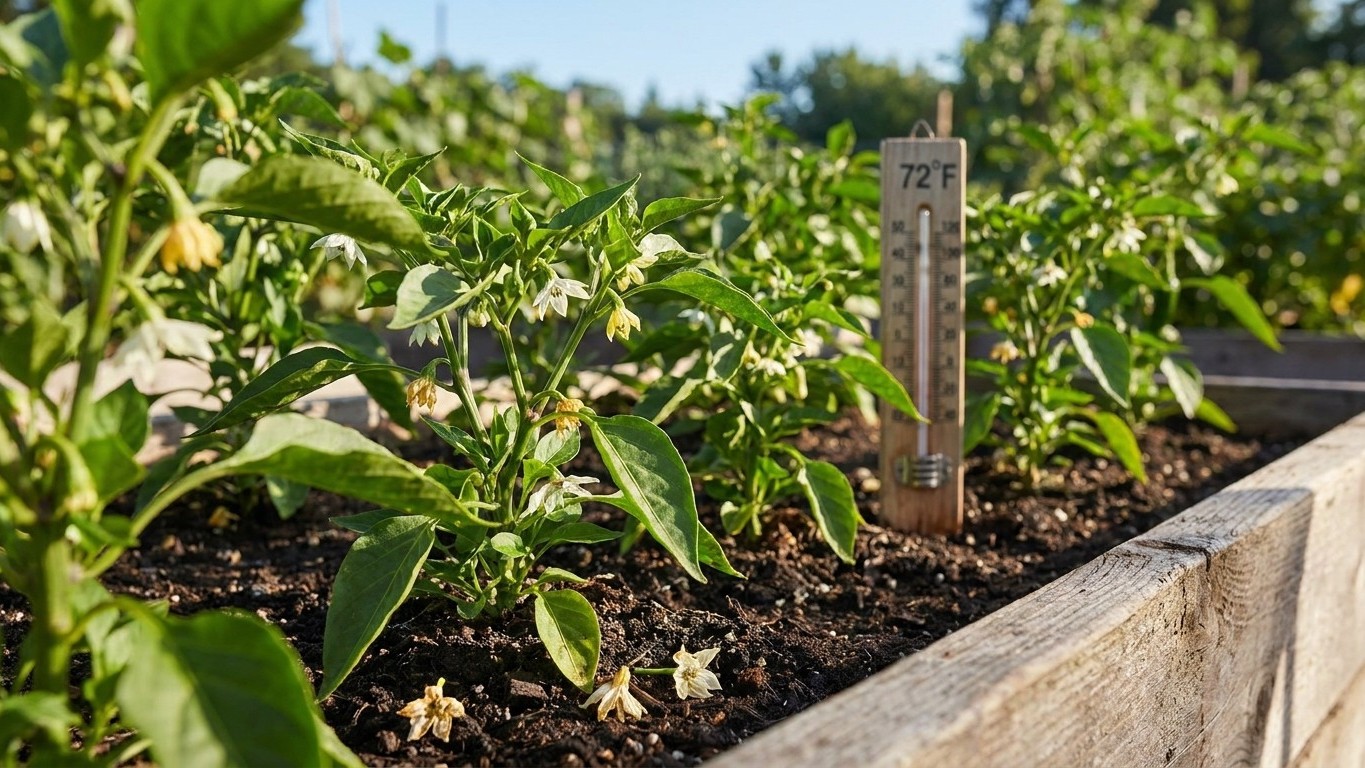
Jackson averages 71.1 days a year at or above 90 F, based on NOAA NCEI Climate Normals covering 1991 to 2020. That’s not a handful of hot afternoons. It’s more than ten weeks of the growing season sitting at temperatures that stall pepper fruit set outright. Pepper flowers can open, look fine, and still drop without setting fruit once daytime highs push past that 90 F mark for stretches at a time, which in Mississippi tends to run heaviest from mid-June through August.
That heat load changes how you think about timing. Starting seed early enough to get plants flowering before the worst of the summer heat arrives, and again picking up a second flush once temperatures ease in September, matters more here than in cooler states where 90 F days are rare. Utah State University Extension notes that pepper fruit set fails at both ends of the temperature scale: nights below 55 F stall it just as effectively as days above 90 F stop it from the other direction.
Here’s where Mississippi gardeners need to do their own homework. This site tracks days at or above 90 F by territory, because that’s a documented, station-based measurement. It does not carry summer night minima, and there’s a good reason for that: overnight lows vary enormously by microclimate, even within the same county. A garden in a low spot near a creek can run several degrees cooler overnight than one on a ridge two miles away. Urban and suburban yards with pavement and structures nearby often stay warmer at night than open rural fields.
So don’t guess at your summer night lows based on how far south you are, and don’t assume the coldest month of the year tells you anything about a July night. Latitude is a poor stand-in for actual nighttime temperature data. If blossom drop shows up in your pepper patch during a stretch of warm weather, check an actual overnight low reading from your own location, ideally with a min-max thermometer near the plants, before deciding what’s causing it. That single habit will tell you more than any regional average ever could.
When to start seed here
The math behind a pepper seed-starting date is simple enough to redo for your own county once you know the pieces. Work backward from your transplant date, not forward from some fixed calendar day.
- Find your last spring frost window. For the Jackson reference station, that’s March 6 to March 22, based on NOAA NCEI’s 1991-2020 climate normals and 32 F freeze probabilities. Suburban and rural gardens away from that airport station typically see their last frost later, often by one to two weeks, and more if you’re at higher elevation or in a low-lying cold pocket. Check your own county’s frost data rather than assuming the Jackson window applies exactly.
- Confirm soil temperature, not just frost date. Pepper transplants need soil at 60 F before they go in the ground, according to Utah State University Extension. Air can feel warm enough while soil, especially in shaded or heavy clay ground, still lags behind. A simple soil thermometer pushed a few inches down gives you a real reading instead of a guess.
- Set your transplant date at whichever comes later: frost-free or 60 F soil. In many Mississippi springs those two conditions arrive close together, but not always. A late cold snap can push your safe frost date well past when soil has already warmed, or the reverse can happen after a wet, cool spring.
- Count back 8 to 10 weeks from that transplant date for your indoor sowing date. Using the Jackson window as an example: if you transplant around March 6, sowing 10 weeks earlier lands around December 26. If you transplant around March 22 and sow only 8 weeks ahead, that’s roughly January 25. Most gardeners land somewhere between those two dates.
- Adjust for your own frost data before locking in a date. If your county’s last frost typically runs a week or two later than Jackson’s, push your whole schedule back by that same margin so transplants aren’t sitting indoors, rootbound, waiting on cold soil.
The point of laying it out this way is that the seed-starting date isn’t really the number that matters. The transplant date is the anchor, and the seed date just follows from it by simple subtraction.
What goes wrong here
- Blossom drop during a summer hot spell. When daytime highs stack up above 90 F, which Mississippi sees an average of 71.1 days a year at the Jackson reference station, flowers open and fall without setting fruit. There’s no fixing the weather, but you can shade cloth over rows during the worst stretches, keep soil moisture even so plants aren’t stressed on top of the heat, and expect a lull in production during peak summer with a second flush once temperatures ease.
- Blossom drop from an unexpected cool night. The same failure can show up from the opposite direction: nights that dip below 55 F stop fruit set just as effectively as extreme heat does, per Utah State University Extension. This site doesn’t track summer night minima, so watch your own thermometer readings rather than assuming a late cool snap won’t happen. Row cover pulled over plants on a night that’s shaping up unusually cool can be enough to protect a flowering crop.
- Sunscald on exposed fruit. Strong Mississippi summer sun can scorch pepper fruit left without leaf cover, especially on plants that have lost foliage to disease or pruning. Leaving natural leaf canopy in place, and avoiding heavy pruning during the hottest months, keeps fruit shaded and prevents the pale, papery scald patches that ruin otherwise good peppers.
- Blossom-end rot on developing fruit. Irregular watering, common during Mississippi’s uneven summer rain patterns, disrupts calcium uptake and shows up as a sunken brown or black spot on the bottom of the fruit. Consistent, even soil moisture through mulching and regular watering does more to prevent it than any calcium spray applied after the fact.
Common questions
Can I sow pepper seed directly in the ground in Mississippi?
Direct sowing is possible but rarely practical here, since peppers need warm soil and a long runway before flowering, and Mississippi’s frost-free window doesn’t leave enough time for direct-sown plants to catch up to transplants started indoors 8 to 10 weeks ahead.
Why are my pepper flowers falling off even though nights seem fine?
Check daytime highs first. At 71.1 average days a year above 90 F in the Jackson area, heat is the far more common culprit locally, though a cool night below 55 F can cause the identical symptom, which is why checking your own overnight readings matters before assuming either cause.
Does the last frost date apply the same across all of Mississippi?
No. The March 6 to March 22 window comes from the Jackson reference station’s climate normals. Suburban and rural spots elsewhere in the state often see frost linger one to two weeks later, so treat this as a starting reference and confirm against your own county’s data.
How long after flowering do peppers actually take to mature?
Utah State University Extension’s guidance on fruit set timing counts from flowering forward, not from the seed-starting or transplant date, so factor that separately when estimating your first harvest once plants begin to bloom.