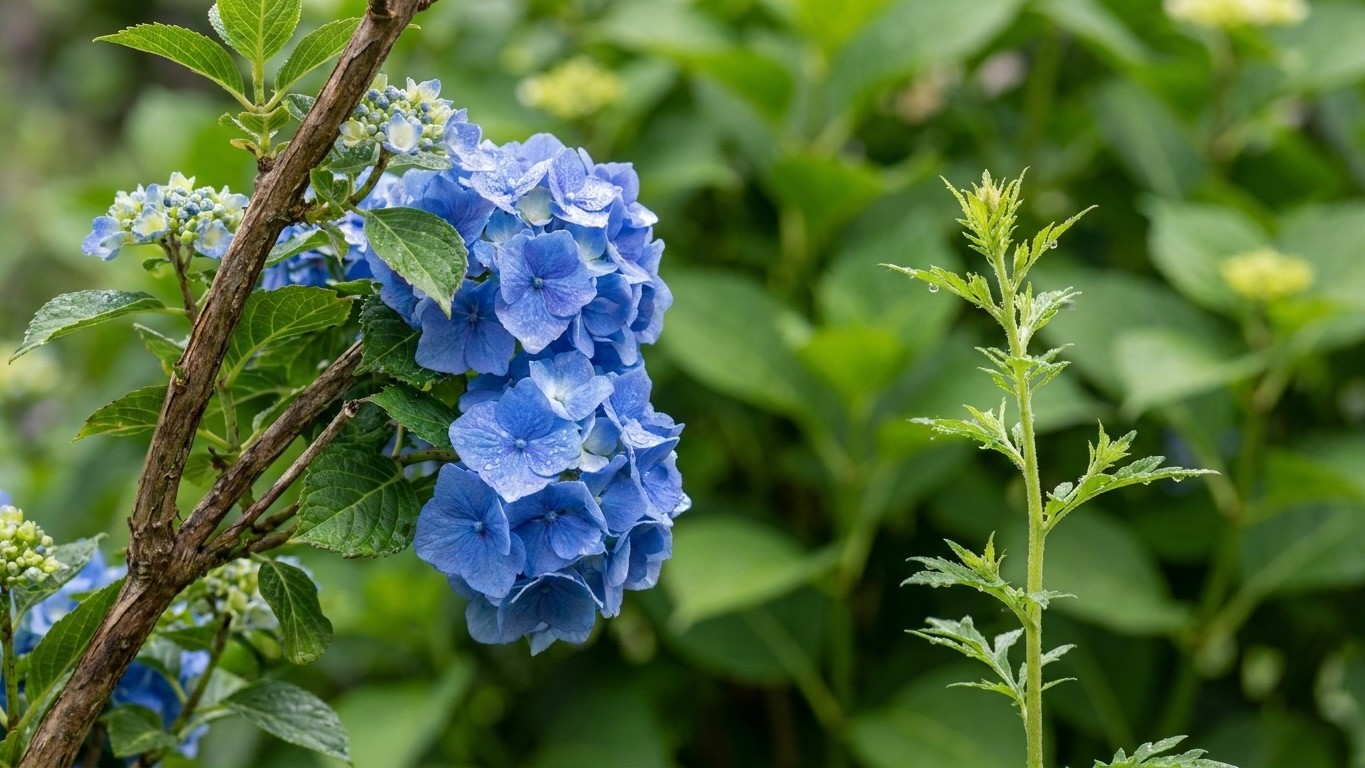

Most hydrangeas grown in Mississippi handle the cold itself without trouble. What hurts them is a warm spell in late winter that wakes the buds, followed by a freeze. Good winter care comes down to three things: a thick layer of mulch before the first frost, pruning that waits until late winter or spring, and frost cloth ready for the nights after buds begin to swell.
What this comes down to in Mississippi

At the Jackson airport weather station, the first fall frost arrives between November 7 and November 22, and the last spring frost falls between March 6 and March 22, based on NOAA NCEI climate normals for 32 F freeze probabilities. Winter protection matters most at the two ends of that stretch, and the spring end is usually the costlier one for flower buds. Those are reference-city numbers, so a suburban or rural yard will usually run later in spring and earlier in fall, often by one to two weeks (more on higher ground).
The NOAA climate normals for the Jackson station also explain why deep cold is rarely the problem. The USDA Plant Hardiness Zone Map rates the state from roughly 7b in the north to 9b on the Gulf Coast, and that system rests on a single variable, the average annual extreme minimum temperature. Most hydrangeas are rated well below those numbers. The zone tells you the roots and woody stems will usually survive. It says nothing about whether the flower buds do.
What actually damages hydrangeas in winter?
Most bigleaf hydrangeas and oakleaf hydrangeas set next year’s flower buds on old wood during late summer and fall (reblooming bigleaf varieties also flower on new wood). Those buds sit on the stems all winter. A run of mild days in February can push them to swell and open, and a freeze afterward kills the soft tissue. The shrub leafs out again from lower on the stem, but the flowers are gone for the year. Plants usually survive. The show does not.
Panicle and smooth hydrangeas bloom on new wood that grows in spring, so a late freeze costs them leaves at worst. Which type you grow sets how much effort winter deserves, and the guide to which hydrangeas survive a Mississippi winter goes deeper on hardiness by type.
| Hydrangea type | Flower buds form on | What winter care it needs |
|---|---|---|
| Bigleaf | Old wood (last season’s stems) | Mulch in fall, no fall pruning, frost cloth on freeze nights after buds swell |
| Oakleaf | Old wood | Mulch in fall, light cover only if a freeze follows early leaf-out |
| Panicle | New wood | Mulch is enough, prune in late winter |
| Smooth | New wood | Mulch is enough, cut back in late winter |
Working it out for your own garden
A fixed calendar date goes stale the first time a winter runs warm. A method built on your own frost window holds up in a mild year, a cold one, or after a move to a different county.
How do you time winter protection for your yard?
Start from the reference window and shift it for your location. The airport sees its first fall frost between November 7 and November 22. A yard that frosts one to two weeks earlier lands between about October 24 and November 15. Plan to have mulch down and frost cloth located by the middle of October, which leaves a margin on the early end.
Spring runs the other way. The airport’s last frost falls between March 6 and March 22, and a yard that frosts one to two weeks later is looking at roughly March 13 to April 5. Keep the cloth within reach until the first week of April, even if the shrubs look fully awake in early March. Bigleaf buds that open in the first warm week of the year are exactly the ones a late freeze catches.
Between those two windows, the forecast does the work. When the overnight low is forecast at freezing or just below and the buds have swelled or leaves have opened, cover the plant that afternoon. Drape frost cloth or an old bedsheet over the whole shrub and down to the ground so it holds in soil heat. Plastic works only if a frame keeps it off the foliage, because leaves that touch plastic freeze right through it. Take the cover off the next morning once temperatures climb above freezing.
How can you tell if the buds survived?
Wait until the shrub has had a few weeks of settled spring weather before judging it. A stem that is still alive shows green tissue when you scratch the bark lightly with a thumbnail. Brown and dry underneath means dead wood on that section. Cut back to the first pair of healthy buds, or to the ground on stems that show no green anywhere. On bigleaf hydrangeas, a plant that leafs out from the base but shows no buds on the old stems has lost this year’s bloom to cold, and next year’s flowers will form on the new growth if the shrub is left alone to mature.
What changes across the state
The Jackson numbers sit near the middle of the state, and the ground moves them in both directions. The hardiness range of roughly 7b to 9b gives a rough picture: the warm end covers the Gulf Coast and the cooler end covers the northern part of the state.
Does north Mississippi need more protection than the Gulf Coast?
North Mississippi runs colder in winter and frosts later in spring, with the hills in the northeast cooler still. Shrubs there stay dormant longer, which helps, but a freeze in the last half of March or into April can still catch buds that opened on a warm day. Protection covers a longer stretch of the calendar and mulch matters more. Gardeners in the cooler parts should treat the later end of the spring window as the one to watch.
The Gulf Coast has the opposite pattern. Water holds heat, so winters are milder and the last frost comes earlier than at Jackson. Bigleaf hydrangeas there often break dormancy in late winter, sometimes weeks before a freeze is truly past. A coastal gardener may need cloth fewer nights overall but should expect to use it after the plant already looks like spring.
Does your own yard run warmer or colder than the forecast?
A low spot in the yard collects cold air on still, clear nights, and a bed on the north side of a house stays colder than one against a south wall. A shrub near a brick wall or a paved driveway picks up heat during the day and gives it back at night. Those few feet can matter as much as the distance between towns. Walk the yard after a clear, cold night and see where the frost lies heaviest; that is where hydrangeas need the most attention.
The mistakes this state punishes

A mild winter lulls gardeners into skipping the work, and the spring freeze that follows is the one that costs them blooms.
Pruning bigleaf and oakleaf hydrangeas in fall
Cutting back a bigleaf hydrangea in October or November removes the flower buds that were set on last season’s stems. The shrub looks tidier and blooms little or not at all the next summer. Leave stems standing through winter and prune only dead wood in spring, once the buds show you what is alive. Panicle and smooth hydrangeas are the exception, because they can be cut back in late winter without losing flowers.
Mulching too late, too thin, or too tight
Mulch put down after the first hard freeze does little for roots that have already chilled. Apply 3 to 4 inches of pine straw, shredded leaves, or bark in the weeks before the early end of your fall window. Keep it a few inches back from the stems, since mulch piled against the base holds moisture on the bark. Flower color follows soil chemistry rather than winter mulch, and the guide to why hydrangeas are pink in Mississippi and how to turn them blue covers that side.
Feeding late and uncovering early
Nitrogen fertilizer in late summer or fall pushes soft new growth that freezes at the first cold night. Stop feeding by late summer. In spring, pulling off covers and mulch in the first warm week invites the same freeze damage. Loosen the mulch gradually and wait until the end of your local frost window before removing it entirely. Potted hydrangeas are more exposed than those planted in the ground, since roots in a container lack the insulation of soil. Move pots against the house, group them together, or shelter them in an unheated garage on freezing nights.
Checking this against your county
A frost window from one weather station is a starting point. Your county’s actual dates depend on elevation, nearby water, and how your lot sits. Your county office of Mississippi State University Extension can give you local frost timing and advice on what has worked in your soil and microclimate. For the broader picture of site, soil, and care, see the full guide to growing hydrangeas in Mississippi.
Common questions
Should I cut back my hydrangeas in the fall?
Only panicle and smooth types, and even those do fine if you wait until late winter. Bigleaf and oakleaf hydrangeas carry next year’s buds on old stems, so fall pruning cuts the flowers off. Remove only stems that are clearly dead, and do that in spring.
When should I take the mulch off in spring?
Loosen it gradually and finish after your local last frost window has passed. At the Jackson reference station that window is March 6 to March 22, and yards that frost later should wait one to two weeks beyond it. A thinner layer can stay all year as ordinary mulch.
Do potted hydrangeas need to come inside?
They do not need warmth, only shelter. Move them against a south or east wall, cluster the pots, or set them in an unheated garage or porch on freezing nights. Return them outdoors on mild days so they do not break dormancy early, and water them lightly now and then since the potting mix still dries out.
Will frost kill my hydrangea?
A freeze on an established shrub rarely kills it in this climate, but it can burn open buds and tender leaves. The usual result is a missing bloom season on bigleaf types and some dieback on stems. Wait until warm weather has settled in, then check for green under the bark before cutting anything out.