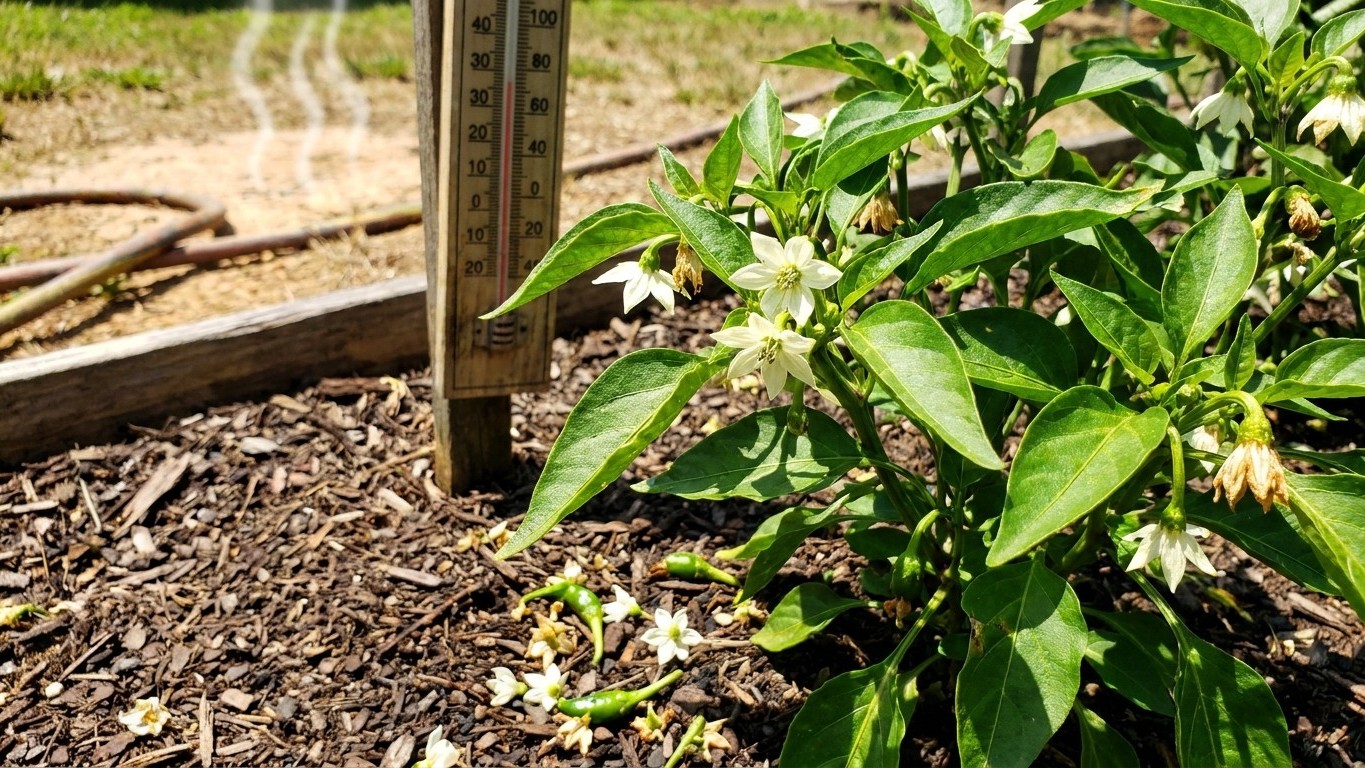

Kentucky peppers stall out mainly on the hot side. Louisville logs an average of 37.2 days a year at 90°F or above, and that heat load is enough to knock pollen viability down and push blossoms off the plant before they ever become peppers. The cool end can do the same damage, but this site doesn’t track summer night lows, so that half of the equation is on you to watch. Add a frost window that closes in early April and the growing season here punishes peppers that start too early or bloom during a heat spike.
The short answer
Start with the number that actually explains most pepper failures in this state: 37.2 days a year, on average, hit 90°F or hotter at the Louisville reference station, based on NOAA NCEI Climate Normals covering 1991 to 2020. That’s not a handful of scorching afternoons in late July. Spread across a normal growing season, it means a Kentucky pepper plant can expect well over a month’s worth of days where daytime heat alone is enough to stress the flowers. Pepper pollen doesn’t handle that kind of heat load gracefully. Above roughly 90°F, pollen grains lose viability, flowers open and close without being fertilized, and the plant responds the only way it can: it drops the blossom rather than waste resources on fruit that was never going to form. A pepper plant that looks healthy, full, green, loaded with flowers, can still produce almost nothing if enough of those flowering days land inside a heat stretch.
That’s one end of the failure. The other end is cold, and it’s just as real, even though it gets less attention because it doesn’t show up as dramatically as wilted leaves in August. Pepper fruit set fails at nights below 55°F just as reliably as it fails above 90°F during the day. A cool snap in late spring or an unusually chilly stretch in early September can shut down fruit set even while daytime temperatures stay pleasant. The plant isn’t dying. It’s just refusing to commit resources to fruit when its internal cues say conditions aren’t stable enough.
Here’s where this gets tricky for anyone trying to plan around it: this site carries the daytime heat numbers for Kentucky, but it does not carry summer night minimums. There’s no reliable substitute figure to hand you here, and guessing based on how far north or south you sit doesn’t work, since local terrain, elevation, and even how close you are to a river or a paved area can shift nighttime lows by several degrees in either direction. If you garden in a valley, a low spot, or an area that cools fast after sunset, your nights may dip under that 55°F threshold more often than a gardener ten miles away on higher ground. The only fix here is direct observation. A cheap min/max thermometer left in the garden bed for a few weeks in late spring and early fall will tell you more about your actual fruit-set risk than any regional average ever could.
When to start seed here
Working backward from transplant date is the only way this arithmetic makes sense, and it starts with two hard constraints: peppers can’t go in the ground until frost risk has passed, and the soil itself needs to hit 60°F, since cold soil stalls root growth even if the air feels warm enough. In this part of Kentucky, the last spring frost falls somewhere between March 24 and April 4, based on NOAA NCEI’s 1991-2020 climate normals and their 32°F freeze probability data. Soil warms slower than air, so the 60°F soil mark often lands a couple of weeks after that frost date, not on the same day.
- Pin down your frost window. The regional range is March 24 to April 4, but the National Weather Service office covering Louisville has noted that this urban measuring station tends to run later in spring and earlier in fall than the rural parts of surrounding Jefferson County. If you’re outside the city, plan for a tighter, later-arriving frost-free window than the station data suggests.
- Add the soil lag. Since soil temperature trails air temperature, expect the 60°F soil mark roughly one to two weeks after your local last frost date. That pushes a realistic transplant date into mid to late April for many Kentucky gardens, later for cooler microclimates.
- Count back 8 to 10 weeks for indoor seed starting. Utah State University Extension’s guidance on peppers puts the indoor head start at 8 to 10 weeks before transplant. If your target transplant date lands in mid-April, count back 8 weeks and you land in mid-February; count back 10 weeks and you land in early February.
- Build in a buffer, not a fixed date. Because your own frost date and soil warm-up will vary from the regional average, treat that February window as a starting point, then confirm with a soil thermometer before you transplant rather than trusting the calendar alone.
Redo this math for your own county rather than borrowing someone else’s dates. A garden in a river bottom or a shaded lot can run a full week or two behind a garden on an open, south-facing slope just a few miles away.
What goes wrong here
- Blossom drop from a hot spell. When daytime temperatures push past 90°F, especially with several such days in a row, flowers open and fall without setting fruit. There’s no way to force pollination during a heat spike; the practical remedy is timing your main flowering period to avoid the heaviest stretch of Kentucky’s 37.2 average days above 90°F, which tends to cluster in mid-to-late summer. Getting transplants in as early as frost and soil temperature safely allow gives plants a chance to set an early flush of fruit before that heat load builds.
- Blossom drop from a cool night. The same dropped-flower symptom shows up when nights fall below 55°F, whether that’s a late spring cold snap or an early fall chill. Since this site doesn’t track night minimums for Kentucky, the only remedy is direct monitoring: keep a thermometer in the bed during the shoulder seasons and expect a pause in fruit set, not plant death, if a cool stretch moves through. Fruit set resumes once nights warm back up.
- Sunscald on exposed fruit. Kentucky’s strong summer sun can scorch pepper fruit that’s left uncovered by foliage, especially on plants that have lost leaves to disease, wind, or aggressive pruning. The pale, papery patch that results isn’t fixable once it appears, but leaving the plant’s natural leaf canopy intact, rather than stripping leaves to “let in more light,” prevents most of it.
- Blossom-end rot. This shows up as a dark, sunken patch at the base of the fruit and traces back to inconsistent watering rather than a soil calcium shortage in most home gardens. Kentucky’s swings between wet spring weeks and dry, hot summer stretches make this especially common. Even soil moisture, delivered on a regular schedule rather than in occasional heavy soakings, is the practical fix.
Common questions
Can I still get peppers if my nights stay warm all summer?
Warm nights above 55°F remove one obstacle, but daytime heat above 90°F can still cause blossom drop on its own. The two thresholds work independently, so a warm-night summer doesn’t guarantee reliable fruit set if daytime heat spikes are frequent.
Does Kentucky’s frost date apply the same way statewide?
No. The March 24 to April 4 window comes from the Louisville reference station, and NWS Louisville itself has flagged that this urban site runs later in spring than the surrounding rural county. Anywhere outside that immediate urban area should expect a somewhat different, likely tighter, frost-free window.
How do I know if my soil has actually reached 60°F?
A basic soil thermometer, pushed 3 to 4 inches into the bed and checked in the morning before the sun warms the surface, gives a reliable reading. Waiting for a calendar date without checking soil temperature directly is the most common reason transplants stall after going in the ground.
What variety should I plant to avoid these problems?
Utah State University Extension’s pepper guidance names several varieties gardeners commonly grow but does not attach heat tolerance ratings, days-to-maturity figures, or size data to any of them. Rather than choosing based on a claimed heat rating, focus on timing your planting and flowering window around the heat and cold thresholds described above.