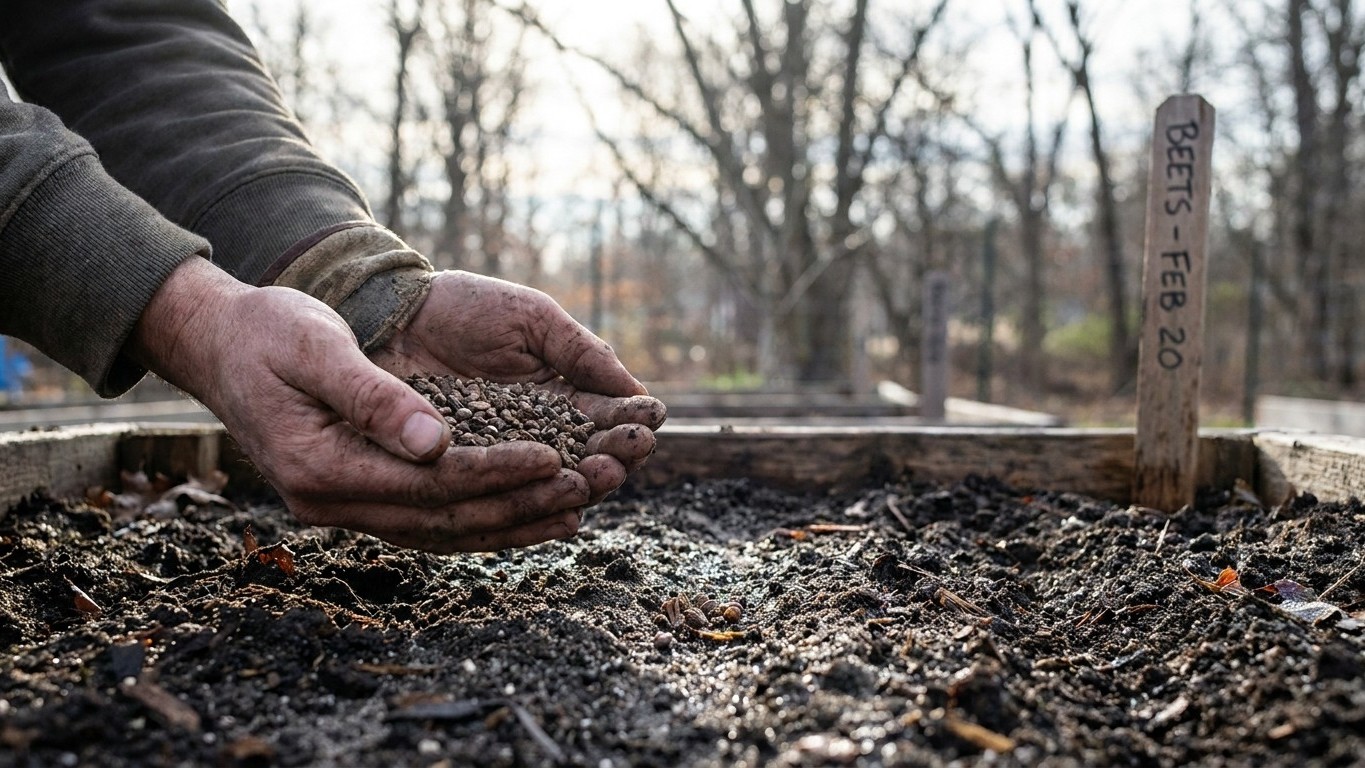

In New Jersey, get beet seed into the ground directly (beets don’t transplant well) two to three weeks before the last spring frost. Based on the reference weather station used here, that frost typically falls between March 29 and April 6, which puts a first sowing in the second half of March for most of the state. From there, succession-sow every two to three weeks through early summer, then stop early enough that the 60 to 80 days from seeding to harvest finish before the ground turns unworkable in fall.
The short answer
The soil USDA lists as representative of New Jersey is the Downer series, an Ultisol, which is an old, heavily weathered and leached soil type that tends to run acid and short on nutrients. The surface horizon of the major Downer components comes in at 79 percent sand, 6 percent clay and 15 percent silt, with organic matter around 1.2 percent and a surface pH near 6.3, slightly on the acid side. It’s classified well drained, which for a root crop is mostly good news: beets hate sitting in wet, heavy ground, and a sandy profile like this one sheds water fast rather than pooling around the taproot.
The catch is that fast drainage cuts both ways. Sand this coarse doesn’t hold much moisture between waterings, and Utah State University Extension’s guidance on beets is specific about what happens when that moisture runs out early: water stress in the first six weeks pushes the plant toward premature flowering, meaning it bolts and gives up on the root it was supposed to be building. A soil built mostly of sand grains, with barely more than a percent of organic matter to buffer against drying out, is exactly the kind of ground where that six-week window gets risky if rain doesn’t cooperate.
| Factor | Downer series (surface) | What beets want |
|---|---|---|
| Texture | 79% sand, 6% clay, 15% silt | Deep, sandy, well-drained |
| Drainage | Well drained | Well drained |
| Surface pH | About 6.3 (slightly acid) | Near neutral, generally tolerant |
| Organic matter | About 1.2% | Benefits from up to 1 inch of compost per 100 sq ft |
The exact count of days the reference station spends above 90°F isn’t part of the record cited for this page, so that specific number isn’t published here. What is documented is the beet’s own heat threshold: once temperatures climb past 85°F while the plant is also short on water, the root turns woody and loses the tenderness that makes beets worth growing at all. New Jersey summers reliably deliver stretches of heat well past that mark, especially in July and August, which is one reason later sowings aimed at a fall harvest tend to do better than a spring crop pushed too far into summer.
None of this is a verdict on any one backyard. A state spans hundreds of soil series, and the Downer series is a representative starting point, not a stand-in for the dirt under a particular tomato bed three towns over. River bottoms run heavier and wetter, hill country can carry more clay, and anywhere a builder graded or filled the lot, the native profile may not exist anymore. A basic soil test remains the only way to know what’s actually there.
The six weeks that decide it here
Sowing two to three weeks ahead of the March 29 to April 6 frost window lands the first six weeks of a beet’s life somewhere in the stretch from mid-March through late April or early May, depending on how a given county’s frost date compares to the reference station’s. That’s the period Utah State University Extension flags as the one where water stress does the most damage, triggering the premature flowering response known as bolting rather than simply slowing growth.
Mid-Atlantic spring in this stretch of the calendar doesn’t hold to one pattern. Some years bring a run of soaking rain that keeps the topsoil wet for weeks; others swing into a dry, windy stretch that dries out the surface in days, particularly on a sandy profile like the Downer series that doesn’t retain water the way a clay-heavy soil would. Because that specific soil sheds moisture quickly, a week or two without meaningful rain during this six-week window is enough to put a bolting-risk crop into actual bolting territory, especially for seed sown on the early end of the recommended date range, when cool nights and a still-developing root system leave less margin for error.
This is also the reason the timing advice leans toward the early side of “two to three weeks before frost” rather than the late side, for gardeners on lighter, sandier ground. Sowing closer to three weeks ahead gives the root system more time to establish before the swing into warmer, drier late-April and May weather typical of the region, while sowing right at two weeks ahead, on soil that already drains fast, compresses that establishment period at exactly the moment moisture becomes least reliable. Either way, the six-week clock starts at seeding, not at any later stage, since beets go into the ground directly and never pass through a transplant phase where the calendar might reset.
Checking a county-level frost date against the reference station’s March 29 to April 6 range matters here too. Suburban and rural gardens away from the airport station typically see their last frost run later, sometimes by one to two weeks or more at elevation, which shifts this whole six-week window later on the calendar and changes what kind of spring weather the crop is likely to meet.
What goes wrong here
- Bolting from early dry spells: On sandy, fast-draining ground like the Downer series, a dry week or two in the first six weeks after sowing is enough to trigger premature flowering. The remedy is consistent watering through that window specifically, not just general watering through the season, since Utah State University Extension ties this failure to stress in the early stage rather than later heat.
- Woody roots from summer heat: Once temperatures pass 85°F and the plant is also short on water, the root turns fibrous and tough. This is a separate problem from bolting, tied to later-season heat rather than early water stress, and the fix is either watering through hot spells or timing sowings so the root matures before or after the hottest stretch of summer.
- Low organic matter limiting moisture holding: At roughly 1.2 percent organic matter, the representative surface soil has little buffering capacity against drying out between waterings. Working in composted organic matter, up to but no more than 1 inch per 100 square feet, helps the bed hold moisture longer without overdoing the nitrogen a heavier application could bring.
- Sowing by a calendar date instead of a local frost date: The March 29 to April 6 window comes from one reference weather station, and county gardens, particularly rural or elevated ones, often see their own last frost run one to two weeks later. Sowing on the reference date without checking a local frost record risks seedlings meeting a freeze the reference station never predicted for them.
- Acid-leaning soil left untested: A representative surface pH near 6.3 is workable for beets, but it’s a regional average, not a guarantee for any one plot. Skipping a soil test means guessing at whether lime or another amendment is actually needed, rather than knowing.
Common questions
Can I sow beets earlier than three weeks before the last frost in New Jersey?
Beet seed can tolerate some cool soil, but pushing sowing much earlier than three weeks ahead of the reference frost window increases the chance of a late freeze hitting young seedlings before they’ve hardened off, and it also means more of the sensitive first six weeks pass through the coldest, most unpredictable part of spring.
How many beet sowings can I fit into a New Jersey season?
With 60 to 80 days needed from direct seeding to harvest, and a spring window opening in mid-to-late March, most New Jersey gardeners can fit two to three succession sowings before summer heat makes germination and root quality unreliable, then add another sowing in mid-to-late summer aimed at a fall harvest.
Does the sandy Downer soil type mean I need to water more than average?
If a garden’s soil resembles the Downer series texture, sandy with very little clay, it will dry out faster than a loam or clay-heavy bed, particularly during the first six weeks after sowing when Utah State University Extension identifies water stress as the trigger for bolting. That argues for closer attention to watering frequency during that specific window rather than a blanket increase all season.
Should I amend my soil before sowing beets in New Jersey?
A soil test is the only way to know what a specific bed needs, since the state’s representative soil data describes one series among hundreds and won’t match every yard. Where organic matter is low, Utah State University Extension recommends working in composted organic matter at no more than 1 inch per 100 square feet before sowing, which helps the bed retain moisture without over-amending.