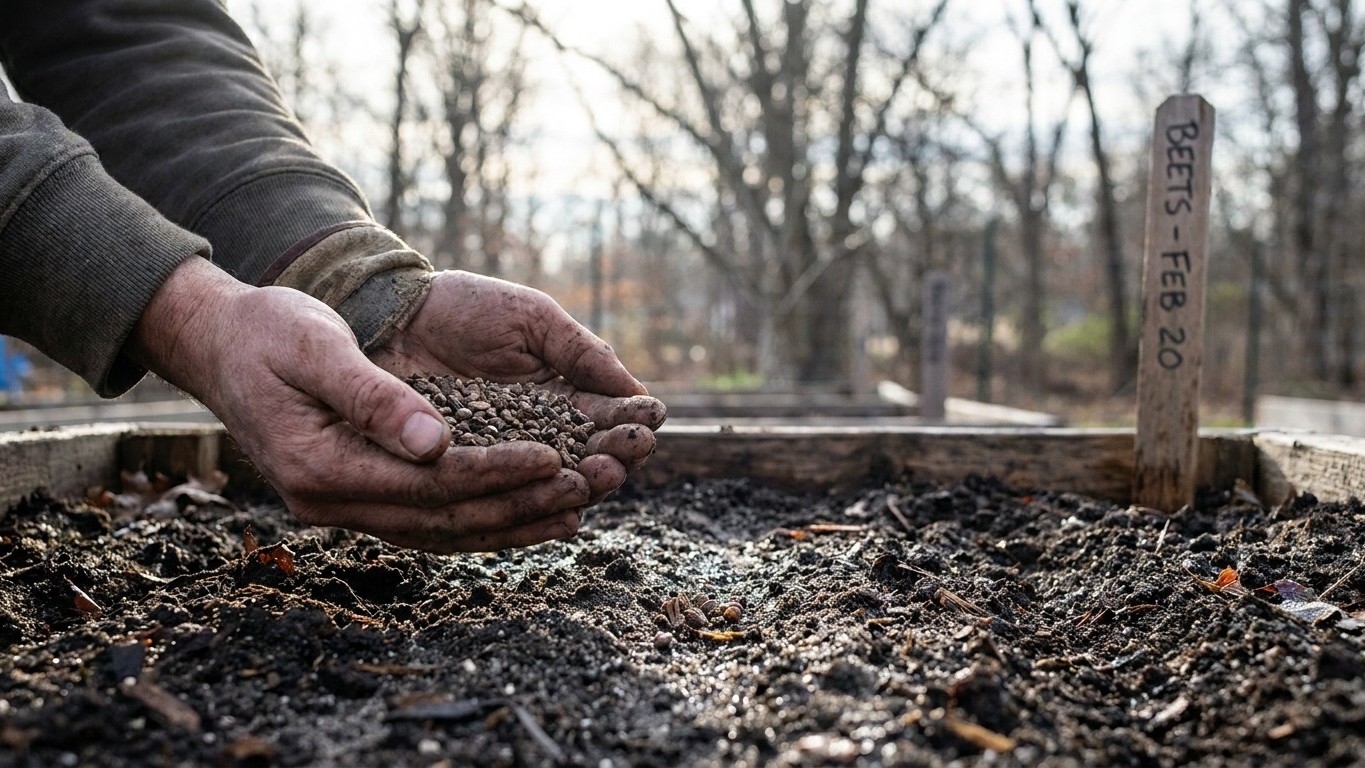

For most of western Washington, beet seed goes into the ground directly, two to three weeks before the last spring frost, which falls between February 27 and March 18 at the region’s reference station. That puts sowing somewhere from mid-February into early March for gardeners near that mark, though cold, wet soil often pushes the practical date later than the calendar suggests. East of the Cascades, the whole schedule shifts, and what happens in the first six weeks after seed goes down matters more than the date itself.
The short answer
The soil USDA lists as representative of Washington is the Tokul series, an Andisol built from volcanic ash. It’s light and porous, unusually good at holding onto both water and phosphorus, and its surface horizon runs about 45 percent sand, 10 percent clay and 45 percent silt, classed as moderately well drained. Surface pH sits around 4.5, which is strongly acid. That’s one soil among the hundreds of series mapped across the state, not a prediction for any single backyard, but it’s a useful starting point for what the ground here tends to do.
Beets want deep, sandy, well-drained soil loaded with organic matter, amended with no more than 1 inch of composted material per 100 square feet, according to Utah State University Extension. A silt-and-sand mix like Tokul’s, moderately well drained rather than sharply draining, lines up reasonably well with that on texture. The strongly acid surface is a different story. Many root vegetables, beets included, tend to struggle to take up nutrients efficiently once soil runs that far into acid territory, which makes a bed this sour the kind of thing that belongs in front of a soil test rather than left as an assumption.
One figure on the Tokul series is worth flagging before it gets misread: organic matter around 75 percent in the surface horizon. That’s not a garden loam number. A figure that high in a mapped soil series means the surface being described is a natural organic layer, something like forest litter or peat, not a bed that’s been dug, amended and planted for years. A cultivated garden bed on this same ground won’t carry anywhere near that percentage, so don’t treat it as a target, and don’t assume it excuses skipping compost altogether.
On heat, there’s no published count here of how many days a year the reference city spends above 90 degrees Fahrenheit, so that figure won’t be repeated as if it were on record. What is documented is the beet’s own breaking point: heat above 85 F combined with water stress is what turns a root woody, according to Utah State University Extension. In western Washington’s generally mild, marine-tempered stretch of the growing season, that combination is the exception rather than the rule, but it isn’t impossible, and it becomes far more relevant the moment a garden sits in a hot pocket, against a south-facing wall, or misses irrigation during a dry stretch.
The six weeks that decide it here
Sow beets two to three weeks ahead of the last frost and the first six weeks of that seed’s life land squarely inside the window NOAA’s 1991-2020 climate normals mark for this region: a last spring freeze falling somewhere between February 27 and March 18. That’s the western Washington read, tied to the station behind those normals; it does not carry over to the eastern side of the Cascades, where the growing season runs on a shorter, drier clock entirely.
What a mild frost date doesn’t tell you is when the ground is actually ready. Cold, wet soil and short, low-angle daylight hold spring crops back well past the date of the last freeze itself. A beet seed dropped into sodden, chilly Tokul-type ground in early March may sit and do very little for weeks, not because of frost risk, but because germination in cold wet soil is slow no matter what the calendar says. That’s a different problem than the one Utah State University Extension flags for the crop generally: water stress in the first six weeks pushing the plant into premature flowering, or bolting.
In a maritime spring, the more common early failure isn’t thirst, it’s the opposite: soil that stays too wet, too long, in ground that’s only moderately well drained rather than free-draining. Puget Sound country and the coastal lowlands both tend to run gray, damp and cool well into what looks on paper like planting season. The bolting risk that comes from water stress tends to show up later here, once the wet season breaks, typically as late spring slides into an early dry stretch and a bed that hasn’t been watered on any kind of schedule goes from soaked to parched in a matter of weeks. That swing, wet start, dry finish, is the pattern to watch for rather than a steady, predictable drought.
None of this transfers east of the mountains, it gets replaced by it. A high-desert spring runs drier and warms faster, which means the six weeks after sowing there carry a different set of risks, built around early water stress rather than cold, sodden ground. The frost window on record here doesn’t apply on that side of the state, and neither does the wet-to-dry swing described above.
What goes wrong here
- Strongly acid ground stalls the crop. The Tokul series surface runs around pH 4.5, strongly acid, and beets seeded into ground that sour often come up pale or simply stall. Test the actual bed rather than assume the state figure applies to it, and amend based on what that test shows rather than a guess.
- Cold, wet soil delays germination past the frost date. A last-freeze window of February 27 to March 18 doesn’t mean the soil is workable that early. Moderately well drained ground holds moisture and cold well into what looks like planting season on the calendar. Wait for the bed to crumble rather than clump before sowing, even if that pushes the date later than the frost window suggests.
- Over-amending a naturally organic-rich surface. Because the mapped Tokul surface carries organic matter around 75 percent, a natural litter layer rather than a cultivated one, gardeners sometimes pile on extra compost assuming their own bed needs the same treatment. Stick to the Utah State University Extension figure instead: no more than 1 inch of composted material per 100 square feet.
- A wet start followed by a dry snap triggers bolting. Beds that go from saturated spring soil to a sudden dry stretch without supplemental watering hand the plant exactly the water stress Utah State University Extension ties to premature flowering. Keep watering on a schedule once the rain lets up, rather than waiting for the soil to visibly dry out first.
- Late-season heat on a thirsty bed turns roots woody. Heat above 85 F combined with water stress is the documented trigger for a woody root. It’s not common on the mild, marine side of the state, but a hot pocket, a paved-in yard, or a missed irrigation cycle during a warm stretch can still produce it, so keep watering steady through any late warm spell rather than assuming the coastal climate covers for you.
Common questions
Does the February 27 to March 18 frost window apply across all of Washington?
No. That range comes from NOAA’s climate normals for a western Washington station, and it describes the mild, marine-influenced side of the state. Eastern Washington’s high-desert climate runs on a different schedule entirely, with its own last-frost pattern that this figure doesn’t cover.
How long do beets take from seed to harvest?
Most varieties are ready within roughly 60 to 80 days, counted from the day seed goes into the ground. Beets are direct-seeded rather than transplanted, so that clock starts at sowing, not at any later stage of growth.
Should I test my soil before sowing beets in Washington?
Yes. The state’s representative soil, the Tokul series, runs strongly acid at the surface and carries an unusually high organic-matter reading that reflects a natural, uncultivated layer rather than a garden bed. A soil test on the actual bed replaces both of those numbers with something the beet crop can actually be planted against, instead of a statewide average that may not resemble your yard at all.
What’s the biggest mistake gardeners make with the frost date here?
Treating it as a planting date. The last-freeze window marks when frost risk drops, not when the ground is ready to work. Cold, wet soil and low late-winter light routinely keep beet seed from germinating well past that date, especially in moderately well drained ground that holds onto both cold and moisture longer than a drier soil would.